How to Stop Your Subconscious Mind from Running the Show
Beat Imposter Syndrome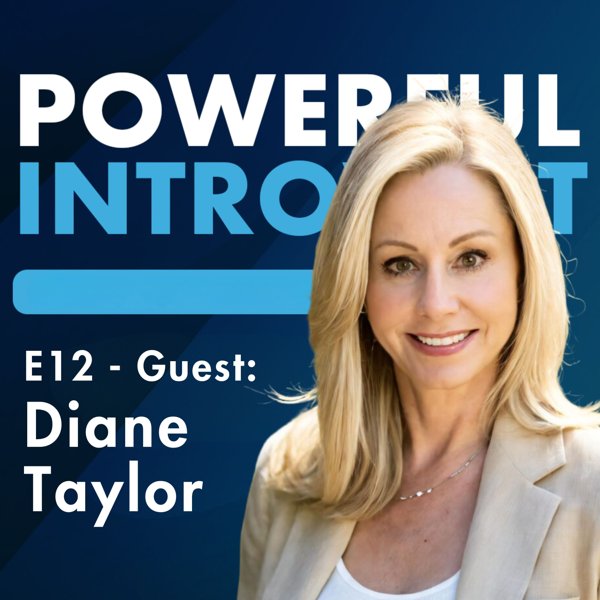
Diane Taylor is an HR professional and leadership development coach with 30 years of experience in promotion decisions, and her insight is blunt: most people think they're being held back by credentials or hours worked, when the real blocker is unresolved emotional material from formative experiences. Her book Elevate Potential and her coaching practice work at the level of the subconscious — the 95% of our operating system we can't see — to clear what's actually blocking leadership growth. For introverted leaders, the episode reframes the quiet leader as often the most conscious one in the room, and consciousness, Diane argues, is the number one leadership quality.
Why people think they're being held back is not the real reason most of the time.
Conscious humans make better leaders, period.
When the quiet leader speaks, there's always wisdom. As a quiet leader, questions are so powerful.
If we can't show up for ourselves, why do we expect everyone else to?
Key Stories
- The red binder at 17: At 17, searching for her older sister’s birth certificate to use as a fake ID, Diane instead found a binder of sympathy cards from her sister’s death. Thirteen years of suppressed grief came flooding out. In the next three months, she attempted suicide three times. This trauma — and the healing that followed — became the foundation of her entire professional philosophy.
- Survivor’s guilt as achievement drive: Diane connects her overachievement and control tendencies directly to the survival wound: “I better be worthy of being the one that got to live.” She names this not as pathology but as a pattern that can be understood and worked with.
- The quiet leader who speaks wisdom: In a coaching session, a senior leader described two people in her organization — one loud and ego-driven, one quiet. When the quiet one spoke, “there was always wisdom. It always moved the company forward.” Diane uses this as evidence that questions, not proclamations, are the most powerful leadership tool.
Techniques & Frameworks
- Conscious vs. unconscious leadership: Unconscious = “life is happening to me.” Conscious = “life is happening for me.” The shift from victim to champion mindset is the defining transition in a leadership journey.
- 95/5 subconscious rule: Only 5% of how we show up is conscious. The other 95% is driven by subconscious beliefs, triggers, and wounds — making surface-level skill-building insufficient without deeper work.
- The four realms of healing: Physical, mental, emotional, and spiritual — each requiring its own approach. Clearing the physical (cleaning your desk, your closet) is the entry point because it’s easier and creates real psychic space.
- The burning letter: Write a forgiveness letter by hand, fold it, burn it — a ritual for releasing held resentment without sending it. Pen to paper accesses something the keyboard doesn’t.
- Automatic writing: Write “What do I need to know?” at the top of a page and keep writing without editing. This is a subconscious access technique Diane uses for clarity and claims produced most of her book.
- Lead from where you are: You don’t need a title to lead. Asking smart questions that guide collective thinking is leadership — and it’s exactly what quiet leaders do naturally.
- Daily meeting with your higher self: Treat morning meditation like a calendar appointment with your most important stakeholder. Skipping it sends your subconscious the message that you are not worth your own time.
Full transcript
60% of top distributors run on Epic Core Prophet 21. It’s ERP built for distribution, enhanced with a Genic AI that doesn’t just inform, but acts. Optimizing inventory, stream-aligning purchasing, and making everyday easier. Don’t play catch-up at stanepiccord.com slash win. One instant MVP status? Join the new DickScoreCard Plus program. For $99, scorecard plus members enjoy one year packed with perks. Like $80 in annual bonus rewards. Free shipping with no minimum purchase. Triple points on two purchases and more. That’s over $160 in benefits. Join DickScoreCard Plus today and score more than ever. Tap the banner to learn more. Exclusions in terms of apply. Visit dix.com slash scorecard plus for details. Hi, I’m Greg Wanger, host of the powerful introvert podcast. I’m here today with Diane Taylor. Welcome, Diane. Thank you so much, Greg. It’s really wonderful to be here with you and your listeners. So I’m going to tell the audience a little bit about your background. Your founder and principal consultant of glow leadership. Your speaker and an author and a leadership development coach. And strategic human resources consultant with over 30 years of experience. Sounds like me. All right, fitting the profile. Also, most pertinently to this podcast, your author of the book, Elevate Potential, a conscious approach to success. And this book is about leadership and personal transformation to help individuals reach the highest levels of leadership, which is the most conscious leaders. I’m super interested in this book. I’ve read it this week and found it really engaging. A lot of this work is similar to work that I’ve done on my own leadership journey through my executive training, executive coaching, some personal transformational work. So I thought this would be very interesting to my listeners who are quieter individuals who are interested in leadership and making more of an impact in the world around them. So super glad you’re here. Wonderful. And thank you so much for taking the time to read my book. Yeah, it was great. So one of the things that I found inspiring about your work is how open you are and vulnerable in talking about your past. And that speaks volumes about the work you’ve done. Could we start up telling a little bit about that and your personal story and what led you to write this book? Maybe I’ll start with writing the book and then head back to my personal story. But in my work as a leadership coach and HR professional, I have the privilege to be at the table when it comes time to promote people, when people are chosen, you know, we have the meetings and choosing the high-po tentals within the organization. I’ve been involved with that for most of my career. And then coaching individuals for many years. And I started to realize that why people think they’re being held back from a promotion is not the real reason most of the time. It’s something different. People will think, oh, well, if I just go get some more letters behind my name or if I just work more hours and prove that, you know, I’m the one that knows how to do everything and they really, really need me. And then taking my own personal journey and climbing the corporate ladder before starting my own company and understanding what was getting in my own way during that process, I linked it back to my own personal experience and the imprints from my childhood wounds and how I had to heal that to become who I wanted to become and who I am today. So I grew up in a, you know, happy, normal family. I was a second born and for the first few years of my life, I had an older sister. She was 14 months older than me and, you know, doated on me and spoke for me. And so I had two loving parents and an older sister and life was great. And then two months before my fourth birthday, my older sister died of cancer. And so in that moment, my world turned upside down and I lost, you know, one of the most significant people in my life at that time. And that was back in 1974. So during that time, there was no support or understanding. Neither one of my parents went to a day of counseling. They soldiered on and it was thought that I was too young to have any sort of understanding or impact. To this day, apparently my mother, when she read my book, said, oh, I had no idea that had such an impact on her. That’s incredible. That is amazing. It riffing in us. Yes. And, you know, I teach about generations in the work place as well and, you know, you can see the difference in the generations from, you know, just from a boomer to an axe. So I soldiered on with everyone else. And when I was 17 years old, I thought, well, if I find my sister’s birth certificate, I was living in Alberta in the drinking ages 18. So I thought, oh, I’ll just find this birth certificate and I’ll be able to go to the club, certainly. And I went on a search for that birth certificate and I actually came across a red binder that my mother had put all of the sympathy cards. She received it during my sister’s, you know, after my sister’s passing. And in that moment, my world imploded that 13 years of unresolved push down grief that was not processed came exploding out. And in the next three months, I tried to commit suicide three times twice by overdose and once by slitting my wrist, I still have marks on my wrist today to always remind me. And it was then when I started my healing journey. So there was a lot of impacts to that trauma in my formative years and the way I show up and still show up to this day, you know, the rug was pulled from under me. And I’ve spent the rest of my days being a control freak because I don’t want that rug to be pulled from under me ever again. That was one time was was enough. So it tends to show up, you know, as a control freak, I show up as my survivor’s guilt makes me show up as I better achieve, I better be worthy of being the one that got to live. So the nets of my story, I know everybody’s story is different, but there’s some similar impacts and the reality is something happened to us in our formative years that is impacting the way we show up today. And if we don’t heal those wounds, they’re preventing us from really creating the success that we want to achieve in our lives and having the things we want to have in our lives. That’s what I’ve seen again and again. Thank you for sharing all of that story and for telling that story because some people have experiences that are more extreme and some people have less extreme, but we all come away from this time period with some kinds of unmet needs or wounds just given the culture at the time. Children, they were almost like treated as not people and treated as objects. And so not the most supportive culture at the time. And so many of us have that and this matches my own journey where I had reached a certain level and the way I was showing up is kind of hitting barriers, which have nothing to do with education. I’ve been super fortunate to have a great education, all my achievements, all the things I do. There’s no studying your way out of this kind of limitation. It’s really an emotional thing and that’s really the way to get out that. Yeah, absolutely. So one concept in your work that you talk about is the idea of what’s subconscious versus conscious. Only 5% could you talk about what if this important 95% that seems important? Yeah, so they say that only 5% of the way we show up, what we know about ourselves and the stuff around us is in our conscious mind. That means 95% of what’s happening and what we’re doing and achieving is not conscious to us. We’re not aware of it. So it’s not just going to come. Sometimes it comes in a form of a trigger winner, emotions or triggered when we have one of those experiences where we just react in a non rational way and we don’t understand why that’s because there’s something in our subconscious that is needing to be brought forward and healed. We have to be intentional about what is it that we want to achieve and what is blocking us and preventing us and how can we dig into our subconscious to pull that forward to allow space for healing and to let it go. So I personally done a lot of work. I work within the four realms, the physical, mental, emotional and spiritual counseling, for example, happens in the mental, emotional realm. I’ve also done a lot of work that happens within the emotional spiritual realm, whether it be Raky or subconscious, release technique or childhood regression work. I’ve done a lot of work and I find that emotion code work highly, highly effective. It cuts through faster than what you might take years to do in a counseling session, for example, from my experience that was much more effective. The more we ascend from the physical, mental, emotional, spiritual, the deeper we can go. But my journey as well, you know, it’s been a lifelong journey and I’m still, gee, I hate to break a G-Gray, but I’m still not perfect. Still working on that control issues. Yeah. Yeah, right there with you. Yeah. But it sounds like you’ve been working at this for a while. Was there a particular moment where you realized you needed to do more work or could you paint a little bit of that picture about how you found these techniques that helped you? I think the human experience is we are incarnated and something happens and then we go through life healing from that or growing or learning from that. So you’ll be given a lesson. Something difficult will be happening in your life and then you’ll work through and you’ll sort that out and you’ll figure out how to overcome that and you’ll have success in that and you’ll be through that. And then you might have a few days off from lessons. And then the universe says, oh, you’re so good. Congratulations. Look at you growing. We’re going to grow you even more and something else in our lives happened. You can’t talk to any of your friends or colleagues that doesn’t have something happening to them in their life. And that is the life experience. Life is hard. It’s meant to be that way so that we can grow and evolve and change and become more conscious and be better. So my life, you know, I don’t think there’s any big moments but there are lots and lots of moments along the way. Lots of relationship challenges. And you know, that seems to be the way life teaches me. I lost my very first soulmate and my life path seems to be having fear around if there is a deep loving connection that I’m going to lose it. So then what do I do? Oh, I hold on or I leave before I can be abandoned again. So experiences will show up for me in my wound of abandonment to teach me and to grow me. So there’s lots of messy parts, lots of messy stories that call to, okay, you better do something. And I also find that those methods or healing techniques show up when you need them, right? You hear or friends says, oh, I just did this thing and you should really try it or, you know, there’s something that you learn about and what you need in the moment always finds you, I believe. I agree with that. And it’s just a matter of paying attention to those signs. This is showing up, shows up again, you think about it. You know, there’s a reason you’re thinking about it giving those paying attention to those signals and giving them a chance. We need to give these signals a chance in our lives. And then I think you write about that in the book as well about paying attention to signals and signs. Yeah, I definitely experience signs along the way. Beyond just finding things, my other understanding about the human experience is if there’s one thing we really struggle with the most, it’s letting go in many different forms. And, you know, the experience of losing someone or going through grief, we hang on and hang on and hang on. My understanding of losing my sister and my maternal grandmother, who I was really close to and my father, they show up for me all the time. They are sending signals and they like to have fun with it. But they’re always there. Even though I can’t see them, they’re always proving to me that they are there and with me and supporting me. So yeah. It’s good that you have that attunement to it. It’s a nice, very supportive. You talk about, on the subject of letting go, one of my favorite titles of David R. Hawkins’ work is the book Letting Go. I don’t know if you read that one in particular. You talk about his work in your book about energy the different levels of consciousness. I’m wondering if maybe we can lay out a little bit about your understanding of the levels of consciousness and what we’re doing and where we’re going when we’re working on elevating our levels of consciousness. There’s different theories on the levels of consciousness and what the belief is currently is that 70% of humans are still in an unconscious state. And only 30% are in a conscious state. Now, what does that mean? How do we define conscious versus unconscious? Unconscious simply is life is happening to me. Conscious is life is happening for me. So when we get to a point when we understand this life experience and all the terrible things that we’ve experienced, all of the terrible things that we’re struggling through, you know, last year, this year, next year. When we understand, yeah, it’s hard, but it’s happening for me. There’s a purpose to that pain. There’s a purpose to that challenge. It’s to grow me and to evolve me, to be a more conscious human being, where I can truly be of service. And when we grow through the levels, first we become conscious. Then the highest level is enlightenment. And, you know, I’m not sure how many people get to that. But somewhere in between that is a place where we take our pain and turn that into a place of service for others. When we can see that the human experience is to experience pain and we can look around and say, all that human that I share life with must have pain too. And we can be empathetic and we can be understanding and attuned. That is a real great level. And that’s where we transition into leadership. Because conscious humans make better leaders, period. I think we can all probably start thinking of leaders who are there caring and concern and openness versus doing things that are ego-motivated. And this is part of your practice now, not just personally, but also how you help others. So what does it look like when you’re trying to help someone evolve into these higher levels of consciousness? Where might you start out? Well, we just start with what’s in front of them? What are their challenges? We just start in the present moment. And it’s through the challenges that they’re dealing with in their professional and personal life. And just some work around shifting that. It’s a very fine tuning of the radio. The personal development model says that 10% of what we learn is in the classroom. 20% is through coaching. And 70% is in the workplace or life. If we’re evolving our personal life, that happens in our personal life. So if I was to just focus on, okay, I’m going to teach you this model about consciousness today. It’s not really going to be that helpful. But if we talk about, okay, what’s happening? What challenges are you having? How are you feeling? Why do you think that’s happening? How can you shift and see that from a different perspective? And then you start to change your neural pathways. You know, they get wired in a different way. And you start to become a victor or a champion, not a victim. And you start to be more aware. Your awareness goes instead of me, me, me to we, we, we. It happens naturally. Right. And more concern about each of the individuals that you’re working with and everyone around you. Yeah. And everybody takes their own time. And you know, there’ll be some days where I come out of a call and I’ll bang my head and think I’m not helping at all. And then I’ll get a text a few days later and it will be like, oh, it did, it did help, right? So people process at different speeds and at different times, the newer generations are brilliant. The process has always been whatever is the more senior generation hold a lot of judgment for the generation after them because they are different. And so we fear what’s different. Just like we say, well, you know, I’m a quiet leader. And that’s different than, you know, the leaders I see and declare as leaders because they’re charismatic. It’s just different. And the generations are just different. But there’s brilliance in everything. And the newer generations are more conscious. If you think about back to that physical, mentally emotional spiritual. And I think about my grandmother who came from England when she was three years old. And her father, you know, came across Canada like in a wagon and had to go on the barren land and build something. They lived in a very physical domain. That created for my mother’s generation an opportunity to go to crane to become a nurse, to be in a mental realm. Which created for my generation the opportunity to start to heal in an emotional way. My children’s generation now can level up to the spiritual and be more holistic and be more conscious. I have a couple of Gen Z kids myself. And they are more conscious just effortlessly. It’s in the culture. It’s the way they have just default assumptions about the way things work that are naturally more supportive or nurturing. And they value each of these things like you’re saying the physical, mental, spiritual. So I really like that framing a lot. It’s very encouraging to think about it in those terms. Yeah. Some people say, oh, I don’t want to have kids. I’m so afraid of the future. The future is going to be very bright, very bright. Once we get through, we have a large population of boomers that are transitioning out of our workplaces. And they add a lot of value. The reality is the world will change once we transition from that generation and be more inclusive and be more conscious. Yeah. Amen. It’s funny. I think we’re both in Generation X. And I don’t find there’s a lot of discussion about this generation. There’s a lot of interesting role in the intersection between these two things. The great boom and then the echo and the millennials. And Generation X, we’ve gone through a lot of changes in terms of technology and cultural. We were raised in the, like, people would be surprised to hear that the death of a sibling would be impactful to them to this new generation where we’re just deeply involved in nuanced understanding of psychology and how these things, even from a scientific standpoint, impacting us. And we’re just kind of the observers in all of this. But I think we’re a key part of the transition as well. Yeah. I think we’re the transitions. We are the teachers from our experience, right? So what we, as X’s, have you and I are both on this path, is to share our experience to empower others. So maybe the X’s are the empowers of this. Hours and teachers. Exactly. I like that. And so as part of this work, it sounds like when you’re coaching somebody, you start where they are, there’s always going to be something that comes up. Then you start seeing patterns and there’s an opportunity to go deeper. You talk about some different techniques in the book, the shadow work. And could you describe some of those practices for the audience? Some of those things I do with my corporate clients. I typically don’t do shadow work with them. It doesn’t necessarily feel as appropriate there, but you know, they all know that I have a book. And I hope that they read it and they’re doing those exercises as well. But if something did come up and there was an opportunity to present that, the book is definitely deeper on that sense within my corporate work. I’m not doing, you know, to find your little boy soul and have a sit down and see where they’re at. We don’t do that kind of work. Definitely there’s lots around letting go. I have a chapter and lots of exercises in the book about letting go. One of the hardest things we as humans do is let go. So we hang on, we hang on, we hang on. Why? Because the only thing worse than bad is uncertainty. So we’ll hang on to something bad because we’re afraid of what might be. Instead of thinking, if I let go of this, what possibilities can find me? The first part of any process is to create space for something new. In the book, I walk through how to create space in the physical, mental, emotional, and spiritual realms. So one of the first things I talk about is clean your closet or clean your desk. Is there something in there that, you know, you haven’t worn for five years? Why are you hanging on to it? If you get back into your skinny jeans, you deserve to buy yourself a new pair of skinny jeans. So let that go, create space and doing it in the physical is way easier than in the emotional. So it’s a good place to start to get the energy. Plus, you know, the good Qi that comes from enhancing your Feng Shui is always a good thing as well. So if you haven’t, anyone listening, if you haven’t cleaned your closet in over a year, I would challenge you to start there and see because once we clear a physical space, then we can start. You’ll automatically notice in your mind how you feel clearer. And same with your office. If you have papers all over your desk, that’s how your mind is going to feel. Right? There’s a connection between the physical and the mental in terms of that. And then I go into working on emotion. One of the best exercises in terms of letting go of things we’re holding onto in our emotional realm. You know, humans struggle with forgiveness. And they say, not forgiving someone is poisoning yourself. You know, or people say, well, I’ll forgive you, but I won’t forget. Well, that’s not any better. That means you’re holding on. Why are you holding on to that stuff? It’s going to give you wrinkles and make you look old and it’s going to, you know, make your cells turn into cancers. So don’t do that. So if you’re having some anger or inability to forgive or let go in that way, write a letter to the person, do not send it to the person. Right and right and right. Very important. So not least on that. And don’t pipe it out on your computer. Like take a piece of paper and a pen and write. There’s something very magical about the pen to paper and write and get it all out. And if you want to cry, that’s even better. Right and right. And then take that paper and fold it into four in half in half again. And then go somewhere safe where you can light that paper on fire and allow it to transmute the energy. And as it’s burning, just let it go. Let it go. And it’s incredible how free you feel afterwards because you intentionally used a ritual to let go of stuff that was in your body, in your mind, in your realm, that’s holding you back. So let it go. It’s a deep clearing of clutter. It’s amazing how much these things are creding out your energy and your thoughts base. So that’s probably part of this 95%. You’re talking about as you’re holding on to resentments or past pain or setbacks. So any of these things are worthy of taking a look at just for the sake of clearing it out. Exactly. And that’s another way to access the subconscious is automatic writing. So you could take a journal or a paper and just say, what do I need to know and just write? It’s an incredible process to see what comes up. You just write and it comes through you automatically when you just trust in the process. And I would say at least three quarters of my book came that way. It came through me, which was really great and made it a much easier process. I can imagine. Do you have that as an ongoing practice when Julie Cameron’s the artist way that’s a big part of that whole process where you wake up in the morning. When your mind isn’t that kind of a liminal state still just start to writing and see what’s there from you from your subconscious. I do a meditation practice every morning. So I wake up. I have one cup of hot water and one cup of black coffee while I do a meditation for about 45 minutes to an hour every morning. And then when I was writing my book, I would write after for the next hour by write on the new moon and the full moon every month. I do have a meditation practice and really solidified over the years. It’s been very easy to follow finally for me, but you write about that also and you brought it up in the context of helping you access the shadow part of yourself. Do you see that as playing other roles in supporting people? I find that that’s where the direction comes. Right. It’s my quiet time to meet with my higher self. And just like you have appointments in your calendar to meet with your boss or your direct reports that are very important to creating success within your business, my daily meeting with my higher self tells me, you know, oh, you should contact that person like stuff will come to me. The direction, the path just naturally flows to me is what I find. And for me, it’s like they say, put your own oxygen mask on first. That’s where I get my oxygen. If I have to go somewhere early, I’ll wake up early to make sure I have that to serve myself first before I serve others. When I do that, I’m a much kinder, nicer, more effective human and leader. Completely agree. And I know that meditation can be a challenging thing for people where if you haven’t gotten to that place where it is something you just need to do to center and show up as your best self, that can seem frustrating or off putting or like I’m doing it wrong. You hear it again and again from so many leaders that this is a critical component of what allows them to declutter and show up as their best self. It’s well worth the investment of time defining out what’s there for you if you can get to it. Yeah. And I would, you know, I put that as well. A lot of people say, oh, I’ve tried it. I don’t like have light light shining out of the top of my head every day. I do it people like I just the thing is it’s about the consistency. So showing up what I do is I I do different meditations mostly guided meditations on YouTube. So someone is talking to me and I just listen and you know they just tell you to breathe in, breathe out. I just follow. So the most important thing is I’m showing up some days I’m not getting any air and I’ll be like my thoughts are going and whatever, but I showed up for myself when we commit to ourselves, it sends a message. Oh, you’re valuable. All of the sudden there’s an alignment and value will find you. If we say, oh, you know, I don’t have time for that. You’re basically saying, I don’t have time for myself. My self is not valuable. My self is not worthy. So don’t give me more money. Don’t give me that promotion. Don’t give me that loving relationship. If we can’t show up for ourselves, why do we expect everyone else to? That’s what meditation is for me. It’s my commitment to myself. So I want to draw this back to the concept of leadership and you work with people in a couple of different capacities. You have more corporate clients where you’re introducing better ways that you’re introducing conscious leadership, but you’re not necessarily going into the deep part. You know, maybe you arouse people’s curiosity. So what are some other ways? So if you think about someone who’s earlier on in their career and is interested in becoming a leader, what types of things would you suggest for them to pay attention to or to start working on? I would say follow what’s finding you just like we spoke about the things that come to you at this point 32 years into my career. My wisdom is a sum of many parts, right? Many teachers, many philosophers along my way and each and every one of us is unique. We have our own unique fingerprints. So we have to find what is right for us. So I always suggest to emerging leaders, you know, when you go to bed at night and you’re putting your head on the pillow, just ask, how can I serve? And the things will come to you. How can I be a servant leader? And if something comes across a book or an article or you hear about a practice or a meditation retreat, learn about different things. But don’t just look for the theoretical look for the things that can create self awareness because self awareness in my opinion is the number one leadership skill that great leaders have. The more we understand about ourselves, the more we understand about humans and the better we can serve the humans around us. And I would also say just because if you’re an emerging leader, you don’t have that title. That doesn’t mean you can’t lead. Lead from where you are. Be a team player. Care for the team. You’re always a leader, no matter where you are, no matter what your title is and no matter how many people you’ve never round you. Show up, where you’re at and lead from there. So there’s so many opportunities to lead and you see people who don’t have titles who are clearly leading every day. They’re attuned to the people around them. They’re voicing their concerns. They’re pointing out opportunities to the group. And a lot of times leadership roles and opportunities come as either a recognition of what you’re already doing. These are the people who are flagged for that because they are acting in a sense of service and supporting others. Yeah. And for the quiet leader, I just was on a coach who called this week with us, senior leader. And she was speaking about two people within her organization that were leaders. And she said, well, this person A is very voice stress and has a lot of opinions and is always talking and always asserting always ego based asserting their leadership. And it’s very frustrating for everyone with the organization. But we have leader B who is a quiet leader. But when he speaks, wow, there’s always wisdom. It’s always moving the team or the company forward. He asks smart questions that guide and increase wherever we’re at. As a quiet leader, questions are so powerful. You’re thinking rather than looking across the loud leader who says, we need to do this. Have we thought about the consequences of applying A to B? That can be a very powerful and conscious way to lead. Absolutely. The right question reframes everyone’s thinking and even makes a certain conclusion inevitable. And you make all that happen without telling anyone what to do. And how about you yourself? I mean, do you consider it without labeling things through your career? Have you been more loud assertive that kind of thing? Or do you come from a place of quietness? It’s really interesting because if you meet anyone that I work with in my career, they both say, oh, she’s absolutely an extrovert. My Myra’s Briggs labels me as an extrovert. And I believe that I’m an ambivirt. For example, yesterday I did not see anybody all day long. I did not speak to anybody all day long. I was by myself. I needed that day. I needed the entire day. And the universe worked with me. I just got all these emails down the morning. I wasn’t supposed to see yesterday. I definitely see myself as an ambivirt. When I do show up, I am quite passionate, powerful, directed, supportive. But it takes a lot of charging up in the background to make that happen. And if you read my book, you know how I feel about labels and we’re putting people in boxes when we are all unique. So that’s something for the listeners to consider is you don’t have to be in just one box. You’re a beautiful human and imagine yourself flowing in all parts of life. So many more capabilities than we may realize, particularly when we have more self awareness and can heal some of these parts of ourselves. Well, this has been a really great conversation. I wanted to leave the audience with where can they find out more about you, your company, and your book and your work that you’re doing. Absolutely. So my website is glowleadership.com. And you can find me on Instagram at glow leadership. And my book is available anywhere at Amazon, Barnes and Nobles. And it’s called elevate potential, a conscious approach to success. Thanks so much for being on the podcast, I am. Thank you so much, Greg. It was a pleasure speaking with you today. The Bleacher Report app is your destination for sports. Right now, the NBA is heating up, March Manus is here, and MLB is almost back. Every day there’s a new headline, a new highlight, a new moment you’ve got to see for yourself. That’s why I stay locked in with the Bleacher Report app. For me, it’s about staying connected to my sports. I could follow the teams I care about, get real-time scores, breaking news, and highlights all in one place. And I’ll upload the Bleacher Report app today so you never miss a moment.