Quiet Confidence Starts Here — You're Already Good Enough to Lead
Beat Imposter Syndrome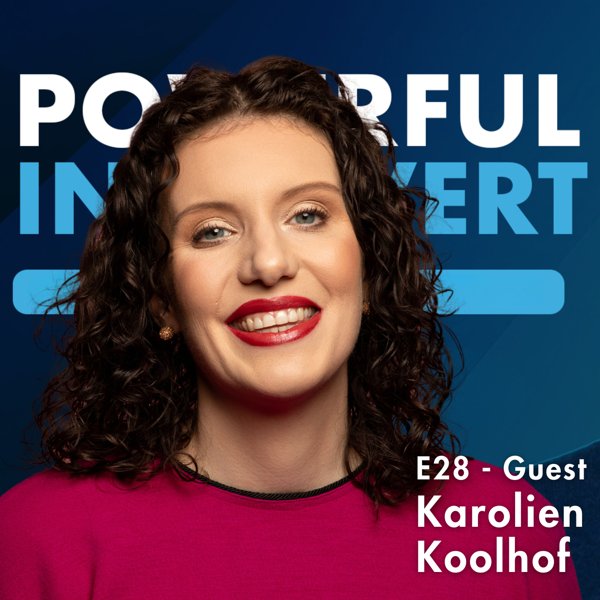
Karline Kulhof is a certified coach, trainer, and author of "Introverted Leadership," based on interviews with 400 self-proclaimed introverts and 30 in-depth conversations with leaders across every continent. She founded Quiet Quality in the Netherlands and works with major Dutch corporations and public institutions. The central insight is that the most pervasive and damaging limiting belief introverts carry — "I'm not good enough the way I am" — is directly produced by affinity bias in extrovert-dominated organizations, and healing it requires making the inner critic visible, reconnecting with values, and taking small behavioral steps aligned with those values.
I'm not good enough the way I am — that's the deepest and most harming limiting belief, because it touches the whole core of a person.
If you aren't neurodivergent, if you are an introvert — it makes you feel a bit different. And if already at a young age you feel like a bit of an alien, that creates a pattern that will follow you the rest of your life.
Every brain is wired differently. Even identical twins. So neuro-typical? I don't think it exists.
Key Stories
- Teacher reports that said “maybe she’s just shy”: From childhood, Karline received feedback that framed her quiet nature as a deficiency rather than a trait — a pattern she’d hear throughout her career.
- The journalism newsroom: As a national newspaper journalist, Karline was doing innovative, deep-dive work and was still told she needed to “be more outspoken” — her visible contributions were not recognized in the way the extroverted culture required.
- The MBA discovery: Karline enrolled in an MBA program intending to move into leadership; a classmate recommended “Quiet” by Susan Cain, and the whole picture came together — she pivoted to researching introverted leadership and writing the book she’d always dreamed of writing.
Techniques & Frameworks
- The Bus visualization: Limiting beliefs become passengers on a visual bus. The coach and client identify which “passenger” — the perfectionist, the pleaser, the inner critic — is driving, then work to move it toward the back while installing something more balanced (pride, self-acceptance) in the driver’s seat.
- Affinity bias awareness: The tendency for extrovert-dominated leadership to hire and promote people like themselves, making introverts invisible not because of incompetence but because they don’t match the dominant template.
- Values-obstacle-behavior scheme: Map your core values, identify what obstacles prevent you from living them, see what behaviors those obstacles drive, then ask what behaviors your values would produce — and take one small step toward the values-driven behavior.
- Core talent assessment: Assessment tool rooted in childhood play patterns, revealing what someone naturally liked doing before social conditioning, used as a coaching starting point.
Full transcript
The Bleacher Report app is your destination for sports. Right now, the NBA is heating up, March Bandit’s here, and MLB is almost back. Every day there’s a new headline, a new highlight, a new moment you’ve got to see for yourself. That’s why I stay locked in with the Bleacher Report app. For me, it’s about staying connected to my sports. I could follow the teams I care about, get real-time scores, breaking news, and highlights all in one place. Dallow the Bleacher Report app today so you never miss a moment. When people discover that, okay, so I can actually influence all of that. I can stop avoiding my values. And by taking small steps, because the obstacles are daring, or to help you deal with discomfort. So it asks you to deal with it. That’ll be a bit of discomfort if you want to, that your values. But by doing it in small steps, it is doable to create new brain patterns because that is what we’re talking about. Are you tired of being told that you should take up more space or be more outspoken as a leader? Karline Kulhof was too. And she didn’t just find a different path. She’s dedicated to her life to helping other leaders find it too. Welcome to the powerful introvert podcast. I’m Greg Wanger. I’m here today with Karline. She’s a certified coach, a trainer, and author of the book Introverted Leadership, which explores what introversion really is, how cultural views shape our views of leadership in different countries, and the deeply ingrained biases against introverted leaders. This is based on interviews with introverted leaders around the world. And she explains how quiet leaders everywhere can shine. Through her company, quiet quality, Karline helps introverts navigate their real world of leadership challenges from managing teams, defining their voice in organizations that still reward extraversion, which is pretty much everywhere, right, Karline? Yes, that’s correct. Yeah. Welcome to the show. Thank you. Nice to be here. Yeah, really good to have you. A lot of times we start with the introvert origin story. We were all introverts from the start, but we had different childhood experiences. Could you tell us a little bit about what your childhood experiences were like as an introvert? Yes, for sure. No, I was a very quiet kid. I really liked being inside, reading books, just being by myself. And when I went to school, it was basically, I preferred to be with not like a big group, but just one-on-one with other people, but at least here in the Netherlands, where I think around the world. I was in a big classrooms that could be quite overwhelming sometimes. And actually that made me somehow, I don’t know, close off from the environment and really, yeah, I started living in my own world, which was basically books and just a few friends that I had because what could be quite overwhelming now and then being in such large classrooms. And also, my professor actually saw that, the teacher saw that, because they wrote on like yearly reports that I got, like, yeah, maybe she’s just a little bit shy or maybe she doesn’t care to like speak up or take space. Now, when I first read that, I really felt like, okay, what do they even need with all of this? Because for me, it was just like normal, right? I never even considered that it could be different for other people. It was only later on because of these remarks that I discovered, like, okay, some parabeticist is considered as something that’s odd, which maybe makes me different from others. And that is the beginning of something that I kept on hearing also when I started working. I came back several times. So just in terms of what you’ve learned since, I think you wouldn’t have had that perspective then. Bren, what? It was easier, harder relative to other places growing up in the Netherlands being more quiet or more shy. I think not just the Netherlands, but also the fact that I grew up in small village. So it was not that crowded. I can imagine that if I would have grown up in like one of the bigger cities that would have been even more overwhelming to me, but in this quiet village where I grew up, well, there is the possibility to just go somewhere and be alone. So I think that was all right, but there was always the expectation of taking up space of profiling yourself, of showing what you’ve got. I think, yeah, it’s the Netherlands. So it’s not as outspoken as in the US because we are a Calvinistic country. There is some kind of norm, like don’t show up too much, don’t brag about yourself because then there’s also considered as something that’s not done. So it is like a fine line between not being too modest and not taking up too much space. It’s always this search for like, okay, am I doing it enough and I’m doing it not too much. It’s a fine line, really. So it sounds like the overall bias is still Western. There’s a support or encouragement of more outgoing, more interested. But at this point, there’s maybe there are some of these tendencies that rein that in a little bit. Red and white? Yeah, true, true. Yeah, I think it is largely in from the spot, the US norm of showing off your success, right? The individualism of, okay, look at me. Look at what I have achieved in my life and then being proud of that, which is good in one sense, but I think in the other, it can be quite challenging too, especially for introverted people, right? That’s right. It’s not the natural fit for all personality types. Well, it isn’t. So you had this awareness developed in school, like a lot of us and then you went off into your career and then you started in journalism. Tell us a little bit about that. Yes. So ever since I was a little kid, I wanted to be a writer. I even wrote little poems on the walls of my room. But I wasn’t too happy about that at the time, but later on, she understood that was just preparation for my career later on. And so I studied languages and ended up first in regional journalism. And then later, I worked for one of the bigger national newspapers in the Netherlands. And that too was quite an extroverted environment, so to say, because there, yeah, it’s really about who has liked a newest scoop and who will write the article for the front page tomorrow. So it’s really about, yeah, getting that position, but we call that like elbowing your way forward, yeah, showing yourself, showing that your story is better than the story that the artist want to bring for that signature’s paper even online, make his own line. It’s also about speed, right? So who was first and I was there just beating my introverted self, taking, I think a little bit more time to overthink all kinds of things. Even before I started writing, I always wanted to dive deep into a subject. And then I would come up with questions and then call someone or as there are a lot of broader journalists out there. You can see the commercial auto insurance quote today at gikego.com and see how much you could save if feels good to gikego. Just pick up the phones straight away and start talking with other people before even exploring the subject. That was already quite a different preference. And I also like taking up bigger projects, innovating journalism. I made like a tool for the election time where people could inform themselves on all of the different parties to see what their preference was. So that was a way for me to really contribute also to the public opinion and informing people about what’s going on. And even while doing all of that, because to me it felt like pretty much profiling myself right, innovating stuff, and coming up with topics that no one ever thought of, even going deeper with certain subjects. They kept on telling me like yes, you need to be more out there. You need to be more outspoken. Share yourself. I really couldn’t understand that. I was like, what are you saying all of that? Because I feel like I’m contributing the law, especially in the innovation. But still it wasn’t seen somewhere like in the way they wanted it to be. So there again, I kind of felt misunderstood just like I felt in kindergarten already. So you are leaning on your introvert strengths and doing innovative things, creative things in your own style and your own way. And it sounds like it was not being recognized. Not enough, at least. Of course they saw what I was doing. I was not bragging about it all forever. I was just doing my job. That’s what it felt to me. But also fairly successfully. And then, so what led you to a decision to move away from that? I’m also as a person, the kind of person that likes to look forward. So I was always thinking, okay, what is the next step that I wanted to take? And I really liked this innovation part. So I asked, is it possible for me to do more with innovation? Because I’m really liking this project and I got that. That there was not so much space in order to do that. I really wanted to innovate journalism because it is an industry that is struggling because of all of the new technologies that are arising. So I thought, maybe if I become like a leader, then I can improve and solve that. So I subscribed myself to an MBA program because I felt that was the way to go in order to take that step forward. But the funny thing about the whole program is that I really discovered a lot more about myself, about my introverted side. I really knew about the word introversion before, but not as much as I learned through that MBA program. I really had a deep dive into my own personality and describe like, hey, this is why I prefer to recharge on my own. I thought it’s not something bad or whatever. Even decided to do research in this topic, all introversion and leadership. I decided to write a book about it as well. I wanted to be a writer. As a kid, I wrote it when I was still in a dream that was out there. So I made that dream come true. And there was also kind of the turning point where I decided, hey, I know no one to write about people. I wanted to speak with them and I wanted to help them. Yeah. And embrace this strength that is actually linked to introversion. Yeah. Just a way that I discovered that true that whole program. And really inside of something inside of me, like this farmer that I wanted to spread to other people. Yeah. And what was it in there? Was it some of the material you were coming across that made you that informed you about it? Yeah. I remember at first we did some kind of personality test. It also spoke about introversion and extroversion. And then I also have like a very good discussion with one of my classmates. And he recommended the book Quiet. I soon came to me. So I started reading that after I, yes, exactly. It’s a classic, right? Right. And that, yeah, all of the pieces of the puzzle just came together reading that and it made me curious to know more about it and to do something with that. That’s fantastic. You’re the first person I’ve talked to you. You came to that discovery in a program where you could immediately apply it in research and learning. Yeah. It was great that I could then link that to leadership because what the program was heavily also focused on leadership. And I was really curious to know like are there even introverted leaders out there? Because to me, it seemed like it was something that was frowned upon or something that was not accepted as a leader. And I really was motivated in order to prove them wrong. Like there is nothing wrong with introversion. It’s just different. It’s not good or bad. It’s just different from the way that other people do it. That’s it. So you went and talked to a bunch of introverted leaders. How many people did you speak to and what types of things did you take away from those? Yes. So it’s several things. There was an online question there which I shared worldwide through all kinds of ways. Like on social media and by email, all of that. So it was like a question there that about 400 self-proclaimed introverts worldwide answer. And then I spoke to another 30 in person like deep dive interviews that also became part of the book to really give examples of what does it actually look like to be an introverted leader. And you also took a little bit of a cross-cultural perspective too. Did you do that in that research? It was that later. Yes, I did that in that research because after reading Susan Keynes’ work, I really had to had you that that was written from a more Western perspective. And I was really missing the Asian perspective, one from Africa. So already with the question there, I had people from all over the world and also interviewing those people one on the one. And I made sure that I spoke to people from every continent out there in order to see the differences between, yeah, introverts worldwide and the way it is considered worldwide. So maybe we could just talk about that a little bit. Okay. Let’s start with some of the similarities first. What is really most common across the cultures? Well, most common is that a lot of introverts and counts are what we call affinity bias. So what does that mean? Well, it means that if you’re in an environment, for example, if you work in a company where the top management or the top layer is mainly extroverted, then the people in this top layer will probably project their own personality onto you because we prefer to surround ourselves with people who are just like us. Right? So it’s not safe because you know how they will respond, how they will react. So it’s only natural for people to look for people to cite themselves. This comes with a very big downside because if as an introvert, you work in a more extroverted dominated environment that it becomes even harder to get to that top layer because they will look at you through their more extroverted paraglasses, right? And they will consider you to not sue them for leadership positions. So that is something that almost 80% of the people I interview told me they encounter in some form or the others. Yeah. So there was kind of shocking that it was so strong. Yeah. Been my experience as well. Yes. Yeah, it seems very natural. And I think that’s a point of departure for a lot of DEI initiatives. And it’s not necessarily rooted in some kind of racism or sexism. There’s just this affinity where I’m going to feel more comfortable and then it kind of ends up perpetuating these other biases. That’s a really important point also that it pertains to personalities, types, neurodivergence, that sort of thing. That’s true. Yeah. And I still run into that like almost every week with the people that I coach with people having bosses and telling them like, yeah, you are not suited for this position. No, you need to change this way or that way in order to be capable. So the indirect message and the all of that is you’re not good at the way you are. It’s quite a harsh message, I would say. Absolutely. Were there any other findings about the similarities that were surprising? Well, I also asked them for a definition because there are all kinds of definitions out there. And the funny thing is that while like official definitions define introverts sometimes as maybe in a more negative way, like being closed off or not daring to do stuff, but those introverts that I interviewed through the question are they all framed it in a way more positive way? Like it’s just linked to the way that I recharge. And it means that sometimes I like being alone, but it doesn’t mean that I don’t like other people. And I just need a little bit more time in order to think about things and then express my thoughts and feelings, then more extroverted people, but there’s no good or bad in that. And it really gave me the chance to create a new definition that is more neutral than the ones that were already out there. So you composed your definition on the basis and part of the research that you had done. What would you say your definition at this point in your life is? Yes. So an introvert is someone who we charge is by being alone or undone. That does not mean that an introvert doesn’t want to be without her people, but if an introvert does that, then preferably in smaller rates or more. That’s an introvert prefers to take a little bit more time to think and to process first, before speaking, whereas extroverts prefer speaking and thinking at the same time. So that’s way more neutral, right? There’s no judgment in that whatsoever. Right. And I know in certain frameworks, like the big five personality assessment, introversion is like it isn’t even defined. It’s defined by the lack of introversion, where so the version is the positive characteristic in that’s like defining women as the lack of male characteristics. It’s pretty. That’s crazy. Pretty harsh. For worldview. I’m sure. But I want to come back to the cultural differences. And so maybe the differences that you discovered, what are some of those? One of the main insights that I got is that there are big differences between the continents. So if you look at Northern America, but then also Western Europe, those ten? It’s going to be the most extroverted parts of the world. That is where individualism is very important because in the literature, introversion is linked to individualism, showing your success and all of that. When was the last time you felt in control of your business finances? Expenses tracked, invoices sent, taxes ready. That’s where found comes in. Found brings your banking, bookkeeping, invoicing and taxes together in one simple app. Engage expenses, invoice clients, send payments and prep for tax time right where you bank. Join the hundreds of thousands who have already streamlined their finances with found. Open a found account for free at found.com. That’s f-o-u-n-d.com. Found is a financial technology company, not a bank. Banking service is provided by Lead Bank member FDIC. Whereas if you look at continents like Africa, certain countries, in Africa, but also certain countries in Asia, then they tend to be more introverted. Friendly because there it’s more about collectivism and so on. Doing it together, being part of a whole not just taking up space for the sake of taking up space. It’s a different way of doing things. So for an introvert, it can be easier if you are in those parts of the world working down, giving there because the expectations are just different. Are there particular countries in Asia, for example, that stood out in that way or maybe stood out as the exception in Asia? Not necessarily that. Oh, well, I think for a member correctly, the countries like Japan, it was slightly different, but the difference was not like that significant in order to dimensional. Yeah. And I’ve spoken to people all over, including Singapore. I spoke to somebody who was very comfortable growing up in Singapore and then relocated to Australia where they encountered this shift, but actually took some of that strength with them. So he felt comfortable speaking out about his introversion, if that makes sense. Certainly confronted a very different environment there. We can imagine yes, yes, because Australia, New Zealand, they’re way more the western part of the world, so to see. So, to follow your career from there, did you go right into coaching at that point, where did you go after your MBA? Yes, so first I now in intermediary here where I did some consultancy that was through a connection of this MBA program, but I ended up just making power upon slides, so there was not challenging enough for me to still not the opportunity in order to really make a change. So during that year, I made a plan in order to create my own company because that was also something that I learned through the MBA. I knew how to do it and I knew how to create the goals strategy and make it happen doing all of that. And so, yeah, during that year, I prepared for it and subscribe to the first coaching training and it took off, but it was just the forecove it hit. So it was like the worst time I ever in order to start a company because, yeah, I had two pillars that I had thought of. Like I wanted to coach one on one and I wanted to do workshops for groups, but then all of a sudden, while everything was closed down, I could not meet with people in person and I could not be with large groups. So that was kind of challenging, but I really used that time in order to invest in everything that is still the basis of what I’m doing. So finishing the research, finishing the book, also making the first version of the alumni academy that my clients got when they do a challenge trajectory with me. So yeah, but it actually happened to be quite a creative career for me and even looking back, nowadays, I’m like almost full-time in coaching, in training. I even have that much time anymore in order to develop all of that. I wish I could do it just as much as in that period. So it was really a good way of really creating the fundamentals of what I’m still using in my business right now. Yeah, it sounds like in retrospect, that was a gift at that time. Yes, even it was a challenging time as well, but yeah, I made the most of it investing in my company. That’s great. And then is your practice mostly online or in person? No, mostly in person, although I must say it with, yeah, because I started in COVID time, and I also did a lot of online coaching. Still, sometimes do that if people live a little bit further away or even abroad, that is an option, but most people now prefer to meet in person if that is possible. So I worked throughout all of the Netherlands from just out, and told them to emce it there in all larger cities on the island, space where I can coach people. That’s great. And you’re working with pretty large Dutch corporations there. Yes, there are some banks, some insurance companies, municipalities as well. There’s great that such a topic that I thought was like a niche topic. It seems to be something that really speaks to people, and then it can help them with that. It feels really rewarding still and forget doing that. That’s really great. And it sounds like some of your techniques or your approaches probably lend themselves a little bit better to in-person work. Could you talk a little bit about your approach to coaching? Yes, I have different techniques, but all of it is evidence-based, so based on actual clients, I’m also a third-year in psychology, so that’s also helping me deepen my knowledge about all of that. But I usually always start with insight, so it can be like a big five question there, where if it’s career coaching, then there’s the core talent assessment that looks at what you like doing when you were a little kid. It’s about the play that you actually showed when you were a kid, kind of playing behind your. That’s also an interesting one to do. And then after getting all of that insight, I also look at limiting beliefs because insight is all very nice and well, but if you’re not doing anything with it, then how’s it going to help for you? So that’s always part two, phase two, which can be even more challenging because that’s really the king at yourself in the mirror. Okay, what is it that I’m telling myself that might be blocking me from taking that’s that forward from accepting myself as I am? Yeah, so those are the two main parts of what I do. And yeah, sometimes it goes even a little bit deeper if there’s something that happened when they were younger in that created some kind of pattern that might be blocking that might come work with that too through some psychotherapy, helping to do it like it, another perspective next to the ones that they already have that can sometimes help. But it really, yeah, differs from one person to the other when I actually use in order to help people. What are the most common limiting beliefs that you encounter with your clients? I’m not good the way I am or I’m different. People should like me. I should do everything perfectly. There’s a one that I see a lot. And yeah, they coast are the main ones, but I think that the deepest one and also the most harming one is that I’m not good to why I am one. Because it touches like the whole cool lot of a person. And is that very individual or is there a commonality to how you treat that? I’m not good enough the way I am belief. Yeah, I think it is a belief that a lot of people actually think I hardly run into someone who doesn’t have that belief in some way because it’s so easy nowadays to compare yourself with others, right? Even that you’re king on social media and you see people doing all these nice things. You think, okay, why am I not doing that? Or why is that person getting promoted and I’m not? So it’s very easy to see something that’s lacking out there that might make you not good at your own. And I think it is also something to this neurodiversity because if you aren’t neurodivergent, if you are an introvert or someone else who’s considered neurodivergent, it makes you feel and a bit different kinds of words. It’s still quite a large group out there. But because as introverts we’re not speaking up that much, it might look like you’re dealing the introvert out there and that can really have an influence on the way moving forward because if already at the young age you feel like, hey, I’m different and I’m maybe strange for some kind of alien out here that really does something with your self image and that can then create a pattern that will follow you around the rest of your life and say to you every day, like, I’m not good the way I am. I should adapt. I should change. I should start pleasing or should prove that I’m first based on I should work even harder. How will these kinds of patterns are from being to that? So how does the work that you do help surface that for people and look at that and then perhaps to break that path? Well, we start by making a visual. I use an exercise that’s called the bus. I saw all of these beliefs. They become passengers on a visual bus where they feel like, okay, where does the perfectionist go? In a critical way, does the pleaser go? And then we pick the one who is like, the hardest, like the toughest one out there and we work with that in the session. We give that person a chair in the room and I start talking to that person, to that perfectionist or to that, you know, pretty good, okay. How come you are in front? How come you are behind the steering wheel of the bus? What happened there? And what would happen if we would change a position or moving you a little bit more towards the back of the bus and what could we then put next to it in order to get some more balance, right? Because oftentimes what’s lacking there is like the feeling of pride, a feeling of, yeah, a bit being good enough, right? Exceptions. It’s not oftentimes it because that’s always round two. We also work with the thing that could be put next to it. That really helps to balance it a little bit more. And then people get that insight doing that live in the room and they go, okay, yes, this really is a different perspective and I never thought about it this way. So that’s one thing. And then after that, I always like to look at core values, like, okay, what is my inner compass? What is it that I find important that can really tell me how I want to live this life? And then the other side of it is, okay, what is actually blocking me from doing that? So in the blockers, the obstacles, we also make that visible. And then we link that to the behavior link to it. Okay, does your behavior look like if you follow all of these obstacles and what does it look like if you follow your core values, if you start living, what is important to you? And then also by making it’s like a scheme that we’re just writing down the values and then the behavior and the obstacles on the behavior. When people discover that, okay, so I can actually influence all of that. I can stop avoiding my values. By taking small steps because the obstacles are daring, or to help you deal with discomfort. So it asks you to deal with it. That a bit of discomfort if you want to live your values. But by doing it in small steps, it is doable to create new brain patterns because that is what we’re talking about. And so I always try and break that down into smaller steps and if, okay, what is one kind of value that you want to dedicate some more time and attention to in the coming weeks, the coming months, the coming year, where do you want to be in the year? Okay. And if you want to be there, what does that mean in terms of smaller steps? Or we really break it down into small steps and then people start actually living down and actually experiencing that, okay, it’s not as bad as I thought and it’s really making a change for me. There’s a lot of great stuff in there. I love the visualization. It seems very helpful to give you some distance on the feelings and look at them a little bit more objectively and potentially with a little bit more care. Definitely. Yeah. And it works wonders because people really get that insight themselves. And then always when I ask them, like, in the end of a trajectory, like, what is it that stood out most to you? They always tell me that that bus won’t subside. And then also they’ll schedule that we make. Like, okay, how can I actually live those values? Yeah. It’s something I think they will remember for a moment because it’s, yeah, it’s a different exercise. It can be challenging for people because they need to lay their own inner critic, which can be fun, but sometimes quite challenging too. You don’t often like to hear what they have to say, but they’re always talking. I mean, yeah, some people, yeah, they even, I don’t know, they get mad because of that or start crying because of it. Yeah, I can really think to just strong responses doing that. Yeah. And I like how you’re focused on the values too because that’s something that I did with some of my personal work. It really motivates you in a different way when you are choosing your values and seeing how they might differ from what’s in the environment. And it does become a lot more motivating. Definitely. Yes. Yes, it does. And it can help you like throughout your life making the choices that actually suit you and that reading things very well to my way of working of getting people to actually be themselves and start from within instead of start from the outside. That’s great. And then just for somebody listening, what might be an example of a practical exercise that they could do to start looking into some of these things? Yeah, I think that the one I just described just think of something that is very important to you that you feel you are not being enough time and attention to like one little value. And then just think of something small that you could do in the coming week in order to do that. For example, if hell is my core value that may be going for a walk each day could be a step. And then you could think of, okay, how can I help myself doing that? So maybe it would be putting your shoes somewhere where you can see them for asking a friend to come with you so that you make sure that you actually go for a walk. So it’s this little nudging things that can really help to think of how can I make this a reality because planning has one thing but doing it is always second. So really think, okay, what kind of measures can I create for myself in order to make it easier? And to what extent can accountability help there? I mean, you have that in the coaching relationship, but let’s say you don’t have one of those, how might you create some of that for yourself? And yeah, so that’s also where friends or like a family member or your boyfriend or a friend wife or husband or all of that can come in right. If you tell them, okay, I want to go for a walk every day from now on. And help me with that that can also be something or maybe create like some kind of ticking box where you can see your own streak that can also be rewarding because rewards they also are proven to help people continue with these kind of things, with kinds of apps where if you lose your streak, well, that doesn’t feel nice, right? So trying to create some kind of walking streak maybe on a paper maybe using it that can also be something to hold yourself accountable for it. Nice. It seems like you’re doing really great work here and you’re finishing up a psychology degree. Random. What do you think might be in the future for you to have a direction in mind for your coaching practice or to just do more of the same? Well, I’m very interested in the topping of neurodiversity in the whole breath of it. Some not just interversion. I also coach giftedness and already helping people who have ADHD. Sometimes autism is really becoming even broader in terms of approach, helping all of those people except that they are good the way they own using the strength of it because all of these things are on the strings but also dealing with the challenges that might come with it. Yeah, and it would really be my end goal in order to get every person except him or herself for themselves. Just having to feel like I build on and get the way I am. If I can get there and that would be the end of my work when I’m afraid there’s no end point to that. Yeah, that’s a beautiful message is something I really support as well to help people feel more understood and really all of us. And along those lines, is there such a thing as neuro-typical? Very good question. I spoke to a neuro psychology professor, because I was interviewing him for a new book and he told me like every brain is wired differently. When with identical twins in it research, their brains are different. So it’s a very good question and neuro-typical and normal even exist. I don’t think it’s done. So I think it’s good that we start from that diverse view perspective and not just see it as something additional that is needed for the hard of the people out there, but I think it’s needed for everyone in order to be seen in them to work in a way that suits them. And if people want to learn more about you and your work, where should they go? Yeah, so on my website, it’s quality.nl. I have a weekly blog that they can follow. Otherwise also on LinkedIn, there’s plenty of information. There’s a Dutch podcast. There’s some English podcast sound care as well. And then of course, there’s the book introverted English. That people can buy on Amazon if they want. Thank you so much for sharing your thoughts in your wisdom. You are doing amazing work. I wish I could move to the Netherlands and spend some time with you. But really, yeah, pleasure to have you on the show today. Thank you for having me. It was great talking to you and yeah, really a whole lot by doing this together again, even awareness for this very important topic. Thank you so much for dressing this and for all your great work that you already did. Thank you, absolutely.