Self-Confidence Must Be Earned
Beat Imposter Syndrome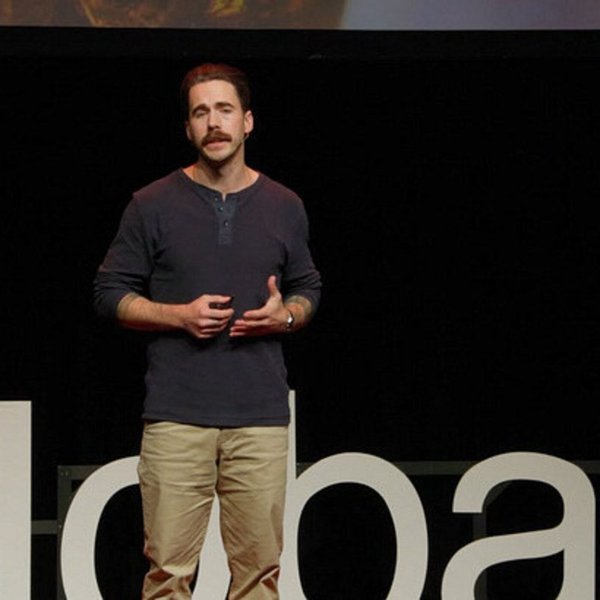
Josh Wood is an introvert operating in the extrovert-dominated fitness industry in Tasmania, Australia — and a TEDx speaker who prepared for his talk by flooding his office with blinding lights for six days straight. His central argument is that self-confidence is not a mindset trick but a byproduct of accumulated competence: you build it by repeatedly doing hard things, starting so small the first step is almost trivial. For introverted leaders who doubt whether they belong on a stage or in a room, Josh's framework offers a practical, sequential path to getting there.
You gain confidence by proving your competence to yourself.
Motivation is the spark that starts the fire. Motivation is also the biggest excuse.
Put yourself in a situation where the only option is to try.
A mistake is just a speed bump, if we let it be.
Key Stories
- The blinding lights rehearsal: After being thrown off during a stage run-through because he couldn’t see the audience, Josh set up five standing lights in his home office and practiced his TEDx talk under them for six days — turning the unexpected disruption into deliberate preparation.
- Signing up for Jiu-Jitsu competition in week one: To prevent himself from backing out, Josh entered a Jiu-Jitsu tournament in his very first week back at training after a 15-year break, removing the option to opt out and forcing himself to show up.
- David Blaine trailing his hand through bushes: Josh cites Blaine’s practice of dragging his hand through sticks and hedges as the literal first step toward extreme endurance feats — illustrating that the accumulation of discomfort starts at almost zero and compounds over time.
- The Irish session musician: Josh describes inserting himself into traditional Irish music sessions by first just showing up and listening, then arriving with his instrument but staying quiet, until the invitation to play came naturally — applying the same progressive exposure logic to social and professional settings.
Techniques & Frameworks
- Competence-first confidence: Confidence is earned by proving competence to yourself through a series of incrementally harder challenges — not through affirmations or participation trophies.
- Progressive exposure: Start in the lowest-stakes version of the feared situation (show up, be seen, say nothing), then add one level of engagement at a time until full participation feels inevitable.
- Lock yourself in: Sign up, pay the entry fee, make a public commitment — remove the escape hatch so the only path is through.
- The Apple Test (eat like an adult): Before reaching for food, ask “Would I eat a fresh apple right now?” If yes, you’re hungry; if no, you’re feeding an emotion — a framework for building conscious decision-making habits that applies well beyond nutrition.
- Motivation → Discipline → Habit: Motivation is the spark that gets you asking questions; discipline sustains you through the hard middle; habit is the only thing that keeps a change alive permanently.
Full transcript
The Bleacher Report app is your destination for sports. Right now, the NBA is heating up, March Bandit’s here, and MLB is almost back. Every day there’s a new headline, a new highlight, a new moment you’ve got to see for yourself. That’s why I stay locked in with the Bleacher Report app. For me, it’s about staying connected to my sports. I could follow the teams I care about, get real-time scores, breaking news, and highlights all in one place. Dallow the Bleacher Report app today so you never miss a moment. This is the powerful introvert podcast on Greg Wanger. In this episode, I spoke with Coach Josh Wood. He’s an online fitness coach and TEDx speaker based in Hobart, Tasmania. He’s a very personable guy who’s in the business of helping people change and achieve their personal goals no matter what they are in life. And of course, no matter what your personality type, introvert or extrovert health and fitness is the key to all that. We sat down and discussed his background growing up in the US, his current life in exotic Tasmania. What it’s like to show up as an introvert in a profession where being extrovert is denorm. Josh shares his insights into his coaching practice and helping busy individuals achieve their health goals. We then go deep into his TED Talk experience, talk about self-confidence, motivation, and of course his famous concept of eating like an adult through six important habits or mindful eating. I had a great time talking to Coach Josh. I hope you enjoy this episode. All right. Welcome to the powerful introvert podcast. I’m here with Josh Wood. Welcome, Josh. Thank you for having me. Yeah. I have you here. You are in the business of helping people change. That’s a big theme here on our podcast. So I’m really excited to talk about some of these topics with you here today. Thank you. I do my best to help people change. Yeah. That’s right. You’re a coach here about it. But we’ll get into that in a minute. I have a more important question to address. And that is where can one find the best apples in the world? Oh, that’s an easy one. Tasmania. Apple aisle. I’m so fascinated by this. I don’t believe I’ve ever had a Tasmanian apple. And we are pretty proud of our apples in the Pacific Northwest or the Washington apple. Really excellent. But so I’m going to have to sample one of these and accept that challenge. Yeah. Honestly, a little like side note here, Pacific Northwest is basically exact same climate as we have here in Tasmania. Tasmania was one of the biggest apple exporters worldwide until like the 1950s. And then New Zealand took over that. If you are ever on the look for an Australian apple, if you had a granny Smith, this is where they originated in Australia. All right. Well, that’s good. I maybe I’ve had one unwittingly and didn’t realize it. I am curious what life is like in Tasmania. So I lived on Vancouver Island in British Columbia for a few years as well. A couple years. That was 2016 to 18. And I grew up in Minnesota in the Midwest, in the US. But a lot of my families from Oregon, Washington, I was born in Portland actually. So this sort of thing that’s been part of my family history for a long time. I’ve explored the American Pacific Northwest. I’ve been up through British Columbia, Vancouver Island, Alaska. It’s all very simpler. You know, if you think of Oregon 20 years ago, small, like we’re not a big place. The whole island, we’re about the landmass of Ireland. We have just barely 500,000 people across the whole space. The main city where I live, Hobart. You know, we have 300,000 in the greater Hobart area, maybe 350. But not super populated. We got lots of hipster coffee shops and cafes and micro breweries and the stilleries. And just great food across the board. It’s sounding very much like Portland even now, but maybe a little quieter as of 20 years ago. I’m pushing 20 years in Portland about 17 right now. Oh, nice. We’ve talked a little prior to this. You had described yourself as an introvert and an extroverts profession. Could you first describe your profession a little bit for the audience and then we can get into how being an introvert might impact you with that? Sure. So I have two main minerals. I run my own business, strong for life online coaching. So it’s a fitness coaching business based online working with people all over the world. My focus is primarily on lifestyle longevity. So getting fit and capable to do what you love for as long as you love to do it. And the other thing I do is for a number of years now, I’ve been teaching health and fitness education. So I’ve taught the personal training courses, the certifications here, as well as the massage courses for a number of years. Both very sort of extroverted jobs. Let less so working for myself, like working in gyms. That’s very extroverted. You know, especially if you’re running classes and stuff and you’re trying to keep the energy up, that’s not my thing. I’m not the hype personal trainer. I’m not like those spin instructors who are dancing across the platform with the rave music and the lights. I’m a very direct and focused trainer. And you know, my thing is I always guarantee you results. So we get the results. But if you look at for someone who’s going to hype you up the whole time, that ain’t me. There’s a lot of extroverts in the industry. But you know, I find that just incredibly tiring. Yeah. So it’s sort of natural for the one on one, but less so just getting up and hyping people up. Yeah. That makes sense. Do you ever run across a client where you feel like it’s not a match for that reason? I feel like I used to a bit more, but because people come to me knowing my brands, reading my materials, following me on social media, they kind of get who I am, which makes it a lot easier. I haven’t had anybody that I’ve worked with that really needs that like super intense classic personal trainer motivation. I get a lot more people that are like, just tell me what to do and I’m going to do it. It’s like sweet. We’re going to get along great. So less so now more so when I was doing more group classes and things like that and the people on the C, the coach Josh, that’s running a group class as opposed to the one on one coach Josh, which is a lot less intense. It’s kind of the beauty of the internet where your people will find you, your clientele will find you. I’m sure there’s no shortage of people who you can reach that way. Yeah, absolutely. And it ends up being a lot of folks like me that I work with who are either training at home or they’re trying to figure out how to do that. Dads, entrepreneurs, other people with ADHD who have a hard time staying on task like that crowd kind of all starts to congregate when you find the right person. Nice. And we also talked about you spend time as a backpacking guide. Yeah, I did that for a few years here in Tasmania running a four day trek on what’s called the Tasman Peninsula, some of the tallest sea cliffs in the Southern Hemisphere, some of the tallest sea cliffs in the world running four day, three night group backpacking trips as part of a larger company with co-guides. It’s another profession I think requires leadership and communication skills. So do you find your comfort zone with that as well? Yeah, I mean, it’s kind of like you put on a persona and you just go, okay, this is who I’m going to be for the next four and a half days, four days. It’s a little bit different to how you might interact in your home life or with your friends. You know, the leadership role is fine, especially with the co-guide who might be a little bit higher energy, like I’m much more like I’m good at storytelling. I love telling the stories of the lands and talking about things that have happened and what’s going on with what we’re seeing and where we’re walking each day, love that stuff. A lot of socialization being with a group of, say, 14 people in the back country in a lot of each night cooking dinners, I like that. That can be harder and much more fatiguing, whereas there’s a lot more sort of extroverted folks in that industry. You actually get a lot of introverts because we all like the outdoors and I want to share that and be outside and we like the quiet of the bush, but you also get a lot of young extroverts who are just there to just socialize and be excited about everything. And I’m like, okay, you do that. You do that. I will manage logistics. Yeah. And when you’re kind of stuck in a group like that, you’re all kind of walking together. Sometimes introverts are going to want to need breaks and get some time apart. Yeah, it can be, but it’s also like, it’s a little bit easier when it’s, I don’t have to yell. Like I don’t have to yell over a bunch of people saying a gym. You get a lot more one-on-one times just sort of walk and chat with people down the line. And so it’s not too bad. It is tiring trying to manage the socialization, the lodges and things like that, but like on the trail, it’s just lovely. Nice. Well, see how you found your path through that. It sounds amazing just to spend the time in the outdoors that way and what a great experience. Oh, yeah, it’s got its challenges. Sometimes out there and it’s 100K wins and you got hail and other times it’s 40 degrees Celsius. And so that’s like 100 degrees and full sun and you get the challenges of nature, but you also get the peace that comes with that. I also wanted to ask you about your TEDx talk experience. Public speaking is a fear for many people. It doesn’t matter. Introvert or extrovert is one of these things we’re hardwired to fear. So I’m just curious, first, how do you decide to do that and then how do you feel about that and what was your preparation? Yeah, it’s an interesting thing. It was the second year it ran here in Hobart. There was a year in 2014 that they ran a TEDx event and then there wasn’t anything until 2023. And so they had an event then. And so it kind of got a bit of a name for itself. And then the second year was coming around. I didn’t really know much about it, but a friend was like, hey, applications are open for this thing. Apply. I’m like, yeah, okay, look at it. I’m so it’s an application process and what I didn’t realize is that anybody in the world can apply to any TEDx event. So there was international applications and a lot of local ones, not just local test mania, but Australia-wide as well. And so I just applied and then left it sitting there and didn’t think too much about it and then a couple months later I get an email saying, hey, you’ve been shortlisted to the top 50. And I was like, okay, cool. And so now you need to do a one minute video pitch of your idea. And the event had a theme, the ripple effect. So my idea was trying to get people to eat like an adult. And so I had to do a 60 minute pitch about that and how that fits in with the ripple effect. So I did that, sent that in and a couple weeks ago. Sorry how long. 60 seconds. Got it. Sorry, I think I said 60 seconds. It’s a very, very short pitch. Much more concise. Yeah. A little bit more, 60 minute cheese. Yeah, so did the little pitch inside to then and then a few weeks later I got another email that says, hey, you’ve been selected as one of the 10 speakers out of 300 and something applications. I was like, cool. All right. And they’re like, so we’re going to get the cohort together and start talking about the process and give you the resources I’m putting your talk together because there’s official TED resources on how the talk should go and what visuals you can and can’t use and how you’re supposed to use them all from original application to speaking day. It was about six months of doing stuff and preparing for this 15 minute talk, 15 minutes max. And I think I clocked it at like 14, 20 something, 14, 30. And so it spent months just like taking this concept, how do you like an adult, which is something that I’ve been using for quite a while in graphic, you know, an explanation and guide on how to eat like an adult. And then I gave these basically three hour workshops on health and nutrition, donating in these habits on how to eat like an adult. So do that as like a three hour workshop. And I had to kind of condense the core message into 15 minute most of the work went was like cutting that down, figuring out what the essence is going back to the organizers and be like, okay, you know, how does this work here? And you know, what do you think about this? And then working with them to try and hone the message in. And then it was just practice, practice, practice. It was yeah, it was a lot for a very short talk. How many times do you think you practice that speech? Many dozens, maybe hundreds. You know, it’s one of those things. Could we have a rehearsal, a stage rehearsal, the Monday before the event, the event was supposed to be at a stage rehearsal on the Monday where we actually got up on the actual stage and everyone did a little run through, not the whole thing, but like being able to you know, stay on the platform. A word was supposed to be speaking, making sure our slides or visuals or sounds were working, making sure we’re good with the mic. And the thing for me was like, I get up there and I got done a lot of public speaking at the teaching and classrooms and running workshops and podcasts and all. And videos and all that kind of stuff for years. So I’m fine, fine talking. You know, we’re just having a conversation. It’s good. But the thing that really threw me is there is a lot of lights. There is a lot of really big lights shining in my face. And it was really disconcerting. I was like, like blinded and I was like, oh, so this is, you know, this is what those guys on stage are always talking about where they can’t see the audience. You know, it’s just shadows, shadows and bright lights. And so after that, I was like, that really threw me like, I was like, that shouldn’t throw me, but it did. It was a very strange thing to not be able to see who I’m talking to. And so I went home and for six days, I set up all my lights here in my office and I had like four or five standing lights and I just crank them up and I shine them in my face and I went through my talk and I went through my talk and I went through my talk over and over and over with all these lights shining in my face. So I couldn’t see anything except those lights in my eyes. And that was the biggest hurdle for me. It was like that. Disorienting. Like, I can’t see where things are or who I’m talking to. All I can hear is the murmurs of the crowd and the awkward chuckles when I call them out on, you know, and not to hit like an atolls. But yeah, it was a very, very interesting process that took a lot of adjustment because it’s very different to give a speech than it is to engage in coaching or workshop with a group of people. So it sounds like in general, you were pretty comfortable with public speaking and the whole concept of leading into that. So, you know, there’s nerves standing backstage behind the curtain, listening to the person in front of you, waiting from the call your name and sitting there and I’m pacing and I’m running through my talk and I’m breathed. I’m mumbling and I’m walking around and pacing and listening and then they’re like, Josh Wood and I walk out and we’re good. We’re fine. But you still have to talk yourself up. Like, I’ve engaged in a lot of high pressure situations, whether, you know, guiding people in the wilderness, whether it’s combat sports, you know, I’ve been in boxing and Jiu-Jitsu, I’ve competed in powerlifting. You know, I’ve been on platforms putting everything on the line, trying to lift as much as possible. I’ve, you know, did strong man a few years back and did this log press, big metal log, you throw it up over your head and I passed out under that and collapsed with this, you know, 80 kilos log above my head and I had my face broken in the ring and, you know, all these things that are high stakes. The log didn’t fall on you. I just want to be. No. That’s great about you. No, it didn’t fall on me. I passed out under it standing there with the log over my head and I fell in such a way that it fell forward. That’s good. It’s one of those, thank you. It’s just one of those things where it’s like, standing on a stage and getting ready for this house like, nothing’s going to fall on me. No one’s trying to punch me in the face. I’m not having to lift up any heavy things or injure myself. There’s no risk there. Like this is pretty safe. This is fine. Like the worst that happens is I stumble over my words a little bit and I do that every day. You know, so is this constant talking like, this is what I’ve done. This is where I’ve been. These are things I’ve done that were way worse. You know, like getting up and talking about something I’m passionate about. I can do this. I like that. So self-talk is clearly a part of that and something you’ve become skilled at. And how do you incorporate that into your coaching practice? Self-talk? Yeah. The motivational talk, that kind of thing. You know, a lot of it comes back to contextualizing what we’re dealing with, where the challenges are. And a lot of that comes to self-confidence. And I think people generally have the wrong idea about self-confidence because we kind of grew up in an era where, you know, in my I’m sub 36, I think I came just at the tail end of the Participation Award era where everybody got an award for everything they did and that became a little bit less popular as I got older. But you know, at the tail end of this era where it’s like just be happy with yourself, just be confident, just be confident. And it’s like, that’s not a real thing. You gain confidence by proving your competence to yourself. I have done this so I can now do this similar thing. I can extrapolate on a previous experience where I’ve overcome something challenging. I can apply that mindset or that experience to this new thing that’s similar. I’ve had my face broken up by being punched a lot in a ring and a bunch of people, a bunch of people cheering for me, getting beat up. Is that going to happen this time? No, okay, why survive that? I used to lift really heavy things in front of a lot of people on a platform. Can I do that? Yeah? Okay, can you talk? Yeah? Okay, great. I’m just going to show you guys a bit of slowly acclimatizing yourself to challenging things, allows you to gain that confidence because you’ve proven competence to yourself. And when it comes to coaching and writing programs and training people, it’s the same basic process. We’re slowly introducing new challenges that are one step above previous challenges and knowing that you’ve accomplished the previous thing that you know that you can accomplish this thing that’s at a slightly more difficult level. And then six months of year down a line you’ve accomplished a hundred difficult difficult things and you realize oh I can just keep doing this. You know you climb a mountain one step at a time you look at the mountain you say I can never do that. Well can you take one step? Well yeah okay can you take two? Yeah okay can you take a hundred? Yeah I mean I took 99 why can’t I take a hundred? And then next thing you know you’re top of the mountain. So it’s this constant accumulation of overcoming experiences that let you go ah you know what I did this so I could do this next step. It’s just those baby steps over time and just keep doing that. It’s the same thing any endeavor you know the mountain climbing one is pertinent because you know I spent a lot of time hiking and trekking around mountains you know including in the Himalayas and I’ve got clients that client actual mountains like proper rock climbing or mountain climbing with the ice picks and everything and it’s always the same thing. You just start off with one step and then over time you don’t even think about the next one. That’s just what you do. I really love that it’s a great general framework. I love the framing about confidence really comes from proving your competence just again and again there’s some similarities to the progressive exposure idea with overcoming fears it’s it’s a similar thing you’re proving your competence in the situation of public speaking by you know you raise your hand and say your word and keep upping the challenge it sounds like the same process. Yeah there was there was an interview or an article I read like many years ago maybe 20 years ago I think was you know David Blaine the like Street Magician slash like performance artists he said something and I don’t know anything about the rest of the context of the article but I just remember this thing is like someone asked him like how do you work your way up to living in an ice block for a week or underwater in a chamber for a week and always crazy things he’s like well I just I start off accumulating discomfort you know and it’s as simple as you know as if I’m walking down the street I start trailing my hand through the bushes all he did to start doing this crazy stuff was start trailing his hand through all the sticks and the spikes and the bushes wherever he was walking and that was the first step and eventually you live underwater for 10 days or whatever it is he did you know it’s like that’s that’s the process for everything you just start off accumulating challenges overcoming challenges accumulating stresses that you overcome and overcome in very very very very small amounts and then just a little bit more and then just a little bit more and then you’re at the top of the mountain and I think what we’re talking about here is this is your overall approach to change and there’s a strong tie in here to mindfulness where you’re becoming aware of discomfort and typically our reaction that would we’ve learned habitually is just eliminate the discomfort as fast as possible take the aspirin binge you’d away the emotions like you know from your talk and really mindfulness is just all about that taking the breath and just noticing it and just being with that discomfort and you start to notice this discomfort will pass in time and then you can take on more discomfort it you know that doesn’t even register as discomfort is just like oh there is that feeling yeah and at certain point you start to seek it because you know what it does feel it’s kind of like when you first start going to the gym you’re in a whole lot of pain but eventually you start seeking that you start going I want this feeling because it no it means that I am doing something I’m accomplishing something and moving closer to where I want to be the soreness of my muscles is not a bad thing the sign that I’ve worked hard and I’ve earned something I want to talk a little bit more about going about change and how you approach that in your practice a lot of people that I’m talking to are aspiring leaders who are quieter speaking up especially when there’s a lot a lot of people in this situation or leading a group breaking in since can be pretty uncomfortable so the I guess the one question I have for you is a big part of this is self acceptance and recognizing okay my natural inclination is this but I want to have more influence so I’m gonna need to challenge myself and make myself uncomfortable in these situations so how do you think about balancing acknowledging where you are but also being willing to push yourself yeah I mean the first step is acknowledgement like you have to know yourself to understand what you want in life and where you want to go you have to go okay this is this is my natural limitations this is where my strengths are and so I need to figure out how to door up my limitations how do I shore up these gaps in my capabilities and for a lot of people who are not extremely extroverted like that public public speaking public engagement whatever it is is a hard thing to just jump into and you know a lot of like speaking coaches and things like that teach you how to do the speaking but you have to get to the point where you’re able to do the speaking or you know whatever the domain is and the number one lesson is is always they always comes back to exposure just be in those situations there’s there’s a few ways to go about it so you know one of one of my side passions is Irish traditional music and so I’ve partaken in that for many years now and going to sessions is a big part of the Irish scenes we show up at a pub where other musicians are playing someone starts playing a two and you join in and it’s like I wanted to be part of that culture but I didn’t feel comfortable playing in public around people with people people play difference I don’t play like that what am I supposed to do and the first step was put myself in situations where you had to do that you take away the choices first but first it was a climateization like show up be there be there make sure people see you say hi be friendly and this is perfectly applicable to business too go up to community meetings show up to events and expose and whatever’s going on that’s relevant to what you’re trying to accomplish show up and be there you don’t have to say a lot do a lot but smile shake hands make sure people see it make sure you’re seen because then eventually people will ask you questions and that was what I did with the music stuff too as I just kept showing up and then and listening and then eventually showed up with the instrument and people go hey come join us okay so I sit down at the table I don’t know a lot of the tunes so just listen listen to ask questions listen ask questions listen to ask questions what’s this tune what’s going on here I know she did this and then eventually you’re there people start asking you for stuff hey why don’t you start a set why don’t you play a tune what kind of business are you in it’s all the same and you know after a while you can say no you know I’m just just here to listen to learn just here to see what’s going on I’m just here to network meet some people I wanted to see what the industries like whatever the domain but eventually you can only say no so many times you got to put yourself in those situations where eventually you don’t have a choice you know and when it comes to overcoming dangerous challenges you know one thing I’ve always done is just sign up for things you know I started presenting Jiu Jitsu after like a 15 year hiatus I did it when I was in my youth I started at the beginning of last year in January started in January there was announcement that a competition of tournament was coming up in three and a half months I signed up right away in my first week back first week at Jiu Jitsu I signed up for this tournament put my money down all right I’m walked in there’s no choice I can either embarrass myself by bailing or I can embarrass myself by not training enough and going out there and being destroyed but I put myself in a situation in which the only option was to try and it’s the same in any domain put yourself in the situation sign up for stuff lock yourself in expose yourself over time to the situation and then when time comes and you don’t have any other choices you participate also notice I mean that it works so many ways always do that there’s several great examples in a solid framework just for getting yourself in overcoming some of these fears so in your coaching practice when someone comes to you and like I want to make a big life change how long will this take depends depends how big it is depends how much effort you’re willing to put in how much time and capacity you have to do the work you could make changes very quickly but the ones that happen quickly don’t usually stick around so you know when I’m working with people I say at 10 to 12 weeks you’ll be a different person then at 12 weeks you’ll have things set up so that you have you know a system that works for you and you can continue to follow without my help if you want it and you can go out and become a different person but how much of a different person are you gonna be you could be a very different person in a year you could be a pretty different person in six months you can be a little bit different person at 12 weeks and then really you know there’s there’s degrees to that there’s no hard and fast rule it’s an individual thing but every step you take in a different direction gets you closer to the different person you would rather be so it gives you timeframes from 12 weeks to a year just depending how large the change is and so I assume you’ve seen this quite a few times in your in your career yeah I mean it just it depends on the domain you know a lot of people that I work with are people who have let themselves go they’ve had a health scare and they’re like oh I don’t you know lose 20 to 50 pounds soon I’m headed for an early grave and some people are like I’m on that like I’ll just do what it takes and we see you know 50 60 pounds weight loss in the first year you know other people you know it’s 30 pounds and six months it just it depends on the individual and how important it is to make the changes and how much capacity they have a lot of the people I work with are like me they’re busy parents multiple kids and they don’t have a lot of time they’re time poor and so the amount of change you can make is minimal but you know it only takes a small stone to start an avalanche so we’re starting off just building momentum I’m just focusing on those baby steps and you will be different in 12 weeks or six months but you know there is some limitations to our individual capacity but they’re always be changed and what role does motivation play and within all of that motivation is the spark that starts to fight motivation is also the biggest excuse people will be like I’m not motivated well it doesn’t matter your heart is not gonna be motivated to keep beating if you’re going down the same path you’re following now doesn’t matter about motivation but motivation is the thing that gets people ask questions to look for a potential change I want to see this I want to have a you know I want to feel better about myself I want to be more capable I don’t want to be tired going up the stairs to work all the time motivation starts people asking how I do that and then discipline is what keeps people going in the medium term but habit and lifestyle is what keeps you going forever like you know in the beginning you have to think hard about brushing your teeth how many people are out there going oh I just don’t feel motivated to brush my teeth very few people and it’s not taking discipline most of time for for adults typically you know adults aren’t going around going right it’s 7.45 I am going to brush my teeth and I’m gonna do it in two minutes and 30 seconds above like it’s just not discipline it’s just this is just what I do I get up and I make a cup of coffee I eat my breakfast brush my teeth before I go to work I brush my teeth before I go to bed whatever it is but you don’t think about anymore once it becomes habit but the first thing is that motivation thing that says I need to look at some options I want to learn this thing I want to be better in this domain and then we build some discipline I need to do this even though it’s hard and then you do that long enough it’s just I just do this I just brush my teeth that’s great there really rings true the things that stick for me have to become part of me just part of my makeup almost an indelible habit yeah it’s the only way to keep something going in the long term we only have so much willpower like we cannot just constantly fight ourselves and our routines and our natural inclinations forever that’s what discipline is you do things even in their heart but at a certain point you’re not going to do that forever in every domain so you have to figure out how to integrate it or reassess not every goal is going to be for you do you ever get people come to you where health and wellness is part of a larger goal so maybe it’s a career goal or I want to achieve some other goal and I see this as part of it yeah all the time you know like my my whole brand is strong for life and if you follow me on say like Instagram you see a lot of what I do with my life you know it’s it for me it’s about the side quests it’s about the getting out with my kids and camping and hiking and you know doing bushcrafty stuff it’s it’s about exploring new areas picking up new habits it’s about playing music it’s about just grabbing life by the horns getting the most out of it when when I’ve had enough sleep I go to the gym it’s my job it’s my profession but I do it in ways that are supplementary to the real goal which is the out there and so a lot of the people I work with are in the same boat I do work with some specialized individuals what I call what are called tactical athletes so people that are in military fire police prison guards that kind of thing so their health and fitness is very specific to the profession and in the past I’ve worked more with you know athletes that are wanting to be really good at say powerlifting or various sports fine but most of the people that I work with are more like me in that all my training is focused around getting the most out of life being healthy making sure I’m happy with the way I look and being capable to undertake the things that I want to undertake and for me my focus physically is Jiu Jitsu right now so all my training is like I need to get to Jiu Jitsu first and then if I have time around that it’s supplementary work to make sure I stay injury free or make sure I perform better make sure I’m not you know winded all the time so it’s all focused on either Jiu Jitsu practice and improving that or being capable of going out and hiking a mountain when I get the opportunity I very much aligned with that in my focus on leaders or leadership in companies there’s a holistic set of things you want to do if you want to show up as a higher level leader it doesn’t matter what level you’re on there’s changes to sleep to diet to mindfulness to exercise every part of that goes into making you feel good healthy and present and available for others so that you are reacting in the best possible way that you can in any given situation and so to generalize beyond leadership that seems like that goes for any endeavor in life that you want because it’s really about your overall life and not just that particular goal that’s right that’s right I’m a gym junkie because it supports the life I want I don’t want to live in the gym I like the gym gym’s nice you know great place to be I like the people but you know my goal isn’t the gym the goal is to use the gym or you know my home gym or whatever to support the other things and you know speaking of business people leaders you know one of the things that leaders have to be mindful of is like stage presence what image are you portraying ha like you know this is something I’ve got a number of white collar professionals that I’ve been working with for a while and it’s it’s interesting how much more comfortable they are in boardrooms how much more comfortably are in front of people when they fit their suit a certain way you know it’s like they don’t just feel comfortable themselves because they have proven some level of capacity I feel strong I am strong I am physically capable that radiates off them but also how people react to them when they’re like that guy his shoulders are popping out of his suit you know he crosses his arms and I don’t want to fight him and you know we try to to move away from especially in the last couple decades this this idea of you know judging a book by its cover but if you’re in a leadership role that is exactly the first thing that everyone is going to do they’re gonna look at you and they’re gonna judge you based on how you walked into that room how you shook hands and how you commanded presence I can’t disagree with any of that because that’s always there I personally think that it’s the way that that person feels which is coming across more powerfully than even the visual it’s just like I feel like Superman here I just feel great I feel good about myself and that’s what’s contributing to that presence absolutely it shines through it shines through you know it’s it’s it’s all it’s really hard to fake like if you feel confident because you’ve proven yourself to yourself that’s kind of shine through what are these six habits that you need to eat like an adult six main habits the first one’s the most important the first one’s called the apple test and I highly recommend everyone just watch the TEDx talk to or I’ve got a like I said an infographic of a free guide that just you can put on your fridge that’s originally what I made was this infographic for my sister and her husband to put on their fridge it’s a six-habit like an adult that way you just got to remember them but the first one’s called the apple test and the apple test is probably the most important thing because the main concept of eating like an adult is learning to make conscious decisions around your food instead of perpetually enacting habits that you got from your childhood or through teenage rebellion it’s about making conscious decisions about your food because an adult understands that their future is created by the decisions they make today so if you want a different future you have to make decisions you can’t just meander through life without making decisions and just shoveling whatever is convenient into your mouth you have to choose so the first habit apple test is all about breaking that habitual feeding so the idea is that if you’re sitting here so I’m thinking my desk if I reach into my drawer I’m digging around that something sweet some little hidden snack where in your pantry at home you know the first step is to recognize that you’re doing this and it’s usually somewhere around 10 in the morning and 3 o’clock in the afternoon or 8 o’clock at night it’s always the same sort of times but you start to recognize this looking around for something and you stop and you ask yourself am I actually hungry if coach Josh was to magically show up behind you with a beautiful Tasmanian apple besides the obvious breaking and entering issues but besides that you know someone was to offer you a fresh apple like if you’re hungry you’d eat it so you have to ask yourself what I what a eaten apple right now or whatever fruit you like what I eat this apple what I eat real food it was offered to me if it was convenient and the answer is yes you might actually be hungry then go eat that thing go eat an apple if the answer is no I just want to find that Snickers bar that I’m pretty sure is in the back of my desk drawer you’re probably not even hungry you’re more likely dealing with a craving that could be because you’re stressed out you’re tired you’re not eating well in the first place you’re not drinking enough water all these things but first of all recognizing if you’re eating because you’re hungry is the first step apple test it’s the most effective it’s the one I get the most messages about it’s like you just start doing that you start actually understanding your feeding habits and then understanding if they’re serving you because that conscious decision is really what is the whole concept of eating like adult you know if I want to buy a new car I have to start saving money which means actively looking at my financial situation and figuring out or I can do that conscious decision if I want to lose 50 pounds this year I can’t keep doing what I’ve been doing I have to do something else that starts with what are you putting into your mouth so the apple test is is probably the most important next one would be choosing better so apple test choose better the idea here is you don’t need perfect you just need to choose a little better every chance you get so if you’re going out to eat and you know you’re being in the US you know how easy it is to to upside stuff for 50 cents more you can add an extra half a liter of Coca-Cola to your order of choosing better would just be going no on fine I’ll take the small I really love Coke I’m gonna drink a Coke cool you don’t need you know a liter and a half you don’t need a two liter bottle you have a small one if you’re thirsty drink or water making small better choices compound over time so choose better so apple test choose better than we’ve got good enough good enough is good enough this is this is sort of this the settling for like if we’re out to dinner and you know it’s Australia so pub meals you got for go out to the pub for a meal and you look at the menu you’re like well I’m trying to you know lose a bit of weight watch watch you know my my cholesterol or whatever it is I’m trying to eat a little healthier you go out to eat and you’re like well there’s nothing that fits my perfect weight watchers diet so I’m just gonna eat the rim carbon air with extra large fries on the side and you know I’ll pine to beer it’s like whoa don’t let perfect be then really good you know just saying for something good enough you know if you’re looking at that menu like well everything on here isn’t perfect we go okay what what would be okay well you know if I got a chunk of meat and a little bit of a side salad a dinner roll you know most people would say that’s pretty good it might not be perfect for your diets or whatever you’re working on but it’s gonna be good enough and if you’re out to eat piece of protein bit of salad dinner roll stack on top each other that’s a hamburger and it’s one of the most vilified foods on the earth but it’s honestly just meat veg grains it’s all the extra stuff that people get with it so just get the burger and go easy on the sides next have it don’t eat your emotions you know this is this is one of those easier said than done things well it’s easy for you to say Josh well no it’s not I mean yeah it is easier to say but that’s not the point the idea is that if you’re constantly self-medicating with food or alcohol you’re not learning how to deal with the situation you need to learn how to develop healthy coping mechanisms that don’t involve binging or self-bedicating with external substances especially when it’s a recurring thing and that’s that’s obviously not an easy thing but once we start to recognize those habits we can start going right so every time I have a bad day at work I go would drink a six pack of beers like well okay well you’re feeding your emotions and you’re losing your ability to actually manage them and develop healthy coping mechanisms you know so once we start to recognize that we could do something about it again bringing in consciousness see here treats or treats this is another one of those ones that can be very very opening mind-opening for people you know a treat to something that is earned it’s a reward for something special you know it can be a thing it can be an event whatever it is but it’s something that’s earned how often do we hear people saying oh I’m gonna just need a little treat I’m just gonna have a little treat I’ve earned this but if you’re reaching for the same treats every night or same time every week you know whether it’s food whether it’s alcohol that’s not a treat that’s your diet if it’s happening all the time if it’s happening on a consistent schedule it’s just your diet no matter what it is doesn’t mean it’s good for you but it’s it’s your diet you know a treat is earned you don’t get a treat for going to your nine to five because you’re gonna do that every day for 45 years you know then you’re not treating yourself you’re just eating your emotions and that that one can be a bit of a game changer when you start to realize that when I was watching your TEDx talk I realized that I might have a dessert lifestyle yeah that’s that’s fine you can do that you can have that balance in your life you know like you can like we have takeaway food once a week in my family you know on Thursday nights there’s a food van that pulls up around the corner we usually get that once a week that’s our thing it’s not a treat because we do it the same time it’s just ritual it’s habit we love it it’s enjoyable it fits the overall balance of her diet and lifestyle that’s great there’s nothing wrong with that but once you recognize that you can decide if it serves you or not right very good more habit all right last one is mistakes happen because throughout all this you’re gonna make mistakes and anytime well a mistake is anything that you do that is an opposition to your goals I’m trying to lose weight I’m trying to watch my cholesterol whatever it is excuse me if you then go out and say I’m trying to lose weight but I’m gonna eat a whole pizza that’s a mistake you know I’ll have you’re out for a social events you know common one is like going out for things after work or going out for a birthday party and it’s like oh okay well I need to be mindful you know I’m just gonna have well there’s not much here so I’m gonna eat some pizza for dinner okay no worries have a slice of pizza but then if you go well now that I’m eating pizza I might as well eat the whole pizza that’s a mistake you know it’s it’s you’re just using that as an excuse but that’s fine the worst thing we can do is let that experience derail everything we’ve been working for and give up we’re just gonna keep eating and we’re gonna keep drinking and I’m not gonna worry about what I’m eating for the rest of the week whatever it’s usually a guilt reaction but if you just realize that mistakes are gonna happen and sometimes life’s gonna get in the way you’re not gonna have any other choice about the quality of your food let’s fine tomorrow just go back to eating normally problem solved a mistake just a speed bump if we let it be if we learn from it that’s right there’s a compassion in that you know we’re all human we’re gonna make mistakes we’re gonna fall off absolutely smart to build that in yeah because that’s that’s that’s probably the only guaranteed the whole thing the only guarantee is that you’re gonna mess up at some point and you can either use that as a learning experience or as a way to derail everything you’ve been working towards yeah and it strikes me that eating your emotions is gotta be the most challenging part that’s something that I have noticed and struggle with and especially when you get triggered by something and something that is your number the emotions rise up and you’re looking for ways to manage it and so having go to’s for each of those is gotta be key yeah it starts from just recognizing the pattern which is hard I’m not saying that’s easy and usually it takes someone hitting a rather uncomfortable situation in a life to recognize that but by starting to sort of pay attention hopefully you can recognize those habits a bit early before they become too detrimental do you ever get into that into your coaching practice what are your triggers and when you’re falling down I don’t actively search those out but I find them out pretty quickly a lot of people aren’t super aware but because of what I do as an immersive coaching experience so I work through an app I’m in my clients pockets every day of the week I know what they’re doing I know what they’re you know taking what boxes are taking what they’re doing with their food with their training I learn a lot about the people I work with because it’s an everyday thing and I learn very quickly like hey I noticed that this thing happened at work again and I didn’t hear from me from three days maybe we need to address that so I’m very I’m very experienced at pattern recognition so you can supply some of the pattern recognition when your client doesn’t necessarily have that aware and that’s one thing that most people have a hard time seeing for themselves as you kind of need that external viewpoint going you know you do this every time this thing happens and like I never even realized that’s a good tip if this thing keeps happening it’s a it’s a good cue to to look at what was the trigger and finding go to habits whether it is a walk or run or meditation walking meditation or primal screaming or resilient jujitsu whatever it is for you how you work through it instead of binge eating or what happens to be for you I could talk to you for probably another hour or two about all the stuff but I know you’ve got a day to attend to here it’s been a real pleasure to talk to you and have you on the show I’ll provide links to all the things we mentioned your business and your talk and anything you send along too but for people listening where can people find out more about you and your businesses yeah well you know if you feel like coming to Hobart Tasmania just look me up I’ll show you around but aside from flying across the world you can find me on Instagram coach Josh Wood linked in it’s the same actually every platform I’m coach Josh Wood my website is strong for life dot online it’s her strong for life online coaching there’s a bunch of free resources there there’s a backlog of all the podcasts and interviews I’ve done yeah you could just fire me on Instagram though and send me a question if you got one all right check them out thanks so much Josh appreciate it