Break Free from Self-Doubt and Build Unshakeable Credibility
Increase Visibility & Influence Authentically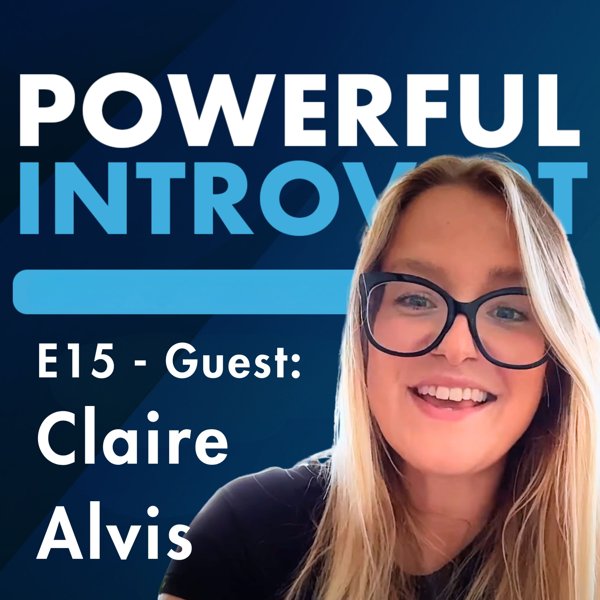
Claire Alvis built a global operations career at Deliveroo and multiple startups with a CV that doesn't follow the linear path — TV production, restaurants, startups, some failed, some not — and she turned the experience of having to explain that non-linear story into a framework for what she calls "quiet expertise." Her argument is that most people promote what they did, not how and why they did it, which means the most differentiating 50% of their actual expertise stays invisible. For introverted leaders who feel their work speaks for itself, Claire's episode is a direct challenge to that assumption and a practical alternative.
There's a fundamental difference between saying what you do and saying what makes you different about how you do it.
Stop hiding a good 50% of what you've done — it's still really interesting. You're just not saying it because it doesn't have the A-star grade you think everyone wants to see.
I didn't go in and pretend to be someone I'm not, and I didn't pretend to have all the answers.
Once you get over the fear of judging yourself and judging others, you realize there are so many people who genuinely want everyone to succeed.
Key Stories
- “My profile looked like other people’s — and probably worse”: When her last startup shut down, Claire faced a job search with two failed startups on her CV and a career that had woven through customer success, marketing, and operations. She realized she had been hiding the parts she thought wouldn’t land — and decided to stop.
- LinkedIn as authenticity discovery: Claire started posting on LinkedIn the way everyone else did — playbooks, listicles, “I scaled from 3 to 100 here’s how” — and hated every second of it. The posts got no traction. When she switched to writing her actual opinions and how her brain works, the conversations that followed changed her professional life.
- The slinky metaphor: Claire describes her operational expertise not as “I run operations” but as “I see chaos, I find what’s causing it, and I untangle it so it can flow again” — illustrated by the deeply satisfying task of untangling her daughter’s slinky. This became her expert signature.
- The electric company analogy: Claire and Greg land on the observation that operations leaders (and introverts generally) are like the electric grid — no one thinks to thank the people keeping the lights on, and the only time they get noticed is when something breaks.
Techniques & Frameworks
- Quiet expertise framework: Your expertise is the combination of technical skills, functional skills, industry experience, how your brain works, how you solve problems, and the full texture of your experience — including failures. The CV shows the tip of the iceberg; the rest is what makes you irreplaceable.
- What you did vs. how and why: Most self-promotion focuses on outcomes (“99% uptime,” “scaled to 100 people”). The more differentiated story is the process: what did you have to coordinate, change, and trade off to get there? That’s what makes your expertise yours alone.
- Expert signature: Distill your expertise into a single sentence that captures what you do, why you do it, and how you do it in a way that is uniquely yours. Not a job title — a cognitive fingerprint.
- Translate impact beyond your function: “99% uptime” is invisible to non-engineers. “Which meant customer support handled X% fewer tickets and saved the company $Y” is visible to everyone. Connecting your work to business-wide impact is the translation layer most introverts skip.
- Stop hiding the color: The non-linear parts of your background — the failed startup, the industry pivot, the role that didn’t fit — are data that makes you three-dimensional. Burying them leaves you indistinguishable from a filtered, polished version of yourself.
- Collaborative leadership as authentic style: Claire’s leadership approach is to lead with data, present a recommended direction with intellectual humility, and explicitly invite pushback — people feel consulted, trust builds, and the 1% adjustments that emerge make the decision more durable than one made alone.
- Social media as thought demonstration: Rather than performing expertise, use social media to show how you think — your opinions, your reasoning, your take on complexity. People hire the thinking, not the credential.
Full transcript
Hello, welcome to the powerful Introvert podcast. I’m Greg Wanger. Today’s guest here is Claire Alvis, founder of Silent Partner Consulting, where she helps ambitious businesses turn complexity into clarity and sustainable growth. Claire has been an operations executive at multiple tech companies, including Deliveroo, and she focuses on strategic clarity, scalable systems, and transformational leadership. Claire also writes the sub-stack newsletter Shine Unfiltered, where she explores authenticity in leadership and how to turn quiet expertise into visible impacts. So glad to have you on the show today. Welcome Claire. Thank you. Yeah. And it is through sub-stack that we met. There are lots of writers on there trying to start a following, which I’m among them. I came across Claire and a post, and I was so interested in her writing. It’s really compelling. Well written has really excellent graphics. You can tell me the story. You said it was a slight cheating on the graphics, but not to me. I mean, they’re super compelling and well thought out. It’s using some software to support it. But it really helps communicate the message. And the message very much resonates with the reason we’re here on the Powerful Introvert podcast. So really glad to have you here. No, thank you. And yeah, you’re right. It’s a wonderful tool. It’s called NAPKIN. If you’re ever looking for something to go and help you design a graphic, it’s really useful. So we’re happy to share it. Well, get an affiliate link and drop it in the show notes. You get to use some credit. So Claire, tell me a little bit about your career trajectory. How did you get started in that field? Sure, I suspect my story is slightly less common because I didn’t kind of come to tech that that’s what I wanted to do. I started out working in TV and I worked in live TV production for the first few years in my career. Super fun, really interesting world, but very hard. Like the pay is tough and the hours are tough and is a woman as you get older. If you want to go and have children or stuff like that, it just gets very difficult. I decided that I wanted to do something different and I was really interested in how businesses worked and were built. And that’s how I found my way into startups. I wasn’t really interested in going to work for the big corporation, although I ended up working for Delivery as it grew into what became a very big organisation. When I joined Delivery, it was really by chance. It was because my background was actually in food by then I’d done some work in TV that was in live cooking shows. And then I went into restaurants for a little bit and they really wanted someone who had a good background in restaurants. So that was how I found my way into tech. It was absolutely nothing to do with my technical skills or my knowledge of business. It was all to do with the fact that I knew restaurants. Yeah, that’s a great set of experience just working in the entertainment field. My wife did as well. Tell me a little bit about how being an introvert factored in earlier in your career and then as it progressed into your tech career. It’s interesting because I don’t know that I would describe myself as an introvert. I think I’m someone who’s always struggled with confidence. I think outwardly people would probably just say, oh, you’re quite confident because I’m quite good at going in and being like, huh? And instead of projecting this aura of, don’t worry, I’ve got it all together. But the reality is in my heads, there’s a huge amount of doubt and imposter syndrome and you’re not good enough to be here. I think a lot of that comes from this idea that I haven’t had one career experience. I’m not the person who can say, you know, I’ve done 10 startups now. Like I’ve grown myths from here to here. You know, I worked in TV and then I worked in restaurants and then I did some startups and some of those startups were mad success like delivery and some of them fizzled into nothing. Like the last one I worked for and I think that for me is this idea of introverted, but it’s more kind of in introverts. Like I’m able to sort of go in and say, oh, yeah, I’ve done this. But inside I’m like, oh, I don’t think you have. I’m probably coming across this slightly psychotic care. That’s the way my mind is. No, I think that’s a really common experience. And imposter syndrome is such a real thing and it cuts across different personality types. People are quiet for one reason or another and the more people I talk to, they’re just more reasons. Some of them might be due to personality type. But there’s always a reason to feel like you’re not good enough or to knock yourself down. That’s more universal. So a lot of people find themselves in that situation than we’ll get into what do we do about that in a little bit. But you know, at a certain point, you found your footing and you transitioned into leadership roles. So what was going on at that time? I guess a bit like anyone, you sort of start to work up the career ladder and you start to understand the more senior you get, the more visibility you get. And sorry, by visibility, I don’t mean visibility of me. I mean visibility of what goes on in the company. And for me, I was always desperate to know like, how do the decisions get made? Why are they making that decision? What’s the like? The stuff that I’m not seeing that when you’re lower down, you just get told, oh, by the way, this is happening. You know, we’ll give you a reason, but it’s not going to be the full reason. And so I really started to kind of work my way out through leadership positions to try and figure that out because that’s what really interested me. And I think I guess again, to feed into your question around sort of introvert because that was my motivation, not necessarily the title or prestige that came with it. It meant that whilst I was really happy to get those promotions and to sort of climb up the ladder, I guess I was feeling like, am I the right person to be here? Or am I just here because I really want to know more? Which in itself, really, right? Because that’s exactly the kind of people that you do want to be there because curiosity is a great thing to have as a leader. It brings these questions into you like, yeah, but that person’s done these five things and I do. Like, are they better than me? Right. So you’re really drawn to this out of curiosity. And you’re just going where your curiosity leads. It’s not out of, I just need to be bigger or something like that. And then you suddenly find yourself in a situation where it’s interesting you talk about visibility because it’s really two ways. You get so much more of a picture, a clear picture of the company and why we’re doing what we do and all that. But it also works the other way that it’s a two way mirror. The spotlight is on you more because you’re responsible for more and people are looking to you for making decisions and that sort of thing. Sounds like you had a bit of a reckoning at that point of, oh, yeah, I find myself in this position suddenly. Yeah, I think so. And I think delivery was particularly an eye-opening experience because it was at that point getting a much bigger company. And my role went from being a UK focus to a global focus role. And all of a sudden, I was having to work with people who were at least as senior as me and in most cases were more senior than me. And then it was really about, okay, well, how do I come in and say like, actually this way is better when I felt like they had the right to laugh me out the room. And that’s wrong, right? Like no one should ever feel like that. And that’s a lot of kind of my internal demons that I needed to work through, you know, I was 27, 28 years old when I was doing that. But that is kind of how I felt. And that was one of the challenges I found with that kind of leadership role. Yeah, absolutely. And I think a lot of people earlier in their career are as they’re transitioning into leadership. It’s a theme that comes almost by definition as you’re doing something that you haven’t done before at each time you take on a larger scope role. And growth companies are just fantastic for creating opportunities like that. That’s one reason I’ve spent my time in growth stage companies and why I recommend that to anyone who is super curious because there’s an endless smorgasbord of opportunities. Oh, I could do this thing. I’ve never done that before. Here’s a new situation that’s chaotic and crazy. You know, so you put in this uncomfortable position and you started to develop a leadership style that was more authentic to you. And so could you describe that? I think the thing that has worked for me throughout my career and I think it’s the way I’ve got comfortable with sitting myself now is I’m not going to go in and pretend to be someone I’m not. Equally, I’m not going to go in and pretend I have the all the answers. And I think the way I found that for me leadership worked would be to go in with humility and honesty and be like, look, this is what I think we’ve done there. So it works. Here’s the data to prove that you’re different. So I appreciate that not everything I say is going to work 100% for you that it did for another person. And that’s kind of my approach to things, leading with a bit of, you know, I don’t have all the answers. I believe no one has all the answers. And so like, that’s the way I find it’s easier to talk to people one on one. That’s a great way to approach it. It’s data driven. It’s coming from a place of fundamental humility. You know what you know. There’s also an assertiveness and a confidence in that where like, this is my view and you’re challenging people to prove you wrong, bringing people along too because you’re telling a story and showing the picture with your thinking and your data. Yeah. And I think I’d find it really hard to go into a room and say like, this is it. This is the way because I fundamentally don’t believe that that’s true of any situation. Who I think you should make 12 different processes for 12 different countries because all of them have slightly different nuances. Absolutely not. That way chaos lies. But I do believe that people have the right to kind of walk up to things and say 99% of that work. Some worried about that 1% and pull that through with them. And sometimes it means that they shift a little bit because they realize why that works. And sometimes it means you shift a little bit. But I think those conversations are where you get mutual trust and respect for each other. And that I think is really key to building relationships whether a leadership position or any other position for that other. Absolutely. I agree. My fundamental approach is collaborative. As I’ve grown in leadership roles, I realize that I need to bring more of the solution or the recommended direction. But the framing is still the same. I think this is the way we should go. What’s your feedback? People like to participate and feel consulted and feel included and to feel like they could flip the table if they needed to. Instead, I’ll just tweak this 1% over here. Yes. Yeah, that’s great. So you mentioned self promotion, which is something you tackle in your writing. And what has been that experience promoting yourself and how did you come up with the philosophy you do about it now? So about a year ago, the last company I worked for a start-up went under. At that point, I was faced with like, I need to interview for jobs, but equally, like, is this really what I want to do again? Because I felt quite burnt by what happened in the last company. So I joined forces with a couple of other people and we decided to make go of consulting. But as part of that, I realized that I had some good experience, but really no one knew me outside of the people who I’d worked with. And that wasn’t enough to kind of bring clients in, really, I think is a step back. And so I thought, okay, fine, well, I’ll start posting on LinkedIn. And I did it with a real kind of, I hate this approach to it. As I’ve been a lot of people do. And quite a lot of like, sort of, judgment of myself as like, oh, this is so embarrassing, I can’t do this. But the more I did it, I better like kind of think you’d get comfortable with it. But equally, I think you find what works for you. I share, I wrote a post about this recently, but I think what is hard is when you join any kind of social media, be it Substag, LinkedIn, Instagram, whatever, you see what people do and you think, oh, I have to do that. They’re successful. So I must do what they do to be successful. And there were a lot of things that I saw on LinkedIn and that I see on Substag where I’m like, oh, that feels horrible. Like the posts on LinkedIn of kind of, I scaled a company from three people to a hundred. Here’s how I did it. Pick Playbook, like write Playbook and I’ll send you my five best tips or whatever. And they get so much interaction. You’re like, oh, wow, okay, that’s what I need to do then. And so I started writing these things and I was like, this is just not me. This is, this feels so disingenuous. It’s not what I would ever say. And I think it came across in the post because I never wanted to interact with them. And so for a long while, I was like, this is a fatal waste of time. I don’t know what I’m doing. And then I think I just started saying, screw it. I’m just going to write what I want to write about. Which is more about this idea of kind of, I need to promote myself, but actually, I don’t want to stand up here and say, how wonderful I am. Instead, what I’ll do is I will write you wrongly, give you a bit of a kind of insight into how I think and how my brain works by writing my opinions. And so that’s kind of what I’ve done. And that’s how I’ve sort of started to, I guess, build up a following, but also promote myself as you say. And now I actually enjoy as maybe a strong word. There are definitely, I get an idea and I’m like, oh, this is really fun. Like I’m really looking forward to this. There are other times where I’m like, oh, God, I need to just keep going because I’ve started. And so I need to continue. But largely, I’m enjoying it a lot more now. And I think I’ve got a lot more comfortable with it because I’ve found something which feels natural to me. Right. You found that point of authenticity for you. And that’s what you see time and again, that’s what people are responding to. They’re responding to your authentic personality when you’re putting it out there like that. Yeah, definitely a lot of people are looking for the answer there. You know, I want to know how you built a company up to 100 people really quickly. And that’s fine. I’m really happy with that if people want to go and look elsewhere. I did not for a minute expect that I’m going to please everyone. I’ve just found what makes me comfortable. And from my perspective, I think it’s working. And I’m having more interesting conversations with people through LinkedIn and Substack now around topics that I really care about rather than just kind of meaningless likes and great post kind of thing. Right. That’s really what makes it meaningful and enriching to your life. And as conversations, we got to sit down and have this conversation right now through that medium wouldn’t have happened if you hadn’t been putting yourself out there and vice versa. You mentioned the self-judgment in there. It’s honestly, having just gone through this kind of experience and getting over the hump of it. I can’t believe I’m doing this. I’m putting myself out there in this field, terrible and all this stuff. And so there is a lot of self-judgment in that. Would you have any advice to anyone who’s kind of facing that wall of self-criticism? Yeah. And I think for me as well, I would say I’d like to say I need judge myself, but I hugely judged others for it. Like I looked at people’s LinkedIn and I’d be like, oh, say like Stalker. I can’t believe they’re writing that. And then you start doing yourself. I assumed that social media by and large was a very hostile place. I thought it was largely kind of saturated. And so if anyone else came in it, it would sort of form a wall when people would be like, we don’t want you here. And actually that couldn’t have been further from the truth. There are so many people who I’ve found through social media who have been so generous with their time and so willing to kind of help and interact, whether that’s like you inviting me on this podcast or I interviewed a girl on my sub-stack last week who took the time to kind of talk to me about it. And these are people who, you know, everyone has busy lives, right? But you don’t expect people to take the time and say, oh, you know, I find this really interesting. Like let’s talk more about it. And I think once you get over that fear of judging yourself and judging others, you realize that Sanavé is people who genuinely want everyone to succeed. With a few exceptions, like there’s definitely some people who don’t want you to succeed out there and that’s fine. But they are the minority and I thought it was the reverse. That’s great. And you can block them, which is the beauty of social media. Yeah. And no, that’s so accurate. Maybe there’s an element of a view that this is a bit of a zero sum game at first and it’s really not true at all. There’s lots of people who are there genuinely want to help others or mentor others or just have great conversations and connect with other people. So it’s a better, more positive way of looking at it, like the way you put that. So then I think the other component, this is self promotion in the social media space. But then there is the element of needing to or wanting to get recognized for the work you’re doing in your job and your workplace. So what’s your advice for people in that arena? And really this is where I started writing my subset newsletter. And the reason why this came about is, as I said at the end of a year ago, the company I worked for came to the close. And I had to interview and I spent the time that one usually spends redoing my CV and updating my LinkedIn and all of that good stuff. And I realized that my profile looked like other people’s out there and probably worse than that I had two failed startups on my CV. I wasn’t like, she’s manager, operations team lead, operations director, COO. I did customer success and I’d done some marketing and I’d weave my way through. Which I see as a positive because I’m like, well, I know why this side of the company works. And I know how this side of the company works. And actually when you bring it together, it’s much stronger. A lot of people want that like linear path and they want a lot of boxes ticked. And so I thought, okay, I’ve got to find a way to show people that I’m not just someone who’s had a half-harse career jumping around different jobs. I need to tell them why I’m different. And I think that’s where I realized that there’s a fundamental difference between saying what you do and saying what makes you different or what you do. And I believe that everyone has that. But a lot of the time we spend a huge amount of time focusing on what we do and what we’ve achieved, not how we did it and why we did it. And that for me is the much more interesting bit and that’s why I started this newsletter trying to kind of help people tease that out. So and that introduces the topic of expertise. You have this concept of quiet expertise and that expertise is what is unique to you or what is differentiated about you, which you can use to stand out in a crop. Yeah, exactly. So fundamentally, I believe that your expertise is a combination of whether that’s technical skills, functional skills, industries that you’ve worked in. It’s how your brain works, how you approach problem solving, how you process information, et cetera. And then finally, your experiences, so what you’ve lived through. So that’s I think where the coloring your CV comes out. So it can be the work for a startup of 10 people and you’ve worked for a startup of 10,000 people. And it can be you’ve been through redundancy or you’ve been in a startup that’s fails. Like that’s where I think actually the color becomes part of your expertise and part of your experience rather than something which you kind of try and brush under the carpet and hide. And I think that for me was like that switch moment where I was like, okay, I’ve got to stop hiding this and just being like, oh yeah, I shaled awkward to being like, actually, I learned so much through this. Like there’s so many things I wouldn’t do again. And there’s things I would do again, but I learned that through failing rather than through succeeding. Such a great point. You learn so much from your failures. And they’re just indelible in a way that successes aren’t sometimes you like never, never doing that again in your pattern and recognition is super attuned to those things. Beware. So that’s great. And it’s really embracing all of your experience and telling a fuller story. It sounds like that was empowering for you. Yeah, exactly. And finding out how you can kind of show that that’s what makes you unique and why that’s important. And you know, whether that’s for someone to hire you or to promote you or just for you to promote yourself. Like I think too often we only take the kind of shiny things that we think other people are going to be interested in and we bury the rest. And my view is, stop fighting a good 50% of what you’ve done. It’s like still really interesting. You’re just not saying it because it doesn’t have the a star grade that you think everyone wants to see. And this applies not just in job seeking or promoting a business, but also if you’re an employee within a company, they’re the same opportunities. Could you say a little bit more about how employees within a company can go about shining the light on that other 50%? Yeah, absolutely. And I did a lot of work at delivery particularly, but also in other companies where a lot of my job was just making sure that things worked. The problem is when things work, that’s kind of the baseline. But actually that means you’re at 100%. I do things are working. You’re doing your job really well. So how do you tell people that actually what you’re doing is really quite tough and you’re achieving a huge amount when you don’t necessarily want to stand up and say, Hey, like a bee, I’m amazing. And so it’s about building these frameworks of kind of, okay, actually this, this is kind of the data of what I’ve achieved. Like this is how I did it. This is how to talk about it in a way that’s factual and measured without sort of standing up and saying, I’m so proud of what I’ve achieved it and here’s how I did it. And you can say that as well. Like I think it’s absolutely right out of yourself, but I think a lot of people in situations don’t necessarily want to do that because it feels like they’re show boating or trying to kind of pull the line like onto them, whereas actually as an employee in a company, you know, if you want to get promoted, if you want to achieve your goals, then you have to be able to show people what the impact is of the work that you’re doing. And I think a lot of the time we aren’t taught in school or during work, how to do that, unless we do something where the result is really obvious like sales where, you know, you sell a customer and everyone will work. Yeah. So, so yeah, it’s about kind of surfacing the data that you have, the metrics you have, and then crucially turning that into impacts like what did that mean? If you’re an engineer like 99% uptime great, but like, what does that mean? That means customer support had fewer tickets and you actually save the company money and things like that. You know, there’s so many tangible impacts of what good work is. I think often we only think in our own function and our own headspace, we don’t sort of widen it out to what the broader impact of the company is. That’s right. And you mentioned we run operations so similar to certain, you know, certain things engineering. Sometimes you ship a product and everyone is clapping, but then, you know, it’s like air traffic control. Like we’re never celebrating the air traffic controllers. We, we only ever noticed their failure. But if you’re in that type of role and you learn, okay, yeah, well, we’re protecting $35 million or revenue or $100 million, you know, whatever it is. And with this kind of uptime and comparing it to the past, then you can tell a story and communicate about that in a way that is memorable and shows that you can communicate about these things. You understand not just what you’re doing, but the business impact and then you have the ability to communicate about it. Yeah. I think the thing with that as well is that, you know, you say kind of, oh, I’ve managed to hit 99% uptime or like, let’s take logistics where I used to work. 99% of our deliveries were on time. And some people would turn around and say to you, yeah, but that’s what is expected. And I think whilst that’s true, I think that totally belies the amount of work that came through to do that. And I think that’s where being able to document that and say, okay, sure, but actually to achieve that, what we did was this, we collaborated with this company, this person, this whatever implemented this process. We changed this. We saved money doing that. Like there’s a whole host of things that happen behind the scenes to get to that. Yeah, but that’s what’s expected. And I think that’s what people often forget and don’t see. And that means that the people doing all that work, a, feel hugely undervalued, which doesn’t do a lot for people’s confidence or their enjoyment at that company. But B doesn’t, doesn’t let the other people know like, oh, okay, like 99% uptime is really hard. Like that’s a risk achievement. Let’s stand up and clap them. Yeah, absolutely. And that’s, that’s your really, your role as a leader is to tell that story on behalf of all the people doing the hard work. Because it’s not, you didn’t do it yourself. You know, really you’re facilitating that on behalf of the people and that, that’s just a great insight and message. So the, the visibility is, it’s, again, it’s not about you. It’s about telling the story on behalf of all the people doing this great work that, that you’re helping to coordinate. Yeah, exactly. It gives me this image of like the electric bill. I’m not sending thank you notes to all the, you know, there’s thousands of people at the election. Thank you, by the way, thank you if you’re listening from the electric company. I really appreciate it and the internet. That’s, that’s great. And then I have a couple more questions about expertise. How do you know what your expertise is? Like what’s valuable about what you know? I think, and I think this is where it is this idea of, it’s not just what you know, but it’s how you apply it that matters. And that’s where this idea around your expert signature comes in. Anyone can know how to run operations or how to run a product team. Lots of people couldn’t do that. But what makes your expertise different is everything that has led up to that. So if you, if you kind of the way I, again, using napkin, my funny drawing tool, the way I kind of illustrated it is like your expertise. If you envisage an iceberg, you can see like the top of it. And that’s maybe like your CV. That’s kind of your product leader and you work to these companies and you’ve achieved these things. But actually beneath the iceberg is the whole bit of the iceberg that no one sees. And that is what truly makes you you. That’s the bit which people need to kind of unpick to see. But it’s also your responsibility to be able to tell people that that’s the bit they’re not seeing. And that’s why you do such a fantastic job. And it’s not just, Claire, someone from operations does a fantastic job or, you know, it’s that unique bit under the iceberg that is your expertise that is unique solely to you. And that’s why they want you not just another operative. Right. And sometimes that is your failures in there that those sets of experiences. Yeah, exactly. And it’s kind of everything. You know, it’s your whole persona. You don’t want to show everyone all of that all at once because you’ll come across as unhinged. But you want to be able to distill that into like a sentence where you can say, this is what I do. This is why I do it. And this is how I do it. That makes people go, okay, that’s interesting. Like it’s not just, you know, I can do operations. But like my thing is like I try and untangle stuff. Like I see the chaos and I want to know what’s causing that chaos. How do we straighten it out? How do we make it into something which is neat again? I quite like using the analogy of a slinky because my daughter is perpetually coming to me with a slinky that’s in knots. And I actually find it deeply satisfying to unwind it and make it a nice slinky shape again. And that’s kind of how I view my work. That’s what my unique expertise is. I work at how to untangle the slinky and make it work again. That’s a beautiful metaphor and we all have a nice, healthy slinky stretching and coiling up. I’m so saps, like, awesome. All right, I definitely add that to my shopping list then. So, and a lot of this is centering around communications. So, you know, inside a company, there’s some set of communications that are telling the story through data and then backing it up. Well, this is the story of how we got there and the results of it. And so that’s making people care. You’re building your expertise in your brand within a company. And then there’s a similar kind of thing if you want to create expertise outside in the world through social media. You tell bits of your story either as social media posts or longer form posts, but each of these are individual and personal and are part of the iceberg under the water. You’re hinting at more and telling more about what you can bring to the subject. Yeah. I think that was exactly right. And I think that’s one of the reasons how I felt more comfortable on social media because it wasn’t this, hey, look at me. Here’s what I’ve done. It’s kind of, I find this really interesting. And the reason I find it interesting is because this is kind of my niche. And I think if I were kind of an employer looking for someone to hire, I’m much more interested in how someone’s brain works and how they’re thinking about things and their curiosity and the kind of questions they ask. The necessarily they can tell me, you know, they raised, you know, 10 million for a series A or whatever. The impressive, but tell me how you did that. Tell me why you did that. Tell me why you made the decision to do that and what the trade-offs were. And what did you learn doing it? Like those things for me are the interesting things. And that, as you say, is the communication around it. I’m just going to take a prize and cough. And it hasn’t happened to me before. Beauty of podcasts, it’s not live. Exactly. I don’t know what you do on a live stream. You’d have to maybe just go with it. People like the authenticity. No, that’s fantastic. Well, honestly, this sounds like a really kind of a gentle path that you’ve charted out here because it doesn’t have to be, you know, inauthentic to you. I mean, this is really about talking about you, what you bring to the role. And you don’t have to put yourself out there in a way that makes you uncomfortable. And it’s a way that, to shine a light on the good work you’ve done, I think you do a fantastic job of capturing that and being encouraging and giving people really practical frameworks to use and think about these things. So I really appreciate that. And I strongly encourage people to check out your newsletter to see what you write about there. But where can people find that? So my newsletter, Shine on Filtered, is on Substack. I do a weekly post there and I’m trying to figure out what an earth the note section is. So you’ll see me post, you know, really random bits of my brain that I should probably hide there as well. And I also post regularly on LinkedIn, which is more kind of, it’s all related. So it’s, but I guess it’s slightly more kind of work related rather than general confidence related. But yeah, I’m on both of those places. Fantastic. And definitely check them out. And if anyone figures out what the note section for is at Substack, please let me know. Yeah. Yeah, maybe it’s just the algorithm in us. But, Claire, thanks so much for being on my podcast. It was a great conversation and wish you all the best. Thank you so much for having me. It’s been a great time. Oh, hear that exactly. That’s the sound of McDonald’s extra value meal, sausage McMuffin with egg, hash brown, small hot coffee, and sweet golden silence, all for only $5. Price and participation may vary, promotion pricing may be lower than meal pricing. But, uh, but, but, but, but, if smoothies are a part of your routine, here’s a reminder. Don’t overlook one of the most underrated fruit. Fresh U.S. grown pairs. Adding fiber-rich fresh pairs is a simple upgrade with real benefits. One medium pair packs six grams of gaff-friendly fiber to help you feel fuller and fuel your day. Once sweet and juicy, Bartlett pairs are great in smoothies. Prefer crisp and refreshing. Try a red anju for a sensational salad upgrade. Feeling like a foodie? Boss pairs are the chef’s pick. Made for cooking from pizza’s depies. Buy them bake them or blend them. Find your recipe personality at USAPairs.org. Protein is everywhere. But the real upgrade is fiber-maxing. That’s pairing protein with fiber-rich fruit. Like fresh pairs. One medium pair delivers six grams of gaff-friendly fiber, helping you feel fuller and supporting better digestion. No extra effort. Slice pairs with yogurt, blend one into your post-workout smoothie, or just bite in. No peeling needed. The skin brings the fiber. Better together, pairs help protein work smarter, not harder. Buy them, bake them, or blend them. Find recipe in Spareration at USAPairs.org.