How to Speak Up in Meetings Without Waiting for Permission — Bushra Khan
Speak Up in Meetings with Quiet Authority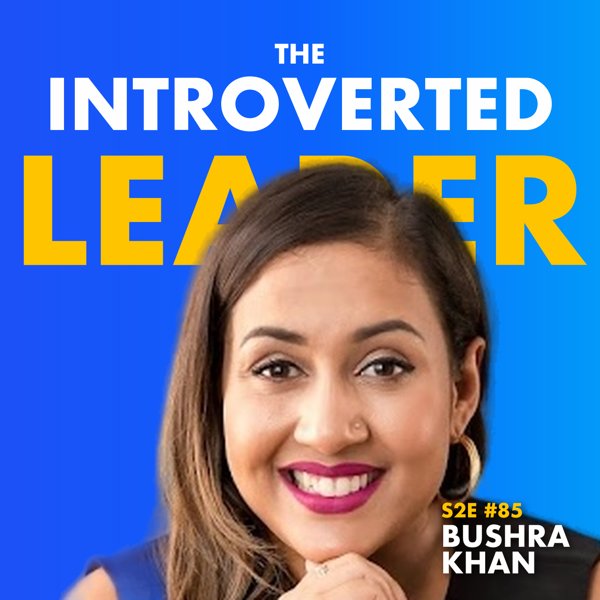
Bushra Khan is a business professor who teaches leadership to MBA and engineering students, and a self-described extrovert-turned-ambivert whose closest colleagues, students, and partner all identify as introverts. Her core claim: quiet professionals are often waiting for permission to speak that no one is ever going to hand them, and the discomfort they feel before speaking is a learned habit, not evidence of incompetence. She gives two systems — a three-question notebook check for anyone facilitating a meeting, and the MVE (mirror, validate, empathize) framework for conversations that feel stuck — plus a practice method: rehearse the interruption out loud until your brain files it as safe. Her consistent caveat is that every technique has to sound like you, not like her.
And discomfort doesn't mean incompetency.
And for those who are self-identified introverts, ask yourself what is it that you're seeking permission for?
And that's what I do is I manufacture hardship.
It's not a concrete wall, it's a styrofoam wall.
Because you are so selective in what you say, when you speak, everything, time stops.
all eyes are on you because everyone's tired of hearing from the rest of us. We want to hear from you. Please.
Key Stories
- The engineering students who wanted her to send the email: Her undergrad and master’s engineering students ask her to assign their groups and to email teammates who have gone quiet on a project. Her answer — “I don’t know. What do you do?” — is the beginning of the coaching, not a dodge.
- The MBA group riot: Her MBA students clock their preferred partners on day one; try to reshuffle groups six or twelve months in and it’s “an absolute riot.” The contrast matters: the engineering students who start lower on confidence and grit surpass their own starting point far more dramatically in four months.
- Manufacturing hardship on purpose: With AI absorbing the low-hanging difficulties — scheduling, awkward email replies, brainstorming — she deliberately engineers real-time conflict and uncomfortable conversations into her courses. Students dislike her for the first two weeks and give her strong reviews by semester’s end.
- The four rounds of role-play: An MBA student said she simply couldn’t speak to a classmate. Bushra played the classmate, over the top, and made her interrupt. First round: laughing. Second: less giggling. Third: “Oh my God, Bushra’s not gonna let me go until I do this.” Fourth: she leaned in — mirrored, validated, empathized, and named her concerns, in her own register, not Bushra’s.
- The number-two who held the room: Greg’s story about a senior leader at a former company who was notoriously quiet, completely comfortable with silence, and whose words carried enormous weight — sometimes by naming an uncomfortable truth nobody else would.
- The styrofoam wall: The brilliant, highly specialized technical leaders she coaches keep hitting the same barrier — “we already have the solution, why aren’t they just listening?” — because they haven’t worked out what’s stopping the other person.
Techniques & Frameworks
- The three-question notebook check (for whoever is facilitating): Walk in with a notebook and pen. One — did you get a full sentence from every person, not a “yep, I agree”? Write each name down as you hear them. Two — did everyone offer a plus (what they appreciated), a delta (what they’d change, with a suggested solution, so you don’t open Pandora’s box), or an aha (what made them pause)? Three — if someone stayed silent, follow up within 24 hours: “Hey, you were really quiet. Can we go for a coffee?” You only need to do this once or twice; after that the room has learned you’re a safe person.
- MVE — mirror, validate, empathize: Mirror the concern back in the other person’s own words, then always ask “Did I get that right?” or “Is there more?” — possibly several times, because a person gathering their thoughts rarely delivers them neatly the first time. Validate why the concern is genuinely hard. Then empathize, which is not agreement and not niceness: name the position they’re in. Most conflict isn’t about content, it’s about “you’re not listening to me,” and you can watch the shoulders drop when that signal lands.
- Rehearse the interruption: Ask when the person was last steamrolled and what that looked like, then role-play it on the spot — how to interrupt professionally, confidently, and authentically. It feels silly for the first few rounds; that’s the mechanism. If someone tells you their voice isn’t being heard, role-play with them rather than advising them.
- The body-language cue as a low-cost signal: Elbows on the table, hands clasped, shoulders back, body leaning forward — the opposite of crumpling into your seat behind a notebook. Even without saying a word, it prompts others to ask whether you had something to add.
- The two-minute power pose before a high-stakes meeting: Pick a ridiculous pose — flexing, Superman, one arm up — and hold it for two full minutes, ideally in front of another person, not just a mirror. She makes MBA capstone teams do it before presenting to hundreds of people: the giggling stops after 20–30 seconds, the chest opens, and you walk in having already laughed at yourself.
- Two mentors, one question set: Find a mentor you’d like to resemble in ten or fifteen years and one who’s roughly where you are now. Ask both the same question — “how did you get to where you are today?” — write down the answers, and look for the similarities and differences. That’s your data collection, and it becomes the work plan for the next promotion or project.
Full transcript
Greg (2): Have you ever sat in a meeting knowing exactly what you wanted to say, waited for the right moment, and it never came? Afterward, you told yourself, “I’ll speak up next time.” Well, here’s what I think is really going on. You’re waiting for permission to speak, and no one in that room or anywhere else is gonna give it to you. My guest today is an extrovert. She’s a business professor who watched a room of quiet engineering students wait for her to tell them it’s okay to send an email, that changed the way she runs every meeting she’s in. Welcome to “The Introverted Leader.” It’s a podcast helping introverted leaders embrace your underrated quiet strengths so you can get promoted and start earning what you deserve. I’m Greg Weinger. I have over 25 years of leadership experience, and yes, I am an introvert. Bushra Khan teaches leadership to MBA and engineering students, and she has a great facilitation system for getting the quietest person in the room to contribute and for helping that person say it in their own voice. Before we start, I made a free masterclass for introverted leaders. It’s called Why Everything You’ve Heard About Getting Ahead as an Introvert Is Wrong. 30 minutes. It features three moments that decide whether you advance or stay put and one practice to start this week. Get started at gweinger.com/masterclass. That’s G-W-E-I-N-G-E-R.com/masterclass. Let’s get into it Bushra, welcome to the show. It is so good to have you here Hi, good morning, Greg. Thank you for having me Absolutely. I have to ask the question, and there’s no wrong answer here. Do you consider yourself an introvert, extrovert, or other? if my friends and family are— they’re gonna be listening to this, if I even were to remotely say I’m an introvert, there would be a, there would be a riot. So no, definitely not an introvert. I didn’t know there was an other until a few years ago, so I always was, like, on the extrovert end. But I think what I’m finding myself more is I’m closer to the middle, like an ambivert. I don’t claim myself as an introvert, but I have most of my close, close colleagues, students, my partner, they would claim themselves as introverts Yeah, that’s a interesting answer. I find, a lot of times it’s the room you’re in, it’s all relative. I can find Yeah rooms where, I am an extreme introvert, full of sales leaders and then, other rooms where I’m at the extroverted side of the folks in the room Oh, I like how you said that. It’s all relative. my son and my husband, they’re huge basketball fans, and in that room, I’m the introvert because I have no idea what’s happening. I don’t really care for it. I’m not invested. But bring me in a room where we’re talking, sales, tech leaders, students, emerging leaders, middle managers who want to become directors, I am the extrovert. I am the biggest cheerleader. I’m the biggest champion. You want me in your corner. So I appreciate that you’ve reframed it as it’s all relative. I think no matter how you’re wired or whatever your preference is, we all have capacities for doing different things. you might be really wired on the introvert spectrum, but find that, being on stage is really gratifying or, learning that skill to talk to strangers as they come by. Maybe I don’t prefer to do it, but I can do that That’s it. It’s like math homework, right? It’s around grade seven that kids start internalizing, “I’m just not good at math,” right? And it’s so heartbreaking to see that. No, you might be having struggles, or it might be difficult for you, or you may not enjoy it, but you can do math, right? Mm-hmm. And it’s the same thing with public speaking or leadership positions or anything that gives you discomfort. And discomfort doesn’t mean incompetency No, that’s a great point. There are a number of things that I do as a leader that have been historically uncomfortable for me, but it doesn’t mean that I’m not good at them and, it doesn’t mean that, I couldn’t do them Absolutely. Or that you can’t be coached on it or learn. You know, our brains are just such beautiful sponges We really can lead our brain into these, and I’m not talking about manifestation work, but we can tell our brains and coach ourselves around that self-awareness. Excellent. Well, let’s, get into that a little bit. really enjoyed the story you told me, about, your students self-selecting into groups and how you have really different experience with that for your MBA students versus your engineering students. Yeah. So my MBA students right away, a- and okay, so my MBA students are in their 30s, 40s, 50s. They’re, let’s say, middle managers looking to grow, or second careers. My undergrad engineering students or even my masters of engineering students, they are a different species. My MBA students are folks who come in and they’ve already decided that they’re leaders, especially the middle-aged men in my groups. They’ve already, they’re like, “We know what to do. We’re gonna jump in. Yeah, we prefer to make our own groups.” Right? They’ve already walked in the first day of school, into their MBA program, and they’ve already clocked who’s going to be their, their partners. And if you try to change up their partners, let’s say, six months or 12 months into the program, it’s a riot. It’s an absolute riot. “Nope. I’ve already selected who I wanna work with. These are the people I work with. We have a strong cadence.” Whereas my engineering students, there are some folks— I’m not going to say they’re, it’s a, it’s just like a one type of student, but I would say the majority is, “Can you put us in groups?” Or, “What do we do when they don’t respond to emails?” Or, “So and so said they’re going to submit this part of the project. They haven’t yet. What do we do?” I’m like, “I don’t know. What do you do?” “Can you email them, Professor?” “No, I, I, I can’t. Can you email them?” “Oh, but maybe they have something else happening,” right? And it’s, like, such a different experience. And I will say the changes I see in my engineering and my master’s of engineering students is far greater. The change, the change in just four months is far greater than the changes I see in my MBA students. So, the MBA students, if we were to just kind of, put them on a rating of, when it comes to extroversion or public speaking or, even, the grit. They come in pretty high. When I compare them to my engineering students four months later, they have surpassed, the level that they’ve started with, and a lot of times is— And that’s what I do is I manufacture hardship. I intentionally manufacture hardship, especially in the world of AI, where so much of our AKA low-fanging, low-hanging hardships can be taken care of AI, like our scheduling, difficult email responses, brainstorming. So it’s my duty as a professor, I gotta manufacture that hardship where conflict and those uncomfortable conversations come in, and you gotta do it in real time. So that’s what I do. My students don’t like me the first couple of weeks, but then I get really great reviews by the end of the semester. that’s fantastic. There’s a lot in there. I mean, one is it sounds like there’s a little bit of self-selection, that’s happening. Of the people who do come into your program, so they’ve gone through a cultural filter. They’ve gone through an age filter, an experience filter to get there, and so they’re more sorted a little bit for, for Absolutely do you see the topic of introversion/extroversion naturally arising in those groups? is that on people’s minds when they arrive where you are? Absolutely. And, it’s more about the introverted, and they’re never deemed lazy. The introverted is, oh, they’re quiet and they’re shy, and I think there’s also a cultural piece is if you have something to say, surely you will speak up, Right. Right. there is, of course, we cannot be responsible to bring up all the voices at once. But at the same time, can we not? Right? Is that not what’s gonna set us apart as a leader is Can we also create the opportunities and the coaching where, hey, I can see and you can see people are engaged, and how do you pull those voices up? Right And for those who are self-identified introverts, ask yourself what is it that you’re seeking permission for? But yeah, I do see a lot of that in my work, and I do see a lot of that in the classroom Yeah. And in terms of space for other folks, it doesn’t come natural. Let’s say you’re not naturally shy, creating space for others, may not come natural. What advice do you give people to become more mindful of that if it does not come natural to you, that’s okay. Let’s talk about a meeting. There are eight people, and if you are the one who is facilitating and it does not come natural to you to include all voices, walk in with your notebook and a pen and have three questions. One, did you get everyone’s voices? And actually ask, “Did you get an actual full sentence?” Not a, “Yep, I agree,” or, “Yep, let’s go.” Did you get a full sentence? Did you hear everyone’s voices? Mhm. two is did you ask everyone to put forth a question? It could be at the start of the meeting or at the end of the meeting or, a food for thought, or it could be, something as what was your plus or delta or your aha? A plus is something you appreciated. Delta is, the Greek sign of change, so delta is what would you like changed with a suggested solution because that’s a slippery slope because if you say, “What do you want changed?” Then you open up Pandora’s box, but the caveat is what would you like changed with a suggested solution? And the last one is, what was your aha? What was your aha meaning what made you pause? Or where did the light bulb go? Or where did you kind of pause and have a food for thought and you’re like, “Oh, I never thought of it that way.” So number one in the meeting, did you get everyone’s voices heard? And write down, Greg, yep, heard this voice. Bushra, yep, heard this voice. I did not hear from John here or Susie. That’s on you to get them to like, “Hey, what do you think? And if you need a moment, please let me know.” And you can follow back up with them. Number two is what’s your plus, delta, or aha, and the third one is if you did not hear from folks in a space, as the introverted or extroverted or an ambiverted leader, it is on you to follow up with them within 24 hours saying, “Hey, you were really quiet. Can we go for a coffee?” Okay, I’ll get pushback on this. Bushra, we don’t have time for that every time, and I hear you, but here’s where the magic happens is you will not need to do it every time. The first time you do it, the second time you do it, you better believe now you have built enough trust that that other person’s brain signals to you that you’re a safe person, that when you’re in that room, when you’re facilitating a meeting, that I can speak to Bushra, I can speak to Greg, and we can move forward. So yes, you will need to do it one or two times where you follow up with a introverted person or a quiet person or a shy person But after one or two times you’ve checked in on them, their brain will signal to you that you’re a cool, safe person, let’s move forward Yeah. that you’re teaching these skills because these are things that takes you quite a few years to develop. And one of the things that I’ve always personally relied on is building relationships outside of meetings. the more one-on-one meetings, connections that I form, that changes the dynamic in the meeting. Absolutely. you spoke about this, framework to mirror, validate, empathize, because I think you mentioned your younger engineering students, they come out having some challenges understanding how to form connections with other leaders. So could you walk us through that? The framework is called MVE, mirror, validate, empathize. And I’ll tell you what that does to our brain, and this is really great. This is such a great framework for those who find themselves struggling to understand why people do what they do. I think we all struggle with this, a little bit, where it’s like, “Ah, if you just listened to me, if you just followed what I said, life would be so much easier.” And that’s… those are the leaders that I currently work with they’re brilliant. They’re so smart. They’re, like, one of three in the world who do what they do. They are so highly technical, highly specialized, and they keep bumping against this wall. It’s not a concrete wall, it’s a styrofoam wall. And they keep running into this wall which is, “Bushra, we already have the solution. Why aren’t they just listening?” And oftentimes what, w- with… it’s they’re not understanding what is stopping the other person. So we do something called mirror, validate, empathize. So say, Greg, you are c- sharing a concern about a project. You are not going to give the thumbs up on your part of the project because you are concerned. I now mirror it back using your words. “Okay, Greg, I hear what you’re saying. You’re concerned about the, the 30 hours a week additional work that it might mean for your team. Am I hearing that right?” And you always have to say, “Did I get that right?” Or, “Is there more?” Or Is that, is there something else I’m not understanding? You have to ask, “Is there more?” in your own way. So first of all, mirror using the person’s language, and always ask, “Is there more?” or, “Did I get that right?” Once they’ve cleared you, and you might have to do it a few times until you’re getting the full grasp because while we are trying to absorb this information, the other person’s brain is trying to, in an eloquent manner, word vomit. But word vomit doesn’t come out so neatly, right? So they might be babbling at first, so give them the opportunity. Is there more? Is there more? So give them that kindness, that grace to ask them, give them that space to really gather their thoughts. So first mirror. “Greg, I hear that you’re really concerned about if we go ahead with this part of the project, it might mean 20, 30 hours extra work for your technical team. Did I get that?” “Yeah, Bushra, you did.” Oh, validate. “Yeah, that’s really challenging because you’re already stretched thin, right? I know with the recent tariffs and the recent layoffs, your team is already working 40, 50 hours, and on top of that, this project sounds like it might be another 20, 30 hours. Is that what your concern is?” “Yeah, Bushra.” Mirror, validate, and then the last piece is empathize. Now, the key to empathy doesn’t mean that it’s another word with being nice or it’s another word with agreeing. You may not agree with Greg’s concern. But that’s not the point of this exercise is. Empathize like, “Oof, Greg, as a leader, you’re in a tough position because you don’t wanna burn out your team.” Mirror, validate, empathize. What happens to your brain is then the gloves come down. I am signaling to you that I am a safe person, that I hear you because a lot of the times conflict is not about the actual content. It’s about, “Oh my gosh, you’re just not listening to me.” And if you’re signaling to that other person that I hear you, a lot of times what happens and you’ll notice even in the shoulders, a lot of times what happens is And you can see that physical, that physical change. Now we can have the magic happen. So mirror, validate, empathize, especially for those who are feeling really stuck in conversations. And this is really powerful if you prefer to have one-on-one conversations, that you don’t prefer to be airing out your grievances and your concerns out in a boardroom with eight, 10, 20 other people. And I appreciate what you said, Greg, was you, you coach others around having those one-on-one conversations. Do you find that when you’re coaching others, that they thrive more on that one-on-one where they’re building that safe relationship? Is that what you’re finding? Yeah, absolutely. the one other thing to call out is that for introverts, that tends to be a strength. they may have more discomfort in larger groups, but they often form really excellent bonds in one-on-one conversations. So it’s really leaning into a natural strength of a lot of introverts. And we enjoy those conversations more absolutely. I was just gonna say, and you must enjoy it, also. And would— do you find in your work that folks if they are self-proclaimed introverts, that they’re more observant of other folks’ body language or little nuances that other people might gloss over? It can be, yeah. I don’t think it’s a universal thing, but among introverts you’ll find some of the most attuned, perceptive people Yeah. I, I, I would agree with that. I would agree with that I think one challenge that introverts find themselves in meetings especially among people who are a lot more loud and extroverted, is getting steamrolled. And, there’s sort of a challenge in breaking in.it’s kind of a universal challenge, that I see in people I talk to in larger groups. So I’m curious how you coach about that, how you teach about that in your classrooms. Yeah. So without calling it your inner child, I do ask when was the last time you were, and using your language, steamrolled? You know, and like can you tell me kind of some of your earliest memories of what happened? What did that look like? Who was the other person? And then I’ll actually get them to role play with me right then and there. So we’ll say, “Okay, let’s practice how to interrupt, how to interrupt professionally, confidently, and that is authentic to you.” And I think oftentimes because I’m extroverted and when I’m working with those who are not so, it’s, “Oh, Bushra, you don’t understand.” And I’ll say, I’m like, “You’re, you’re absolutely right. I don’t understand. Help me through it.” And it’s not about being louder. And again, I’m not telling the extroverts to shut up and quiet down, and I’m not telling introverts to become loud and rambunctious. It’s how do you stay t- true to your authentic self? Mhm. cross-cultural communication. Cross-cultural doesn’t mean like we’re from different parts of the world. It could just mean we’re from two different parts of upbringing, right? I grew up in a big family, so if you weren’t loud, you just weren’t heard, period. Maybe you also grew up in a big family, but maybe you’re somewhere in the pecking order where you felt like you weren’t heard. So we will role play right then and there. So if you are a leader and you are hearing this, and someone comes to you and says, “Hey, I don’t feel like my voice is being heard,” role play with them. It does fantastic things to our brain And it feels silly the first few times. And I will go ahead, and I will fully on role play. We had a conflict, two semesters ago in my MBA program, and a student’s like, “I just can’t speak to this other student.” I’m like, “Cool. I’m gonna act like him. I’m gonna act like him, and I’m gonna go over the top, and you’re going to interrupt me, and you’re…” And she’s like, “I, I, no, I can’t.” I’m like, “There’s no one else here. Everyone has left. We are going to do this.” And we did it several times. And believe me, the first time she was laughing and giggling, and she was so uncomfortable. The second time it was a little bit less giggling. The third time she’s like, “Oh my God, Bushra’s not gonna let me go until I do this.” The fourth time she leaned into it. But it was her authentic self though. She wasn’t loud and using words that she wouldn’t use. But we just practice, and it does wonderful things to your brain. Your brain says, “Okay, we’ve done this a couple of times. We’ve practiced this. This is safe.” And she did it. Sh- but she did it in her own way. It wasn’t in the Bushra style, but she mirrored, validated, empathized. Then she also gave her concerns, and it was beautiful. It was really well done. I love that so much. This is one of the topics that I speak about is how to interrupt. It’s something that I’d struggled with in certain situations with certain folks and, just having that plan, I like that you brought in the MVE. But I especially love what you said about, it has to be authentic to you. I think some folks, or maybe a lot of us, have seen a model of interrupting that don’t wanna emulate, you know? The idea is that interruption is this kind of negative approach, but it doesn’t have to be. Interrupting can be respectful, but it’s kind of asserting yourself, but it doesn’t have to be disrespectful Absolutely. And one thing I wanna say is that if you are the strong, silent, introverted type and you interrupt, believe me, everyone is listening, and they are saying, “Damn. Wow, did they…” It’s like you didn’t expect it out of them, so when you do, and again, if you are an self-proclaimed introvert and you interrupt or you share something or you provide a different analysis or a different, perspective, all eyes are on you because everyone’s tired of hearing from the rest of us. We want to hear from you. Please. And that’s, that’s like my, my big thing is that… And, and I’ll have folks say, like, “Bushra, they listened.” I’m like, “Yeah.” Because you are so selective in what you say, when you speak, everything, time stops. And Greg, I would love to hear if you, if that’s been your experience, is when the folks who are not as verbose in meetings or presentations or in the classroom, do you find when they do speak, everyone’s like, “Gasp. That was a really great idea.” Mm-hmm. do you, do you find that? Oh, absolutely. Yeah, yeah. And I think that’s another one of these, tricks is that because you’re selective, because you’re thoughtful, and, you’re choosing when to speak, your words can have this real immense power That’s your superpower. That is your Yeah. absolute superpower. Oh, I love that Yeah. I even tell a story about a senior leader at a previous company, some 10 years ago, and this guy was notoriously just quiet, and he could just hold space like no one else. You would speak, and then He was just completely comfortable with silence and just thinking, and he was this number two guy, in the company, so everyone, of course, was waiting for him to speak. And when he spoke, it had so much weight, and sometimes it was super challenging for people. It doesn’t have to be just a positive thing. It could be calling out a really uncomfortable truth. Yeah but, that silence and taking the time and being super selective, that just had a lot of power. I 100% agree with you, and as you were just saying the story, your hand was up like this, and you were, I think role-playing how this gentleman might have been in the meeting. And what you were signaling is that, right, like that body leaning forward, your arm up Right? That now I’m signaling to you I’m listening. For those who can’t see us right now but have an audio to this podcast, Greg, what he just did is he had his elbow up on the table, and he had his body leaning forward versus if I’m crumpling in my seat, and I’m trying to make myself very small, and I have my notebook and my pen, and I’m kind of hiding behind, right? Dr. Amy Cuddy in her TED Talk, demonstrates her research about this is when, again, you don’t need to be extroverted, but your body language can say a lot of things, right? So even if there’s one tiny, tiny change you can make is can you sit in a meeting with your body leaning forward and your shoulders back? And if that feels unnatural to you to even have your elbows up on the table and leaning forward, th- uh, you know, often because then our hands are kind of providing a protection, right? Mhm. even if that’s a tiny little change you can do, when you want to offer an insight, just change your body language to arms on the table, elbows on the table, hands clasped forward, and lean forward. Okay? Even if you do not feel like you have the agency or the power or the confidence to say the words to interrupt, that tiny little body language will signal to other folks in the room, “Oh, did you have something to say?” Elbows on the table, hands clasped, lean forward. That’s great. Yeah. It’s a great signal even for who are super distracted and, maybe thinking about something and, speaking about something else. It’s a really clear signal to Yeah Another thing I wanted to talk about are these, cultural stereotypes. So we talked about these middle managers, and that’s tied in with this deeper stereotype where now it’s your 40, 50-year-old playing, senior executive. And so we just have all these associations of what leadership looks like, what senior leadership looks like, and, these are cultural constructs. How do you teach people about what is true leadership if it’s not these trappings that we all associate with it? Yeah. And the trappings, there is truth to it, and it goes back to what we were talking about is the relationships, right? So on the golf course, we know it’s less about golf and it’s all about networking and relationships. So where else can you build relationships, right? Golf course is like one of the thousands and millions of opportunities to build relationships. Can you, build a relationship that network while, bonding over Dungeons & Dragons, a board game? Can you bond over, the love for a sport? Can you bond over having children? Maybe you can bond over something, you know, your child’s hate for math. I don’t know. But this, this golf course, middle-aged You know, men walking in with their, with their golf shirts. There is still a lot of… That still does happen. There’s still a lot of truth to that, but it is no longer, that is no longer the only space where leaders are cultivated, relationships are cultivated. There is a lot of different spaces happening, and, and I keep coming back to what you said is that one-on-one relationship. If going out to play golf or going out for drinks at the end of the workday… By the way, I don’t drink alcohol, so where can I build those relationships? And I find those relationships happen during lunch. It could happen, like, those volunteer days. It can happen one-on-one over coffee. Some of my best mentoring and coaching relationships come over coffee. I love coffee. Mhm. Coffee is cheap. You can just go get a cup of coffee, and you can have, like, eye-to-eye conversations. And I would absolutely argue those relationships are far more substantial than the relationships you can cultivate at a golf course or out for drinks at the end of the night because there’s still a social aspect and there’s an agenda to it, right? You have to play y- the course when you’re at a golf course. Or when you’re out for drinks, maybe there’s lots of people and there’s lots of interruptions and noise, and the bartender’s asking, you know, “What do you wanna drink?” Where if you were to have, like, a s- a going out for a coffee or a lunch, those are far more st- substantial conversations than anywhere else. So stick to what feels natural to you. Do not try to, become someone m- that you are not and also push yourself, right? So there’s this balance where, you don’t have to become completely like someone else That is one thing. The other thing, I wanna mention is find a mentor who you see yourself in. It’s really valuable to have a few different mentors, right? So someone who you would like to emulate to, like, be like in 10, 15 years, and someone who you see yourself like today, right? And ask them the same set of questions. You’re doing some data analysis. You’re gonna do some data collection, right? So if you were to ask, “Hey, Johnny, how did you get to where you are today?” And write down the answers. Ask Susie the same question. “Hey, Susie, how did you get to where you are today?” And write down the answers. And are there similarities in their answers, or are there differences? And that’s where your data collection happens, and that’s how you create your work plan for whatever your next promotion is or the next project is. So it’s n- it doesn’t just happen on the golf course. If you are really thoughtful and strategic about it, those one-on-one conversations can be a goldmine Yeah. So much gold in there. Yeah, and it, I think there’s that through line of authenticity where, if you’re doing something and you’re not, you know, fully invested, fully bought in, you know, it, it comes through. Whereas if you’re doing an activity where, when these one-on-one conversations out for coffee, there’s that opportunity to be completely present with the other person, and it really does form a deep bond, which Yeah might be at a golf course or at a bar for like three hours, and you wouldn’t have an opportunity to have that deep of a connection. Yeah. And what do you find, Greg? Do you find that the golf course rhetoric is still very true? Are you finding there has been a massive change or somewhere in between? I’m guessing it varies by industry. You know, I’m in tech and, yeah, we have the occasional golf outing, but I don’t think it’s a thing in the way it might be if you were in, a law firm or, you know, certain, Or finance. Sure. Yeah. Yeah. Conscious of time, one last kind of question. big meetings are a challenge, for introverts a lot of the time. So, like, big meetings, important meetings, it, it’s something that might be contentious, but you have an opportunity to prepare for it. What are the types of things to think about, and what could be helpful to kind of, get you ready for that big meeting? So, I guess it depends on what the purpose of the meeting is, right? If you are pitching an idea versus a status update versus, a meeting where a decision needs to be made. So number one, go in understanding what is the goal of the meeting. Mm-hmm. Number two is, how… Without over-preparing, I am someone who likes to over-prepare because often what we see is there’s a disconnect between preparedness and confidence. Not always, but there is that connection. And if you know that you are feeling, it may not be that I feel shy, I just may not have anything of value to add, but you know that there are gonna be eyes at this meeting. Be mindful of how you are coming off. So this might be your opportunity to share a status update. It might be your opportunity to ask a really thoughtful question. This might be your opportunity to gracefully, professionally, beautifully interrupt someone, and to practice those, right? Come in with your notebook, write down your questions or your status updates, and actually practice. And to go to a safe person, it might be a colleague, a partner, a friend, in front of a mirror, and practice that role play. And it sounds really silly, but when you practice, what’s happening to your brain is you’re signaling it’s safe to say what I’m about to say, okay? I don’t, I kind of stand in- covered these. Go ahead. Okay. It is so silly, and I make everyone do this, is you stand up and you do a ridiculous power pose, whether it’s, you’re flexing your arm or the, Superman, Superwoman, or, having one arm up and doing it not just in front of a mirror, but in front of another person. And believe me, Greg, without fail, when I have my students doing their final MBA capstone, competition, it’s in front of hundreds of people, and they are nervous. Even my MBA students who are self-selected, extroverts, they are so nervous, and I make all of them, and it’s mandatory. You will pick one of the three poses, and we are going to do it, and everyone’s like, “Ha ha ha ha,” and there’s giggling, giggling the first 20, 30 seconds, and then the giggling stops, and the shoulders come down, the chest puffs up even more. And we hold it for two minutes, and what happens is our cortisol goes down, our stress hormone goes up, down, and our testosterone goes up. Our courage-producing hormone goes up. And when you walk in… ‘Cause you’ve already laughed at yourself. You’ve already laughed as a collective. So when you walk in, you’re like, “I have nothing else to lose.” And that’s, that’s like locker room talk, right? There’s a lot of, beauty what happens in a locker room when they’re chanting, and they’re kind of… It’s almost like a warrior call, like a war call, and you kind of need to do that. Again, sticking to your authentic self. Maybe you don’t wanna do a war call before a meeting, you know, in your bathroom that’s shared with your colleagues. Maybe not so. But even standing in the bathroom stall or in your cubicle, just like , right? And doing a silly pose, and you’re just holding it up with your chest puffed out, your shoulders back. You’re signaling to your brain, “I got this.” Mhm. I hope that’s helpful. All right. Love it. Try it. Two minutes, that’s a important detail there Yes, two minutes. Hold a powerful pose, arms up or, flexing your muscles, your hands on your hips or, something where you’re taking up space. You’re not crumpling in your seat, but you’re standing up and you’re taking up space Excellent. Bushra, this has been so wonderful. If people wanna learn more about you and your work, where should they go? You can follow me on Instagram, on LinkedIn, it’s Leading with BK, or on my website, it’s Leading, L-E-A-D-I-N-G, with BK. With Leading with Bushra Khan, leadingwithbraveryandkindness.com. Or you can email me, [email protected] Bravery and kindness. That’s it Awesome. Thanks so much Thank you so much for having me Greg (2): That was Bushra Khan, and there’s a lot of powerful ideas here. Here are three. Number one, and I’d write this one down, discomfort isn’t a sign of incompetence. The hesitation you feel before you speak is just a habit you learned long ago. It’s no reflection on your ability. Number two, if you’re the one running a meeting, use this system. Have a notebook and ask three questions. One, did I get a full sentence out of every person in the room? Not a, “Yep. Sounds good,” an actual sentence. Number two, did everyone put forth a delta, plus, or an aha? And number three, if someone stayed quiet, did you follow up within 24 hours? Here’s the best part. You only have to do this once or twice. After that, you teach everyone in the room that you’re a safe person, and they’ll be comfortable sharing much more going forward. Number three, practice interruption out loud, with a colleague, in front of a mirror, whatever it takes. It’s going to feel weird at first, and that’s the point. You’re teaching your brain that it’s safe to do. And when the quiet person in the room starts interrupting and speaking, everyone listens. the fact that you’re selective means your words really carry weight. If this content resonates with you, here’s one more thing to try. Subscribe wherever you listen to podcasts. That way, you won’t miss the next episode, and it helps other introverted leaders find this material. I really appreciate it I’m Greg Weinger. Keep leading with quiet confidence, and I’ll see you next time