How Your Brain's Habits Become Your Destiny — A Neuroscientist's Guide for Sensitive Introverts
Manage Your Energy & Thrive in Extroverted Cultures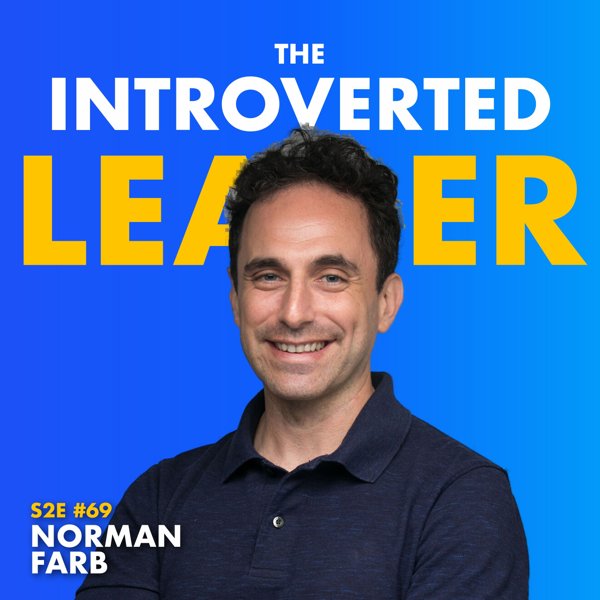
Norman Farb is a neuroscientist whose research focuses on perceptual habits and their relationship to wellbeing. His core insight: the way you habitually perceive your environment — whether you process through a narrative self-referencing mode or an open, present-moment awareness mode — has enormous consequences for how introversion plays out at work and in life. He was a sensitive child who hid in doorways at parties, and his science now explains why, and what to do about it.
Your perceptual habits are your destiny — until you notice them.
I was the kid hiding in doorways at parties. The science I do now is an explanation of why that felt like the only safe option.
Key Stories
- Sensitive kid hiding in doorways: Farb’s personal origin — he describes himself as a highly sensitive child who would literally hide in doorways at family gatherings to observe without being absorbed. The scientist later explained the child’s behavior.
- Perceptual habits create destiny: His central thesis is that we don’t perceive reality directly — we perceive through the filter of habitual neural patterns. For introverts, those patterns often amplify threat signals in social environments and reduce capacity for present-moment processing.
- Two modes of self-reference: Research distinguishes between the narrative mode (thinking about yourself and others, often ruminating) and the direct experience mode (present-moment sensory awareness). Introverts tend to default to narrative mode — which is a strength (depth of thinking) and a cost (overthinking, social anxiety).
Techniques & Frameworks
- Perceptual mode switching: Learning to recognize which mode you’re in (narrative vs. direct experience) and deliberately shift — not to suppress thinking but to access the full range of processing available to you.
- Mindfulness as neural training: Not as stress reduction but as perceptual training — building the capacity to step out of the narrative loop and into direct experience.
- Sensitivity as signal: For introverts with high sensitivity, the nervous system is picking up more data than average. The skill is learning to process that data rather than be overwhelmed by it.
Full transcript
Have you ever had a great idea in a meeting and then you felt your heart start pounding and you hesitate? And by the time you work it out in your head, the conversation has already moved on. And you think to yourself, why can’t I break this habit? This keeps happening. Is this just who I am? Welcome to The Introverted Leader. It’s a podcast helping introverted leaders embrace your underrated quiet strengths so you can get promoted and start earning what you deserve. I’m Greg Weinger. I have over 25 years of leadership experience and yes, I am an introvert. My guest today is Norman Farb. He’s a neuroscientist at the University of Toronto and his research on habit change unpacks at a biological level why introverted leaders get stuck in these same patterns at work. That research tells us what it takes to actually break these habits without becoming someone you’re not. Let’s get into it. Welcome to The Show. I’m so glad to have you here today. Yeah, thanks so much for having me, Greg. I’m excited to chat. Awesome. So the first thing I always ask my guests when they’re first on the show is do you consider yourself an introvert, extrovert, ambivert, other? I consider myself a fairly polarized introvert who’s had to develop extrovert skills. I guess most introverts have to fit into a social world. That’s a good question. That’s right. We don’t have much choice in a lot of ways. Yeah, of course we can find vocations and lifestyles that at least hopefully give us a bit of time on our own. But yeah, at the end of the day, a lot of productivity in life is about working with others. So yeah, gotta figure out how to make it work. Yeah, indeed. And so when you meet someone for the first time, how do you describe your research, the work that you do and how that applies to people in an everyday life? So my research focuses on how people form habits, not just in their behavior, but also how they perceive the world in themselves and how those habits tend to create a trajectory towards well-being or suffering. And then the part I find most interesting is how you could change that trajectory. So how do people learn to change their most deep set habits? And I try to approach this both from a psychology perspective and looking at sort of internal logic of the mind, but also from a neuroscience perspective and looking at what information is being allowed to process through the brain and eventually reach awareness and decision-making. Got it. So these are cornerstone habits, the habits that mediate what information makes it to your brain. And in a sense, habits become your destiny because they govern how you operate in day-to-day situations. Right, and people might have different opinions around free will, but I think most of us can agree that it takes a lot of effort to do something new or do something differently. And what many researchers and everyday folk believe is that a lot of times we’re just running sort of automatic and that really is the power of our habits and not to derogate them. Of course, we need to have a sort of common script to get through our day, especially when things get busy, you get tired or just to make sense of our role in the world. But as you’ve eloquently stated, it can also become our destiny, which is great if the habits serve us and are taking us exactly where we want, but we could also feel like we’re stuck on a runaway train or stuck on a broken down car if the habits aren’t really getting us to the types of experiences and connections that we’re looking for. Got it. So one of the concepts I wanted to touch on was this idea of your brain gets stuck. What happens when all these habits form in a way that you really, you can lock up and you feel like you don’t have agency in situations, maybe just drawing it to the workplace, let’s say there’s stressful situations, you get overwhelmed with stress and it seems like there’s nothing you can do. Your body, brain, it gets stuck in these modes, in these situations and you’re like, how can I change that? Yeah, I think we all have different levels of self-awareness, but a lot of us recognize we fall into patterns. There’s a way we act when we feel hurt or burnt out or threatened. And sometimes there’s going to be unexpected or sort of low frequency threat that you won’t have to worry about dealing with again. So like a major disruption in your life or someone tries to mug you in the street or a major loss or something like that. But there’s a lot of other types of stressors that are predictable and repeated and we sort of watch ourselves fall into these patterns to our own dissatisfaction. So writing an angry email then realizing we’ve actually created way more problems than if we hadn’t just not written an email or avoiding a situation and then having people be disappointed in us or not getting worked at or something like that because we got that sort of local payoff of not having to deal with it right now, like procrastination or avoidance leading to bigger problems down the road. So I think for many people there is a sort of burgeoning intuition that they’re acting in a certain way and it’s almost like baked in and it isn’t ideal. If we really had all the time and freedom and clarity and calm, we would choose differently. Without having to really get into the neuroscience even you can already see just from human experience that we have personalities and traits and those aren’t always acting in our most ideal interests. So that sort of begs the question, is that just destiny? Are we just caught in a chain of causality and we’re just witnesses to our own programming or is there any sort of wiggle room in there? And to put it more simply, can people change? If it’s the case that there’s a reason that we’d want to and this feeling of being stuck and watching ourselves make the same types of mistakes, the same problematic behavior over and over again I think is a clarion called to wanting to change. In a world where most of the time we want things to be predictable and we want to just be able to consolidate and exploit the techniques and strategies we already have. Exactly, and my intuition is anyone who’s still sitting here listening to us is not that type of person. They’re interested in change. They’re interested in expansion and experiencing new things. So let’s grant that that’s our audience and there’s an interest in change. What are the things they get in the way of that? And maybe we do get a little bit into the neuroscience. What puts us in a stuck mode and probably as it relates to stress? Yeah, I think we can look at the brain as trying to be the sort of predictive engine, right? That it’s trying to model and successfully predict how our actions in the world as we see it can maximally promote our ability to stay alive, to pass on our genes as like a kind of biological imperative. Some people feel that more than others but at least to obtain the things that we value and avoid threats. And from the brain’s evolved perspective, what it’s trying to do is form a really robust model for how to interact with the world, which means it wants to successfully predict things and it will be disrupted or dysregulated by the unexpected. And change is literally like making things be more unexpected, right? It’s violating what’s already predicted because if everything is happening as you’re predicted then you’re just continuing on with the habits. Right, okay, so based on your model, we’ve got these avenues of new information coming in through the different senses and this idea of how we introduce change into that model and potentially to do that deliberately and bringing it back to my stress question. Let’s say we do want to affect some change. What is the role of stress in that process? So stress can be thought of as an uncertainty around whether we have the resources to meet whatever the demands of the situation is. And if we decide, yep, it’s a challenge, I can do it. It’s seen as like you stress, like a positive stress, but much more often we see it as a threat, right? Which is seen as distress. It’s upsetting because we’re not sure if we can handle it. And to the extent that we start to feel overwhelmed, the brain will try to conserve any sort of expensive renovation plan, like an updating plan, and instead focus on what it already knows. It’s like seeing- Don’t have the resources for this right now. Yeah, it’s like I want to put the extension on where I like act apathetically, but right now, like I don’t have time for that. My boss is coming for me, so I just need to do the things I already know that will help me get through this. And so that means we’re going to rely on the model we already have. And we see this in our neuroimaging studies that as people become more distressed, more anxious, or we look cross-sectionally at people who are more in a trait-like way, more distressed or anxious than others, we see that there’s much less sensory processing to compete with or inform the information that’s already represented in the default mode network. And I think a lot of Western clinical science and philosophy has thought that we would just be operating directly on the models with our conceptual thoughts, and that maybe people who are just too locked into conceptual thinking have too much default mode network activity would be the ones who would be the most distressed. But it seems from now, coming on two decades of research, at least with myself and my collaborators, that everyone has like really robust sets of self-evaluations and conceptual thoughts and really strong default mode networks. And that’s actually not what differentiates someone with depression or really high levels of stress from another. It’s that model operating in isolation from the senses. So it’s no longer being updated by sensory information that really characterizes someone who’s stressed and vulnerable to break down. So the short-term understandable goals, I don’t want to take anything else in, I’m already overwhelmed, I’m just going to do what I already know in some way becomes a chronic tendency. And that means someone starts to feel as though they’ve lost the ability to act any differently. But what’s sort of insidious is they don’t realize that might be coming from trying to protect themselves from that overwhelm, right? So the effect of stress, just to directly speak to your question seems to be to shut down sensation while allowing habit to continue to run unfettered, which sort of implies that a way to recover from stress would be to intentionally try to rebalance the skills to try to get sensation flowing once again. Interesting, so there’s this self-protective instinct that’s at play here. It’s this idea, the input of the senses is what’s causing me this distress. It’s almost dissociating from that. How can we reduce the impact of it, and which has the insidious effect of keeping them in that level of distress? Yeah, yeah, this ironic consequence of doing what we need to do in the moment can hurt us in the long term, which is not, we see that in all walks of life. I really just want to have that junk food now. If I keep making that choice over and over again, it’s going to affect my overall nutritional health, right? I really just want to sit on the couch now, but if I keep doing that, that’s going to affect my cardiovascular health. And so from a mental health perspective, I just want to distract or in more intense situations, maybe dissociate from my lived experience, my felt experience now, my emotions now, short-term comfort, but long-term, kind of numbness, right? Fixedness, languishing. And it’s just an interesting place. We are culturally where we know a lot of these things, but we don’t really know what to do about it. Like we know what to do about it. Like I should get off the couch and go exercise. I should eat a salad, right? And then maybe on the mental health side now, we’re at least going to start to develop this idea that, oh, I should spend at least some of my time sensing and taking in the uncertain and allowing myself to be surprised instead of always seeking more stability and comfort. But I think this final point I’m making here about sensation is less known, perhaps, than the importance of salads and cardio. And then it’s a whole other thing, like now that we know, can we actually get ourselves to do it? But first comes even realizing that this is a dynamic that’s at play. Yeah, and the parallels to ancient wisdom, I think meditative traditions is pretty striking here. There’s meditation as a practice. One whole branch is focusing on different senses, on the visual senses, sounds, the feeling of the body. People have hit upon some of these ideas, but it’s fascinating to see that parallel with modern science and the ways of understanding the brain we just would have never imagined a few thousand years ago. Yeah, a lot of our work comes from my first neuroimaging studies as a graduate student. We’re just trying to understand what mindfulness meditation courses were doing to people. And we thought it would be breaking down the self as a set of interpretive habits. We thought it would be dismantling and a fault mode network. And my advisor was like, I think you’re maybe doing things wrong because we’re not finding that. That’s not actually what the data is showing. The data is showing that when people start doing these meditation practices and feeling better, it’s actually because they’re taking on more. They’re not dismantling the self. They’re now informing their sense of identity with this kind of disruptive momentary flood of sensation and that those moments of surprise and the unexpected is what’s leading them to feel like, oh, I can change. I’m not always depressed. I don’t always have to be this person who worries. I don’t always have to be someone who can’t enjoy social situations. Got it. So it’s really about expansion and changes is through taking in more and recognizing new parts of yourself and new sensations, new experiences. So that evolves the model in a way rather than destroy it or break it up. Right. Cause you can start again with like from an intentional perspective, like I’m going to start again, trying to act differently or something like that. But you can’t really start again with all that hardware, all that experience, all of that wiring. That is who you are at this point. So you can’t erase the timeline. But you can start to think like, oh, there’s more at this moment, there are many more paths that I could start to include. And I also just don’t want to discount that that can be very unsettling, right? There is a loss there. There is a loss of the certainty of who you’re going to be in the next moment, which requires a bit of courage or faith or something to entertain. Yeah. Well, I think courage and faith probably covers the gamut there because yeah, you had a sense of safety, some comfort and you are letting go of that to an extent. And I want to bring this back, practical realm because this is great. I mean, cause this is fascinating to me and I hope it is for other folks too. So how do you start bringing this? People are looking to expand and change. And so sometimes you do need some deeper change and more of a transformation. Let’s say I’m like, I don’t feel comfortable in front of groups, but I see I want to have this impact and influence. That’s what we’re talking about now and getting uncomfortable that you’re transforming your brain a little bit. Let’s say we’re bought in, which okay, I get it. This is where I want to take myself. What are some things that I can start to do to facilitate that process? Yeah, I’d say the overarching principle is to start developing confidence and comfort with being connected to the sensations that are happening in each moment. So not to become like the world’s greatest reader of people’s expressions or of your own heartbeat or something like that, but to start to explore practices where you are unfamiliar, maybe don’t see the point at first, but into develop a kind of confidence with moving into sensation. And I would start not trying to be the life of the party as your first move, right? Like the first move might just be like, I want to start just getting in tune with how my body feels in different situations. Or I want to start getting in tune with where I look around a room when I walk into a room or when I’m just sitting, working. And not only like where do I look or how does my body feel, but you know, where don’t I look, right? What don’t I listen to? What am I filtering out? So as a practical action, someone could just right now try to notice three things somewhere in the room that they just have never looked at before. We’re almost never looked at, right? And again, maybe that’s upsetting you notice like cobwebs or something you should have cleaned up but you’ve actually been avoiding this because there’s something that is like a to-do list over there. But the whole idea is like, you’re just breaking the pattern, right? And you’re getting comfortable with exploring the visual world. You’re getting, you’re trying to notice what are some sounds I don’t listen to. Like there’s maybe a background hum. You resent the fact there’s fluorescent light so you try never to hear them. But what it would be like to turn towards it. It’s cold outside at least in Toronto right now. So what’s it like to actually let yourself notice everywhere on your body? You can feel the cold instead of trying to clench and feel as little of it as possible. And over time what we will see is, and a lot of our especially intervention research is people just, they don’t necessarily become like more accurate, super human in their senses. They start to feel more just comfortable and confident in these processes. And once you’re like, okay, I can notice for instance, what it feels like my level of arousal in my body when I’m kind of in lab conditions, like I’m in at home by myself or something like that. And I can notice what it’s like when I get up or walk up and down a flight of stairs, but things where I’m totally in control. I feel confident I can sort of hold that and it’s okay for me. What would it be like for me to do that in a social situation? So maybe just around people I’m already comfortable with friends. What’s it like just to part of my attention to be shifting into how is it feeling in my body right now? What’s happening with my eye movements? What am I listening to? Who am I listening to? And then eventually you can start getting comfortable in social situations doing that. And the interesting thing that often happens is when we do this, we realize that a lot of the way we’ve been behaving was already reactions to these feelings, right? But it was just already automated. It was already just caught up in the default mode network. Someone says something nice to me and I first I feel like warm and then I feel like fear or something. And then I do the thing where I say self-derogate. I say, oh no, no, that’s not me. And then I realize I’m doing that because I wanna get away from that feeling. And so this comes both from Western psychology and a lot of Eastern practices is that there are insights that a lot of the times we have really basic approach and avoid responses to the things that we’re sensing. And we’ve done them so many times that we don’t even realize that there’s some choice there. Like it’s become so automatic that it just seems so natural that we would react that way that we don’t realize that first there’s a sensation and then there’s an action that’s taken in a response. The sensation action would be confused. So practically speaking, just noticing, okay, I’m feeling a little bit like my breathing is getting faster. I feel a bit tense. You know, what do I wanna do about that is really different than like this person made me anger. They made me have to get up and leave. It’s like, well, they did something and then what really happened was you had this reaction and to get away from that feeling, you lashed out or you avoided, you left the situation. And what else could you do next time you feel that? So in the example of public speaking, what often happens for people is like, you start thinking, I’m gonna say something in this meeting and your heart starts pounding. And then you’re like, whoa, whoa, I’m not comfortable with that intensity in my body. And then you start thinking, whoa, like, what does this mean, what does this mean? And before you know it, your chance to say something has passed. And like another meaning, I actually had a really good idea, but I didn’t speak up. And at first you’re just like, I just don’t know. I just can’t speak up in meetings. And you start noticing the sensation. It’s like, well, what happens is when I start thinking about speaking up, I have this intense reaction. I think I don’t like it and I don’t wanna do anything to make it more intense. Like there’s no way I could talk while I’m having this sensation. And that’s probably, that’s true at the time. And then you can start getting into, so okay, go to another meeting and notice it again. You don’t have to talk, just notice it. Go to another meeting, notice it again. And after a while you’re like, oh, this is the thing that happens when I think about speaking, right? Now the model knows that it’s okay to, that your heart is speeding up. That always keeps on happening. And maybe one day you’re like, okay, now the thing where my heart is speeding up is happening. What if I just said it anyway? And then that’s really where you see the breakthrough, but it’s probably not the first or second time you notice things happening. And I have given this coaching all the time of someone who teaches seminars and lectures. Someone will come up to me in office hours and say, I had all these ideas and can this still count from my in-class participation? Like, well, you got all this to get it in the class, but let’s talk about what it’s like to be you when you have the idea, but then you don’t end up saying something, like what happens there for you? And then maybe like, I don’t know. It’s your homework just to explore that, not to say something next time. And then maybe a couple of classes later, they say something and the next class, they don’t again. So it’s not always linear, but you start to explore it and you start to get a sense of, as I can say, confidence and comfort. So when these sensations are here, it’s familiar enough to me. I can be with these sensations in a way that allows me to make a choice. And now it’s you choosing, not just like I’m the kind of person who just I can never say something in public. I can never introduce an idea because I don’t know how other people are gonna respond. But it’s really, I just can’t act when I have this feeling. That’s what’s really what’s happening. You don’t know how they’re gonna respond. You can’t act when you have this feeling because you just want to, you just are so focused on managing and getting away from the feeling. Yeah. So in grounding in the senses, I mean, there’s seems like two parts. It’s paying closer attention to the sensory input and the situation and developing an awareness of your emotional reactions to those and what are those patterns? And then somehow introducing an interrupt to that pattern. Is there the element that the grounding in the senses is part of what opens the door to that? Because you’re less fully absorbed in the thinking side of it. You become more grounded in the senses. Yeah, I think so. And there’s lots of different flavors of theory and philosophy at this point. When you see you’re already aware of the senses, some would say just holding awareness, the senses is sufficient to extinguish the pattern. Others would say, no, you need to really step in. I think a reasonable sort of model is once you start to become aware of what’s happening, and you have at least some intention to explore what’s possible once you have awareness, that might be sufficient for things to start to open up. So you don’t have to know what to do with it, but you do have to have some intention to explore for what is possible. That’s not the most obvious or habitual thing. And so when we write about this, we talk about this as like this foraging, right? Like you’re in your senses and foraging in the forest. You don’t know what you’re going to find when you’re looking for something good, right? You’re not just not everything’s fine, like tree bark just as good as finding fruit or something. No, like you are looking for something of value, but you’re also open to the idea that you don’t really know what you’re going to find in the woods. Going into your senses often is like going into the woods, but, and so you should have an intention of discovering something useful, even if you don’t know what it’s going to look like. And I think that’s sufficient to start to pull apart the deeply sort of automated conflation of sensation and response, right? Cause you have the sensation and then you’re like, what’s possible? And the first few times, maybe the first many times this happens, what you might just be aware of is the pull to a given response is so strong, it just runs you, right? So I know when I first started doing more meditation, for instance, coming full circle to the start of our conversation, if there’s a source of dissatisfaction that something has to change, that really drives or empowers the risk-taking of what if I did something different, not knowing how it’s going to play out? Would people still like me if I introduced a challenging idea in a meeting or if I didn’t participate in the gossip or whatever it is where I wish change was possible? Yeah, that provides the motivation to keep going at it and chipping away in a sense. And that’s been my personal experience, developing a lot of skills that I didn’t have in the beginning and that weren’t natural to me. Your example of raising your hand in meetings, like there’s small meetings, bigger meetings and important meetings where important people are in the room, that’s scary. I don’t feel safe in raising my hand. And then you’re there a few times and then you say something small and then that builds over time. And with enough of these experiences, I guess what we’re saying is your model is evolving where this does become something that is available to you. And weirdly in my, even public speaking, I do this. I enjoy many aspects of it. And when I get up in the very first few moments to this day, there’ll be this feeling of fear response. And I know that if I just start saying a few things or if I can get a joke in, then it’s all fine. And I do it anyway. And, but that’s, I think this is just some of these aspects of wiring that will probably always be there. You’re right, exactly. Like I think it’s beautiful what your example of, if you’re like coming from the perspective of saying, when I don’t feel that fear response, when I’m the kind of person who doesn’t feel fear, then I’ll be good public speaker. And maybe waiting your whole life or is having the model of, yeah, I’m the kind of person where I’m always gonna have this, my body’s gonna tell me to run, right? Before I start talking, but I’m used to it, right? I’m just so familiar with it that I know that I am more than it. Like I’m the person watching myself have the fear response and now I’m gonna choose to start talking anyway. And then that’s where we talked about the idea of faith or some kind of irrational confidence comes in where you’re just like, I’m just gonna do it anyway and see what happens. And now your model is like, first I have the fear response and then I like kill it in about the talk, right? Or the talk goes okay even, it’s just not horrible. And that’s so much different than like, I have the fear response so I can’t do it. And the other thing that you mentioned, I think is really, really important is it, is this like slow updating? The way we change our concepts, the way we change our minds is over many, many repetitions of experience that play out slightly differently, right? So we have this idea of like, I’m always gonna be, I’m gonna be this introvert and then I have this breakthrough moment and then I’m gonna be this dynamic extrovert, right? But really what happens is you just tweak a little bit, right? And now you’re the person who sometimes puts up your hand and then now you’re the person who, now it’s natural to put up your hand if it’s not too big a meeting. And now you’re the person who maybe it’s a little scary but sometimes you’re gonna put up your hand even when the stakes are higher. And then the change kind of sticks up on you because it’s a gradual updating, right? Other than the occasional cataclysmic events that happen in our lives, which fortunately for many of us are far and few between, real change comes gradually through repeated exposure to what’s happening in our experience and then how we relate and respond to it. Absolutely, I love it. So I did wanna ask before, I know what time is drawing Nira and I would happily talk to you for another hour or two. Oh, it’s so sweet. But could you describe it? So your book is called Better in Every Sense and what else would be worth touching on for the audience in that book? Yeah, thanks for giving me the chance to riff on it a little. A couple of points come to mind. One is that the ability to develop comfort and even to like, stably access being sensory and exploratory is gonna be easier and harder for some people. The more experience we have at successfully avoiding, distracting and dissociating from sensation, the harder it’s gonna be. So people who have recurrent depression, for instance, and go through eight weeks of therapy, often the biggest change we see in their brains is they stop inhibiting sensation as much, but they don’t fully like reactivate those sensory parts of their brain. Whereas someone who’s kind of like stressed but fairly high functioning in the community with four to eight weeks of practice, getting into sensation, they can start to really turn on sensory parts of their brain that don’t tend to be activated as much. So who you are just hardwired, but also where you are in life and how much you’ve gone through and how much you’ve been practicing will determine how easy it is to move into this kind of sensory exploratory mode. But we do believe it’s the universal human capacity. And the goal is really just to be able to have a balance between this analytic, self-referential, evaluative and habit-driven way of being and this exploratory and letting yourself change way of being a kind of complete healthy person is balancing those two systems. And we really believe a lot of first world problem, human suffering is too much emphasis on the having to already know and have things figured out and be controllable system to the detriment of being able to change the sort of calcification of the self. The second point I would emphasize is we have mentioned meditation. I tried to give a little shout out to things like art and conversations and things like that. Because we think this is a universal human capacity, we can be pretty passionate about that mechanism while being really agnostic as to the access point. So it’s fine for people to look at and explore what would be the most comfortable way into sensation for them as a place to start growing familiar and build confidence. So whether it’s knitting, listening to music, performing music, doing exercise, almost any activity can become a place for sensory exploration and why not start with something that’s already familiar or at least something you get excited and feel good about. Give yourself an easy win, eating, right? You can be traveling. A lot of the things that people are attracted to as ways of kind of shaking things up or doing something for themselves are reclaiming moving into a kind of a sensory exploratory state. So I wanted to mention that as well. And the third thing I guess I just want to bring up is when you first start doing any of these practices, probably you’re not going to have major changes or insights about the nature of reality. It will seem pointless because it’s going against what you already have sort of optimized yourself to know and to do and to consider relevant. So the very first things that might happen when someone absorbs themselves and sensation, even if it’s only for a minute or two at a time, is you’re really just giving yourself a bit of relief from having always to be exploiting the knowledge you have. So it can feel a little bit just not really like much is going on, but that’s the point, right? And over time what we believe, and what we’ve seen with a lot of people we’ve worked with and in my own personal experience, is you’ll start to notice different thoughts popping up, right? And you’ll start to notice patterns popping up, but it might not happen the first time you notice three things in the room you don’t normally look at, right? So at the start it’s just going to be like, okay, I’m doing this and it feels weird, right? It feels like boring, or it’s not feeding into my current set of priorities. And it takes a while sitting there before you sort of remember how to play with sensation and remember, oh yeah, I could have different priorities. And those types of shifts are often like sneak up on you. So I would say find something comfortable or maybe dare I say fun, that lets you be in a sensory exploratory mode and then be open to surprises because you really are relinquishing control over what’s going to happen in order to let yourself be changed. And that feeling of, oh, I don’t really know what the point of this is, but I’m willing to find out. That’s doing it, right? We try to communicate that in the book, but everyone’s going to have their own path. I think it could be useful for the vast majority of people who feel like their lives have become a little bit over determined or stale or stuck. So it’s a great push in the right direction. Hopefully, yeah. Yeah, thanks so much for sharing all of your knowledge here. I just find it fascinating and potentially hugely valuable to people. If people want to learn more about you and your work, where should they go? Yeah, so as you’ve kindly mentioned, we have this book out that came out last year, better in every sense. You can order that anywhere. You can listen to podcast recordings. I’m a professor at the University of Toronto, so you can look up our research papers if you’re a little bit more academically or statistically minded. Yeah, I think you could choose your own adventure. The book is probably one of the more accessible ways to get into it. There’s an audio version or just looking up lectures on YouTube, podcast interviews. I just play this podcast episode over and over again. And then, yeah, lots of published papers as I search for my name. Yeah, yeah. So lots of ways to get into it. But really, talking about the thing is not the thing. I always say, so the biggest thing I would say is give yourself permission for five minutes just to be weird and play with your favorite sons for a while and just check in how you feel before and afterwards. And if you’re like, that’s odd, like it just felt a little different. It hit a bit different. That’s probably the biggest, most important first step and that could drive then listening to another podcast or reading a paper or reading or listening to the book. So just give yourself a couple of minutes to just play with your senses and see if you feel a little different before and after. It would be the way I’d suggest people get started, actually. All right, be weird like a little kid. Yeah, yeah, if you can, if you can get over yourself enough to give yourself permission to do it, things could change. Yeah, if you can get there. All right, Norman Farb. Norm, thanks so much for being on our show today. Yeah, thanks so much for having me and for your insightful questions and conversation, Greg. Appreciate it. So that was Norman Farb, brilliant guy. And I wanna take this time to recap what I think the big three takeaways are from this conversation. Number one, stress shuts down your senses and lets your old habits run amok. When you feel overwhelmed at work, your brain stops taking in new information and it falls back on this old model, this view of your world and who you are in it. And that’s why these patterns keep recurring. It’s not a character flaw. It’s your old wiring under pressure. Number two, you don’t change who you are by erasing it. You change by including new information. You change by adding new information to your model. Norman’s research keeps showing this. Experiences like meditation, transformational growth experiences, great conversations, none of it dismantles the self. It expands your idea of who you are. So you don’t stop being an introvert. You become an introvert who can speak up and hold the room. And number three, distinguish your sensations from the response. That pounding heart right before you speak up is not a red flag. It’s just a feeling that you’ve trained yourself to avoid or run from. Notice that, sit with it. Soon you’ll be speaking up and taking action anyway despite the discomfort. And that’s where change lies. It’s not in the big breakthrough, but these small incremental new choices. If this show resonates with you, here’s your next small choice. Subscribe wherever you watch or listen to podcasts. So you don’t miss out on the next conversation. Also, this helps other quiet leaders find this show so they can join the conversation. Leaving five-star reviews also doesn’t hurt. Thank you in advance. I’m Greg Weingar. Keep leading with quiet confidence. And I’ll see you next time. At Arizona State University, we’re bringing world-class education from our globally acclaimed faculty to you. Earn your degree from the nation’s most innovative university, online. That’s a degree better. Learn more at asuonline.asu.edu.