Proven Marketing Strategies for Introverts to Sell Authentically and Succeed
Increase Visibility & Influence Authentically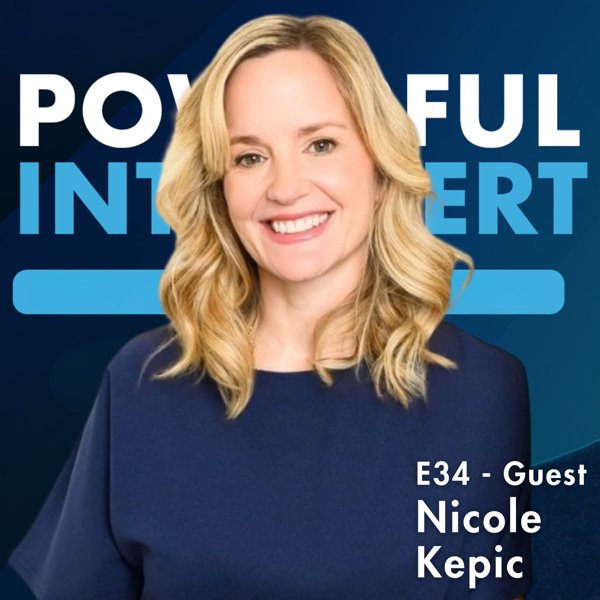
Nicole Ekepick is a copywriter and author who spent nearly 20 years writing for major brands including Kellogg's and PepsiCo before going full-time into her own copywriting business. Her book and work help introverted entrepreneurs market and sell in ways that feel natural — specifically by owning quiet strengths like deep listening, careful preparation, and writing as a primary communication medium. The core insight is that introverts don't need to be louder to attract clients; they need to be more authentically visible, and words on a page can do the selling that a personality performance cannot.
I remember thinking: why do I have to be louder? Why can't my work just speak for itself? Can I just be me?
If I don't offer it to them, they don't know that solution to their problem exists. So I don't do them a favor if I don't sell.
Selling is more listening than talking. And if you think about it that way, then it becomes easier for us.
Key Stories
- The boardroom blank: At a creative agency, Nicole was put on the spot in a client brainstorming session to produce a headline in front of the room. She went blank. The moment she returned to her desk, ideas poured out — a story that perfectly encapsulates how introvert processing works and why on-the-spot performance is a structural disadvantage, not a talent gap.
- “What would future you do?”: Her business coach’s question changed how Nicole approached invitations that scared her. Before turning down a podcast appearance, she asked: “What would the established, confident version of me do?” She said yes, loved it, and now does them regularly.
- The in-person event with 60 strangers: Nicole attended an event where she didn’t know a single person, purely to meet a speaker she’d worked with online. She describes it as a stretch but also a demonstration that introverts can navigate social environments with purpose rather than performance.
Techniques & Frameworks
- Selling as serving: Reframe selling from “pushing something on people” to “offering a solution they don’t yet know exists.” If you don’t make the offer, you’re withholding help. This removes the sting of rejection — a “no” just means they’re not ready to be helped yet.
- Listening as sales advantage: Introverts who lead with questions rather than pitches are measurably more effective — research cited in the episode shows that asking 2 questions per minute (vs. fewer) is the sweet spot for buyer trust and likability.
- Energy-based client curation: Before saying yes to a client, notice your gut response in the discovery call. Difficult clients are exponentially more draining for introverts. Having the courage to say no protects both energy and service quality.
- “Future you” framing: When facing a fear-driven “no” instinct, ask what the confident future version of yourself would choose. Use that answer as the tiebreaker.
Full transcript
Taxes was feeling so stuck. Sitting in traffic, squeezing into a parking spot. All the squeeze-in getting tax help during your lunch break. Now Taxes is a Turbo Tax expert who does your taxes for you. While you go about your day getting real-time notifications about their progress and the most money-backed guaranteed. Now this is Taxes. Into a Turbo Tax, don’t miss the deadline. File by 415. See guaranteed details at TurboTax.com slash guarantees only available with Turbo Tax experts. The Bleacher Report app is your destination for sports. Right now, the NBA is heating up, March Bandit’s is here, and MLB is almost back. Every day there’s a new headline, a new highlight, a new moment you’ve got to see for yourself. That’s why I stay locked in with the Bleacher Report app. For me, it’s about staying connected to my sports. I could follow the teams I care about, get real-time scores, breaking news, and highlights all in one place. Dallow the Bleacher Report app today so you never miss a moment. What if self-promotion makes you cringe, but your business depends on it? That’s the question at the heart of today’s conversation. This is the powerful introvert podcast helping quiet professionals rise in leadership and earn what they deserve, authentically, through short practical lessons and real world stories from quiet leaders. I’m Greg Weinger. Today I’m talking with Nicole Ekepick, a copywriter and author who helps introverted entrepreneurs market and sell authentically. After two decades writing for major brands like Kellogg’s and PepsiCo, she now shows creative professionals how to grow their businesses. In this episode, you’ll discover how to market and sell in ways that feel natural to your energy and personality. Why owning your quiet strengths attracts the right clients and opportunities and practical copywriting and mindset shifts that like your words speak and sell for you? Let’s dive in. I’m really pleased to have Nicole with me today, well done. Thank you so much, Greg. I love that intro and I hope your listeners really enjoy this conversation. Yeah, well, it’s great. Let’s get into it. I wanted to first ask, when did you first get an inkling that you were an introvert? Yeah, I think the first time I really put a name or a label to it was probably about eight years ago and I definitely have a story there, but it’s funny when I think back to when I was a child, I think I was almost like anti-intervert. I was so craving attention and I was so dramatic. My mom said that I just loved being in pictures and anytime I walked by a mirror or a toaster or anything with a reflection, I was smiling at myself. Like I sound really obnoxious here. I would often create and act out these commercials and plays for my family. Even speeches, I loved doing speeches and presentations and would often go to regional competitions. But then I think as I got older into high school and adulthood, luckily I became more modest and I was a lot quieter and I didn’t crave that attention. I didn’t want that attention and I just became a quieter version of myself. I’m going back to about eight years ago or so I remember being at a baseball game with watching my son play, just chatting with another mom. Here was this person, this other mom who was really social and bubbly and she just knew a million people. She was one of those people that had a million friends. She had said, I’m an introvert and I’m reading this book about interversion. I remember in that moment thinking, wait, you’re an introvert? Are you sure? Aren’t you an extrovert? And then that’s where I just learned more about interversion and she had said, no, it’s mostly, I mean, there’s certainly manufacturers, but it’s mostly about how you replenish your energy. You can be friendly and social, love people, all these things and still be an introvert. And I remember thinking that this was such a relief to know this because I felt like I was all those things. I liked meeting new people and I was social and friendly. Yet I knew I wasn’t an extrovert but I was afraid to call myself an introvert because I thought if people think I’m an introvert or if they know I’m an introvert, they’re going to think I’m all these things. They’re going to think I’m not good with people. I’m not social. And I didn’t want to have those associations attached to me. I wanted to be the person that was friendly and likable. So it’s almost like that conversation gave me permission in a weird way to call myself an introvert. And I was like, oh, okay, you can be these things and still be an introvert. And that just, you know, make me happy. So that was, I guess, the first time I proudly labeled myself as an introvert. I love that story. And there’s part of me that really resonates with that. Like as a young kid, you really do have, like you must have felt very comfortable and you were just being yourself and that presented as what we consider extroverted today. And I think things shifted a little bit when you started going into wider social circles. And, you know, and their social pressure is and then those, the part of your wiring that’s, you know, the introvert wiring started to come into play a little bit. But you’re still that little girl that, you know, you still have these parts in you that with the right support can be there and come out. Yeah, that’s so true. That’s such a good point. And yeah, again, to your point, going into those wider social circles when I went from elementary school to high school, it was a much bigger school. So many more people. And then also the pressures and challenges of being a teenager, you’re changing, you’re growing, you’re evolving. And so yeah, I just landed on a quieter version of myself, which, you know, I’m totally fine with now. That’s great. And then coming across this work gives you permission and it’s actually okay to be quieter. It’s okay to be an introvert. Yes, yes, absolutely. And I can’t say there aren’t times where I’ve thought to myself even recently, I’ve thought, well, what if I was louder? Would it be easier in certain ways? You know, would it be easier to market myself? Would it be easier to sell? If I was louder, if only I was louder, but then I go back to know that’s not who I am and that’s okay. I don’t have to be somebody. I’m not. That’s right, because there’s still a world that’s pressuring you to fit a certain mold. Yes, absolutely. Absolutely. So then you moved into the career world and, you know, in the creative agency world where I have spent a lot of time with marketers in my career. There’s a lot of outgoing, extroverted people. There’s, I think it’s another field that in particular like sales really rewards extroversion. So what was that like for you? Yeah, I mean, it certainly had its challenges in some ways. And I’ll say even before then, I had studied journalism. And then even with journalism, I found, you know, there were hints even back then. That I was in an introvert because I loved the writing aspects so much. Just the writing and the crafting of the words. But then when it came to being a sort of being aggressive and chasing the story and being the first to the story, those ideas of journalism didn’t really resonate with me. And that’s why instead of really going after a journalism, a traditional journalism job, I went into copywriting. It kind of happened by accident, but I landed on my first copywriting job where I was essentially just writing all day. I didn’t have to go out and do the interviews and do the chasing. I could just do the writing that I loved. So that was most of my career during that writing and in my last role at a creative agency before I left the 9 to 5. Yes, you definitely have those louder personalities. People who are just naturally better at selling themselves, standing up in meetings, sharing their ideas. And yeah, and I was the quieter person. So most of my job was writing, sitting at my desk. I will say that, but there was also the presenting, the sharing of ideas. There was even a time when I went with the account director, we flew down to Ben Vanville, Arkansas, and I presented to the staff at Walmart at office. And I remember being so nervous for that. It was kind of exhilarating, but yeah, all that to say, it wasn’t just sitting at my desk writing. There are certainly other aspects of the job. And then we talked before about how those boardroom settings, those boardroom situations, where I would be at the creative agency. Maybe we just landed a new client and there’s lots of people around the boardroom table. And it’s kind of like, okay, we need a new campaign, new tagline, new positioning statement. Nicole, you’re a copywriter. What have you got for us? And it’s like, suddenly all either on me and what’s my idea? And I would just, I would just breeze in some cases. I would think, okay, the pressure’s on. I’m the copywriter. I need to be the person with a big idea. But in that moment, in that setting, it’s like I would just blank. And maybe I covered it well. But then other people would start talking or other louder personalities would pitch their ideas. And I would think, well, I’ve got that idea or a better one, but I’m not saying anything because I’m too shy or too quiet. And then we would leave the boardroom. I’d go back to my desk and I could instantly pump out a bunch of taglines and ideas. But it was just in that room, in that setting, whether it was my introversion or imposter syndrome. Whatever it was, I just wasn’t able to perform in the way that I was if I just went back to my desk and did it without that pressure. Absolutely. So many introverts, myself included, find themselves much more challenged in those situations with, there’s a lot of techniques that I’ve developed other people talk about that to help in that situation. Preparation, of course, is very big for introverts. But there’s always going to be a situation that you can’t be prepared for. So, you know, that’s another challenge. Yeah, that’s a very common experience for someone who is introverted. Yeah, absolutely. And preparation, like you said, if I had the time to prepare, if I was creating presentations, I was fine. It was just those on the spot. Hey, what have you got for us on the spot? It’s like I wasn’t able to just think on my feet really well or as well as I wanted to. But again, if I had that time to really sit down and think with my thoughts and come up with the idea, I was so much better at it. Right. And so, your strengths balancing, other strengths. So, there might be people in that room on staff who are great on the moment, you know, in the spur of the moment, but they’re not going to sit down and, you know, crank out awesome material for hours afterwards. There’s advantages to having a mix of people on staff, but you have incredible strengths just as an introvert. Thank you. Yeah. And I guess to your point, that’s why it’s so good to have different personalities, different skill sets on the staff. Excellent. So, you run your own business now that when did you decide to move out of that world and start your own business? Yeah. I mean, it was a pretty slow burn. I had, I was basically for almost 20 years. I was in the copywriting, nine to five world. I was working in house that companies or creative agencies like we just talked about. So I was doing the nine to five copywriting. And then at one point in my career, I was in between jobs and started a freelance writing business on the side. And so at the time, I thought, oh, yeah, I’m just going to run my own business. But then I got another nine to five offer that was just too good to turn down. So I went back into the nine to five, but I still kept up that freelance writing business on the side. So for the last ten or so years, I was, you know, had my nine to five. I was commuting doing family stuff, all the things plus had my freelance writing business. And then ultimately it just got too busy at a certain point. My freelance business started to get busier and busier. And then I thought, oh, I need to make a decision here. I need to either quit my freelance business and just, you know, stick with the nine to five or quit the nine to five. And suddenly that started to sound more appealing to me. Even though I always loved my workplaces, I genuinely loved who I worked with my bosses. I don’t have those horror stories, nightmare stories like other people do. I loved where I worked. And I think that probably is the reason why it took so long to lead the nine to five. But ultimately just be, I think around 2020 or late 2020. I left the nine to five and went all in with my copywriting business. And it was timed around COVID. It wasn’t because of COVID. It just happened to be at the right time where, you know, I was ready. I had established clients. I had my systems in place and I thought, okay, now is the time. Let’s turn this into a full time thing. That’s great. It’s a story here pretty frequently too is the time of COVID was such a big shift. You might as well just go after your own personal business. And that’s really worked for a lot of people. Yeah, I mean, so many people at that time did that. So many people, I mean, unfortunately, many people lost their jobs and were forced into doing that. But other people, I think, yeah, it had them re-embelliating their life. Thinking, like, you know, for me, I was commuting an hour each way. Or, you know, if there’s rain or snow, that’s even longer than an hour. It’s a lot of time to be sitting in a car and you’re just kind of, yeah, you’re re-embelliating. You’re making different choices. Yeah, yeah. The investment of lifetime in commute was really put in stark relief during COVID. You’re like, that’s time you could be spending with your kids or walking your dog or honestly doing more work. I think a lot of people end up doing that. Yeah, for sure. It’s a lot of time. And I think before COVID, we were just in the habit. It was just on autopilot. This is what you do. You commute to work. You’re in the car. It’s just what you do. But then afterwards, companies became so much more flexible. And you realize, oh, there’s more time in my day that does not have to be a car. Exactly. So at what point did you start incorporating these realizations you had about introversion and that this was how you were wired and that this is okay into your career and eventually a book? Oh, my gosh. Well, probably when I made the shift from the 9 to 5 to full time, it hit me again in a pretty big way. Because I remember thinking, okay, in the corporate space, I would have bosses or managers say, you know, we love your work. We love your writing. You just, you need to be louder. You need to be more assertive because we want people to hear your ideas and know that you have these ideas. And this, they had these, these were all with the best intentions. Like they just wanted the best for me. But I remember at the time thinking like, this is so frustrating. Like, why do I have to be louder? Why can’t my work just speak for itself? You know, why do I have to change who I am? My personality. Can I just be me? And this is kind of a segue into my book in the title. I just remember thinking, why do I have to be loud? And then when I left the 9 to 5 to go full time into my business, those concerns popped up again. Because I remember thinking the online space, like you go on Instagram, Facebook, anywhere. It is allowed in busy space. And so then I thought, oh my gosh, how am I going to stand out on here? How am I going to attract clients? How am I going to stand out? There are a million copywriters out there. Am I going to have to change who I am? Am I going to have to be louder and bolder and have this fake personality and be always on somebody I’m not in order to get clients? So that was my concern. But, you know, soon after I realized, okay, just calm down. You don’t need to change who you are. You can still run your business as an introvert. You can still be the same person. Yes, you’re going to have to stretch in some ways. And we can talk about that too. But ultimately, I could just stay the same way I was. And then I would attract different clients, you know, clients that were like me or clients who had appreciated my personality or values, introversion. It just all naturally worked out. I didn’t have to force myself and be somebody I wasn’t. Got it. So in a sense, this became part of the branding that you put out into the world and attracting the people who that’s really speaking to. Yeah, I guess so. And the funny thing is, if you look on my website, aside from my book, it’s not like I’m the copywriter for introverts. I’ve written for introverts. I’ve written for extroverts. But I think people can tell from my Instagram, for example, or when I do videos, I think they can just tell I’m an introvert or, you know, sometimes obviously I talk about it. But I’ve never branded myself as I’m the introverted copywriter or I’m the copywriter for introverts. It’s just, it’s just naturally happened, I guess, in the sense that most of my clients are introverts when I think of it. When I kind of mentally go down to my list of clients, I think there’s just that natural attraction. Yeah. And your focused copywriting, which is the part of the marketing that doesn’t require you to be up and speaking necessarily though, you’re doing it. You’re making videos and you’re promoting your work in that way. The online world is kind of a gift now in that there is so much that you can do to put yourself out there and sell honestly without being on video or trying to be loud in one way. Yeah, yeah, it’s true. I mean, you know, just speaking about the differences too between being in the 9 to 5 and running your business, I will say that there are pros and cons to each as an introvert. In some ways, the 9 to 5 as an introvert was easier because when I worked at that creative agency, I had projects just landing on my desk. Like the account people or my bosses, the studio manager, they would say, okay, here’s a new client. Here’s the copy project. And I just wrote for our clients. I was the only coffee writer on staff, but now that I’m running my business, again, it’s not just about holding my craft and doing the writing. It’s like, oh, I need to market my business. I need to do the selling. I need to do the invoicing. I need to do everything. I need to attract those clients. Those clients aren’t just magically landing on my desk. Yes, there’s word of mouth and referrals, but there’s a lot of energy that goes into attracting those clients to you. You have to be visible. Otherwise, you’re just, you know, you’re going to be forgotten. You won’t be top of mind. So pros and cons to each of those worlds. Yeah, absolutely. And so there are things that sounds like that are taking you out of your comfort zone, which of those activities do you find more challenging? More challenging. I think right now I’m mostly doing things I’m comfortable with, but at one point, I wasn’t comfortable with them. So even the first podcast invitation I got a few years ago, I remember thinking, yeah, no, I remember my first instinct was to say no to the invitation. And then at the time I was working with a business coach, it sounds a bit cheesy, but she would always say, think of future you. What would future you do? The future you who’s established in her business and is confident in in control. And I thought, oh my gosh, this is so annoying. I don’t want to be future you. I just want to be like, current me. But then I thought, no, future Nicole would say yes. She would confidently say yes to this. So I accepted that invitation. And I was so nervous to do it because I was worried about my voice or how I would sound or heaven forbid I stumble on a couple of words. But then it was just a conversation. And I really enjoyed it. And since I’ve done a number of podcast interviews, and I think it is really introvert friendly because it’s just the two of us is just having a one to one conversation. So that’s something that at the time was really out of my comfort zone. But now feels comfortable because I gave it a shot. I tried it. There are certain other things I’ve done presentations for summits. The easier ones are ones where I can just record them in advance. So that’s super easy. Create the deck. Record it. Send it over. But there are also some live presentations I do every once in a while. If somebody has a coaching group and they want a copywriter to come in and do some speaking on copywriting, selling with your words, I’ll sometimes go in and do that. So that’s not as introvert friendly because it’s live. And you don’t know what kind of questions you’re going to get at the end. And there’s that on the spot thinking. But again, I just thought, okay, I’ll say yes once and see what happens. And so I’ve said yes a few times. And I just look at it like you have to be yourself. You know, obviously listen to your God. If something is blaring at you, like don’t do it. This is not for you. Then say no. You don’t have to say yes. But if it’s just a tiny bit of discomfort where you feel like, oh, I don’t know. I’m not sure if this is for me or I don’t know if I’m good enough for this. I would still lean into trying it at least once because you never know. And that’s why you stretch yourself. So is that fine line of saying no to what’s blaringly not right for you? And saying yes to things that are going to get you out of your comfort zone just a bit. Right. And if there’s a motivation to do it, you know, there’s a gentleness to all of this. Where that, you know, you’re not going to put yourself too far out of your comfort zone. It’s going to be a little bit discomfort. But you know, maybe something you can deal with. But if it’s motivating enough, like you really do want more clients, you really do want more success. Maybe you want to meet people. Then it could be worth it for you. And that is a theme for introverts. There is things that are inherently uncomfortable, but there are things we want out there. And so we do have to, to endure a little bit of discomfort to get them. Yeah, just a bit. I know when it comes to video, I mean, video is so huge for marketing, right? It’s always like, you need to do video. You need to do video. So I find I just approached that in my way in the sense that every once in a while on Instagram, I’ll do a video in my story. But even then I can record it ahead of time and then post it. But I don’t, I think I’ve done one Instagram live in my life. Like I just, I just choose not to do Instagram live. I don’t want to do it. So I’m just going to say no to that. So again, it’s kind of picking and choosing what serves you, your energy, your personality, and also doing what you love because if something is just so cringy to you, you really just like it. It’s not going to be fun, first of all. And then it probably comes across to your audience as well. They’re going to, they’re going to sense that. So true. And you’ve talked a few times now about managing your energy. And so I think you got it into that in your book, managing energy systems. Could you tell us a little bit more about how you think about that? Yeah. I mean, in the business sense, it’s, I think of it in a few ways. In one way, it’s in the clients that I work with because I think you can definitely, you know, if I have a discovery call with the potential clients and I can, I can pretty much write a way, tell, okay, this is somebody I can tell I’m going to enjoy working with. They seem like a delight. They seem like they would be easy to work with. Then, you know, I’m going to go in that direction. But I can also tell if somebody, you know, if the red flags are blaring in the past, I might not have been able to notice that or maybe I didn’t listen to my gut. But now I feel like I’m getting better at recognizing those red flags. And if I feel like somebody isn’t a good fit, then I will say something that regular hardly ever happens. I usually, I’m lucky to get on calls with people who are just, you know, I delight to work with. So part of that managing your energy is just managing the people you work with. And then for me, it’s also just in how I run my business on the back end. So I’m never going to have a day where I’ve got like six or seven calls. That’s just not going to happen. I’m not going to let my schedule allow that because even just saying that it allows you to feel like really energy sucking. So it’s just managing my schedule in that way. Even my projects, I’ll do one project at a time. I’m not going to have, you know, six or seven different cooperating projects going at one time because that’s going to pull me in different directions. I’m not going to be focused. It’s going to be draining. And I really just want to give every client my full attention. So just different ways that I manage that in the back end of my business. And it strikes me that having your own business is an incredible advantage for an introvert to help them manage their energy. You get to choose who you’re working with. The energy vampires, you can just say no to. And it’s not necessarily the case in your workplace. Or it’s a much bigger deal to try to avoid people. And you might have to switch jobs. And then the ability to control your schedule that way is, it sounds really, really great. If you are drained by a certain meeting or you know you’re going to be drained by a certain meeting, you can leave time in your schedule to recover and do that. And you do have that freedom to an extent when you’re in a corporate environment, but just to a lesser degree. Oh, yeah, I agree with all of that. Yeah, when I think back to corporate, again, even with the projects, you’re just, you’re doing what you’re here told, essentially. I couldn’t be like, oh, sorry, I’m not going to write for that client. I refuse. That doesn’t match my energy. Yeah, you’re basically taking what you get. So that is a great perk of having your own business, just that choice that you have with the people and the projects. And then the timing, like you said, I can, I can buffer in white space around really energy. I don’t want to say energy draining, but high intense activities. Recently, I speaking of stepping out of your comfort zone, a couple of months ago, I went to this in-person event that was in my city. And it was, you know, for online business owners. And it was all women. I think there were about 60 people. I didn’t know anybody. Not one person. The only reason why I went was because one of the speakers was a business coach who was flying in from Nashville. I wanted to meet her in person. We’d work together online. So I really just went to see the speaker. And that was, yeah, I stepped in. Didn’t know anybody. It was kind of like a wedding. You’re at a table with a bunch of people you don’t know. You’re doing the small talk. And it was a full day of speaking engagements. It was a great event. But boy, was I tired after that. And I didn’t even do anything. I just sat there listening to everything. But it was also the mingling in between the before, during and after. And the next day, I just remember thinking, oh my gosh, I’m exhausted. One man exhausted. But it did. It took a lot out of me. And I think it was also preparing for it too. And the nervousness of what if, you know, everybody else knows each other. And I’m the only person who doesn’t, which of course wasn’t the case. Yeah, that was definitely an example of stepping outside of my comfort zone. Yeah, those events can be so draining. I’ve attended lots of conferences. And the networking. And it always just floored me how excited some people are to just go out in the evening and do more. Even like, I said, at the end of a day, I’m ready to pack it in. But yeah, that’s really speaks to our wiring. And need to manage a energy. And you can manage your energy to extend during those events too. Yeah, it’s such an interesting thing because I remember feeling when I was there that it was exciting. And I felt like it was almost giving me energy. But then yeah, right after it was like, oh, I just want to get into my pajamas. I don’t want to go out for another event tonight. Yeah. I want to talk about copywriting a little bit itself because there’s such an art to it. And you see when it’s done really well. I guess what would you recommend to introverts or just really anyone about the power of copywriting? When do you need to pay more attention to it? Like, what are some indicators maybe that you need some help with it? Oh, great questions. Well, first, I guess I would just preface this by saying that copywriting is really just writing to persuade and not persuade in some icky or pushy way. But it’s really just trying to get your readers to take an action. So instead of just informing them, educating them, you want your readers to do something. You want them to click to the next page or book a call or to invest in you. You want them to take a certain action. So your copy is really what does the selling for you. And I mean, your copy isn’t everything. If you’re a business owner, your copy is on your website, your sales page, your emails. Like, it’s the words that are communicating who you are, how you help people, how you’re different, all the things. So there are so many boxes that it needs to tick. I mean, I could go on and on here. Like, it needs to inspire. It needs to educate. It needs to be clear. It needs to create urgency without feeling pressure. Like, there’s so many things. It needs to have personality. But to answer your question, when does somebody know they need help with copy? When it doesn’t sound like them, when they feel like it doesn’t convey who they are, when it doesn’t reflect the stage of business they’re in. So maybe they wrote their copy. Maybe they wrote their website when they were just starting out. But now they’re at a higher level of business or they want to attract a higher caliber of client or a different client or a different audience. When it’s not selling, when it’s not working for them, people are landing there, but then they’re bouncing off the page. So I mean, these are just a few reasons why somebody might want to look at their copy and think, okay, and maybe it’s time that I either write it, rewrite it myself or hire somebody to help me. Yeah, like I said, your copy just has had so many jobs. And ultimately, if your copy is working for you, it’s selling on your behalf. So if somebody, it’s not that you’ll never have to do a sales call again. But if somebody has read your website first, or your sales page, whatever it might be, and then they hop on a call with you, the idea is that by the time they get on a call with you, like they’re already convinced they want to work with you, or they’re almost there, and they just want to do a gut check or a fit check. So you’re hoping that your words will sell on your behalf, get people excited to work with you to invest in you. And it’s really taking you out of the equation in the sense that you’re not having to physically be there all the time, shouting to your audience, selling to your audience, marketing all the time, like yes, we’ve already discussed you need to be doing those things to run a business, but not all the time. You can let those words, those carefully crafted words speak and sell on your behalf. You’re describing something that is kind of capturing the authentic personality of your client in a way. And so how do you do that? And do you spend a lot of time with your clients? How do you get deep in enough to be able to reflect that in the writing for them? Yeah, I would say that’s yes and no if I spend a ton of time with my clients, because obviously I spend enough time with them to get to know them. So I’m having conversations with them. I’m looking at their existing content, if there’s already content out there. So if they already have an existing webpage or sales page, I’m reviewing that content. But it could be that they don’t like that content, and that’s why they’re hiring me. They’re like, okay, pay no attention to the stuff behind the curtain. Like, don’t look over there. We’re going to create something new. But it’s really just talking to them. It’s looking at their existing content. We’re applicable. It’s also a custom questionnaire I sent to my clients, asking them very strategic questions that are custom to them about who they serve. Their audience pain point, schools, aspirations, the offer that they’re providing. Like, it’s really digging deep into them. And then I say, no, it’s not a lot of time with them in the sense that the reason why they’re hiring me is because they want to be hands off. They want somebody else to rate their content and their copies. So once I get that information, then I run with it. And they don’t have to be on call. They don’t have to be on Zoom with me a million times. Like, I just take that initial information. I run with it. I write their copy. And they can be off doing other things. I love doing in their business. Because if they’re hiring me, it’s usually because they don’t have the time or desire or the expertise to write their copy. They recognize that it’s a weakness of theirs and they want somebody else to do it. All right. Do you ever run into clients who have a lack of clarity of some of those things you’re looking for that you need in order to write your copy? Like, they’re so clear on the offer or the strategy or how they’re trying to come across. Yes. But I will usually make it pretty clear. Like, these are things I need at front. Like, if you’re still trying to figure out your audience, maybe wait, don’t hire me yet. Or if you’re still trying to figure at what it is you’re selling, come to me after. With that said, though, I have had clients hire me and I’m about to write their copy or maybe I’ve even started their copy. And they’re still kind of changing their minds. And then I help kind of rein them in, give them some more clarity. Or even just as they’re answering my question, I’ve had a few people say, oh, this question, I was really helpful because I was feeling like I was all over the place. But then your questions forced me to get clear on who I’m serving and who I want to help or what makes me unique. So part of my process was actually helping them to get clear on their strategy. That makes sense. I wanted to ask, give back to your book. So what was the moment where you decided, oh, I need to write this book. Oh my gosh, well, I always wanted to write a book. I just didn’t know what it was going to be. Please. And then at some point, I just, yeah, at first I thought, you know what, I really want to write a book. And somebody has suggested, well, you’re a copywriter, you should just write a book copywriting. Have a copywriting book and make sense for your business funnel. But then I just thought, oh, I don’t know, even to me, that sounds boring. Like a whole book on copywriting. I don’t know. So then I just decided to write a book that was more holistic to the entrepreneur experience. Like yes, it’s copywriting, but it’s also branding yourself. It’s marketing, it’s selling, it’s attracting clients, it’s establishing boundaries with clients. It’s creating a business that works with your life, not just like your business is your life. So it became this bigger, broader book in the sense of really capturing what it is to run and market your own business and then through the lens of an introvert. So at first, I had this idea for this book. Okay, it’s going to be all this things, how to run and market your business. And then I felt like, oh, but what’s missing? What’s missing? And then it just dawned on me. Okay, you’re an introvert. You’re an introvert trying to run a business in this busy, noisy space. So let that be the, I guess, angle. I don’t want to say angle, but that’s, you know, writing it through that lens of an introvert. At it. So through that experience that you’ve just gone through, the periods of discomfort that you’ve had to go through and what you’ve learned along the way. Yeah. And they always say to write what you know, right? So this is what I knew very deeply, running a business as an introvert. And I just thought, okay, I’m just going to share my experiences. And so the book itself is, you know, there’s a lot of tactical information, like in the book I talk about setting up your email sequence and nurture emails. And so there’s a lot of tactical marketing and advice in there. But what makes it different to it? There’s a lot of stories. A lot of heartfelt, emotional, funny, sad, a whole range of stories in there. Because I didn’t want it to be this dry boring business book. And yeah, that’s the, that’s the last thing I wanted it to be. So I feel like it’s a business book, yes, but it’s also a ton of stories. It’s really human and relatable. And you know, I’ve had people say, it made me laugh. It made me cry. Like what business book does that? I had both emotions. I’m like, I’m sorry. I didn’t mean for you to cry. But yes, there is a chapter in there about grief because that was, it’s kind of the chapter that doesn’t belong. I talk about how I had gone through like three people very close to me. I passed away in a matter of a year and a half. And you know, suddenly your business is not the most important thing in your world. You’re just navigating this grief and you’re putting your business on hold. And then you’re not making money because you, you had this business that only pays you when you’re working. So then it also ties into the more tactical things of, okay, here’s what you can do. Just set up your business to have it run for you when you can’t physically be there. When your family is now the most important thing not your business. So, so again, it’s not just like, here’s how to run a business. It’s all those other things that go with life and business. That takes it another level of depth there because that’s something that could face anybody and sounds like you really personalize that through the stories of grief that came up. Sounds like a very helpful advice for people who are running their own business. Thank you. Yeah. And I think even in that chapter, I said like, this is not an introvert or an extrovert thing. This can happen to anybody, but it was just something I felt was important to share in that book because sometimes, especially in the online space, it’s like, it’s all business. But we forget that there’s also a life in and around that business too. It’s not just business. For somebody who is, let’s say an introvert and a small business and maybe they haven’t gone very far down this path yet of fully getting out there, what’s one thing they could look at and think about to try to expand and market themselves better? Oh, Jayce, I would just say to really look at the options that are out there. There are a ton of different options for marketing yourself, marketing your business and just realize that you don’t have to do them all. You can be picky, you can be choosy. You shouldn’t do them all at once because that’s going to drain your energy and you’re not going to be focused on one thing. You’re going to be torn in all these directions. So I would just say be picky and choosy in a good way about how you’re marketing your business. Choose one or two activities to really focus on them. Let those lead the pack and then as you grow in your business you can add in other elements. So tangible example for me. Obviously I have a website that speaks on my behalf. That’s kind of like the main driver all roads lead to my website. And then I have an email list. My email list is probably more important than my Instagram and I’m now dabbling in LinkedIn as well. But my email list, email is a big one for me and I would highly recommend for other introverts too. Because again, it’s you’re creating this in your own community of hopefully raving fans. And it’s just like a very introvert-friendly marketing platform because you’re just sitting at your computer you’re writing one to one. Yes, your email is going to go to more than one person but you’re writing it as if it’s one to one. And you know, you’re not having to do video. You’re not having to be loud or any of those things you’re just sitting crafting an email. And as people get those emails, they just get to know you better. So you’re conveying business information but you’re also sharing bits of YouTube as much as you want to. That’s a great piece of advice. You need to have a sign out on the internet as your website. But then from there you can start to build your small following and especially with the skill of writing which a lot of introverts are good at. You can really build that personal connection and your raving fans. Exactly. And the one thing I’ll say too, if we’ve got time to vote email and I talk about this in the book is not really using email to your advantage in the sense of not just sending an email and it’s one and done. So creating an automated nurture sequence where every time somebody joins your list, you have a series of emails that go out no matter if they join tomorrow or six months from now or nine months from now, they will always start at grand zero and get the same emails. And those emails can be thoughtful and intentional even if they’re written in advance. But then you’re not just sending one email and then it never sees the light of day. And for me this happened where I had a business friend who said, oh my gosh, I’ve been on your email list for a year or two now and I love your emails. And it makes me sad that if somebody joins tomorrow, they’re not going to see the emails I’ve already seen. So she’s a tech expert, a tech expert. So she helped me set up. Basically we took all those old emails. You know, I repurposed them, refined them. I left out the duds, the ones that weren’t good. Took the best ones and then she created this, you know, using her text skills. This automated nurture sequence for me. So now if somebody joins my list, they’re going to get all these emails that somebody would have gotten before. So it’s just, again, it’s introvert friendly in the sense that you’re not having to constantly pump out new material. You’re reusing, repurposing old material, but old material that’s good. And it’s not just like, oh, that was a waste. Like it’s really quality content. It’s purposeful. It’s intentional. It’s really good advice. And I think there will be listeners who aren’t familiar with nurture sequence. That kind of thing. But yeah, there’s email marketing programs. There’s a lot of them. MailChimp is just like a simple example, but there’s a lot of different platforms there that are friendly for small businesses. And there is that ability to go in. It’s not, you know, you need a little bit of text skills. It’s really not that bad, but you can go in and configure these. And I think everyone is used to receiving an email, you know, welcome sequence. You’re like, oh, they’re sending me email every day. That’s all automated. But that’s a great call out. It’s a great suggestion for anyone who is in a small business. Thank you. Yeah. And it doesn’t have to be this big, expansive thing. You can start small with just a couple of emails. But the idea is that once somebody is on your list, you don’t want to just send them one email and then forget about them. And then six months later, be like, oh, hey, how are you? I’ve got something to sell you. Like you want to just keep in contact with them and nurture that relationship in an authentic way. Yeah, it’s a good way to put it. Nicole, this has been really fantastic. I really appreciate you being on the podcast and sharing your story and your experience and knowledge with us. If people want to learn more about your work and your book, where should they go? To my website, thank you for asking. My website is NicoleCopic.com. So it’s my first and last name. You’ll find more about me. My services. My book is on there. Yeah, all the things. Fantastic. And is there anything else that you’d like to share with your audience we haven’t covered today? Oh my gosh. I think we covered everything. Aside from I’ll just quickly say, you know, I spent a lot of time, a lot of wasted time probably thinking, oh, it would be so much easier if I was an extrovert. It would be easier to market and sell and stand out and all the things if I was an extrovert. And now I realize to a point, you can’t change who you are. So why spend that time? Thank wishing or thinking you were somebody else. And just really own the gifts you have as an introvert. Because there are a number of gifts. There are so many gifts and people really appreciate those gifts. I wholeheartedly agree with that message. Thanks so much for being on the podcast today, Nicole. Thank you, right? Let’s take a moment to recap what stood out in today’s conversation with Nicole. First, remember that marketing and selling don’t have to drain you when you let your authentic energy lead the right clients naturally connect with you. Number two, your quiet strengths are not weaknesses. They’re what make your work magnetic to the people who need it most. And third, your words can do the selling for you when they sound like you, genuine, grounded and clear. If you found this conversation helpful, take a moment right now to subscribe to the powerful introvert podcast. So you never miss new lessons and stories to help you lead quietly and with confidence. I’m Greg Weinger. Thank you for listening.