Quiet Leadership: How to Speak Up Without Becoming Someone Else
Speak Up in Meetings with Quiet Authority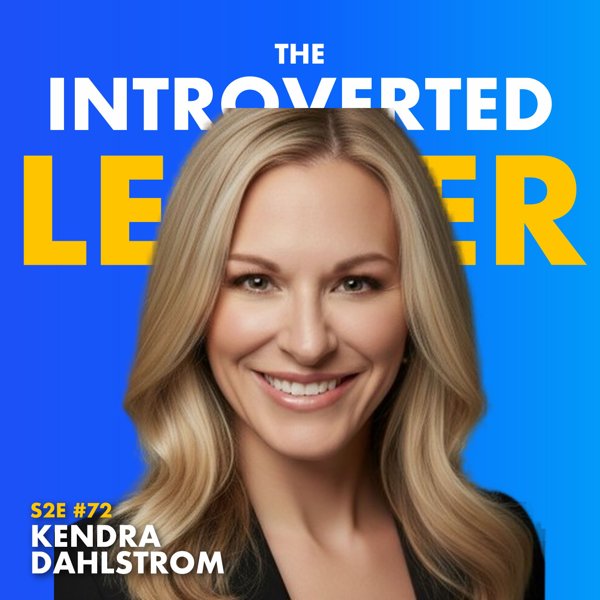
Kendra Dahlstrom is a leadership coach and 28-year corporate veteran who spent the first decade of her career staying silent in meetings out of fear of getting it wrong — then watching someone else raise her exact insight a day later. Her central reframe is that the regret you feel after holding back is leadership data, not a personality flaw, and that trusting that instinct while learning to read the room is a skill any introvert can build. She argues leadership is a set of behaviors — preparation, clarity, deliberateness, and follow-through — rather than a personality type, and offers a concrete tactic for the insight that surfaces after the meeting ends: send it anyway.
That voice in your head telling you, "I should say something," isn't superficial.
Leadership is a set of behaviors. It's not something inherent to your personality.
We need to get really strong internal compasses and use that to define our worth.
Key Stories
- The meeting she stayed silent in — for a decade: Early in her corporate career, Kendra held back her insights in meetings out of fear of getting it wrong, then routinely watched a colleague raise the same point 24-48 hours later and get the credit. The repeated pattern eventually taught her that the silence, not her judgment, was the actual problem.
- Getting “bit” for speaking up: When she did start voicing her ideas, senior colleagues sometimes reacted defensively — feeling blindsided or undermined by a point they hadn’t already considered. She learned to build consensus with stakeholders individually before the meeting rather than retreating back into silence.
- The near-death experience that reset her definition of worth: Kendra describes being shown, during a near-death experience, that the hours she’d spent worrying — not her mistakes — were her real “transgression.” It became the root of her belief that worth is inherent and unconditional, not something earned through performance or external validation.
- The quiet exit at work events: To manage her energy through all-day conferences and evening work functions, Kendra developed small, discreet recovery rituals — stepping around a corner to scroll her phone, taking a hot-cold shower mid-day, or pulling one person outside for a one-on-one conversation instead of staying in the crowd.
Techniques & Frameworks
- Treat post-meeting regret as data: If you leave a meeting wishing you’d said something, that recurring feeling isn’t superficial — it’s your gut instinct pointing to what should have been raised. Learning to trust and act on it, tactfully, is the core skill.
- Leadership as behavior, not personality: Preparation, clarity, deliberateness, and follow-through are learnable behaviors any introvert can practice — leadership doesn’t require dominance or volume, just consistency.
- Send the email anyway: When the right insight arrives after the meeting has already ended, send it in a follow-up email or Slack message instead of letting it disappear. It shows you’re pragmatic and thoughtful, and keeps the conversation open.
- Pre-align before the room: Build consensus with key stakeholders one-on-one before a high-stakes meeting so you walk in already aligned, rather than surprising someone in front of the group.
- Calibrate the nervous system between commitments: Small resets — a quiet corner, a change in water temperature, a short walk, or pulling one person aside for a smaller conversation — let her sustain energy through long in-person events without needing to fully withdraw.
Full transcript
Have you ever sat in a meeting with something to say but held back, only to watch someone else make that exact same point? That gap between what you know and what you express is where quiet leadership lives or dies. Welcome to The Introverted Leader. It’s a podcast helping introverted leaders embrace your underrated quiet strengths so that you can get promoted and start earning what you deserve. I’m Greg Weinger. I have over 25 years of leadership experience, and yes, I am an introvert. My guest today is Kendra Dahlstrom. She’s a leadership coach and 28-year corporate veteran who spent her early career staying silent in meetings out of fear. But she persevered, and she learned the hard way that her gut instinct was the leadership signal that she needed to trust. Let’s get into it All right, Kendra, so glad to have you. Welcome to the show It’s great to be here with you today, Greg Excellent. So I have to ask you, do you consider yourself an introvert, extrovert, or other? So that is a funny question because my husband would tell you 100% I’m an extrovert, but I actually see myself as an introvert that has learned to adapt and been forced to operate as an extrovert for survival. So I guess I would say I’m an ambivert Yeah. Normally I would side with, a spouse, their opinion on my guest, they know people, better than anyone. So but it is interesting that you feel that you,do have introvert tendencies and that you’ve been forced to adapt like many of us. Yeah. I think it’s about motivators, Greg. So for me, even launching my own podcast or when I deliver a workshop or deliver a keynote on stage. If you ask me if I want to do that, if I had a choice, the answer would be no. The reason I did it was because I found that those work the best for me. The awkwardness of just sitting in silence in meetings and being an introvert just became unbearable for me, and so I just decided, fine. I’ll go first. I’ll just… I’ll fall on the sword. I’ll do it.” And so it, it really became a learned competency because I value the impact and connection, so my values are really driving that behavior. It was really out of wanting to have more of an impact and just feeling like I need to say something. I need to do something that, kind of propelled me to overcome my discomfort with those things, and that also leads to its own misunderstandings, right, Greg? And misconceptions, which I’m sure you’re gonna get to here in a minute, but around like you have to say something. Well, sometimes that’s not the best thing you can do in the moment. Sometimes it is what’s needed, and you d- you know, you are able to show up as a leader by being extroverted in that moment. But sometimes being quiet and just listening and not changing who you are is the better solution. So I think it’s about, really getting to know yourself and learning how to, like we call it in leadership development, flex, within a reasonable comfort zone of who y- you are in either direction And it gives you agency and it gives you, yeah, yeah, the feeling I have a choice. And so that can be situational, but it could also be personal. I just am not feeling up to, to presenting in that way in this situation. I can. I know I could summon these, but, you know, I choose to, for personal reasons, whether it’s to take care of myself, I might have other things going on, there’s just more choice there. Yeah, which is also very liberating And that in turn fuels your self-confidence because for me personally, a lot of my confidence derives from paying attention to my internal needs. I’ve kind of realized over time. there are situations where, I need to say something and that fuels my self-confidence, but there might be other situations where protecting my energy is what, I need in that moment, and then that’s reinforcing for my confidence. It’s kind of counterintuitive. It’s sort of what you need in the moment. And I was having a conversation with someone earlier about how I define leadership, and it’s really, I think, different than many other people would define it. But the way I define it is being willing to do what’s needed in the moment to lead the way. And so that often means going first, being vulnerable by doing that. Sometimes it’s being quiet and hopefully the room catches on and everyone’s just silent and listens. Sometimes it’s speaking up. Sometimes it’s being the first one to go in a direction. But, by definition, it’s being willing to do whatever is needed in the moment, and so we have to be able to flex to do that. So sometimes it is I need to listen to my body, listen to myself. I’m not feeling well, and I can’t lead others if I can’t lead myself well. Or sometimes it’s, “No, I do feel like having that conversation,” or, “Maybe I don’t wanna go to that social gathering.” And I love that because it’s, it’s just more nuanced. It means that you don’t always have to be out in front and doing things. It’s being more attuned to your surroundings and present with whatever is there and, and doing what’s needed in that moment Yeah. I think often, I mean, if I look back at my experience there’s some of the most impactful people that I’ve worked with have been introverts, and they’ve been those that are deliberate and thoughtful and quieter. So it doesn’t have to be loud and obnoxious You don’t have to be obnoxious to have an impact. That’s a good— Yeah, it’s a good statement. I, I’m curious if you could walk us through a little bit. I mean, ‘cause you, and you s- you mentioned starting out being quieter as, you know, as younger, and you, you had a journey as you kind of came up and rose up to your position where you were doing leadership development at a very high level. And so what was your progression there? What were some of the lessons you learned along the way? One of the biggest lessons I learned and really started to become more clear to me in my 20s, and so my early career as I graduated college and moved into corporate, was that I’d stay quiet in a lot of meetings because I didn’t wanna mess up. So it was kind of based in fear. I didn’t wanna say the wrong thing, or I didn’t really feel like I know enough to form an opinion, which is fair. I mean, sometimes that’s true. But oftentimes, more often than not, I’d leave the meeting, and if not right after or within the next 24 hours, I would feel a sense of regret for not saying something that I felt was really important that nobody else called out or noticed or drew attention to, or maybe some piece of information I had insight into but others may not, or they just didn’t feel brave enough to mention. And then it always turned out that within, you know, 24 to 48 hours later, somebody came back around and said, “Well, why didn’t we think of that?” Or, “Why didn’t we mention this or that?” as I was learning to, intervene into larger team conversations and how to do it tactfully and all these different things. But I got bit a few times, and then I’d kind of retreat back, but the lesson kept presenting itself over and over again. And then finally, as I approached my late 20s, early 30s, I realized that that is my gut instinct, my intuition, wisdom, whatever you wanna call it, and it’s there for a reason, and it’s a tool, and that I need to honor it and listen to it. Because when I don’t I wish I had. And so that took me a long time and, and I think that helped me kind of emerge from being more of an introvert, and not sharing thoughts, feelings, ideas, to being able to share them in a thoughtful way that really felt m- aligned internally. Does that make sense? I have a similar progression where I’d be more hesitant to share my opinion, and then I just like… It’s like that you’re kicking yourself. “Well, I had that thought. Why didn’t I share it? I could have helped. I could have made an impact there.” It’s almost like you know better, and finally you’re like, “All right, I need to start saying things.” You said you got bit doing that. Is that people reacting or thinking you’re speaking out of turn or just challenging you on it, and then you’re like, “Oh, I, I, I’m not really sure. I am just kind of raising a question.” Like all of the above.Usually it was a more senior person would kind of be like, “Well, how dare you,” you know, “say that?” Like, I should have come to them first. Like, maybe they felt like I was undermining them. I mean, I w- I wasn’t exposing anything they were doing that was wrong. I was just saying, “Hey, maybe we should think about this too,” or, “Have we thought about that?” I’ve learned over the years h- how to get gent- gentler with those questions, and then also to form a consensus maybe before going into those meetings, so maybe putting some more thought before the meeting when I’m That’s made available to me to then go in as an aligned, union versus just mentioning it in the meeting, and it also really depends on the leadership you have and their behaviors and tendencies. So it can get very complex. But most of the time it was because, one of two things. One is that somebody felt like I was side flanking them, and it was a comment that they weren’t expecting or, or something they didn’t have an answer to or something they hadn’t expected, and so they felt like it undermined them or made them look bad because they hadn’t thought of it themselves or whatever our ego wants to tell us. Yeah It’s important to know those things going in. And then I would say the other third of the time it was I, had a tendency to be very visionary and kind of connect dots very quickly across intricate systems, so operationally or otherwise. So somebody could say, “Oh, we’re gonna launch this campaign,” and everyone would say, “Okay, here’s what we could see happens in the next six months.” But for some reason, I have this innate ability where I c- I could see that, yeah, everything’s fine for six months, but in 12 to 18, it could impact this customer experience when we do this upgrade of this software or something really, you know, kinda out there. And, Some of the times when I’d say comments in meetings that were along those lines, it was almost like it was too far in the future or too visionary for people to really hold onto. But to me, it just made so much sense, and I hadn’t quite, been able to connect that just because it makes sense to me internally doesn’t mean that others… that it makes sense to them, and that I, I needed to use better communication techniques to help them catch up. So sometimes it’s kinda like that big sky thinking, and somebody makes a comment, everyone’s like, ” Okay, we’re not worried about that yet.” But then lo and behold, six months later, the leader would always come back and say, “Oh, we need to think about that software upgrade and how it’s gonna impact the customer experience.” And I… And you know, when I was young, and I’d never say, “I told you so” to them, but in my head I thought it a lot. And then I just got used to it, that that’s just how my brain works. Yeah. Well, I fully believe you at this point. Like, these are all very, you know, common introvert strengths and, and also challenges in bringing people along to, you know, the steps of thought, you know, the steps that led you to your conclusions where, I mean, we’re working them out in our head, sometimes rapidly, and, you know, we’re not verbalizing them necessarily. So I mean, and yeah, on top of that, the sort of the political calculus about, you know, how are gonna— people are gonna react. But I think those are all things that you learn over time through trial and error, that sort of thing. Yeah. A- a- and I don’t know … I mean, I think there are other ways that you can learn it, but I think the best is through doing, and I think it’s just part of our journeys, and it’s to be expected. So I think unfortunately there’s some leadership environments that don’t acknowledge that and make that safe and okay. But I, I, I … You know, that’s why I get, got into the work that I’m in now is ‘cause I want to change that Absolutely. Did you ever feel pressure to perform extroversion or just to be a way that you were— you w-weren’t feeling internally? Oh, a lot, especially at work functions Mm-hmm. I can be really extrovert, but it’s planned and deliberate. So for instance, like you and I are talking right now, and I feel like I’m exercising extrovertness. But I will want to go on a, like a half an hour, hour walk by myself after this. I really need time to decompress and sort of just recalibrate, I’ll call it. And so work functions were like that a lot for me, especially when you have those all-day, meetings, and then you’re expected to go to the night thing. Even though I’m sitting in a room, mostly quiet, listening to lectures or discussions all day, and then we do some breakout sessions, I’m exhausted exhausting And I also don’t drink alcohol anymore, so it’s like, not that you have to drink to go out, but, you know, I… And I don’t want an energy drink or I won’t sleep, so I’m… Okay, I maybe I’ll do a Diet Coke or something. But it’s like the last thing I wanna do is then go to a bar or, you know, this restaurant and, and sit at a dinner that I know could really take one hour, but it’s gonna take three or four. Mm-hmm. And it’s just because it’s been taxing on me. but on the contrary, if I’m with a group where I feel like I have really meaningful and deep relationships with it doesn’t take as much energy for me. So I could be with them all day, like my family for instance, although I get taxed by that too sometimes. But we’re hanging out all day on a cruise ship, and then when we go to dinner I may take a 30-minute nap in between, but I can pretty much go all, all, all day and all night because I’m, I’m, I’m s- I feel safe, I’m comfortable, I have deep and meaningful relationships with these people. So I have noticed at events where I have more intimacy with the people that are there, let’s say it’s not family, I can tend to, keep my energy sustained a little bit longer. So I try to do whatever I can to calibrate the nervous system. Sometimes it’s even like a shower in between, in the middle of the day. Like, you know, hot water, cold water, whatever you need. And then in terms of, you know, if you’re at an event in the evening between, let’s say it’s, you know, 7:00 to 10:00, and you just can’t leave without it, you know, it feeling like it’s gonna impact you and your reputation or credibility, one thing I will do is, I will try to find like a quiet place that’s sort of sometimes out of where the main area is, but around the corner. And I’ll sometimes just check my phone and scroll my phone so it doesn’t look like I’m doing anything awkward, but I’m kind of just zoning out for a minute so I can just have some time to myself or just sit, you know, if there’s a patio, go outside, or maybe find somebody that I’m talking with that, “Hey, do you wanna just go talk outside?” So it’s almost like it becomes a one-on-one conversation versus being in the room with hundreds. What have you done that works? Yeah, I mean, similar things. t-take a walk outside if you can, circle either the interior of the space or go, you know, going outside. but, having the discipline to do it can be more of a challenge. Mm-hmm. A lot of the things you mentioned, th-those are good tips. Yeah. I’m always interested in root causes and you know, let’s get to the bottom of this . I don’t want to just struggle with negative self-talk all my life. I don’t wanna, you know, struggle with self-doubt all my life. And so I’m wondering when you get down to it, if you wanna get to the root cause and really make a shift, is it really what you hit on during your near-death experience, this root belief that I feel unworthy? so I believe a lot of Our feelings of unworthiness, are imposed on us We’re not… I mean, look at a six-month baby, and I don’t think any, a six-month baby would ever act or, if they could speak, tell you, “I feel unworthy.” Now, if it was neglected and not given, you know, proper nutrition or nursing or whatever it needs, then it might start to, in its nervous system, start to create a survival stress response, but it wouldn’t be able to equate that to, oh, it means I’m not worthy, until it was old enough to realize, like, oh, I was neglected. Well, I guess I didn’t matter. So we, you know, we have the logical, part of our brain and the somatic part that’s in our body, and it’s about how those two connect. And so I’m a big believer that we all have trauma, and trauma’s a loaded word because it can mean anything from, losing a loved one to, being horrifically abused, trafficked, to watching a awful car accident when you’re five years old and you didn’t even know the people. I mean, that could still leave you with trauma, right? It’s just that it manifests differently for all of us. I think a lot of feelings of unworthiness come from trauma, and included in that trauma can be dysfunctional family systems or dysfunctional, let’s call it, mentors. And that so it could be anything, you know? And if the longer your nervous system’s online, the more it impacts you. And then, of course, if you have a sequence of events, that’s why it can be so hard for people to recover from those. And so, long answer to your question, but that’s where I believe, is the common root. I think what I uncovered, in my near-death experience was a little bit more spiritual than that. It was around this idea that, nothing matters when you’re dead. You realize that like all the stupid things that you… Like, at least that was my experience. It was about like all these things that I thought, I’d have to ask for forgiveness for, and I was basically shown, “No. Look at all the hours you worried.” And I said, “Oh my gosh,” ‘cause I’m a worrier. And I was basically shown that that was like my biggest transgression or sin or whatever words you relate to and, that I wasted so much time just worrying and just not trusting that there was a source and a power that had my back, that would take care of it and believing in myself more and I realized how much just all the little things like even like paying bills and stuff, like I know we think they’re important, and it matters, and we need to have our physical reality here, but when you’re in that space, you just realize how none of that matters. All that matters is health Mm-hmm And if you have those things, anything’s possible. But when I came out of that, I realized that we’re all worthy, just by the fact that we have air in our lungs ma- is- makes us worthy. We’re here. That’s all we need to be worthy. It’s almost, yeah, resetting your perspective is like you’re not taking yourself so seriously. Or you, you somehow shed that belief that you’re not worthy Yeah. And that was just all external. I mean, external validation’s huge. It’s a huge part of our society, and I understand. even lo- we look at companies and corporations and how we have performance reviews and, I mean, everything is set up. We watch sports, you know, we look at TVs and movies and music, and it’s all, like, how, how many albums have sold or how much money did the movie make? But what I really believe is that that’s where imposter syndrome comes from is, you know, are you … It’s okay to get feedback and realize that you could do some things different or better, but that has nothing to do with your worth. And we’re conflating the two, and we’re too frequently relying on others’ opinions of us to determine our worth. We need to get really strong internal compasses and use that to define our worth. Yeah, absolutely. So I wanna shift into whatwhat is possible to do within companies to help support people, on their journey in this way? Well, I think there’s so many ways we can support and help people. First and foremost, I’ll say that I became a coach long before I actually was in an HR formal coaching role. So I started using some of what I was learning with leaders back when I was at Cisco in, like, gosh, 2006. And they were coming to me and asking for advice on before they’d have conversations, and that led into my next job. And so I kind of became a trusted advisor, and I realized, oh, this stuff works, and I’m enjoying doing it, so I think I wanna do it a little more formally. So I got my certifications to become a coach, and then I started doing a little bit on the side here and there. And that lasted for about, I don’t know, five or six years until I actually formally moved into a role that was actually, you know, a leadership development or an HR role. So I just wanna let people know that if you’re interested in personal development, you’re interested in becoming a better leader, a better person, all those things, self-help, you don’t have to be in an HR role to do that, right? You can do it for yourself and then integrate it into whatever it is your expertise is. Product marketing, finance, marketing, communications, whatever it is. I happen to be in, mergers and acquisitions, which is a highly tenuous time, so it lended itself, a lot of opportunity there to, to help people. Well, so back to someone who’s having those, those self-doubts, and realizing, they wanna, reclaim their voice and take up more space. What do you recommend for people? Yeah. Well, I think it’s important to first recognize that, leadership is not about always being loud, right? It’s about preparation, right? So leading through preparation, being deliberate, listening, being precise when you do speak, being thoughtful, and follow through, which shows consistency. And those are skills that one can show without being an extrovert. Those are skills that an introvert can possess, so it’s really important to know that that’s also how leadership can show up. It, doesn’t require dominance. It’s more about clarity and, and as I said, consistency. Where are you already doing it? How can you do it better? And that’s what leadership is. It’s not, like I’d mentioned, it’s not personality. It’s about what’s valued, right? And what’s valued is the clarity and consistency, preparation, deliberateness, attention, and follow through Yeah, and this ties in with what you said earlier about behaviors. I personally think that that’s a liberating thing to think about. And, regardless of my personality, there are certain behaviors that have an impact. And the things that you mentioned, I mean, preparation is really helpful for introverts, just full stop. One, we’re really good at it. We can do our work when, we do our best thinking kind of in the quiet, and then you bring that preparation to a situation. And I think that a really important key after that is your presence and to not be in your head, but to be more present in that situation so you can bring, your preparation to bear in the right moments. As you said, not dominant, but picking the right moments and, bringing what the moment is calling for. And because you’ve done all that, when you interject or when you come in, it has impact because it’s well thought out, it’s perfectly timed, and you’re really paying attention. Yeah. And I will just add one last piece onto that. You know, if you do find yourself in situations like I described earlier where you’re in a meeting and you don’t say something and you wish you had, or maybe the insight and value doesn’t come to you till after the meeting’s over, and I have a lot of clients like that and they get so frustrated. Like, “I’ll be in a meeting, and then literally 30 minutes later when I’m a little more relaxed, I’ll get the insight.” That’s okay. Devise a system to help support you. Don’t make it wrong and try to change it. Instead, i- in the interim, at least say, “Okay, this is how I’m showing up. This is my behavior. It’s okay to send an email after saying, “You know what? I had an additional thought.” It’s better than not sending anything at all. At least you’re showing that, you know, you’re pragmatic, you’re thoughtful. The conversation doesn’t have to be over just ‘cause the meeting ended Yeah, that’s a great point. Email, Slack, yeah, sometimes those thoughts will just come after and it’s perfectly legitimate to share them afterwards. Happens all the time, so it’s okay. Yeah. And that other concept that, you know, gradual, like you’re gradually developing this, and that’s gonna feel most comfortable. You’re pushing yourself just a little bit outside of your comfort zone, and you don’t have to just step in front of the most, high-stakes meeting and put yourself out there. You can develop that comfort over time. Yeah. Definitely So, I wanna make one, plea for, the opposite view on imposter syndrome. There might be some people thinking, “Well, well, if I don’t have this negative voice in my head, maybe I’m gonna get lazy. You know, this is actually responsible for a lot of my achievements. The thing comes up, I have this big fear I’m gonna screw it up, so I make sure I do all this work and prepare and most of the time I pull it off. So I’d be afraid if I l- just let that go.” Yeah. And I hear it all the time. So everything that we do, even the things that we don’t like or enjoy or we complain about, has a benefit. Usually 100% of the time has a benefit, and sometimes we’re not always honest about it, but I believe has a benefit, otherwise we wouldn’t do it. So sometimes it’s, oh, I saved myself from looking stupid, or I have an excuse. If I procrastinate and then I don’t do a good job, then I at least have an excuse. What if I really put my heart and soul into it and prepared and still didn’t do a good job? It would hurt, right? So there’s always a reason, and I think it’s really important, to look at what’s the benefit. Like, how is this really benefiting you? Okay, yeah, maybe it gets you off your tail. You get things done. You work well under pressure. Great job. You’ve made it this far. But what’s the cost? And be really honest about that cost. You know, Are relationships suffering because last minute you’re working till midnight or you’re not saying good night to your kids, and you like to tuck them in, and you’re feeling a little bit of guilt. Be really honest about what that list is. The other thing that I think is really important that was a huge game changer for me in my life was realizing when I was motivated from love and when I was motivated from fear. Being motivated by fear can get you really far. I work with executives all the time. But that doesn’t mean mentally you’re always in a great place You can get the same results being motivated by love, and you’ll be really, really surprised at that. So really ask yourself, if I was to flip this, and instead of being motivated by fear to get me off my tail to do this presentation last minute and then pulling it off and then feeling that sense of, yeah, I did it again, and the ego kind of feeling good about itself, what would it look like if you did it just because you loved your job or you loved yourself enough that you wanted to put the time and attention to detail into it? Or that you love your family so much that you wanna get it done so that you can tuck your kids into bed or… I just wanna have the real honest conversation around what would it look like. I’m thinking of, you know, just even work and, there are some things you have to get done, but, you know, if you can find a way to help the others, help the team, like even a leader. I want them to do well, or a peer, whatever it is. If you can flip it around to some element of service, like, you’re helping in some way. I mean, that’s kind of a softer language version of love. I, I think it’s the same thing. It’s, No, it’s the same thing. Just how… about service. Yeah, it’s about how can you do this to serve yourself and others instead of it being, from a place of fear and survival Yeah. So don’t get caught up on the word love I know when I said it, I was like, “Oh, there’s gonna be people on here that are gonna be like, ‘Oh, that’s too mushy for use a different terminology. It’s like be of help, be of service. Yeah. There you go. this is really great. The time has gone by really quickly. is there anything that you would like to share with the audience Any other bit of advice Well, back to what I said in the very beginning is trust your instincts. Right? Trust your intuition, trust your wisdom. You often know, what to say, what to do. It’s just we have a tendency to bypass it, again, validating, external opinions over our own. And so I think that is definitely, something that’s really important. I think the other thing is we really need to be thoughtful about how we’re identifying worth. we all may identify it and define it differently. how are you defining worth, and by whose standards? And at the end of the day, it really needs to just be yours, and it doesn’t mean you don’t care what other, maybe people close to you and loved ones think about you. But if you’re gonna let their opinion of you carry more weight than your opinion of you, then that creates a whole ‘nother, element of stress. And so I think it’s really important that we become really strong warriors in terms of how we get to know ourselves and what we believe is true about ourselves. Yeah. And don’t get down on yourself if you catch yourself doing that ‘cause many of us will, and it’s just something to be aware of Oh, I still do it all the time. It’s just about… like, don’t take it so seriously. You know? Like, I just kind of brush it off and laugh at myself like, “Oh, there you go again, Kendra.” You know? It, it’s not occurring as nearly as often as it used to, but, you know, we’re human beings, so we’re gonna have moments. And so, I love that you brought that up. You know, don’t take yourself so seriously and, and just understand it’s part of the human condition. And, you know, oftentimes I’ll even try to take myself out of that and realize that it’s really just a symptom of something else. Sometimes we get so focused on it, we think, “Oh, I’m not worthy. And then you realize, well, wait a minute, it’s not even about this thing. This is a symptom. There’s actually… Maybe I need more rest. Maybe I haven’t eaten. You know? Maybe I have something else going on relationally that’s got me stressed. Go deal with that, and then come back and try to do what it is you’re doing, and you’ll probably notice a huge difference Kendref, people wanna find out more about you and your work, where can they go? I’d love to connect with anyone on here who wants to es-explore, you know, maybe more directly about, themselves one-on-one or if they are part of a team, or organization that they might benefit from some of this behavioral work that is observable and measurable. They can find me at kendradahlstrom.com or they can find me on LinkedIn under Kendra Dahlstrom Wonderful. Thanks so much for being on the show today. It was, a great conversation I appreciate your conversation, Greg. Okay. A few things from this talk really stood out. Number one, trust your gut in meetings. That voice in your head telling you, “I should say something,” isn’t superficial. and the regret you will feel walking out the room not having said something is important feedback. It’s telling you, urging you to speak up next time. Number two, leadership is a set of behaviors. It’s not something inherent to your personality. Preparation, being thoughtful and clear, and your presence are what is required. It’s not about being loud. You just need to show up consistently as your authentic self. And number three, if the insight comes to you after the meeting, send it anyway. Email, Slack message, just stop by someone’s office. The conversation isn’t over just because the meeting is, and you owe it to yourself and to your peers to share what’s on your mind. If all this resonated with you, here’s one simple next step. Subscribe wherever you listen to podcasts. It’s the easiest way to make sure the next conversation lands in your inbox, and it also helps other quiet leaders, get more exposure to this kind of content. We need more confident, quiet leaders. I’m Greg Weinger. Keep leading with quiet confidence, and I’ll see you next time