The Surprising Reason Introverts Should Stop Trying to Respond Faster
Get Promoted Without Becoming Someone Else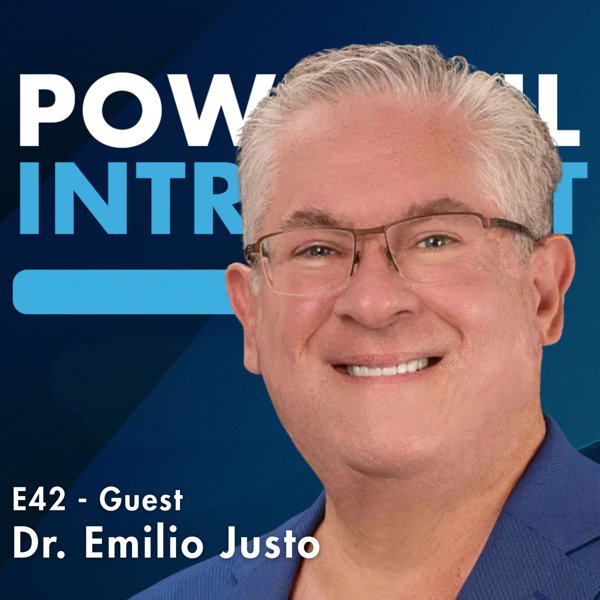
Dr. Emilio Justo is a Cuban refugee, ophthalmologist, TEDx speaker, and author of "The Power of Pause: Mastering Delayed Gratification for Success," who built a 36-year practice in Phoenix and has delivered over 10 million combined TED views across two talks. He argues that delayed gratification — not a productivity hack but a survival skill he was forced to learn as an immigrant child — is the foundational advantage of introverts who are wired to pause, think, and resist the pull of instant reward. His "Cuban triad" of self-discipline, perseverance, and delayed gratification maps almost perfectly onto the introvert's natural operating system.
Delayed gratification is not black and white. It's not choosing between all or nothing. It's just saying: generally speaking, life is not an instant gratification game.
Keep your feet on the ground and keep reaching for the stars.
Embrace your introversion. Don't make apologies for it. But be willing when necessary to get out of your comfort zone — it doesn't have to be a 24-hour-a-day thing.
I can hear myself saying things that if we weren't on this podcast would simply be trapped in my own mind. This conversation is cathartic for me.
Key Stories
- Burying money in the backyard: Dr. Justo’s father distrusted Castro and buried his currency rather than turning it in during the currency changeover; that buried money bought black-market airline tickets through a Canadian diplomat and got the family out of Cuba via Mexico.
- Grandmother vs. the mugger: At age five or six, walking home from Christmas shopping in Gary, Indiana, his grandmother refused to hand over their shopping bags to an armed mugger — eventually screaming until he ran away. The story illustrates the multigenerational grit he inherited.
- Valedictorian without knowing the word: Dr. Justo was so focused on excelling that he didn’t know what “valedictorian” meant until months before graduation — a natural expression of the intrinsic motivation he teaches rather than outcome-chasing.
- The near-bankruptcy: Twenty years ago, Dr. Justo abandoned his own delayed gratification principles, got lulled into greed by people around him, and nearly went bankrupt — naming this as the failure that most reinforced the lesson.
Techniques & Frameworks
- The Cuban Triad: Self-discipline + perseverance + delayed gratification — the three interlocking forces Justo describes as powering all of his accomplishments. “Obsession” in his second TEDx talk is the umbrella term that combines self-discipline and perseverance under a positive vision.
- Healthy obsession: Reframing obsession from psychiatric pathology to a combination of passion, self-discipline, and perseverance in service of a clear vision — the energy that makes delayed gratification feel worthwhile rather than like deprivation.
- Stepping into the spotlight selectively: Even as a deep introvert, Justo has delivered TEDx talks, done 50+ podcasts, and actively teaches his children to get out of their comfort zones — modeling that introversion and selective extroversion can coexist.
- Goals, measurement, flexibility: Set clear goals, measure progress periodically, be willing to change methods while staying committed to the vision — “don’t be rigid.”
Full transcript
Do you ever feel pressure to move fast, answer fast, decide fast? But somewhere along the way, you start trading your best contributions for that quick response. Is that really playing to your strengths? What if your real edge isn’t speed in the moment, but the power of pause? The ability to stop, think it through, and respond on your own time? And what if over time that ability to delay gratification and become healthfully obsessed with what matters is exactly how you make your best contributions? Welcome to the powerful Introvert podcast, a podcast helping introverted leaders embrace your underrated quiet strengths to get promoted and earn what you deserve. I’m Greg Winder. I have over 25 years of leadership experience, and yes, I am an introvert. Today’s guest is Dr. Emilio Husto. He’s an immigrant and refugee who talks candidly about building a life through grit, discipline, and long-term thinking. He shares how delayed gratification became a superpower, not acute productivity hack, but something he felt forced to learn early in life. In this episode, you’ll learn how to use the power of pause, mastering delayed gratification so you choose the longer, greater reward over the quick hit. Number two, how to reframe obsession as an advantage. As Emilio defines it, it’s the combination of self-discipline and perseverance powered by vision. And number three, how to embrace being an introvert and step into the spotlight under the right circumstances. Okay, let’s dive in. Emilio, I’m so glad to have you on the show today. You’re a very busy man, so I’m really grateful to have your time here. Oh, thank you so very much, Greg. It is my privilege, and I’ve been looking forward to chatting again with you. Greatly looking forward to it, so thank you for the opportunity. Absolutely. I watched a couple of your TED talks and learned a little bit about your background. I was curious. I actually grew up in the Midwest in Central Illinois. It sounds like you spent some time in Northwest Missouri as a youngster, is that true? Yes, so my upbringing, although when we came from Cuba, the church organization that sponsored us was from Gary, Indiana. But, you know, of course, we didn’t have anything, and I’m an only child. And my father was working to full-time jobs, my mother, who had her doctorate in education from the University of Havana, actually went three hours south to Bloomington, Indiana University, to restudy. So they actually sent me away to grow up with my grandparents in Northwest Missouri in a little tiny college town called Tarkyo, which is right in the Northwest corner by St. Joseph’s, running your audience who knows Missouri. And so I grew up there from kindergarten through the end of fourth grade before moving back to Indiana with my grandparents, whereby we all reunited starting fifth grade. Wow. So your mother was educated and very well educated, a doctorate, but you came into the country and you didn’t know the language. Correct. My first language is Spanish, of course, and growing up throughout my entire life, we always spoke Spanish at home. It would be very, very odd and unusual to speak English, which we never did. So Spanish was always my first language. And so clearly when we came over, it’s a lot easier when you’re a young child. Learning a second language, it’s a little bit more seamless. For my parents, it was much more difficult, of course, when you’re an adult and you’re thrown into a foreign country, it’s, you know, they had strong accents and my mother picked up English easier than my father did, my grandmother. Literally till the day she died, she hardly spoke a lick of English. My grandfather picked up English fairly well, although again a very strong accent. So Spanish has always been our first language. And so you were very, so you were three when your family left. Yes, I was about three and a half years old and that’s when we came to the United States via Mexico. When we left Cuba, we actually left through Mexico. My father was able to befriend a Canadian diplomat in Cuba. And when Castro took over, he had everyone he mandated a change in currency where you had to go to the local government. Turn in your currency for a new currency that he had created, which was really worthless. My father always distrusted Castro. So he actually chose to bury his money in the backyard, which actually paid huge dividends because it was that money, the original currency that he was able to use with the Canadian diplomat to get airline tickets through the black market and exit via Mexico. We exited via Mexico. We were in Mexico for six months. And back in the mid 1960s, it was commonplace back then that Cuban refugees would have a sponsoring organization in the United States, who would allow them to come into United States. We had Central Christian Church in Gary, Indiana, who sponsored our entry to Gary, Indiana right around the time when Michael Jackson and the Jackson five were just starting to take off because they were from Gary, Indiana as well. Fantastic. So interesting. What are some of your early recollections from that? That’s almost before a lot of people have memories. First of all, in Gary, back then, and I think still today, it’s unfortunate. Gary, there was a time when it was a robust hub and city and lots going on, but quickly started taking a turn for the worst. And so there was a lot of crime. I remember when I was very, very young, I was probably five or six years old and I was home from Missouri. I, you know, went back home to Indiana for Christmas vacation. And my grandmother and I were walking because we live close to downtown Gary. We were walking to do some Christmas shopping. And on the way back from our shopping is we’re carrying all these bags. Someone came up to us, presumably with a gun. We didn’t see the gun because they had it inside their jacket pocket. And they came up to us, wanting all the bags. And my grandmother being, you know, old school immigrant tough lady, as you can imagine, right? Think of the old stereotypical immigrant woman. And she would not give up the bags. And this guy kept asking and asking. And I was getting very nervous. And I kept saying to her, hey, you know, let go. Just give them the bags. Let’s get on with it. And no, she wouldn’t. And all of a sudden she started yelling and screaming. And that caused him to get scared and run away. So it ended up turning out okay. But, you know, it could have taken a turn for the worst. So I think in retrospect, we got lucky. But that’s a memory that will never leave me because it was very scary. Thanks for sharing that. And you’re still very young at the time. Yeah, I was probably five or six years old, but the memory is ingrained in my mind forever. Yeah. And whether Indiana or Missouri, I think there’s kind of a common cultural feel to that part of the country and growing up in central Illinois. Illinois, I was a quieter kid. And so my friends were children of immigrants. I my friends were their parents were Korean or Chinese or Pakistani, that kind of thing. What I’m curious about is do you feel like you were a quieter kid? And if so, was that something that you think was natural or just had more to do with the fact that you come from an immigrant family? That’s a great question, Greg. Yes, as I think we discussed a long time ago when we had our introductory phone call, I’ve always viewed myself. And even to this day, I’ve always viewed myself as more of an introvert. And I’m not sure what has led to that part of it. Maybe that of course I grew up as an only child. Maybe that’s part of it, perhaps because I am an immigrant. Back then, I was the different kid. I was the kid who didn’t speak good English initially, who had an accent, who had parents and grandparents who were strange quote unquote, because of their inability to speak properly. So I’m not sure the origin of all of that, but I do know that I was always an introvert. I never wanted to be the center of attention. As I’ve grown up over the years, I’ve learned to balance my primary introvert feelings and at times push myself to take on a little bit of a more extroverted role. Like for example, you mentioned that the TEDx talks earlier, that’s not easy for anyone. Let’s face it. When you’re up on stage and you have a lot of people looking at you and you can’t really look back because the lights are blinding you so you don’t see the audience members. That’s kind of a scary feeling, but yet at the same time I’ve learned throughout my life that one has to get outside one’s comfort zone and just push yourself to do different things. Just be crazy, be out of the box. And I’ve kind of learned to do that, but deep down inside, I’m still a very shy introverted person. I don’t seek necessarily the limelight. Although I must say, for 30 years, I’ve always commented to my staff members, if I came across a patient who was a Hollywood director or producer, that I would take that gig and I would say to them, hey, I want to be an actor. So there’s a side of me that wants that extroversion, it wants to be in the spotlight, believe it or not. But unfortunately I haven’t come across that patient who’s given me that opportunity. So I’m still in search of, I probably won’t retire until I find that person. But yeah, steep down inside, I’m an introverted person and I don’t make excuses about it. I think it’s a powerful thing. And I’ve witnessed people around me both as young children, as teenagers, as young adults, who are the perennial classical what you might think of as an extrovert. And I kind of sit back and I don’t say anything. I just kind of analyze and think to myself and I think, gosh, I don’t want to be that person who’s out there just gregarious, making jokes, being the center of attention. I don’t think that’s necessarily a positive thing. So I like being an introvert. That’s great. It sounds like you’ve done a lot of self-reflection and self-acceptance. And by the way, I share that there’s a part of me, even though a lot of times my natural tendency is to be quiet. There’s a part of me that really is interested in the limelight and it was always confusing to me that I just kind of accept this as part of the package at this point. Absolutely. Nothing wrong with the Greg. We’re together on that one. Yeah. Well, you stepped into the limelight a number of times, very clearly, which I want to get into. So I want to get through a little bit more of the story. You grew up and then you got to medical school. It seems like you were on a fast track there too. Yes. I mean, I’ve been very blessed in my life. I say that very humbly. I mean, I’ve made tremendous mistakes throughout my life. And as I tell everyone, I wouldn’t have it any other way. It’s those huge mistakes that have cost me dearly, both financially and otherwise, who have ultimately shaped who I’ve become. But to your question, yes, I was always naturally inclined to be very self-disciplined. My parents never had to push me or lecture me. They kind of let me do my thing. And I was just very self-disciplined. I was very academic. For the most part, I enjoyed school. I excelled. I always had an internal competition in my mind with not so much the other students, although occasionally that as well. But even with my teachers, I would always want to catch an error on the part of my teachers to be able to correct he or she or him or her. But they’re in high school. I went to a parochial high school, which was a big sacrifice on the part of my parents, because they didn’t have a lot of money. But they were firm believers in education being the pathway to freedom and success in life. And very classic typical immigrant mentality. I worked exceedingly hard. I mean, truly, I tell everyone that I sincerely believe I worked harder in high school than I worked in college or medical school. And I was fortunate, even though early in my high school career, my freshman year, I did have a medical crisis that kept me out of school for about two, two and a half months. But still, I was able to bounce back, push forward and low and behold, not that I was aiming for this, but I became valedictorian of our high school. And I didn’t even know what the word valedictorian meant literally until just a few months before graduating high school. I had no idea that I was in the running for this. I just wanted to excel. And so I became valedictorian, just became so fortunate. I had a private high school counselor that my mother learned of through a friend. And so with the help of this private high school counselor, she informed me that there was a six year accelerated premedical medical program. I was accepted into the University of Michigan’s accelerated premedical medical program, which basically meant that out of high school, I was accepted directly into medical school. It was just seamless. And I could do it in six years instead of the traditional eight years. So I finished high school at 17 because I started school a little bit early and finished high school at 17, six years later, I’m finishing medical school. Then four years of my residency training. So I was 27. And then that’s when I started practice and moved from Washington, D.C., where I did my residency to sunny Phoenix, Arizona, because I wanted to escape all the doom and gloom from the Midwest. And here I am 36 plus years later still plugging along. Yeah, there’s a lot of parallels to my upbringing. So I’m not, I guess your first generation, the US, I’m like like third generation, but still pretty strong immigrant culture. And there’s a lot of similarities in the focus on education and delayed gratification, which I think we’re going to come to. That’s a point of commonality. And it was my father who went on the fast track to be medical school. I was took a little bit of a different path, but I was also a valedictorian. And you can see a lot of the stuff it felt very indirect. But I think it’s just being raised in this culture and with this focus. And you know, there’s certain expectations, even though they’re not explicit. I was never told yesterday as I was never told you should be a valedictorian, but it just kind of seemed like the thing I ought to do. Yeah, I get it. I totally get it. I didn’t realize we had so many commonalities. So that’s wonderful. Great to hear. I want to talk about what are the things that really have driven you because I find that when there is a kind of a unending source of energy, then it’s really tied to purpose, a sense of purpose. And something meaningful. So did you always feel like you had a clear sense of purpose in the work that you are doing or you know, what was that for you? So I alluded to earlier, I think the purpose of helping patients both see better. That’s the beautiful thing about ophthalmology is although you can’t help every patient because some patients have irreversible, ocular conditions that are just not treatable. There are so many patients that one can make just significant improvements in their vision. For example, through cataract surgery, which I’ve done for 36 plus years, but as well early on in my career, I diversified into the ocular plastic and cosmetic arena in terms of doing aesthetic surgeries and kind of my claim to fame as far as the practices. Concerned is carbon dioxide laser, blepharoplasty, blepharoplasty is what lay people call like an eyelid lift, so to speak. So I’ve done, you know, tens of thousands of those have just been blessed touching so many lives, helping patients see better, helping improve their self-esteem, their functionality, has been a driving force no doubt. And then there’s just an overall joy as I started having a family later in life. I just want to also leave kind of a legacy to my family and children to show them that even as an immigrant in a refugee that I’ve been able to accomplish a fair amount. I was just trying to show them that one can achieve a lot in life if you just are self-disciplined and have that grit and that determination and that perseverance. And that’s really the underlying reason why I chose to get involved initially doing the TEDx talks is it wasn’t initially so much for me. I was reflecting on my life’s journey and trying to leave a message not just for the world at large, but first and foremost to my children and maybe someday when I’m perhaps long gone or maybe I’ll still be alive but maybe my grandchildren or great grandchildren. And now days with technology, those TEDx videos in my book, you know, they’ll be out there forever if someone chooses to look them up. And so that was really the driving force is I just wanted to leave kind of a legacy saying, hey, look, don’t just be a follower, be a leader, have passion and choose what it is that you want to do and go for it. Always room for another great soul and another great medical practitioner out there. Don’t let the world coax you out of your passion by telling you that there’s too much competition or that you can’t do it. Don’t let that negativity get inside your head because that will never serve you well. Well, that’s beautiful. I really like that message there at the end to have someone in pulses like when you have something you’ve learned that works and you have the opportunity to pass that along and support other people on their journey and to realize the best parts of themselves. That’s to me, that’s what it’s all about. Sure, absolutely. And curious what came first was at the TED talk or when did the book come along that? Yeah, so basically first came the first TEDx talk on delayed gratification, your superpower to success. I wanted to kind of leave a teaching legacy to our children. And as I reflected back in my life, I have felt that what I call when I jokingly call my Cuban triad, which is number one self discipline, I’m a big believer in that. Number two, perseverance and number three is the delayed gratification. So initially when I was putting together that talk, I was working with someone who is somewhat experienced in the TEDx world and she was kind of giving me some coaching tips. And she said, no, you can’t talk about all three of those because it’s just way too much and you have to synthesize your talk to 10 or 12 minutes. And so she said just select one of them, pick one. And so I thought about it and I thought, gosh, they’re all important to me, but really my life’s journey has been all about delayed gratification. I mean, it just has not by choice, but simply as a refugee is an immigrant. That’s what I was forced to do, so to speak. So I chose delayed gratification and I delivered that talk. So I delivered that talk. And once it came out on YouTube, that talk really, really took off and started getting just tons of views. I think it’s well over seven million views or something like that. My wife saw that it was taking off and she said to me, hey, you know, clearly this subject matter is something that you need to talk about. Why don’t you consider writing a book? You know, my first thought is, gosh, you know, I don’t even know where to start. I mean, I’ve never written a book. It’s completely foreign to me. But little by little, you know, I was able to contact another person who acted a little bit as a mentor to me, who had written books before. Oh, I started working on it. And then I ultimately came out with the power of pause, you know, mastering delayed gratification for success. And the book has done very well. And during that time, I got the itch to do another tetas. I started to talk about the effects talk. So I started working on that. That’s on obsession. You know, I’m unleashed the drive within the obsession advantage to unprecedented success, which is also one of my talking points because most of us view the term obsession as a negative connotation. Right. We think of obsession as a psychological or psychiatric disease with some sort of obsessive compulsive disorder. I wanted to change the paradigm of obsession being a positive thing that in life, one has to be obsessed with our goals and what we want to achieve because without being obsessed, it’s much, much more difficult to achieve those goals and it’s going to take a lot longer. And it’s also amazingly enough. It’s done very well. Again, three million, three and a half million views, something like that. So those have been the two TEDx talks. But ultimately, I would like to finish off the trilogy. So to speak my TEDx trilogy. And my wife and I are also contemplating either her writing a book with maybe me assisting her or perhaps co-authoring a book, the two of us. That’s in the works. We’re still bouncing off of each other. Maybe some marriage related topics disclosing some of our ups and downs in our almost 25 year relationship. Things as an achievement. A payment tip from Northwest Natural. Northwest Natural offers flexible payment plans and build discount programs for customers who need extra support. That’s good energy reliable and ready. Learn more at nwnatural.com. Awesome. So delayed gratification pause. You had self discipline and perseverance says obsession seems like it might cover potentially both of those. Do you think of that as more of a perseverance thing or maybe a body’s both. Yes, I do think that obsession is really a good way of summarizing the combination of self discipline and perseverance. Right. So that’s how I view that. And yeah, so I could have used that interchangeably. But before I came up with the concept of obsession in my own mind. As I reflect back, I did always always have in the back of my mind this trilogy of the self discipline. I just always have told myself, you know, you got to be self disciplined. You got to be persevering. You know, have that grit. And then the delayed gratification. It’s always been sitting there in the back of my mind verbalizing it as obsession has been a more recent thing. But you are correct. I think that obsession is really an encapsulation of the self discipline and the perseverance combined into the obsession. It combines that with some kind of a vision. And so it’s the vision is what probably makes it a lot easier to stick with yourself discipline and stay persevering toward that vision. There’s some kind of energy that’s created by that vision because it’s going back to what we were saying earlier, like, you’re not burning out. There’s something super motivating to you. And I think that’s what’s captured in this obsession. Yes, no, absolutely. You have to have goals, right? And you have to work very diligently towards your goals and periodically kind of measure them. See where you are and be willing to change methods, change strategies, change direction. I don’t believe in being rigid about things. I think that one has to be flexible and see what’s working and what isn’t working. But yes, I’m the sort of person in my wife knows this by now that I’m always thinking of something else because I have so many interests like the law school thing. For so many years, I had so much tunnel vision into my career path and into my ophthalmology and cosmetic surgery that that’s what drove me and I kind of had blinders on. And it’s just been now in the more recent years as I’m reaching this stage of my career where although I work long hours, but I’m not so much focused on building the practice because the practice is pretty much on autopilot. I’m now trying to do the things I’ve kind of almost feel like I’m playing catch up, right? And I’m trying to do the things that I didn’t do earlier in my life because you know, I’m not getting any younger and I don’t know how many years I’ll be on this earth. So I’m trying to check the boxes as many of those boxes as I can while I still can. That’s great. And you’re clearly doing things that are outside of your comfort zone or outside of almost anyone’s comfort zone and you’re expressing your creativity. Finding a way to bring all this back into the world. Yes, that’s a great way of summarizing it. My wife and I preach this to our kids. You’ve got to be able to just get out of that comfort zone and just do things that may not naturally seem like a fit. But you got to try different things because unless you try them, you’re never really going to know somehow that might ignite a passion within you. Unless you try something you can’t pre-judge something and say, oh, no, I’m not it shit on. Oh, that’s not going to work. Oh, no, that’s too hard. You just got to try and try it. Be all in. You got to be all in. If it doesn’t work, okay, it doesn’t work. Then move on to something else. But without really keeping an open mind. And as you mentioned, get out of your comfort zone. I think that’s the way to live your life and really experience new, exciting things because sometimes it’s the things that we least expect to get us motivated and interested that may just ignite this incredible new passion within us. So we have to try it. We have to try. It’s so difficult sometimes to get that message across to the young people of our times, the youths, because they may be fearful and I get it. We all have fears. We’re human beings. If any of us says we have zero fears, that’s a lie. We’re all fearful. We all have whether we’re an extroverted introvert. We all have that introverted part of us that may be shy, that may not want to be out in public or in the limelight. Again, I 100% see myself as an introvert. But yet in the right circumstances, I’m all in for being in that spotlight, like just doing this podcast with you, right? I mean, this is not necessarily what an introvert would be doing, right? They would be too shy to sit here in front of a camera and be talking about their life and their dreams and their fears. But I’m willing to do that because feel that it benefits both the audience watch, but also quite selfishly it benefits me just verbalizing it and talking about it. So I mean, it’s kind of cathartic for me to have this one-on-one dialogue with you because I can hear myself speaking and saying things that if we weren’t on this podcast, they would simply be trapped in my own mind. And here I have a way to verbalize it out to the world and to you. Yeah, thanks for covering so much of that ground. To me, I really think it is irrespective of whether you’re introverted or extroverted hits that confronting your fears. We all have these fears. And there’s so many more things that you can do than you could imagine. There are things that, well, I could never do that. It’s really not true. No matter who you are, there are ways to get comfortable with the discomfort and kind of face your fears and do those things. And then it unlocks really rich opportunities like this. I really appreciate this opportunity. And frankly, there’s why I do podcasts is to have one-on-one conversations like these where I could just be sitting swirling my phone or reading a book, but I’m having wonderful dialogue with people who really inspire me and energize me. And so absolutely, that’s definitely a message for introverts and my children are a similar age. These are the kinds of things that a lot of these things, I think they intuitively know. I think in some ways the new generation is wiser than when I observe, but it’s a great message to have out there. Yes, absolutely. And it’s just a wonderful thing for me getting to meet wonderful human beings like yourself. I mean, if it weren’t for this podcast, I wouldn’t have had a chance to get to know you and meet you, right? So there are so many benefits to it. Some are selfish, some help me and others I hope help those watching or listening. So Amelia, I want to make sure that I’ve covered everything from the power of pause because delayed gratification, what’s your pitch to somebody who’s, it’s so long, there are things that I could achieve sooner and maybe my vision doesn’t matter. It doesn’t matter. Get to it later or something like that. Yeah, delayed gratification, which I’m, it’s my passion and I will preach it till the day I die, but it is a difficult thing to instill in our youth. And I know this because I’ve talked to my own children and even though they will on the surface acknowledge what I’m saying and they’ll say, oh yeah, I understand, I agree. Blah blah blah, but I don’t necessarily always see it in their actions. And today’s society, right, because you and I grew up at a time where we didn’t have all this social media when we were kids, we didn’t have quite the amount of instant gratification that we do now with Amazon same day delivery and things of that nature. But I think if we can choose to defer some of those immediate rewards in favor of a longer oftentimes greater reward, it’s very, very powerful, but it’s hard sometimes to defer those immediate rewards. Now understand that just because I’m preaching delayed gratification, that does not mean that does not imply that we can’t have certain immediate gratifications right not against going through a drive through I’m not against ordering through Amazon, which I do regularly. It doesn’t mean that it’s not a black and white situation where you have to pick one versus the other. It’s simply saying that in life, the social media would tell you, oh gee, you know, you can get rich quick tomorrow. So it’s not going to happen typically right it’s a one in a million person who’s going to achieve these lofty goals overnight. That’s not the way life works. Life works by having that self discipline, persevering, working diligently, trying to make the right choices, not fearing failure. You have to be able to embrace the failures and learn from them right. So the failures help shape us and mold us. And then ultimately working toward a bigger reward. So that’s why we have to set those goals. We have to measure our progress during that time to see how well we’re achieving them, whether we need to divert our attention and change strategies and then continue upward just continue upwards with newer goals, but understanding that generally speaking with very, very few exceptions. Life in a nutshell is not an instant gratification game. Life is just a series of working forward, setting goals, working towards them, and then setting higher goals and working towards them. And it’s just a complete ever going evolution. It just non-stop. And that’s that’s part of the delayed gratification. It’s really only been in my more recent years, I’d say in the last decade of my life where I’ve really let myself have some of those instant gratification type situations like for example, buying a nice, spansier car and things like that. I mean, you know, earlier in my life, I chose those more conservative things to save, look out for my family that devote attention to them both financially and otherwise. But now after a lot of time on this earth, right, I think I can treat myself to some instant gratification, but in a measured way, in a measured way. We’re talking a lot about material goals and you said goals for yourself and they do take time and there’s a slow and deliberate way unless you don’t have this get rich quick kind of situation. How do you have enjoyment through the journey while still being goal oriented? Oh, it’s a great question. And I think a lot of it is just having the right positive mindset and definitively trying to enjoy what one is doing. If one is going to get in a tailspin emotionally, mentally by not achieving your goals fast enough, that’s not good. But one has to have that positive attitude. Again, that obsession that we were talking about earlier, I think that obsession involves being passionate, right? We have to be passionate about our goals and passionate means being all in, being happy. Like I said earlier, embracing those failures, it’s okay. So what if you have a failure? Okay, it’s natural that you’re going to be down a little bit. I get it. And man, let me tell you, I’ve had some major failures, one that over 20, just slightly over 20 years ago, I mean, almost sent me in the direction of bankruptcy by making just some stupid, stupid selfish decisions where I abandoned my own delayed gratification principles. I got lulled in, I got sucked in through others around me into the instant gratification mindset and became greedy as a result. And it really sent me into a tailspin. I only have my wife to thank for helping me dig out of that situation. But so that was a learning lesson for me. So were they bad mistakes? Certainly. Would I change them today? No. Because those bad mistakes have taught me a huge lesson and ultimately ignited the fire inside of me to learn from them and to make much, much better decisions that have culminated in where I am today. So back to your question, we have to have that obsessive, passionate drive. And yes, can it be difficult at times? Can we get down on ourselves? And feel like, oh gee, life isn’t going my way. Oh, look at the people around me. Oh, I’m scrolling through Instagram or TikTok and everyone else is succeeding. No, no, that’s all just a myth. We all have challenges. We just have to do our best. Stay positive, stay grounded, stay humble, have gratitude for everything that we’re given, both the good and the bad. So even the bad things that occur to us or the negative things, we have to have gratitude towards the universe, towards God, to whoever you believe out there and use that as a jumping off point to stay positive and keep reaching for the stars. Kind of like in the old 70s that you may or may not recall Casey Casum’s top 40, right, when he would do that show at the end that he would say something like keep your feet on the ground and keep reaching for the stars, right? That was his final off. And that’s what we have to do. We have to stay grounded, keep our feet on the ground, but we have to keep reaching for the stars every day of our life until the day that we pass away. And I sincerely believe that. It was beautiful. I hadn’t heard that. I didn’t realize Casey had had that bit of wisdom in there. Yeah, at the very end of his show every week. I was a diehard Casey Casum fan. I still listen to him nowadays. They have reruns on a lot of the radio. Serious XM has has reruns of the old Casey Casum shows. Yeah, an incredible voice he had. Yes. Yeah. This is great. So speaking of gratitude. I’m really grateful to have you here to have this conversation with you. If you had one message that you wanted to leave to introverts out there, but potentially introverted leaders, what would you give them? I would say number one, embrace your introversion. Embrace your style. Don’t make any apologies for it. There’s absolutely nothing wrong with it. Having said that, be willing when necessary to take on those extroverted roles. Do be willing to get out of your comfort zone. Do be willing to stretch yourself. It doesn’t have to be a 24 hour day thing because being an introvert, I love my alone time. I love just sitting in a room and thinking to myself and not having distractions around me. I don’t have to have the TV going in the background as others do. So embrace that introversion. Be willing to get out of your comfort zone. Stay passionate. Stay obsessed. Delay the gratification. Positive things will occur when you least expect them. So sometimes those blessings that occur in our life are when we least expect them. And we don’t know that they’re coming and boom, there they just fall into our lap. So it’s okay to be introverted. Absolutely. Melio, where can people find out more about you and your work? Well, I have a personal website, Greg, a separate from my practice website. And the website is drameliohusto.com. And the doctor is dr. So it’s dr. and dr. I’m very proud of that website. It has all sorts of information from my TEDx talks, other talks that I’ve done. I have clips from about the 50 or more podcasts that I’ve been a guest on. And for those interested in my blepharoplasty work, I have a page on my blepharoplasty where I do intensive three day workshops for doctors around the country who fly in to learn to do blepharoplasty. It’s a very personal website. And there’s a contact page there where you can put in your name and email address and send me questions, et cetera. And that comes directly to my inbox. And I’m very good about replying back within 24 hours. So please check it out. And if you want to email me directly, it’s dr. Husto drJUSTO at drameliohusto.com. All right. Emilio, thank you so much for being on the show today. Thank you, Greg. It’s been a delight and a privilege. And I appreciate you having me on. Thank you. Okay, let’s take a moment to recap what you can take away from this conversation. Number one, remember to pause on purpose in a world wired for instant gratification. The ability to defer the quick reward is built on self discipline, perseverance and a clear vision for where you’re going. Number two, embrace your introversion, but still allow yourself to be seen. You can be a true introvert and still step into the spotlight in the right moments, especially when it benefits the people listening, watching or relying on you. And number three, stay committed to what matters. Don’t be afraid of the word obsession, at least when it’s healthy. When it’s built on self discipline, perseverance and a clear vision for where you’re going, it’s going to be the right path for you. If this episode helped you, here’s one simple next step. Subscribe, follow the powerful introvert podcast so you don’t miss what’s coming next. I’m Greg Wanger, keep leading quietly and I’ll see you next time. A new highlight, a new moment you’ve got to see for yourself. That’s why I stay locked in with the Bleacher Report app. For me, it’s about staying connected to my sports. I could follow the teams I care about, get real-time scores, breaking news and highlights all in one place. Download the Bleacher Report app today so you never miss a moment.