Too Quiet, Too Sensitive? Discover Why These Are Your Superpowers
Increase Visibility & Influence Authentically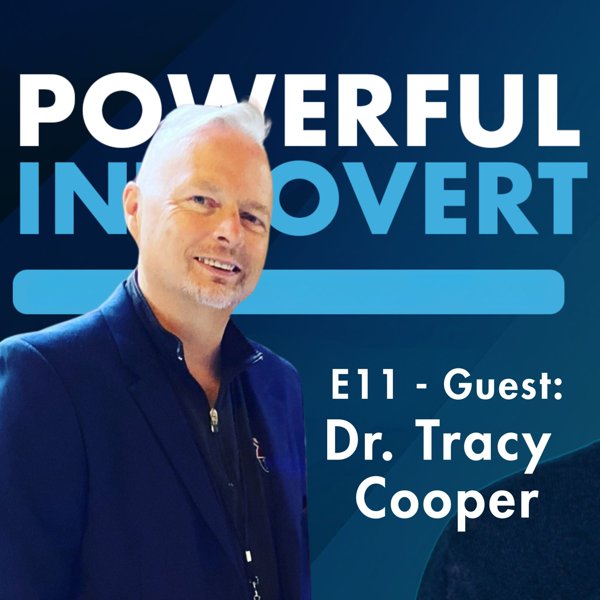
Dr. Tracy Cooper is a researcher, author, and educator specializing in Highly Sensitive Persons (HSPs) and sensory processing sensitivity — a genetic trait found in roughly one in five people and over 100 animal species. The core insight is that sensitivity and introversion, while overlapping, are distinct strengths that nature deliberately built into the human species for deep processing, creativity, and long-term strategic thinking. For introverted leaders who have spent their lives being told they are "too quiet" or "too sensitive," this reframe is foundational: these traits are evolutionary advantages, not deficits.
If you think of it as high sensory intelligence, it's a different kind of way to label it — and it is a form of intelligence gathering.
If we can do it — that guy that grew up in the 70s and 80s, too quiet, too shy, too sensitive — y'all can certainly do it, because you have just as much in you as we do.
The quality of our environment really determines — it's almost the barometer of how well we're doing.
Being seen and heard is something that is really important. Feeling validated is really important. So we can't just call people too quiet, too sensitive.
Key Stories
- Tracy coaching girls’ softball: Tracy describes first stepping into a visible, public-facing role by coaching his daughters’ softball team — a low-stakes entry point that built the communication and leadership muscles he later applied to public speaking and documentary filmmaking.
- The educational adjustment trailer: As a quiet, overstimulated kid in public school, Tracy thrived when placed in a small, calm “educational adjustment” classroom — an early, intuitive signal that environment is everything for HSPs, and a story he now uses to validate his students’ experiences.
- Greg’s corporate visibility journey: Greg shares his own arc from risk-averse coder to leader, describing how gradually showing up in bigger meetings — despite anxiety — built the pathway forward. Tracy validates this as the classic HSP development pattern: disintegration and rebuilding stronger.
- “High sensory intelligence” reframe: Tracy recounts how he adapts his language when introducing the HSP concept to resistant audiences, offering “high sensory intelligence” as an alternative label that sidesteps the cultural stigma of “too sensitive.”
Techniques & Frameworks
- DOES model of sensory processing sensitivity: Four pillars — Depth of processing, Overstimulation, Emotional range/empathy, Sensitivity to subtle cues — defining what it means to be an HSP beyond simple shyness.
- Sensitivity distribution model: The population naturally divides into ~15–30% highly sensitive, ~40% moderately sensitive, and ~30% low sensitivity — each group serving different evolutionary and organizational functions.
- “Stay with it one more minute”: Tracy’s personal anxiety management practice — remaining present with fear for one additional minute rather than retreating, allowing feelings to pass and opening space for capacity to emerge.
- Lead from where you are: Rather than waiting for a title or ideal environment, HSPs and introverts are encouraged to lead within whatever scope they currently occupy, mentoring and guiding as a natural expression of their developed empathy.
- Lifelong disintegrative growth: Self-actualization for HSPs is framed as a recurring cycle of falling apart and rebuilding stronger — a normal, not pathological, developmental pattern.
Full transcript
Welcome to the powerful, introvert podcast. I’m Greg Weinger, and I’m here today with Dr. Tracey Cooper. Welcome, Tracey. Thank you, Greg. I’m happy to join you and to share with you. Awesome. I’m so glad to have you on the podcast today. The work you do, I think, is so necessary and really courageous. You write about sensory processing sensitivity, which is, can be a mouthful for people who haven’t heard these words before, or people who are otherwise known as highly sensitive persons, or HSPs will refer to a lot for shorthand in the conversation. Yeah, thanks so much. Yeah, it is a mouthful, isn’t it? And then the pop culture tends to be called the highly sensitive person, or HSP, sometimes, as you’ll hear the acronym, the scientific term is sensory processing sensitivity, and that really describes the way our trait works. And I can go into a little bit about the trait, if you’d like. Yeah, that would be fantastic. I was going to touch on some of your books, but we can come back to that. I think it’s for people who are unfamiliar, I think it’s best to just kind of jump into a little bit of definition. Sure, sure. So the definition of sensory processing sensitivity is that it is a genetic trait, one that you can inherit from a parent or both parents. It’s something that is naturally occurring in nature. It’s normal, it’s non-pathological, meaning it’s not something that is a disorder that needs to be diagnosed, sort of medicated away in any way. It’s something that occurs in over a hundred other species of animals and birds and fish on the planet, but something that’s intended by nature is something that serves the purposes of survival and reproduction, also serves a safety purpose. But, and we sometimes think of it as deeper processing of all the experiences that we have, over stimulation in certain instances. So we have a lower threshold for feeling frazzled or irritated or over stimulated. The third aspect is we tend to be higher in empathy and emotional range. And the last aspect is we tend to be sensitive to subtle cues from our environment. Altogether, that model works, as you can see, to provide information and inputs for reflection and contemplation. But there is that idea, also, of being a finely tuned instrument, which is a little bit vulnerable to stresses. So we have to manage it very carefully at the same time and kind of honor and respect what we have as a trait. Yeah, when I first started reading about this, I was really struck about, you know, the hundred different species where this is an evolutionary advantage. And it cracked me up that even fruit flies have the scientists demonstrated. There are fruit flies who are kind of less active and sitting around and noticing more about their environment and how, in certain situations, this is a huge advantage. They notice more about the environment. Right. There’s a species of monkeys that actually are considered either relaxed or uptight, which always makes me laugh a little bit, making me have the highly sensitive ones, is being a little bit more uptight because they’re registering more from their environment. So they’re a little more on edge or a little more aware of what’s happening around them, both interpersonally and externally as well. Sure. And then to connect that to our human species, what are some of these advantages that that’s offered that the human race to have our, is it like 10 to 15 to 20 percent of people who have this trait? Right. So of the one in five people out of the total population who are one in five, I should say, one out of every five people are going to be highly sensitive. So if you think of the world’s population as around eight billion roughly, then around two billion of us tend to be more highly sensitive. And sensitivity is a general trait, it’s being thought of more than general trait in humans nowadays. So we have a highly sensitive group at the top end that are about anywhere from 15 to 30 percent, depending on the literature that you look at. There is a moderately sensitive group of people that are around 40 percent and then there is a low sensitivity group that is around the bottom 30 percent. And as you can see, there is a strategy here of having some people that are more sensitive, some people in the vast middle group that are moderately sensitive than this kind of low sensitive group. So what purpose would it serve to have some parts of the species be highly sensitive? Well, they’re more sensitive to everything in their environments. They register process and respond to various kinds of stimuli in their environment than different from introverts. We tend to be more sensitive to everything, not just the interpersonal environment, the social environment, but we’re sensitive to everything in our environments. We tend to contemplate or reflect more and arrive at hopefully better action plans than the end because of that. But people who are highly sensitive looking at its application to the human species and our survival on the planet, in other words, from a leadership stance, we serve the purposes of that deeper process and we tend to be great planners. We tend to be great thinkers and great creatives. We tend to be very good as being healers and educators. So all of those purposes, as they play out across the board, tend to be where we’re focused as high-less sensitive people. But we’re in literally all professions and all careers, but we tend to be concentrated most in those areas they have to do with helping people. That’s kind of a vast category, but we tend to derive more satisfaction from those that immediate feedback. And particularly when it’s one on one, we tend to do really well. And that’s the thing that kind of separates highly sensitive people is the environment. If we’re in a really positive, nurturing, optimistic environment, we tend to do far better than less sensitive people. But if we’re in a negative or chaotic or abusive environment, we tend to do far worse. So environment for us can be just about everything across the board and every facet of lie, every decade of life, restays of life. The quality of our environment really determines it’s almost the barometer of how well we’re doing. Absolutely. And there’s a lot of crossovers here clearly with introversion. And so can you help for the audience sort of disentangle what are these aspects of being quiet or more sensitive are really about sensory processing sensitivity versus what is introversion? Right. Yeah, absolutely great. And Dr. Elaine Aaron is the originator of the trade clinical psychologist center husband, Dr. Arthur Aaron. And they were looking in the late 1990s at what they thought of as why are some people seem to be more sensitive than other people? It was this kind of phrase that came out while Dr. Aaron was doing some therapy for herself. And one of her counselors said, you know, Elaine, I think you’re highly sensitive to everything in your environment. And that’s deemed to click with her as something that she should investigate because it really hadn’t been done before. The first mention of an innate sensitivity comes from the psychologist Carl Jung quite a while ago, but really wasn’t much done since that point. But disentangling that was one of the one of the missions of their very first capers in 1997, I believe, looking at differences between sensory processing sensitivity or what we call a highly sensitive person, an emotionality and introversion. And so there are distinct differences between what it means to be an introvert, what it means to be a highly sensitive person. Yet, there is a huge overlap because some 70% of us who are highly sensitive also tend to be introverted. In other words, we tend to process internally. We tend to be affected by the social environments that were indefinitely. We tend to tire of those environments energetically at the same time. Some of the differences are that we tend to be higher in empathy. So we not only feel people’s experiences that if we’re really high in empathy, sometimes both experience of the effect that’s as much. More so than they possibly sometimes they should, and they can also be exhausting for us at the same time. The sensitivity of the subtle cues applies to not only the interpersonal environment, but to every environment that we’re in. So we tend to notice things that are visual, things that have to do with movement, things that have to do with sometimes it’s about looking at the concepts and the environments that we’re in, and then processing that experience later on. So even while we’re at rest, our brains tend to be super active. And it’s called the default mode network in our brains. And we’ve looked at it with FMRI studies, brain studies, and seeing that those regions that make up the default mode network tend to be more active, even more or not doing anything in particular. So all of that stimuli that we take in during the day since they’re kind of run on its own like a computer, even though it doesn’t really resemble the computer in the common sense, their regions of the brain actually have to do with memory making, pattern consolidation, connections between ideas, and sometimes we wake up, wow, these ideas are fully formed, not always, but sometimes they certainly aren’t. So there are advantages to being highly sensitive. They’re advantages to being introvert. But one of the differences also is 30% of highly sensitive people tend to be extroverted. So of the introverted people, you don’t find those who are extroverted, but by definition, another interesting phenomena in highly sensitive population is up to 50% of us tend to be high in sensation seeking, which is a different genetic trait. So we have a variety of populations, if you will, within the total two billion people on the plant, who are highly sensitive. That’s great. And in just the same way, with there’s maybe the advantages of people who are less sensitive or are more obvious, where there are more and more used to them, they kind of bombat situations, these certain high-pressure situations where you really have to ignore a lot of sensory input and there’s certain callings and populations who are better suited to that. So it’s kind of a beautiful order that nature is arranged for us all. Yeah, when you think of the low-sensitive group, you think of them as possibly being more resilient because they’re not processing as deeply what they’re feeling or what they’re seeing in front of them. So we needed visuals who are quick thinkers can take very quick action, sometimes to save our lives. But we need people also who are a little bit slower and more more focused on their thinking, but that takes time, right? And sometimes in our societies, we favor the quick actions rather than the well-thought-out ones. And only later on, do we realize we should have went with the better thought-out plans because it would have benefited us more in the long run. But in the immediacy of the such of an emergency, you need people who can act very quickly without necessarily thinking first. And then it only comes later on, but then the highly-sensitive people need to be in those positions where they can be counselors and advisors and leaders, because we can help build in what we learned from the lower-sensitive group, but where’s the resilience of something that we need as highly-sensitive people? So we can learn from that group and they can learn from us as well. And then the moderately-sensitive group is going to be pretty party, yet we all have something we can learn from each other. So it needs to be a cross-pollination, not a division between what constitutes each group, because we’re all going to work together to survive on the planet event of Lourish. You can start to see that the applications here for leadership and having a diversity of greats and approaches on any leadership team, because perhaps you have people who have more sensitivity, which is helping to be truly in tune with the company, the market, the people’s, the people on the team, and then also contributing to strategic planning and thought and creativity. But there are also situations that happen fast and do require immediate action. So each of these traits can come to bear to really support that the company. That’s right. That’s absolutely right. And sometimes with highly-sensitive people that are in leadership capacities, because we tend to think for a longer period of time or process that those ideas, or sometimes we have fully formed plans fitting into back of our minds. And sometimes in meetings we’re able to bring those out, and then nobody really understands how we’re able to arrive at that solution or that option or that slate of options, because everybody else is just now beginning to think about it. So the ability to think ahead to intuit, to use our intuition, our strong intuition, that hey, this is coming up on the horizon and maybe we need to have plan A, B, and C, while other people are just thinking about plan A. But sometimes we’re longer-term thinkers and we’re more broad in our thinking, and we’re more creative in our thinking. So we can be fantastic innovators and net-sense. But again, environments, everything is sometimes it is hard for us to be people to speak up and to be heard, because we’re more used to be an observant and to living within that bubble, but that’s not for all people, of course, that are highly sensitive because some of us are extrovers, some of us are high-sentation seekers, and so we tend to defy what people would think of as highly sensitive. So there’s a dichotomy with us. The more you dig into it, the more complex it becomes, but also the more rich it becomes at the same time, because we do have that variety within our population. And because I focus on introverts and there is this overlap with HSP’s, a lot of people who I talk to or counsel are struggling with, they have thought through the plans and they’ve encountered that situation, you just touched on where they need to bring people along and they don’t necessarily have the skills yet to recognize that and then start to bring people along. So they’re like, okay, I’m at Plan C, we’ve got to start way back here and start working with people and that’s going to take some time and patience as well. Yeah, absolutely. It’s one thing to say that we have the innate skill sets to be more empathetic, to be more intuitive, to be deeper processors and then think how that applies to leadership, but in practical real world, you also have to have developed a number of skills, not least of which are communication skills, our ability to communicate, elaborate, make decisions. Those are all things that need to be honed, they’re not something that we arrive at natively, but not something that’s born into us. So those skills need to be grown and developed out, just like any other skill set. So there is a caveat to a highly sensitive leader, which is you have to be evolved, right? You have to have developed your skill sets in order to be ready when that moment comes for you. If you’re not ready when that moment comes for you, just not ready. You won’t be able necessarily to communicate in the way that you need to in a convincing way, to present those wonderful plans that you’ve thought about, but you do yourself a disservice if you really don’t focus on your own growth and your own development. That’s right. You’re describing my personal journey. You’re just now. That was absolutely my experience. I think I want to bring in your work on focus on men with this trait because men do experience this trait different in our society than women, and not to tip my hand, but we were just talking about earlier. I grew up in Piori, Illinois, Central Illinois in the 1980s, where I guess down the road from you in Missouri, down to Ornato Alley. Right from the get-go, I was really overwhelmed on the playgrounds and in those situations, bullied on the bus. I struggled for a long time there and really received some messages that the way I was reacting to that, especially from my father, emotionally crying, not being standing up, being aggressive, and meeting those expectations, I was missing the mark. This sounds like this might be reigning some bells for you. Sincere men, right? Or introverted men across over whichever you are. It definitely is a differentiating aspect to the way highly sensitive women experience life. Being a sensitive person in general is difficult because you’re not only spending more time in picking up on cues from the environment and it’s also exhausting at the same time. So not only are you doing all of that, but then you have to be contend with the influences of peer pressure. Those influences can be so strong as to almost negate prewill. Right? So the urge to be a conformist, the need to be conformist, almost becomes so strong as to be irresistible. For a man that tends to be more introverted or inwardly directed, have difficulty with social cues, have difficulty with interactions. Yeah, that can be quite a difficult journey. In public school, it’s probably the least supportive environment that I can think of for someone like us to be in. But yes, the many of us found our filth there, whether it’s a 70s or the 80s or so on. I think it’s changing now to some extent. But it’s interesting that highly sensitive men are so much hidden in the shadows still. So we made a film called sensitive men rising to help shine light on this and help make it okay for guys to think of themselves as highly sensitive. But what does that mean? Well, it probably doesn’t mean what you think it means by the phrase highly sensitive. So we wanted to break that open and demystify it. I also wrote a book called Empowering the sensitive male soul, which I believe you’re looting to, which really, I wrote that book before we did the film. So in an effect, that is almost the companion piece for the film because it really dives into what it means to be a highly sensitive man and how to move from this simply observing life to really engaging intentionally with it. So that no matter where you are in life, you can find a way to embrace your face whether you’re introverted or highly sensitive or extroverted or wherever you are. You can find a way to really engage with that and find a way to apply it in the world ways that are really sustainable and gender to valley for yourself but for other people. But the environment, I think we both shared environments growing up and in school and otherwise probably weren’t as supportive or nurturing as they could have been. So we know when we learned from our experience of the young men and think about the environments that we’re providing for the youngsters today. I mean, I’ve had four kids now, two boys and two girls of my own and also was married again and then my second life has to be children. But I’ve had a lot of experiences with the parent now if I can reflect back on this. But now it’s the green children of some of whom are highly sensitive and I can see characteristics. I can see how environment and what they’re being provided really is setting a firm foundation for them to grow on. A better one than I had or better one probably that we both had. But it’s changing in some ways and masculinity is changing in some ways at the same time. It’s almost inevitable to change with the times because there is no one concise definition of what it means to be a man. It changes across times and places and situations. Sometimes, you know, a harsh or masculinity is what’s called for like if an emergency situation. You need people who will just act and do what they’re told. But in a non-emergency situation, you have more time for people to develop culture. You know, to build a culture that really is more supportive, that is more caring. And so those kind of people are going to be people who are highly sensitive. You know, people who are introvert, they understand the nuances of that, how to connect with people and build those networks and even into it. What are other people feeling? You know, and what do I do with that? As a leader, you need to be able to do that. So it’s drastically important, the role of environment and for many boys that are either introverted or highly sensitive or both, since a not experienced those environments. So we need to think about the way we’re parenting our kids and provide those loving, kind, nurturing environment. The world is not a place that where we need those, we don’t need to more warrior types in the world. We have enough ways to take care of security. We need more people who are thinkers, creators, lovers, even. We need to fulfill more of our spiritual dimension, our inward life. That’s where our potential really lies is inside of ourselves. Absolutely. I’d like to hear, it’s really nice to hear your perspective on, that’s one of the things I wanted to ask you about how things have changed over the years. And that’s certainly something that I’ve observed with my children. I happen to live, you know, I went to public school, probably like you, not very supportive. My two boys went to public school, but in a very different environment, I’m here in Portland, Oregon. As I described in 1980s, it’s almost like a foreign concept because it is so much more supportive in accepting here. But I’m also very conscious that we live in a bit of a bubble and society is evolved, but it’s uneven. So I think it really depends on what community you grow up in, your family, that you grow up in, what your experience is. But as an average, there’s a culture overall. Clearly, there’s been shifts in that direction. There’ve been shifts, Greg, overall. And we can see it regressing at times and moving forward at times. But you’re absolutely correct. And I thought about this a great deal. I’ve noticed that definitely, in certain areas of the country, you have people that are more open. And then other areas of the country will have people that are basically more closed. Things can’t change. They don’t like change. They’re not going to have change. But even amongst those areas, things are changing because people are shifting around like where I live in the Midwest. There are a lot of folks moving here from California and from other areas due to home values. And maybe they’re retiring and they want to live somewhere with lower cost of living. So I think it’s inevitable that culture shifts. Culture is not a bet and stone proposition. Something that we negotiate amongst ourselves every single day. So we have a vote to put in what we want our culture to be. And that that’s played out in the way that we raise our children. Those become the next generation. And I’m so enthused when we’re around young people because they still have the optimism. They still have that energy yet. It hasn’t been quite beat out of them. And I’m more encouraged by seeing the way some parents are acknowledging that there are differences between people. And I say, there are these things called temperaments. People do have different dispositions. And they think we can be more supportive of that and not quite as far as we don’t create these wounded people that are unable to heal. And then they go into adult life carrying these emotional burdens that they then act out in a very bad way against society. Yeah, agreed. So I wanted to ask you a little bit. As you introduce the term HSP, I’ve even been talking to people myself about it. There are certain the term itself can some people can react poorly to that term. And I think there’s a defensiveness built in from, you know, your whole life people are telling you you’re too sensitive. And so how do you talk about it with someone where that’s been their experience? I relate to them first that, you know, the clinical phrase for the clinical label for is sensory processing sensitivity. And then when you understand how that’s broken apart and what that means that we’re not only more sensitive to everything on our environments, but we tend to process it more deeply. So it has more to do with the brain than it has to do with anything. It’s not a cultural notion. This is something that is we’re born with. And something that is intended by nature. So this sensory processing sensitivity is beautiful thing in a way when you think of it. It’s the way we’re labeling it in pop culture with this unfortunate label highly sensitive person, which some HSP’s, if we’re known, tend to wear proudly. But you can also think of it in another way. There’s another term that flows around called high sensory intelligence. So if you think of it in that way, it’s seen, oh, that’s hey, that’s flattering. That’s not so that’s not derogatory at all. I like that. I want to I want to do that one. Let’s just change it, but you can’t change it because it’s already in the culture, unfortunately. So when I’m speaking to different groups, I tend to like to mention that. If you don’t like highly sensitive person or highly sensitive, okay, think of it as high sensory intelligence because the way that we register and process information really is a form of intelligence gathering. It’s a way of thinking or of arriving at better strategies. And that is a form of intelligence gathering. If you think of it in that way, it’s a different kind of way to label it. And I would be I would be more on board with that label than I would be highly sensitive person. But this is what we have and this is what we work with. So depending on the group, I tend to speak to them in that way. If you don’t like that, let’s sneak about it this way. Now does it make a difference? Most of the time it does. Yeah, that’s right. And there is an element with the term. And I think I had a similar reaction when I first read it. Because that’s not me, you know, something like that. But it’s, you know, that’s part of a journey of acceptance. Well, you know, I had a similar reaction to introversion. So at the outset, you know, in my journey, like towards a leadership, I was in my 30s and I was started to be, I was working in software, I was writing code and I just wanted to have a bigger impact and then started getting interested in leadership. And I was not found myself, I wasn’t encouraged originally because I wasn’t presenting as a leader. I didn’t have a lot of these skills we were talking about. And how do you communicate and how do you, you know, convey, convey an idea with confidence, that sort of thing. And so this is, this is where I had to find my way through it. And so I would take, I was very kind of allergic to any suggestions that, that I might be more quieter introverted because in my mind, that meant I couldn’t be a leader. Whereas I, I didn’t yet have examples or, you know, realized that there are plenty of examples of people who are highly sensitive or introverted who are leaders that are famous examples in history, presidents, like Obama, Al Gore, you know, or leaders of movements like Gandhi or people who have had profound influence on the culture, El Naur, Roosevelt, and not to mention just all the leaders around you because they’re not grabbing attention to themselves. So there’s part of the journey. So these are terms that have some sort of a stigma, but I came around to them, you know, through this process of acceptance. So there’s that, you know, you could have a term, I guess that’s, that’s kind of what we’re left with because it is in the culture right now. And then it’s great that you have these alternative terms here, you know, with maybe to help people get past that. It is unfortunate that we tend to cling to labels and then to use them almost as weapons against people. Like I was never, I think told that I was too sensitive, but I was told I was too quiet. And you might not think that, you know, with me, the communities and podcasts, but I was a really quiet kid growing up because I was a servant, but I was also very shy. And so that played a role in the way that I interacted with, especially the school environment. I was the invisible kid that knew all of the answers and that was quietly writing things in his notebook and really absorbing also what was going on in the class, but not interested in interaction in that way because I was an introvert on this highly sensitive. I was overstimulated constantly by the the classroom environment, which for the most part wasn’t very open or inclusive of people. So it was the Lord of the Flies and mentality, especially in the seven days in public school amongst boys and girls. So that definitely, you know, it’s funny. I did better in what was called educational adjustment I used to come in late to class, you know, to school in the morning sometimes because I lived some distance away. And so I would get detention. I for a couple of detentions, they would put you in this trailer behind a school called educational adjustment. I loved it because it was two or three of us. I was like, can I just stay here for the rest of my time because, you know, I knew intuitively, I knew nothing about what an HSP was, but I knew that environment felt calm and quiet. I had a autonomy. I could work on things and do well at them and I could get feedback from my teachers. Just what I needed, I needed a different environment, but it just wasn’t available to me at that point. And so I’ve seen now, because I’m an educator, I work in higher education as a professor in a doctoral program. So I’ve had the chance now to reflect and to see that I come across a lot of people that are either introverted or quiet to quiet. And I respect her, I respect the way that they are and I respect them as students because I accept them and I work with them where they’re at. And invariably, to a student, they all acknowledge the fact that I’m the one that’s heathed them. You know, being seen and heard is something that is really important. Feeling validate is really important. So we can’t just call people too quiet, too sensitive to whatever. We just need to think of them as who they are and appreciate their skills and talents and then bring them along for growth and development. Right. And really moving past a one-size-fits-all culture, which is, can be, and we’re talking about the percentages of people half of, you know, half of the people are on the quieter side. And you know, if when you create a culture, which is a work culture, a workplace that is unhealthy for half your people, you’re really doing a great injustice to them and to your business. I’ve curious a little bit more about you because you are so visible in your career now. You’re appearing in documentaries. I had to mention it was the sensitive documentary was the first one that the one with Alanis Morissette. Instead of the untold story we did at the end of 2014, it came out in 2015. Sensitive Men Rising actually has a lot of more set end as well because she has sons that are highly sensitive. So we have revisited with her during this documentary. Yeah, that’s cool because she’s so iconic, at least in my generation, that, you know, for just that trait and she turned it into incredible art. She has, right. And she speaks so well about what it means to be highly sensitive in our culture. And she is a huge champion for highly sensitive men and engaging with them. And she is literally a creator of culture. And that’s what we all need to pivot towards is rather than thinking of ourselves as victims of culture. This, you know, in sociology, we talk about culture in the fact that it’s malleable. It’s not something that said in stone. In fact, it’s different in every country you’re to around the world. So, you know, what it means in every culture to be highly sensitive is quite different. So let’s own it within our own culture and set some kind of an example that other people can look to as something maybe that makes a lot of sense and that’s sustainable and that allows these people to harness and to apply their traits in the world in ways that are really positive and generative, but also sustainable for them, so that we’re not burning them out or suppressing their voices. Because we do have a lot of times we do have tremendous abilities creatively, logistically, managerially. But we serve a purpose within our society. Sometimes we need to step into that power. Was there ever a period where you were called to be more visible and you weren’t quite there? It was maybe too much for you or did you? How was that journey for you? Oh my gosh. I had so much anxiety growing up. Great. So my life has been a journey of realizing my potential on now 58. And I can speak back on it now looking in hindsight, but opportunities that I was provided, yeah, I felt butterflies and anxiety and sometimes not confident that I could do the role, but I always had the personal courage to do it anyway. I always felt like with anxiety that if you could just stay with it for one more minute, even though you feel that fear and want to walk away from it, you just stay with it another minute. It’ll pass. This feelings of temporary things. They’re not, they don’t define us and they’re not who we are. But then things start to open up once you get past that fear, and then you can start to bring in some of those capacities that we have as introverted people or highly sensitive people or creatives. And then those things start to play a bigger role and then anxiety tends to decide over time. But I think my pivotal moment was actually when I started coaching my girl softball teams, because it’s a public role, right, being your coach. So my girl started playing softball and I originally started out not coaching, but I found that I wanted to stand near the dugout so I could really see what was going on in that angle. I wasn’t interested in the parent angle at all. So I was naturally intuitively just drawn to this helping aspect, rather than I was a spectator. And then so the next year I coached and it was terrifying, right? But that was an easy way for me to get into it. And it was an easy way for me kind of low risk. And we did really well. It came in second place that year, which was fantastic. And I coached so many teams after that while they were growing up. And then that prepared the ground wave for me later on when I decided to go back to college and finished things in mid-life because I didn’t know who I was growing up or as a young adult. So I went back at 43 to finish my bachelor’s when immediately for masters in KHD. So as opportunities presented themselves, I was then ready again with the skill sets that I could fulfill that role. So when I had the that forward and speak publicly, I was ready for that, even though I still felt anxiety, I knew how to deal with it. I knew how to manage it. I had enough public speaking experience that I knew how to connect with an audience. And so it’s something that yeah, you step into, you learn over time. It’s kind of like being a parent. Initially, you’re terrified with this infant like, what do I do? How do I manage this? You just learned day by day. And pretty soon, hopefully you get over the rough patches and you learn that you’re actually pretty good. You’re more tinted and you’re more anticipating what their needs might be. And then gradually, you can just understand without them even saying anything, hey, this kid’s hungry, this kid’s tired. You can pick up on that right away. It’s really the same with people though. When we think in terms of growth, being something that happens over a lifetime, not as something that ends at a certain point, when we have a growth mindset or growth perspective, then we’re engaging with that throughout our entire life, no matter where we’re at. I’m still growing. I’m still looking at ways that I can continue to expand myself and to appeal to these folks that are in the shadows or that are too quiet or too sensitive or whatever they are. And help them understand that, hey, no, you got something that’s really cool here. Let’s let’s develop that if you want to and talk about it. And there’s some other people that are your community. Yeah. And I think I’ve been reading in your your book, your thrive book that are in other books about HSP’s is that you have so much capacity to change and perhaps more capacity to evolve as a more sensitive person than the the the the base population. So that’s a point of encouragement. I really liked your story there. I think that’s the first one I’ve heard about coaching about kind of helping somebody come out of their shell in public speaking. I’ve heard that about teaching is I think that’s your force to speak and be on all the time. And you that’s a way to kind of teach yourself some of these skills that you’d have and require as a leader. And so certainly being in the workplace was that for me. I was very of risk averse for a long time. I only spent my time writing was not really in environments where I would put myself out there, put myself at risk of making mistakes. And just being in a corporate environment continually putting myself in the position of gradually first talking in a meeting. And then it’s a bigger meeting. And then meetings with bigger people higher up. And as you grow up, you gradually develop the skills and definitely dealing with many nights of anxiety along the way. But which as he said, falls away, but creates that pathway for someone who maybe starts out and is really overwhelmed in the situation initially. It’s so true, Greg. And I think of so many people that I’ve known over the years or interviewed or spoken with or taught that it is the gradual process. And if we can do it, that guy that grew up in the 70s and 80s, that’s introverted quiet, too quiet, too shy, too sensitive, if we can grow to be leaders and public speakers, y’all can certainly do it because you have just as Vinny kick how that is as we do. And we can help you along the way because now there are people ahead of you that have gone through that period of growth and development that understand it’s important to reach back on the help those people that are behind us. Those people that aren’t quite in really in ownership of their capacity yet. So this is what we do by reaching out to your podcast and films and books and workshops and those kinds of things is we’re there to help kind of shine the light. And also to help bring people along and realize that they that they have to ferment as the developed inner potential. That’s something I alluded to I think in several of my books is that you know we people who are more open to everything in our environments also tend to have a high degree of development of potential. But realizing that potential over time is something that it’s a disintegrative process. In other words, we have to go through these periods where we sort of fall apart and then rebuild stronger and that happens throughout life. And then we progress the higher higher levels hopefully or more fully realized versions of ourself or self-actualized versions of ourselves. But self-actualization is a long-term lifetime process. So it’s not something that we reach magically. It’s something that took a lot of effort. And most of the time a lot of intentionality in engaging with the world and understanding what holds meaning for us. And just so right, it is something that those are skill sets that you can develop no matter where you are, no matter how shy you are, how quiet you you can learn to speak up and to do so very intelligently and to do so in a very convincing way in the better of a communicator you are, the better of a critical thinker you are, the more you’ll will have very sound points that other people will respect. That’s right. And for me personally, a big part of that has been finding that point of motivation or a feeling of purpose. And I’m a Johnny cum lately absolutely with this topic in the bandwagon. You haven’t come across it much more recently. But I share that same inspiration that you just described as to help get this information out there. And I’ve done a lot of mentorship and I really want people to understand and know that you do have this capability. And if you have that inkling in you, then you can nurture it and make that a reality. So I, you know, I’d come very much identify with that. My question would be, do when in counseling people or what advice would you have for helping people find that motivation or purpose that might help them push through the discomfort? Yeah, that’s a good one. There are people who are more inclined towards leadership than others. There are some people who are not really meant to leave in the way we think of leadership. I think it’s important that people lead from where they’re at. So if they think of leadership in a broader perspective in terms of wherever you are, that’s where you are. And blossom and bloom within that because that may be a difficult environment, depending on the country you’re from, the culture that you’re from. But you can still do a tremendous amount of good where you’re at in most occasions, most instances. If you are a developed person, if you have an instinct for leadership or guiding people, for mentoring people, for growing your own capacities, that’s almost the natural that you begin to share that with other people, that you bring them along in certain ways. So that’s why I think so many of us are attracted to education. Right. And being a leader has so much to do not only with decision making and collaboration and communications, but also education. A lot of times have to develop younger leaders. And to do that, we have to be more openly at the more pathetic. We have to understand what it takes to become to get to the position that we’re at. I think there’s almost an acknowledgement that we owe a responsibility to other people to bring them along at the same time. But it can be a rough journey. And how do you get beyond those kind of personal obstacles that are in your way, particularly if you’ve suffered from an environment that was, say, traumatic while you were growing up? If you suffered adverse childhood experience, if those can really serve as stop signs in your way, not just roadblocks or road bumps, fee bumps, but they can effectively block you. So I think it’s important to do the work of healing from trauma. You have problems that almost all of us do. So moving beyond that, connecting with other people that are similar to whether you’re an interpreter or highly sensitive or whatever you are, understanding that you’re not alone in the world and then thinking about what holds meaning for you. Sometimes it’s a matter of experimentation, you know, trying different things. If you’ve worked at a business and you found that that worked for you, thinking about what I expect of that worked for you so well. What’s highly sensitive, folks, it tends to be we care a lot about autonomy. In other words, being kind of in charge of what we do on our own without a lot of heavy supervision. We tend to prefer a good amount of feedback. We like to know what we’re doing is actually working. We like to know that it has meaning and that it has impact on other people’s lives. So a job or a career may not fulfill all of those things. That may be the signal to you that you have further to go yet. You have other roles to fill you out. And sometimes it’s an accumulation of roles that you’ve worked in that add up to something in the end. I know what’s for me. It was a chimulas in process. And I couldn’t be happier with where I’ve sort of ended up in life because I’m in a wonderful position where I can affect people’s lives and affect the way people think about themselves and be happier and more accepting of themselves. But I think it starts with allowing the fact that you may be an anxious person or you may be a shy person or you may be a quiet person or whatever your case is, but that you can still grow. You still have tremendous growth capability. And it’s simply acknowledging it and saying, okay, I’m going to own that. I’m going to own the fact that I’m quiet, then I’m shy. Maybe I’ll be self-deplicating about it. But I’ll learn to work through it. And I’ll learn still in spite of the fact that I’m highly sensitive or whatever that I can do these things that I want to do. So it’s a certain amount of belief and belief is something that I think that builds over time as you have successes. And you realize that, hey, I did it. Okay. You know, people didn’t they didn’t bust out laughing. You know, they didn’t just turn around and walk out because I was so ridiculous and what I said. But rather, they paid attention to what I said. Because what I said was well thought out. It was well crafted. I had already worked on my communication skills, delivering my message and my vision. And I understood what they needed to hear. So when you have all that in place, you can approach things like leadership and public speaking from a different perspective. Absolutely. And that starts out with awareness of your self and your personality. And maybe some of these concepts and this lenses to better understand yourself and then getting to a place of acceptance. And then, okay, now this is me. Let’s let’s work with this and it helps if things are not so personalized or like that you do not perceiving all this as a defect. It’s okay. Let’s this is great. Let’s figure out how to work in the world. Yeah. And too often, a high-lacensity men tend to think of being high-lacensive as a defect. It did a lot of HSTs in general think tend to think that they’re, hey, there’s something wrong with me. This is why I’m not like everybody else. Rather than think that I’m a little bit different, but I’m not that much different. Right. And that I can work with what I have. But I think there’s a certain amount of mentoring and coaching and guidance that people need in order to progress. And I don’t know that we get it within our society. So what we’re doing becomes all the more valuable. Absolutely. And it’s wonderful that to have you here helping us better understand all these situations, the dynamics, and the science behind it, and mentoring people and putting your message out there. So thank you for that. Absolutely. A pleasure. And every year there are literally dozens of new, peer-reviewed scientific studies that come out on highly-centred people, on many aspect of that, of the trait. There is a vast group of people that are interested in pursuing additional science and research and applications. And we’re very interested in how we can develop quiet leaders into really highly accomplished leaders. We need many more of these kinds of people in our lives and in the world in general to help realize what we can become as a species from the wide-field build to share that. Absolutely. Amen. Tracey, where can people find out more about your work? You can find more about my work at my website, Dr. Tracey Cooper.org. I’m also on social media. Pretty easy to find, pretty discoverable. You can find out about the sensitive men film from sensitivemanrising.org on Facebook and Instagram, most actively. Tracey Cooper PhD, you can find them with books on Amazon. And I’m very easy to find. You are. And it’s really great work. Thanks so much for being on my podcast. Tracey. Absolutely. Delight. The Pacific Northwest is a beautiful place, but with all our rain and steep slope, they can turn your beautiful yard into a muddy mess. That’s where we come in. Take with the wall here in since 1985, our team has transformed the landscape around the Portland metro area. From a small backyard makeover to major hillside stabilization, the wall has he covered. Don’t wait for the next storm to cause damage. Give us a call today or check out our website by the wall.com at bythewall.com. Hold your ground with the wall. CCB 5495. The Bleacher Report app is your destination for sports. Right now, the NBA is heating up. March Manus is here and MLB is almost back. Every day there’s a new headline, a new highlight, a new moment you’ve got to see for yourself. That’s why I stay locked in with the Bleacher Report app. For me, it’s about staying connected to my sports. I could follow the teams I care about, get real-time scores, breaking news, and highlights all in one place. Download the Bleacher Report app today so you never miss a moment.