The Executive Communication Gap — How Words Like "Try" and "Hope" Quietly Undermine You
Communicate Like a Leader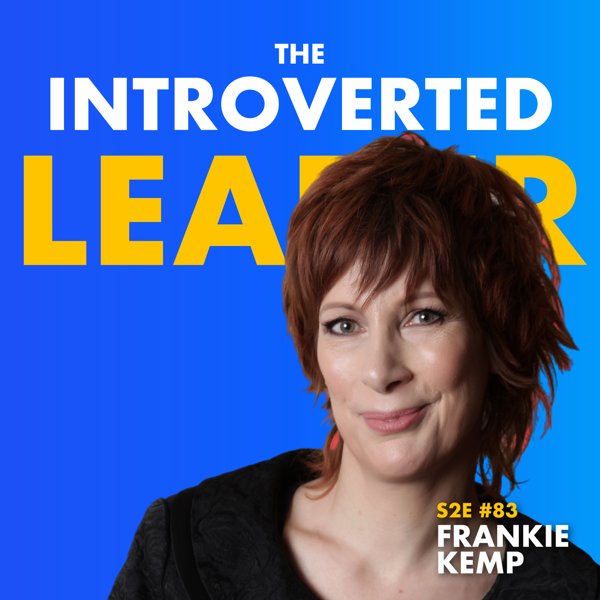
Frankie Kemp is a communication coach who trained as an actor before moving into leadership development, and she teaches that executive presence isn't about performing a role — it's about expanding the range of expression you already have. In this conversation she unpacks the "executive communications gap": the small, habitual language choices (try, hope, hedging, jargon) that quietly undermine competent leaders, and she offers concrete frameworks for buying time, giving updates, and speaking with conviction when caught off guard.
You are trying to be the corporate bod, but you are completely denying your own self-expression.
What you've done with the word try is you've built in failure.
There are so many ways of being brilliant, and it doesn't have to be the organizational playbook.
Often they are relying on telepathy and competence.
You tell people what you know, what you don't know, and what you'll find out. That's honest, it is simple, and it breeds trust.
Presence is the inside… charisma is the outside.
Key Stories
- The hallway ambush: Greg opens with the classic senior-leader-in-the-hallway moment — “What are you working on?” — and the freeze that follows, showing how strong work gets undercut by weak language in seconds.
- “That’s me” in the training room: Frankie describes running update workshops in tech, architecture, AI, and robotics where participants put their heads in their hands when they see a bad update on the screen, because the waffling, apologizing, and try/hope phrasing is unmistakably their own.
- The messenger with half the picture: A leader has to relay a change from senior leadership to their team but only caught fragments in the corridor — Frankie uses this to show how the pressure to reassure while protecting yourself is what pushes people off the rails.
- From actor to coach: Frankie draws the line from film and theatre — hierarchical, script-and-director driven, but demanding a performance true to an inner core — to organizational life, where people feel pressured to follow the “organizational playbook” instead of bringing themselves.
- The dinner table of selves: Greg and Frankie realize they share the same metaphor — a table of inner voices, only a few of which get called on to speak — and Frankie uses it with clients to ask which voices haven’t had airtime lately.
Techniques & Frameworks
- Swap try/hope for stronger verbs: Replace “we’ll try to make this work” and “hopefully this will succeed” with “our objective is…”, “our aim is…”, or “we endeavor to…” — language that signals intent without over-promising.
- Kill the jargon (especially “optimize” and “leverage”): These non-specific words either mask an unwillingness to go into detail or an attempt to sound like the adult in the room; at senior levels they become a barrier to clarity.
- Buy time when caught on the hop: Three of Frankie’s 18 techniques — Repeat (echo the question back with considered intonation), Redirect (ask which of your projects they want to hear about), and Comment on the question (talk around it while your headline forms).
- PEP: Point, Example, Point (or Action): The simplest spontaneous-speaking structure — state the headline, give one example, restate the point or name the action. Works for hallway questions, panels, and Q&A.
- The four-part team update: What you’ve previously done → what you’re doing now → possible challenges → how you plan to overcome them. Done.
- What you know / don’t know / will find out: When you’re relaying a message but don’t have the full picture, this three-part structure is honest, simple, and breeds trust instead of forcing false reassurance.
Full transcript
Greg (2): A senior leader stops you in the hallway. “Hey, what are you working on?” they say. You freeze and start saying, “Um, I’m trying to move a few things forward, which hopefully is gonna have the impact that we’re looking for.” They move on, and while you know your work is strong, you realize that is not what came across. This is the executive communications gap. The language you’re using is quietly undermining you. Every try, hope, hedge that you mean to be accurate or avoid bragging is doing that damage. My guest today trained as an actor before she started coaching leaders, and what she teaches is that real executive presence isn’t performing a role. It’s actually expanding the range of express express . Welcome to The Introverted Leader. It’s a podcast helping introverted leaders embrace your underrated, quiet strengths so you can get promoted and start earning what you deserve. I’m Greg Weinger. I have over 25 years of leadership experience, and yes, I am an introvert. Frankie Kemp is a communication coach who uses acting techniques to help leaders show up with authority without becoming someone they’re not. Before we start, I made a free masterclass for introverted leaders. It’s called Why Everything You’ve Been Told About Getting Ahead as an Introvert is Wrong. 30 minutes. It features three moments that determine whether you advance or stay put, and one practice you can start this week. Get started at gweinger.com/masterclass. That’s G-W-E-I-N-G-E-R.com/masterclass. That’s one word. All right. Let’s get into it Greg (2): All right, Frankie, welcome to the show Hi, Greg. Nice to be here Yeah, good to have you. I have to kick this off the normal way. Do you consider yourself an introvert, extrovert, or other? Ambivert. So ambivert yeah, it’s like speaking two languages. Whenever I do this test, I like to see now and again whether I’ve changed, because people do change, and I’m always smack bang in the middle what kind of comes to the fore for you on the extroverted side versus what’s in the introverted side? So aspects of extroversion that I hold are, the performance element. I’ve got an acting background. I love that. If somebody asked me to speak about something, I could, improvise. I do improvising, so obviously that’s something that I feel very comfortable with. However, there are aspects of me that are very introverted. For example, if I need to make an important decision, I hate being put under pressure. I need time to speak about it, to weigh things up, to internalize, to speak to different people. My problem is I overthink. So I could walk into a room, people would think I’m the party person, but then I’ll go away, and I’ll be thinking. I overanalyze. I’ll overanalyze about what people say, how I might have come across. It was only recently that I came across the term ambivert Ja And then it made so much sense. That’s when— I’m always decrying the overuse of labels, but, you know, sometimes you need to under— It helps you to accept yourself Mm-hmm. Yeah, agreed. so you’ve kind of had this, acting and improv background, and then you got into career coaching. I would call it sort of confidence, coaching for leaders. What’s the connection there? How’d you Oh, right. The connection is massive. Firstly, in acting or film, especially in film, it’s very hierarchical. So if you want things to change, you have to be very politically savvy In an organization, what always happens, whether I’m training a presentation to a group or executive presence to a leader, they feel that they’re under pressure to not be themselves, and yet, to act according to the organization playbook And, you know, as an actor, you have a script and you have a director, so you have somebody in charge, but you have to make that you. You It depends on the style of performance you’re doing, but often it needs to be true to an inner core, which is why you can have umpteen actors, but they would all do it differently in a way that is true to them, and neither is necessarily better or worse. And it’s that ethos, it’s that paradigm that translates directly to an organizational context where there are so many ways of being as true as according to my tagline, “Less vanilla and more thriller.” You know, there are so many ways of being brilliant, and it doesn’t have to be the organizational playbook because remember, they’re only drawing from a few sources. What you give them might be exactly what is needed at that moment. You were employed for a reason, and you need to bring more of yourself into that arena Yeah. I love that, and it’s touching on one of my core themes of authenticity. You have to be authentic to yourself. but another current there where there’s sort of a multiplicity in our personalities which are often unacknowledged. I have the metaphor of, You have a large dining room table full of lots of people seated around it, and only certain people are called on to stand up and participate in a given moment. if these are all aspects of your personality, all parts of your authentic self, you could call on more of those people or different people in different situations, That’s my little model of the world and, you know, in terms of personality, but it seems to fit with what you’re saying there. That’s exactly my model. And that’s actually what I use with people. I say, “Right, there’s one or two people who seem to be having more voice room than everybody else around your dinner table.” And that’s exactly the same one maybe I, I stole it from you. Well, I wouldn’t say that, but I will hand you the bill. I think it’s a really useful one. It’s a really useful one because it leads people to ask themselves Who are they not calling on? Who haven’t they been? Which voices would be useful now? Yeah. think it lines up with a lot of internal family systems, parts work kind of thing that’s in the culture, where, if you spend time paying attention internally then you can kind of get to know different parts of you that have been kind of pushed aside. I don’t know what you do with your clients to help draw those out, there’s different techniques, but just certainly spending time and paying attention to what’s coming up for you. Yes. And there are different ways of drawing it out. Sometimes you just mirror back what they… Patterns, and they’re like, “Oh my God, do I keep on saying that?” Or sometimes I’ll draw on an inconsistency, or sometimes I will actively get them to play. You know, we do… I wouldn’t even call it role play, it’s just play. Like imaginative play. And then they go, “You know, we’re playing a game here, but I need to be this more. I haven’t done this for ages. I used to be like that.” Yeah. Yeah. And I think that also one of the ways of overcoming the stress that we referred to earlier is to recognize those parts that we don’t call upon, Because we’ve become a certain average. But those averages can change, and there’s a whole body of research around personality, and that we can act wider than the scale, wider than the scale that might be our norm So when you’re working with a leader, what’s happening for them in your experience when they’re drawn down to an average and, they may feel like they’re trying to make a name for themselves, they’re doing good work, but that’s isn’t getting recognized. What’s going on for them? Often they are relying on telepathy and competence No, people will know I’m not gonna be that arse that’s in that department or I used to work with and go telling everybody how wonderful I am But they don’t even know how to give an update without waffling or apologizing or umming and ahhing. So it’s very difficult to deduce what people are doing or what’s in their heads because they’re not communicating it. And I think that… I mean, I’ve just written an article, research-backed article, on presence. And, this is kind of the, the difference between presence and charisma is presence is what is the inside It’s being really present, and it’s your listening skills and how you can tune into people. And charisma is the outside. If we just push away that word which becomes overly associated with extroversion, and talk about expressiveness. Being able to talk about something clearly and with conviction and with relevance. So giving people what is important to them at that moment, without waffling, being succinct I mean, these are This is leadership communication, but actually it’s not just leadership. It’s not just for leaders, it’s for anybody who needs other people to realize that they’re useful. And so that leads to a reframe is, it’s not being a Billy Bragass. How can I work with you if I don’t know what you do? How can I use your God-given talents, skills, and intelligence for the betterment of this organization if you don’t tell us what you’ve achieved or what you’re working on now? do you have some interesting in your materials around the language you use? The very language you use, conveys a lot about you and your mindset, and it’s signaling to other people, how you’re perceived. tell me more about some of your phrases Oh, good. So we tend to use language that undermines us. There’s a framework, for example, that I’ve been training organizations in tech, architecture, AI, robotics, on how to give an update, and this applies to every level, like senior board updates. There’s all different types of structures that you teach according to the context, but a simple update. And every time I show people an example of a bad update, they always sit there with their head in their hands and they go, “Oh my God, that’s me. That’s me.” And I said, “Well, I only wrote it because it’s typical, so don’t worry.” Otherwise, I wouldn’t teach it if I didn’t think you could learn to be better quickly. And one of the phrases that’s always popping up, and I’m sure listeners will sit there going, “That’s me,” is, is, what we’ve been trying We’ve been trying. If you tell a leader, well, we’re trying to do that, or we’ve been trying, it doesn’t give any sense of confidence because what you’ve done with the word try is you’ve built in failure. For example, it always pops up in the conclusion of a presentation. When I’m training in presentations, I could put money down that nine participants out of nine participants, there will be at least four of them that will end with, “So we’ll try and put all of this into practice,” or, “We urge you to try to do this.” Nah. “We urge you to do it,” would be fine. Yeah. We urge you to do it. It’s up to them whether it fails or not, now, sometimes you can’t say, “This will happen,” or, “This will work.” But if you were to say, “Our aim is to make this work for you.” If I’m speaking to a prospect and I say, “My aim is to try to make this work,” and then I say, “My aim is to make this work for you”- Mm-hmm. One of them sounds more determined and the other one, even though I did use aim, I also used try, which weakened it completely. If I just say, “We’ll try to make this work for you,” I mean, that sounds even weaker Yeah. Or we’re gonna make this work We’re gonna make this work. Now, often you don’t want to overpromise. Yeah Now, if you feel like a complete fraud if you say something like that, or that it could end up shooting you in the foot. Then just say, “My objective is…” or, “Our objective is… Our aim is to…” Or even this beautiful French word, “We endeavor to…” It’s so much stronger than, “We’ll try,” okay? Or the other one, hope. Hopefully this will be a successful relationship with your, whoever it is, your business partner. So you want to avoid words like hopefully, you want to avoid words like try, and jargon let’s start with the crowd I know is the tech space. What are the jargony words that they’re really not meaning as much as we hope they’re meaning? Optimizing and leverage are probably the two most common across the board, because I always say, “What are we optimizing for?” who and how? Because basically you’ve just said we’re gonna change something there’s an underlying criticism there is, is being more specific and colorful and vivid if you can be. Is there— It’s possible to be hiding behind words in a way? So these words are so nonspecific that they would hint at either an unwillingness or an inability to go into any detail. And are we possibly using it to avoid conflict? It could be that we’re using it to avoid conflict. It could be that we’re using certain words in order to seem more knowledgeable than we are. I see this a lot with leaders speaking to managers or the teams, and they get really impatient. They are saying, “Just give me plain English.” Because people use this language because it sounds like I’m the adult in the room, but actually, once you get to a certain level, it becomes completely detrimental to speak like this it becomes a barrier to speaking to people in different parts of the organization and, you know, across teams, and often you lose clarity when you’re using those term, especially if you’re using non-specific, more general terms. Um, Frankie, I’m curious, ‘cause you work with people and their bodies, physically. what causes people to hesitate, you know, that, kind of stops them up. There’s almost a physical reaction. Do you work with people, on that level? what’s causing them to kind of hedge and,hold back? Oh gosh, there’s so many reasons. For example, when it comes to presenting, for example, people will say to me, “Can you just deal with my nerves? I don’t need to deal with the content.” And I’m like, “Well, that’s what you think.” “Oh yeah, sure.” And then we end up taking the content apart ‘cause I’m like, “You don’t speak like this. As soon as you walked in the room, that wasn’t the person I saw. So why are you presenting yourself in this way? You are nervous because…” And this goes back to what we were saying earlier. You are trying to be the corporate bod, but you are completely denying your own self-expression. So I don’t see or hear your ideas or your brilliance, but I do when you speak to me like this, one-to-one. Now, if we come back to your original question, what makes people hesitate, deliberate? Again, it could be m- a whole bunch of, of different, reasons, but it could be because there is a political story and they’re trying to dodge bullets Or they are very worried about how they’re coming across, and they put themselves under so much pressure to perform. It feels very make or break, especially when you’ve had feedback on your communication skills, and I get this all the time where people come to me and they go, “I need to work on my communication skills. They’ve just got rid of so-and-so, and now I’m worried I might be next because of the feedback they’ve given me.” And so I need to help people lift that pressure off physically, mentally, because it’s all down to the… often it’s down to a cognitive load, but even that is for different reasons. So you’ve got the political, you’ve got this pressure to perform. You’ve got simply, “I don’t know what to say next.” So you might have a situation whereby you’re leading a group, you’re leading a team, and in this particular team meeting, you have to give a message from senior leadership about change. And the problem is you don’t quite know what you have just heard in the corridor to tell your team And you are expecting them to be very defensive or scared. So firstly, now you’re worried about protecting people, then you’re worried about protecting yourself. And all of that could risk your communication going completely off the rails because you want to reassure, but you can’t reassure because you don’t have the full picture. You want to look like you’re in control, but you’re not really, not at the moment Угу So in a situation like that, one of the best structures is the simplest structure, which is you tell people what you know, what you don’t know, and what you’ll find out. What you know, what you don’t know, and what you’ll find out That’s honest, it is simple, and it breeds trust But these are just some of the reasons why people will waffle, they get over apologetic They hesitate. It could simply be because you have thought about something so deeply, it’s very difficult to untie the knot and work out what the first point you want to make is. Like, where’s the headline? Mm-hmm. Because I see things in shades of gray, not black and white Again, another reason. Now, if you’re working with someone, Whoever you decide to work with, they can work out what’s going on for you and give you strategies to make it easier to deliver a message, whether you’re doing this in a Q&A, on a panel, in front of 1,000 people at the end of a presentation in a conference, or if you’ve just seen a senior leader tap you on the shoulder and say, “Hey, Greg, what’s going on?” And you’re like, “Oh.” S- “Ugh.” You know, “I don’t know. What do I tell them? What do I tell them? What … i’m working on four projects.” So either way, people will gain trust in you if you don’t do the following. It’s like saying, “Don’t think of a pink bus.” But if you’re over-apologizing, waffling, filling up the pauses with eh, none of those will breed trust, despite the fact that you’re amazingly knowledgeable and competent. But that is not what is gonna come across Right. What’s a good framework for that situation? One of the first things that I would say is you’ve got to Buy time. Because you’ve been caught on the hop, and if you feel like you’re under pressure, the first thing you have to do is take a few minutes to relieve that pressure. So what I have is spontaneous speaking frameworks and 17 or is it 18 ways to buy time. let me just give you a few. I’m not gonna give you all 18. A few of these techniques to buy time are repeating. Just repeat back what you’ve heard. Now, it might seem like you’re— You might think, “Oh, no, no, that’ll sound like a parrot.” It will sound like, with the right intonation, that you’re considering. So for example, “What’s going on?” “Hmm, what’s going on? Well, hang on. I’m working on three different projects at the moment. Just give me a bit of time.” Then you might want to redirect. “Well, I’m working on this, this and this. Which one would you like to know about?” If you can’t find a headline, make them pick one So that’s redirecting where I ask a question back So you’ve got repeating, you’ve got redirecting. You can also comment on the question, where you say, “Right. Well, that is an interesting question, Tim, because I’m currently working on three different projects. One of them is brand new, and I’m not quite sure what we’re doing with it So I could talk to you about this, this, or this. So I’m talking around the question All of that sounds so much better than going, ” Oh, um, well, there’s a lot going on at the moment. I’m sorry, hang on. Let me just get everything in my head. Um, because we-” Yeah, that, that’s a fail. You need to give yourself time. Buy time. The next point I would say is the simplest way of dealing with those spontaneous conversations is go for three points. Headline, example, action. Headline, example, action. So we’re currently working on the Chinese project with the robotics whatever it is And then you might say what we’re doing currently, an example of one of our current areas of work is this. And then you’ll say, and the action that we’re undertaking current— at this point in time is looking at how we can connect that with, with this specific operational, wh-whatever it might be. Or you can use something like you take a situation, and I, I’ve got a whole list of… Well, there’s three. 18 of them here. Well, there’s eighteen ways to buy time, and there’s three structures that you can use for very specific reasons. So when I give these structures to people, they look at them, and they go, “Oh my God.” Well, the PEP is the simplest one. Point, example, point. Point, you make your point, you give an example, and then you make your point again. And sometimes your point is so simple, you just say the point and the example, and you’re done. Or it could be point, example, and action. You know? This is the point is the headline, the headline of the project. I then give the example and then the action. That is probably the simplest one. And then if you’re giving an update, like a team update, is you talk about what you’ve previously done with that particular project, what you’re doing now Any possible challenges, and then how you plan to overcome those challenges. That’s four. That’s it. Done. Done Yeah. Well, it sounds easy to lay it out there, and, I have used certain frameworks and it really does pay off. I mean, a simple one that I’ve incorporated is, you pick two points. just start out with saying two things, and I say the first thing that’s on my mind, and I’m, reasonably sure I could come up with a second one, and there’s almost always a second one. and no one remembers that you said that by the time that you finished your first point anyway, And the rare occasion I don’t find a second one. but I love these frameworks ‘cause they’re just a little bit more focused or directed where, it’s a satisfying update. Unfortunately, our time is running short. Frankie, these have been really great practical frameworks. I love how actionable all of this is, and, I’m pretty confident we could talk here all day about these things. I’ve really en-enjoyed it. I wanna make sure people, know where to go to find you and your work. should they go? frankiekemp.com. www.frankiekemp.com That’s simple and to the point. very appropriate. Thanks so much for being here today, Frankie. Thanks so much, Greg. I’ve really enjoyed the conversation All right. That was Frankie Kemp. Here’s a few things I’m taking away from that conversation. Number one, the words try or hope quietly build failure into your message. We’ll try to make this work lands very differently than our objective is to make this work. Greg (2): Tiny edit, but huge change in the impact. number two, when you get caught off guard, senior leader taps your shoulder or someone lobs a question at you in a meeting, remember, you don’t have to answer immediately. You can buy yourself time by playing back what you just heard, redirecting with a question, “What do you think?” Comment on the question. any of these techniques beats leading with filler words like um, uh, or giving an apology. and number three, when you have to give an update, try using a simple structure, point, example, action. Or in cases where you don’t have the whole picture, try what you know, what you don’t know, and what you’re going to find out. This builds trust much better than pretending you’ve got it all under control. if any of these resonated with you, here are some more techniques. Try my free master class, why everything you’ve been told about getting ahead as an introvert is wrong. It’s 30 minutes on demand at gweinger.com/masterclass. That’s G-W-E-I-N-G-E-R.com/masterclass. I’m Greg Weinger. Keep leading with quiet confidence, and I’ll see you next time
Related episodes
- #84 Rewire Public Speaking Anxiety: From a Panic Attack on Live TV to the Keynote Stage
- #78 Quiet Authority in Any Language — How Introverts Lead by Asking Better Questions
- #77 The Introvert's Public Speaking Playbook — Salvatore Manzi on Presence, Imposter Syndrome, and Speaking Up With Quiet Authority