How Introverted Leaders Build Confidence, Communicate Clearly, and Manage Energy
Manage Your Energy & Thrive in Extroverted Cultures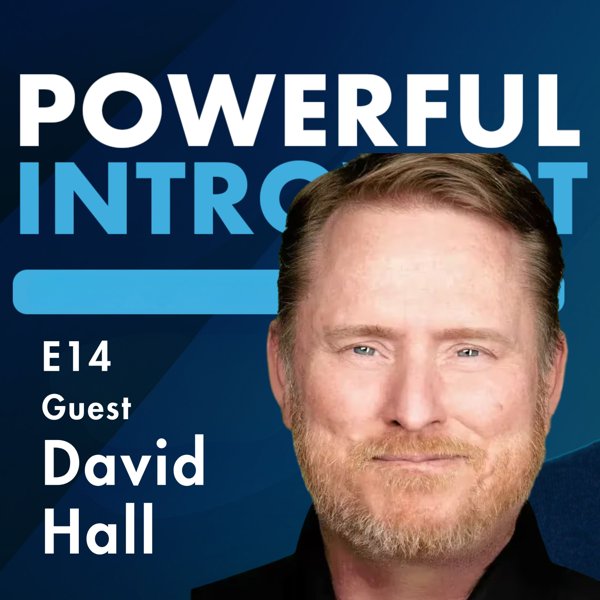
David Hall spent 25 years in higher education before launching the Quiet and Strong podcast on World Introvert Day 2021, and his contribution to the field is definitional: he argues that "introverts recharge alone" is a dangerously incomplete description that discounts the core trait — being an internal processor and deep thinker. By centering introversion on cognitive style rather than social preference, he reframes every introvert strength (deep thinking, keen observation, reflective capacity) as a leadership asset that can be developed, not apologized for. The episode is a myth-busting, reframing conversation ideal for introverts who are still embarrassed by their own introversion.
The recharging part doesn't make me an introvert. It's just because I'm an introvert that I need to recharge.
If you just get out of your comfort zone but don't shift your mindset, you'll keep having to get out — and every time it will be terrible.
Introverts can have lots to say — because we're always thinking.
When you're leading people, they really need to know what you're thinking. Things can be very clear in our minds but other people might not understand it if we don't share it, often enough.
Key Stories
- The Myers-Briggs epiphany: David was certified to administer the Myers-Briggs as part of professional development, and the moment a facilitator said “introverts think, then speak; extroverts speak in order to think” was his inflection point. It explained why he had felt like something was wrong with him for years.
- Three kids, same upbringing, wildly different personalities: David has two extroverted kids and one introverted kid raised identically — proof that these traits are innate, not learned failures of socialization.
- Pandemic and the “introverts love this” myth: When the pandemic hit and everyone assumed introverts were thriving, David launched the Quiet and Strong podcast to capture a more complex truth — his wife had lost her quiet workspace, his kids were miserable at home, and isolated introverts were struggling too.
- Blocking the first 90 minutes: After years of feeling he had to be available to everyone at all times, David blocked the first 90 minutes of his day for quiet processing and strategic thinking — and describes it as transformative.
Techniques & Frameworks
- Introversion as internal processing, not social aversion: The recharge-alone definition is incomplete. The primary trait is a cognitive one — spending more time in one’s inner world. This means deep thinking, strong observation, and natural reflection are introvert strengths, not side effects.
- Introvert ≠ shy: Shyness is a fear-based social anxiety that introverts and extroverts can both experience. Conflating the two is one of the most damaging myths because it denies introverts the possibility of confidence and voice. They can be both introverted and outspoken.
- Share your vision often: Introverted leaders tend to assume their clearly held internal vision is visible to their team. It is not. Communicating direction repeatedly — more than feels necessary — is a specific leadership skill introverts must actively develop.
- Make people feel seen: Beyond sharing direction, introverted leaders must ensure team members know they are valued as individuals, not just contributors to a deliverable. This is the relational dimension of leadership that can get neglected when a leader is processing internally.
- The 90-minute morning block: Reserve the first chunk of the workday for deep work, strategic thinking, and self-orientation before shifting into collaborative mode. Guard it and communicate it openly to colleagues.
- Mindset shift over comfort zone exits: Getting out of your comfort zone repeatedly without changing your underlying thoughts produces no lasting change. Shifting the mindset — “I can handle this” rather than “this is terrifying” — is what actually expands the zone.
- Weekly review for introverts (GTD remix): David Allen’s “Getting Things Done” weekly review maps well to introvert needs — it creates space to identify what requires deep processing, pre-plan meeting preparation, and protect recovery time before it gets scheduled away.
Full transcript
Whatever you want to become, on-point community credit union can help. Want to become a teacher? Go back to school to learn how. Want to become a pilot? Spread your wings with some flying lessons. Do you want to become a homeowner, a business owner, or an adventure van owner who hits the open road? On-point has the financial tools and expertise to help. So become a member today. On-point. People are the point, federally injured by NCOA Equal housing opportunity. The Bleacher Report app is your destination for sports. Right now, the NBA is heating up, March Bandis is here, and MLB is almost back. Every day there’s a new headline, a new highlight, a new moment you’ve got to see for yourself. That’s why I stay locked in with the Bleacher Report app. For me, it’s about staying connected to my sports. I can follow the teams I care about, get real-time scores, breaking news, and highlights all in one place. Download the Bleacher Report app today so you never miss a moment. Hello. Welcome to the powerful, introvert podcast. I’m Greg Wanger. I’m here today with David Hall. He is the creator of the Quiet and Strong website. He’s an author, a blogger, a podcaster, and he’s a speaker on a mission to help introverts discover their strengths and honor their needs. It’s a mission to help introverts discover their strengths and honor their needs to mission very aligned with my own. David has spent 25 years working in higher education, and he’s given many workshops, trainings, and presentations on personality, strengths, and introversion, and extroversion. His first book, Minding Your Time Management, Productivity and Success, especially for introverts. It’s very topical here, and it helps readers understand themselves and their introversion to be more successful in managing their time and productivity. He is the creator of the Quiet and Strong podcast. I was recently a guest, and he hosts thought leaders, creatives, and successful professionals that share how to leverage their introvert strengths in the workplace. Welcome, David. Absolutely great to have you here. Thanks, Greg. I’m happy to be on the powerful introvert. I love that name, and it was great to have you on the show as you mentioned. Yeah, that was great. So now the tables have turned, and I have questions for you. Okay, so maybe we could get started a little bit with your backstory, how you got into the role you’re in now, and when did you realize you were an introvert? Yeah, so like many of my guests, and you included, you know, I thought something was wrong with me, you know, why can’t I be more at ease in conversation like that person, or why can’t I be more confident in public speaking like I see this person? And it took me a long time to figure it out. At the same time, I’ve always been interested in, you know, what makes people successful, you know, myself, but others. So I started to really dive in. I got a bachelor’s in psychology, but that didn’t quite do it, and I got a master’s in counseling, and you know, again, I’m learning a lot about our natures, our personalities, but it was really, it’s in professional training at work, professional development that really was my, I had some epiphanies. So I got certified to give the Myers-Briggs, and you know, it’s about introversion, extroversion, but there’s some other personality factors in there as well. And I remember the facilitator saying, introverts think, and then speak, and extroverts speak in order to think. And that was one of my live bold moments. It’s like, oh, yeah, that is me. You know, that is what’s going on here. And what we can talk more about that is like, if you don’t understand that, you definitely can feel shy, like confidence, if you don’t understand our communication styles. So that was one thing, and then also I got certified to be a facilitator. It was called Strengths Quest at the time now it’s Clifton Strengths with the Gallup Organization, and in that there’s 34 themes, and you get your top five, because the philosophy is that you focus on your strengths and not so much on your weaknesses. And so this one, it wasn’t about introversion, extroversion, but these strengths occur naturally. Like one of my top is analytical, and I have always been analytical. You can ask my parents, you know, ever since I was little, I looked at the world and wondered why things happened the way they did and how things could be changed. And that’s a gift for me. And I don’t have all the gifts, not everybody’s analytical, but we each have our own gifts, and that was really powerful. And you know, my wife isn’t converted, but she’s just always been confident. She’s never been hung up by it at all. She’s always known what she’s needed. She definitely needs her space when she’s trying to get some work done, which definitely introverts do. I have three kits, two extroverts, one introvert. We raised them the same, but they came with their own natural gifts. So all of these things were really a piffonies for me. Like, you know what, I am an introvert, and it’s a good thing, and there’s strengths that come from it. And also there’s some needs, you know, I do need some time to do certain things, or maybe recharge, things like that. That’s great. And it sounds like these realizations occurred while you were already into your career, as an adult. So tell me a little bit about, as you got to know more of these things about yourself, you started to move into leadership, and how did that come about? Yeah, so let’s just talk just a bit about my take on introversion, and how that applies to leadership. So I often hear people say, well, the main difference is introverts, recharge alone, extroverts recharge with other people. I think that definition is so lacking. I think it’s true that that’s part of it, but I say that I’m an introvert because I’m an internal processor. I’m a deep thinker. And I think, you know, that’s what makes us introverts is that we tune in in our world, our imaginations more often than not. Everybody looks out, but as introverts, we’re spending naturally more of our time inward, and great strengths come from that. And because of that, from time to time, I do get drained and I need to recharge, but the recharging part doesn’t make me an introvert, it’s just because I’m an introvert, I do need to recharge after certain things. Also, if that was the definition, what about, because we’re gonna talk a lot about strengths today, what about all our strengths? If that was the definition, then we’re discounting all these strengths that we have of deep thinking and observation. So with all that in mind, throughout my life, I’ve always risen to leadership positions really quickly, and I think that is because of my analytical ability, and I try to work hard, but there’s things that I’ve definitely learned, you know? The working hard and analytical ability is definitely very important, but when you’re leading people, they really need to know what you’re thinking. It’s sometimes you assume they know, but you really have to share because as introverts, things can be very clear in our minds. We can have this perfectly clear vision of where we want our team and our company to go, but other people might not understand it if we don’t share it and share it often enough, and that’s been a big thing. The other thing is likely we are gonna have introverts and extroverts on our teams, and there’s other factors. Again, I focus on introverts and extroversions because there’s so much misunderstanding, but there’s other personality factors, all introverts aren’t exactly alike, but if we can get to know our team members and take the time to find out who they are, and really, you know, with leaders, the team, they want to feel seen and heard. They want to feel like you see them, and that’s something that I didn’t always understand as a leader, you know? It’s really important to share your vision, but also understand how to help them in their strengths, but have them know that they’re a valuable part of the team and that they are seen. So it sounds like your view on introversion is really, yes, it’s true that we need to recharge, or we tend to need to recharge alone, but that’s not really the core of what makes us introverts. It’s really rooted in this internal process saying, which can take quite a bit of energy and makes for different situations when you’re with other people. And so you develop some of these realizations while you’re at work and learning to apply them as a leader and realizing, okay, I’m processing internally, I’m paraphrasing for you. Yeah, yeah, yeah. Just trying to summarize a little bit here. You learn that, okay, I need to share this and I need to let people know where I’m coming from and bring people along. Yeah, absolutely. And the other thing Greg is, I don’t call anything extroverted. I am truly an introvert. I was shy, I did lack confidence, but since I came to understand my introversion that I think first and then speak generally and you’ll hear me use those words like generally, usually because we are gonna act in different ways, but generally I’m gonna think first. I’m doing this podcast, I don’t get nervous. Years ago I would have been terrified to do this. But some people would say, oh, well, you’re leaning into extroversion. No, I’m not, I’m an introvert, but I’ve learned how I need to prepare. And you know, you did send me some prompts ahead of time which was really great. I looked through those and we’re gonna talk about some of those things. Also, I need time to recharge. And so manage my energy. So after this podcast, guess what? I don’t have anything scheduled right after. So even though I’m loving talking with you Greg, I probably wouldn’t need a little downtime after. But being on the podcast or doing public speaking doesn’t make me an extrovert. It just means I understand what I need as an introvert. I love that. And I think it was the Myers-Briggs, which is originally derived from Carl Jung’s theories. And they are really treating introversion and extroversion as separate qualities. I know some of the more recent methods of studying personality, the big five assessment. It’s really, it’s a measure of extroversion, like how extroverted are you? It just kind of inherently denies introversion as a separate trait. Yeah, yeah. And sometimes people get really hung up on what’s my label? Am I an introvert? Am I an extrovert? Some people use amber ver. I don’t. It becomes more about not the label. The label can be helpful because if we’re both introverts, we could learn from each other. But it’s more about, I do process internally. I do need time to think. I definitely need some time with family of friends. I need to collaborate with people at work. I enjoy it. So anyway, in answer to your question, I think that we are leaning towards introversion or extroversion. And it’s more about understanding your personality and coming to some self-awareness. It’s less about what’s your label. I have to get my label right or. Yeah, yeah, yeah. For why? Unfortunately Greg, too many people misunderstand introversion and they don’t want that label. And I have so many conversations and people are like, well, David, I can’t be an introvert because I like people. I’m like, yeah, I do too. And that doesn’t make you an extrovert. You can like people. In fact, like 1% of the population don’t like people. Introverts and extroverts go out like people. We might want to experience social relationships differently, but we need social relationships. Absolutely. There’s different labels for that. Yeah, yeah. Not liking people, but I don’t want to label them. Yeah, right, right. So you had developed as a leader and then you got into public speaking. Tell me about that. Was there some air anxiety around that originally? Yeah, so I’ll bust the myth here that some people think introverts have nothing to say. We have lots to say because we are always thinking. So we have a lot to say. And public speaking, speaking one to many can be a really good way to get our ideas out there. And I think for me, it was just kind of looking for opportunities and volunteering in the beginning. And a lot of people are afraid of public speaking. And so it was really putting myself out there to share some of the ideas I had. Also, I did a lot of presentations with an extroverted friend of mine. And I noticed that we really prepared differently. She of course prepares, but she was also more comfortable with being spontaneous, which I’m not. And so I learned that I need to prepare ahead of time. Like I need to make an outline and think about what I’m going to say. And then as I get closer to the time, I’m going to record those ideas that come to me, the presentation or speeches in the back of my head. And I’m going to think about, okay, I should be sure to tell that story. So I’m going to capture those ideas after I’ve made my initial things. And you know, I just realized that I can be an amazing public speaker. But my approach was probably going to look different from an extroverted friend or colleague. Yeah, absolutely. Definitely more preparation. Do you find that you prepare less as you gain comfort with it? Or are you still following your preparation methods? Okay, so that’s a really good thing too. Because like, you know, I said we think and then we speak usually. But when you’re speaking on your expertise, it’s more top of mind. It’s more right there for you. And so, you know, I joke that I could speak all day about introversion, you know? Because I’ve been doing the work for quite some time. If it was a topic less familiar, I probably would need to prepare more. But yeah, just depends on your topic and your expertise. I agree. So I want to ask you about your podcast. Are you at around 240 episodes? When did you start that? It’s been a few years. Yeah, so I started like just this whole thing. I started blogging about 10 years ago. And I wrote my book a few years back. And then here we are in the pandemic. You know, I’m used to going into the office all the time and all of a sudden I’m at home all the time. My wife has always run her own business from home. She’s an introvert, like I said. My three kids are now off home all the time. And we’re in my wife’s space. Like, you know, she’s like, wait, where’s my quiet that I usually get when you guys are gone to work in school? And my kids are also an online school which they did not like. You know, they’re missing their friends. And you know, I love my family, my wife and three kids. There’s nobody I’d rather spend time with. But here we are isolated from everybody else. Meanwhile, there’s a lot of talk out there. Oh, introverts are just loving this, being alone all the time. And you know, I knew there was some definitely isolated introverts. There was some introverts that didn’t have great office space at home. It was funny because like, it worked. I could close the door at home. I was kind of in this open air space. Yeah. So I wanted to give more of the voice to all of this. Oh, January 2021 on World Introvert Day, which is every January second. I launched the Quiet and Strong podcast to talk more about what introversion really is. I did 40 solo episodes because I had a lot to say. And then I started having great guests like yourself on, you know, ever since. And I still do about a solo episode a month, but I have awesome guests on as well. Great origin story for the podcast. I was searching on Google terms. They actually show you the frequency of search terms over time. They’ve plotted since the origin of Google in the early 2000s. And the trends are super interesting. So the interest in introversion was generally low for a while. And then around 2012, on the time Susan Cain’s work came out, a few things came out at the same time. That level of search could maintain for a while as leveled off a bit. And then it just exploded to the highest level ever during the pandemic and sustained throughout the pandemic. It’s tapered off since. But that was on a lot of people’s minds. And that was great that you were there responding to that interest in the public at the time. Yeah, that’s fascinating. Yeah, definitely a lot of myths to bust. Yeah, I definitely want to get into that. I love that. The myth busting. He mentioned that when we were on the show, what’s a myth to bust we haven’t touched on here yet? So I don’t think we’ve actually said this, but a lot of people use introvert and shyness synonymously. And that is far from the truth. I correct to someone just the other day because they were saying that the person wouldn’t speak up because they were shy and introverted. And I’m like, yeah, it’s not the same thing. Now an introvert can be shy. Extroverts can be shy too. The causes might be different. So like I said, there could be a lot of causes, but I believe that some of them can be from not understanding introversion, not understanding that. You know what? They’re going to talk a lot. I’m going to think and share what I think is most important. Both ways are valid. It’s not good or bad. So I know some very confident and outspoken introverts. They’re deep thinkers, they’re internal processors, but they’re not shy. So it’s not correct to say introvert instead of shy. And that’s one of the biggest myths. You know, and the great news is if you are shy and you aren’t getting what you want out of life, you can change that. You can overcome your shyness. You can gain confidence. And a lot of it for introverts could be if they’re not understanding what their gifts are and their strengths and also what they need. That’s right. I had conflated those two for a long time for sure. And you’re like, oh, I’m hesitating because I’m shy. Maybe it’s because you’re thinking. That’s a really different point of view on what’s going on. Yeah. And again, introverts, extroverts can be shy. Introverts are at least half the population. And so more than half the population are not shy. You know? Yeah. And along those lines, so you said you don’t love the term amber ver. What’s your hesitation with that? I don’t think that people are dead in the middle. I think that you do have preferences that you lean one way or another. The other thing, Greg, is I feel like when people are using it, the way they’re using it is to say, I’m okay. I’m not one of those introverts. I’m okay. Not. That’s not helpful, you know? And I mean, maybe someone is really in the middle. But again, a lot of times they’re saying, well, I need my time alone, but I also like people. And those aren’t the right definitions. That’s how I hear it used. So, and I didn’t hear Carl Jung using that term. It was really perceptive. And again, guilty as charged, I went through a time period. I must be an amber ver because I, you know, all these reasons, but it’s not truly embracing who you are. Yes. Yes. If you can use it and you understand yourself and your needs, fine, but I don’t ever hear it really used that way. Yeah. And there’s the undercurrent of all of this that there’s something lesser than or something inferior. Yes. Yes. And that’s just not true. We need introverts. We need extroverts. We need everybody. And our gifts go far beyond introversion, extroversion, like I said, but we need everybody. And none is good or bad. Just we need a lot more understanding. Still, we still don’t completely understand ourselves and those on our teams and in our families. And we still need some work. I sometimes think of like, why am I talking about this so much? This is one of the dominant personality traits. It’s not at all everything of what people are about. You keep saying there are many different personality traits. But it’s a very important one. Yeah. And it’s a very misunderstood one as well. Yeah. Yeah. There’s strength of introverts that we haven’t covered here. So a lot comes from our deep thinking. And I think a lot of times people say introverts are good listeners. And I agree they can be. But you have to be careful with that one because just because I’m not talking and you’re talking a lot doesn’t listen to you. So we can be good listeners. I think along with good listeners, we’re really keen observers. Like we are taking in what’s going on. We’re looking at how things are done. We’re coming up with things that other people are missing. So I think that being a deep thinker, we’re also keen observers. I think that’s one of many strengths. It’s common. So like sometimes people say that we are all empathetic. And if you use the term empathy, like meaning that you’re feeling the feelings of others, that’s not true for all introverts. Some introverts and we could talk about the Myers-Briggs. Some introverts are coming at things more logically like myself. And some people are gifted more to feel the feelings of others. Neither are good or bad. But again, there’s different strengths that go with it. But talking about the common ones of being a deep thinker or keen observers, those kinds of things, we’re good at reflection. We’re good at after this podcast. I might think, you know what? I really liked how this part went. You know, if I did it again, I’d probably say this differently. We’re good at reflecting too. It was a really great point about we’re not necessarily listening. Yeah, yeah, yeah. If you’re doing a lot of thinking, then that’s what you’re doing. Your mind could be a million different places. So you should be a good listener, but sometimes people will maybe somebody’s talking a lot and they think the other person, oh, you’re such a good listener. And it’s like, well, you won’t let their shit award him. So we see how conversations are definitely not usually one way conversations. That’s a good tip. Maybe we could talk a little bit about your book, because that’s something I really haven’t heard much about. It’s time management. Tell me how you got into this one. Yeah. So I’m blogging about introversion. You know, I’ve really come to embrace it. At the same time, you know, I’m putting in a lot of hours at my job. I run a business with my wife. So, you know, that’s something that keeps me busy as well. You know, I’m blogging, so that’s time. I have three kids and they were younger. So definitely a lot of time. You know, great time, but a lot of time. And so I’m also studying time management books in different resource. And I’m figuring out, you know what? There are some things that I need as an introvert that aren’t being called out. Like for example, I love David Allen’s getting things done. You know, and I loved, I loved, you know, looking at your week, you know, doing a weekly review. And that can be so powerful because as an introvert, you can say, okay, what do I got? What do I need to prepare for? What do I need to plug in some downtime here there? Also, I love his someday maybe list. So like as introverts, we can be powerful thinkers and have all these ideas. And we might have this great idea while we’re trying to do something else. Like if, you know, I’m not having any other ideas right now, but I could like, oh, I should look at. I just wouldn’t be the right time to think of. So anyway, just as an example, but his book was great, but it wasn’t calling out things like, yeah, you know, because you’re an introvert, this would be a good thing. And I just realized, you know, as introverts, we do need some time. Now, it could be for recharge, but also we need time to think, we need time to focus, we need time to do some strategic planning. We need to give ourselves that time. At the same time, we got a balance. We do need to collaborate and, you know, I enjoy collaborating. It’s not that I don’t like people. I enjoy it. I just need to find that balance. So that’s a lot of what introverts need to understand is they do need some quiet and they do need to balance that all out and really make plans for their time. And it sounds like making sure that you’re, oring out that time to recharge or be silent or take those breaks in your day. My personal experience with getting things done, I didn’t stick with it because I found myself processing everything that was coming in and it was taking up a lot of energy for me, which I think is a little bit tied to the introversion deeply processing every little trivial thing that comes in and giving it reality and note. I found it’s easier for me not to track absolutely everything, just the things that were in my mind. So didn’t do that. Tell me a little bit more about some of the tips for introverts in that book. Yeah. It’s a bit might apply to everybody. I have a big thing is with time management productivity, you have to set priorities, you know, for your work life, your home life, you can’t do everything, you know. Trust me, I have tried. You can’t. You think what’s most important and for introverts, especially, you know, find that quiet time and you determine the interval. It’s definitely not just every January. Find the time. Maybe it’s once a month where you really have, give yourself some time for deep thinking, like what are my priorities and what are my big moves to make the most impact and you just have to do that from time to time is revisit those and think, you know, how am I doing on this? So that’s another thing and that’s for extra words to just the deep thinking time might be a little different. Yeah. I found that very powerful. There’s life priorities and weekly priorities that you need to set aside time. I’ve personally found it really helpful to set a daily priority, just readjusting those things and they might be more tactical, make time to think about the strategy or that strategy, but I find that really helps me focus and gives me some comfort because then I know at least psychologically the most important things are going to get done and then I can let some of those other things slide because they’re less important. Yeah. Setting some time aside for yourself for certain things. Like, you know what, this particular project, I need quiet. I need to focus and sometimes you have to articulate that to others and you’re, you know, your teams, you know, like, I’m going to close my door and I’m just going to focus on this. And another thing to really remember is that we have our needs and other people might not have the same. Like one of the best things I did was I blocked off the first 90 minutes of my day for this quiet time for all these things that I’m talking about. And before that, I felt like I had to be available at all times to all people and that wasn’t working very well. And, you know, other people can put things on my calendar. And I just found that, you know, if I had that first 90 minutes, it was amazing. Now it’s worked out so well and I’ve been doing this for years now. But other people I work with, they may not need that same time, you know? They may want to start chatting and brainstorming first thing in the morning. That’s not going to be me. So both of our processes or valid just, it’s important to remember that your process, you figure out what that is and you might differ. Like you talked about, you know, you didn’t follow David Allen exactly, but because you figure out, this is what works for me. And that’s what’s most important. That’s right. And to have the conviction that this is what I need and be curious about what other people need as well. Yeah. Another thing is, you know, with this quiet time when needing focus, there really is no such thing as multitasking, you know? We can only think of one thing at a time and, you know, I’ve known some people that are pretty proud of their multitasking abilities and it’s like, you’re really switching back and forth. And most of us are very good at it. It’s like, oh, where did I leave off? You know, you’re more likely to make mistakes. So the focus time can be really important to get some things done and move things forward. In my profession, it’s really well known with programmers is you don’t approach a programmer. Ideally, it’s a planned event or you might leave them a chat message, but if you interrupt them, it’s super costly and really messes with what they’ve done because it takes so much time to bring all what they’re working on into their memory. I don’t know if that’s directly related to introversion or it’s a fact of programming. There are so many things that you need to hold in your head, so complicated, but definitely need to respect that time. Yes. An extroverted programmer is going to need to focus too. But it’s just a little bit different. Yeah. I have one who’s very chatty, super productive, you know, it’s very different from the other ones. Right. We’re edging into the leadership area. I wanted to ask you, what do you see as specific challenges that introverts face? Definitely misunderstanding. Like we’ve been talked that somebody might think we have nothing to say or maybe that we don’t care. Even as leaders, we can give off calm demeanor, which can be very helpful. At the same time, it could also be misunderstood as that we don’t care. We don’t understand the problem. And so again, a lot of times as leaders, introverted leaders, you have to express where you’re at and how you’re feeling. And yes, I recognize this problem. This is a challenge, you know, and again, sometimes the calm, the calmness can really be helpful, but often you need to explain how you’re feeling and what you’re doing in that type of thing. Definitely experience that myself and with people that I’ve mentored or supervised. Sometimes you do need to dial up the energy as the situation demands. Yeah, for sure. And part of my show, what I’m trying to do is give advice to younger aspiring leaders who are a little bit earlier in their career. What might be one piece of advice you’d have for them? Definitely develop your self-awareness. Who are you? You know, what really lights you up? What do you need? What are your gifts? And at the same time, learn other people’s gifts. Learn what lights other people up. How we can be authentic. Because, you know, I’ve definitely tried to be something I wasn’t for many years and it doesn’t work. It’s not effective. Like, you know, I often talk about the traditional networking event where you’re supposed to bounce from person to person as fast as you can. I can do it. I don’t enjoy it. But also, it’s not effective for me. You know, I’m going to be better if I can find those good conversations and deep conversations. And so even though I could do it, it’s not going to be my best way of to approach things. Very much aligned with that. I just recently wrote a piece about networking, how to survive it, but not my favorite. No, no. I had someone on the show and she said, you know, she did it. She collected a lot of business cards. And then when she got home, she had a fire going and she realized these are no good. And she threw all the business cards into the fire. That’s amazing. We’re still handing out business cards. Yeah, yeah, not so much anymore. But yeah. Yeah. Hopefully the pandemic mostly killed them off. Yeah, yeah. We’re printing a lot less, which is nice. And just in terms of career growth, what are some good ways for introverts to develop in their career and different types of experiences or what’s good for professional development? Yeah. One thing I’ll say is another myth, the bust is that there’s certain careers for introverts or extroverts. And you know, like you said, I mean, you might have an introverted programmer. You might have an extroverted programmer, you know, and they might approach their jobs differently. So that’s one thing. So really find the work that does light you up, that you’re good at. We have to work hard. There’s just no way around that. And also really developing what is your expertise? What can you bring to the table for yourself and your organization? One of the things that I always think about, I’m really curious to ask you, I’ve always found as a leader and as an introvert, I’m encountering situations that are uncomfortable for me. And I’ve learned over time as you put yourselves in them, over time you gain some comfort with it. So how do you balance this tension of making yourself uncomfortable, but still having this need to take care of yourself and manage that and support yourself? Yeah. And I mean, a lot of times we really just need to challenge our thoughts. You know, people talk about getting out of your comfort zone, but to me, it’s like, is a is a younger introvert. I got out of my comfort zone over and over and over again, but until I changed my thoughts, I had to keep getting out, but you can really expand it. And you know, we’re going to have new situations that are uncomfortable, but just think about, okay, you know, this is going to happen. These kinds of things are going to happen. What’s the best approach? And just again, being reflective and just changing your thoughts about, if something’s scary to you, you know, changing your thoughts about that, like, you know what, I can handle this. It sounds like shifting your mindset a little bit. Yeah, it really is important because again, if you’re just getting out of your comfort zone, but you don’t shift your mindset, you’re going to keep getting out of it. And every time it’s going to be terrible. That’s right. It’s your thoughts about that or defining your experience of it to an extent. As this is going to be scary, I’m not good at this. I’m really worried. That’s signals that you’re sending to your body to shape how you physically experience it. Do you have any recommendations of books? Like, what are some of your favorite books on these subjects? So my very favorite book on introversion is called Introvert Power by Dr. Laurie Helgo. And I had two beasts from that. Just the word power. Feel like you have the powerful introvert. Just the word power was there, inspiring to me. And then she also had a time where people were saying introversion was like, 33%. She also was showing data that, yeah, it’s 50% or higher. And so I really recommend her book. She’s been on the show too. It was awesome. Oh, yeah. And her extroverted lawyer has been barren on with her. They had a short run podcast. I think it was like eight episodes. And they were celebrating their 40th year marriage, but they had to work through all these things. They had to work through. And what he said was, he was helping her edit her book. And he finally like, oh, I get this. Because he’s generally thinking out loud. He likes the conversation to go back and forth. They talked about how he’s comfortable with half-baked ideas. She like us introverts, I generally am not going to share half-baked ideas. So she wanted to think about things and then share her whole idea. And it was just amazing that contrast. But that’s a really great book on introversion. I think it should be better known. Thanks for that. You had mentioned that before. I really enjoyed it as well. Yeah. It was great tips on taking retreats, making that time for that. Yeah. And I love that. And she would take retreats alone. My wife has to let me do that. But you find ways to get that time to step away, whether maybe it’s taking a work trip or something. You find time to step away and just give yourself some space and get away from your normal. I like she frames it. It can be daily or it doesn’t have to be this long extended thing. And it can be just a small trip that you just for a couple hours. It’s just you spend time. You make that time for yourself. Yeah. I love that concept. Yeah. David, this is so great. I’ve really been enjoying your podcast, too. You have the luminaries of this field that you’ve brought some of the most influential authors onto your podcast. And I just personally really inspired by the work that you’ve done in the direction that you’re taking your career in with the public speaking and the book writing and podcasting, obviously. Thank you for that. Thank you, Greg. I would like to say, yeah. Is there anything else that you would want to share with my audience about where to find them to add more about your work? Yeah, it’s quiet and strong.com. We’ll get you everywhere. You can find the podcast there. There’s some blogs. Links to social media. You can take a free typefinder personality test. Get your Myers-Briggs code there. So quiet and strong.com. All right. It’s a great place. Thanks so much for being on my show, David. Yeah. Some days call for some oomph to amplify your everyday look, like when you want the look of false lashes without the extra effort. Reach for thrive cosmetics liquid lash volumizer mascara. Or when you want all eyes on your smile, keep in power gloss ultra glossy lip serum in your bag. It’s a burst of 24 hour hydration that smooths like a serum, shines like a gloss, and can be worn sheer or layered. You’ll also look and feel your best with thrive cosmetics. Plus, every product is 100% vegan, cruelty free, and made with clean skin loving ingredients that work with your skin, not against it. And for every product purchased, thrive cosmetics donates to help communities thrive. So every time you use your favorite thrive cosmetics product, you’re helping communities you care about too. Amplify your everyday. Go to thrivecosmetics.com slash shine 26 for an exclusive offer of 20% off your first order. That’s thrive cosmetics. C-A-U-S-E-M-E-T-I-C-S dot com slash shine 26.