Credibility Before Visibility: How Introverts Get Noticed Without Performing Extroversion
Increase Visibility & Influence Authentically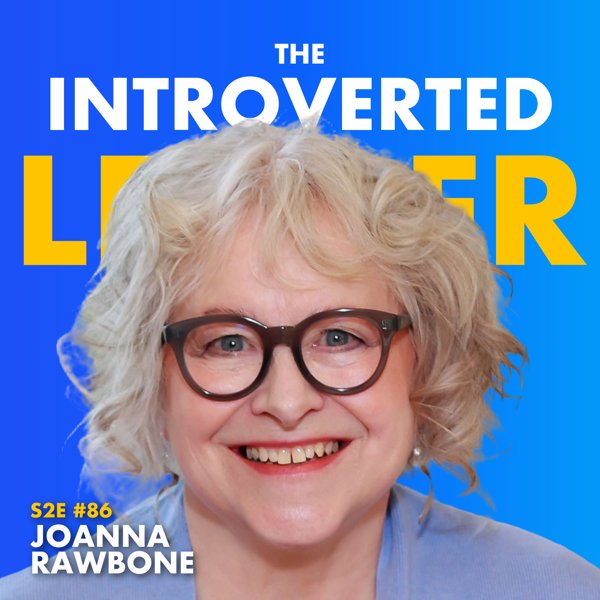
Joanna Rawbone is the founder of Flourishing Introverts. She helps quiet professionals whose great work goes unnoticed to build credibility first and then step into visibility on their own terms. For almost two decades she copied the extroverted trainers around her, and burnout ended it. Her core argument is that "be more confident, speak up, leave your comfort zone" really means "be more extroverted." Introverts grow at their learning edge instead: they claim their work as showcasing rather than showing off, they state their strengths without apologizing, and they manage their energy on purpose.
It seems that the extroversion bias is the last acceptable bias.
I wasn't prepared to be visible until I felt credible.
It's about showcasing what we're doing and what we're capable of. It's not about showing off.
So it's not within my gift to give you psychological safety.
a strength is not just what I'm good at, it's what I'm good at that I enjoy or love doing.
Key Stories
- Two decades of borrowed leadership: Working in learning and development, Joanna saw that her successful colleagues were all big-personality extroverts. She used them as a blueprint to be “less like myself.” It worked until burnout and age made her stop compromising who she is.
- The training room in Doha: Joanna was helping Qatari nationals work together as a team. She saw what she had seen all over the world: the quiet people doing great work were consistently overlooked. She got mad, and that anger became her mission.
- “The last acceptable bias”: A director of communications told her that extroversion bias “seems” to be the last acceptable bias. The line hit her hard and still shapes her work.
- Credibility vs. visibility with Richard: Joanna and a colleague were designing an influencing-skills game. He assumed visibility comes first and credibility second, and she was “aghast.” That disagreement became her credibility-then-visibility model.
- The oversubscribed lunch and learn: At a professional services firm, a senior leader joked, “good luck getting the introverts to turn up.” Her session became the most oversubscribed one the firm had ever run.
Techniques & Frameworks
- Comfort Zone → Competency Zone → Learning Edge: Joanna rejects “nothing good happens in your comfort zone.” The comfort zone is where you are unconsciously competent. Just beyond it is the competency zone, where you have to concentrate to perform. Beyond that is the learning edge: mildly uncomfortable, but not fear or panic. Working at the learning edge grows your comfort zone sustainably.
- Credibility, Then Visibility: First build trust and expertise and give yourself time to prepare. Then step into the limelight, lead the meeting, or present the paper. Introverts who want to go visibility-first still can.
- Reframe “You’re Quiet” as a Strength: Instead of apologizing, say: “Thank you for noticing, because one of my real strengths is my ability to observe what’s going on, to notice what’s not being said, and I do that much better when I’m quiet.”
- The Pre-Frame for Claiming Work: To get credit without bragging, describe the difference the work made instead of saying “I did that.” Open with a line like “One of the things I found when working on this piece was…” That flags your contribution and adds to the discussion at the same time.
- Battery Management and Brilliant Battery Boosters: Watch your energy level closely, and check your calendar ahead so you can pre-charge before draining events and schedule recharge time after them. Start meetings at 10 past the hour to create buffers. Keep quick boosters on hand: acupressure points, citrus essential oils, moving between meetings, a mindful pause at doorways, and breathing with a longer exhale than inhale.
Full transcript
Have you ever been told that the way to get ahead is to be more confident, speak up more, push yourself outside your comfort zone? If you’re an introvert, you know that this advice is really code for be more extroverted, So you study the loudest people in the room. You copy them, and slowly but surely, you stop leading as yourself. My guest today did this for almost two decades until burnout forced her, like me, to discover an authentic leadership style built on her quiet strengths. Welcome to The Introverted Leader. It’s a podcast helping introverted leaders embrace your underrated quiet strengths so that you can get promoted and start earning what you deserve. I’m Greg Weinger. I have over 25 years of leadership experience, and yes, I am an introvert. Joanna Rawbone is the founder of Flourishing Introverts. She helps quiet people doing great work that isn’t being noticed first build credibility, and then step into visibility on their own terms. Before we start, I made a free masterclass for introverted leaders. It’s called Why Everything You’ve Been Told About Getting Ahead as an Introvert is Wrong. 30 minutes, it features three moments that decide whether you advance in your career, and one practice to get started this week. Get started at gweinger.com/masterclass. That’s G-W-E-I-N-G-E-R.com/masterclass, one word. Let’s get into it. All right, Joanna, so happy to have you on the show today. Welcome Thank you, it’s a real pleasure to be here, and I know this conversation is going to be really useful in so many different ways I have the habit on this show to ask everyone, are you an introvert, extrovert, or other? And, I have a pretty good idea on this one, but, I have to ask anyway. Yeah, I definitely identify as an introvert without a doubt. And I think the ambivert tag is misapplied quite a lot, and people use that because it’s still not quite acceptable to own the introvert label. Mm-hmm. And as for extrovert, I mean, don’t go there because for me, that’s just actually an introvert flexing, which is what all of us can and are able to do. So yeah, so this one clearly identifies as an introvert All right. take us back to a time where you first realized that, and then maybe also the point where you decided that this was something you wanted to Hmm. I was in the world of learning and development. I was a trainer. I was a coach working with organizations around the world. what I saw very clearly was the difference between the extrovert behavior and the introvert, typical introvert behavior. And all of my successful colleagues in learning and development were all the big personality extrovert types And so what it gave me was a blueprint of how to be more like them, less like myself, less authentic, which worked for almost a couple of decades until I hit burnout, until I reached a point and an age where I thought I can’t continue compromising who I am. So that was a point where I decided that I needed to really own my introvert strengths and play to my introversion. And what led me to doing this work predominantly, I remember being in a training room in Doha. I was working with Qatari nationals, both men and women, and part of my role was to help them work together as a team, which if you know anything about that culture, was quite revolutionary at the time. Interesting, Yeah. And I noticed the same thing there that I’d noticed almost everywhere else around the world I’d worked. Now, I know that we see what we notice, or we spot what we’re looking for, but it was the same thing, the quiet ones who kept their head down, who were doing great work, were the ones who were consistently overlooked and it seemed undervalued. Mm-hmm. And in that moment, Greg, I got mad. I got really as angry as I would allow myself to be in that kind of public forum. And from that moment on, what I did was I went away and started planning how I could enable the introverts to have a fair crack at the whip without pretending to be extroverts, without pretending to be somebody they’re not. Because… And it was a director of communications I was working with who said to me at one point, “It seems that the extroversion bias is the last acceptable bias.” And that hit me really hard, because I think there’s a lot of truth in that so let’s talk about some of the advice that this world gives introverts as they’re coming up. Just be more confident. speak up more. Be more assertive. What, Yeah. there? Yeah, push yourself out of your comfort zone. All of that.for me, the big problem with all of that is essentially what it’s saying is be more extroverted. Mhm. What it’s not doing is saying, “Let’s understand who you are as an introvert. Let’s understand what your strengths are, and let’s enable you to play to your strengths.” Because your strengths as an introvert add value that complement the strengths of the extroverts. So the big problem for me is that we seem to be trying to create mini-mes or have a cookie cutter approach, when actually what we need to be doing is playing into that, valuing diversity, and creating an inclusive environment where people know they belong as they are, not as how people want them to be I also have a particular problem with the comfort zone thing because, and, I’ve seen various models around kind of comfort zone, and I’ve seen various statements like, “Nothing good happens in your comfort zone.” And that is so not true. Because if we think about it in terms of the, kinda conscious competence model, what happens in the comfort zone are the things that I can do without really thinking about them. They’re where I’m unconsciously competent, and isn’t that great, that I can, I can rock up, I can do that stuff. It’s not particularly stressful. I don’t have to think about it. So there is lots of good that happens in our comfort zone. What I do agree with is that growth doesn’t necessarily happen in the comfort zone. Mm-hmm. So the model that I’ve developed that works for me, and a lot of what I share is stuff that works for me, but is just beyond the comfort zone, is, the competency zone, where if we back to that competency model, this is where I have to be conscious about what I’m doing in order to be competent. So that for introverts is when we’re going, “Shh, shush everyone, I can’t focus, I can’t concentrate while you’re all talking.” So that for me is just beyond the comfort zone. And just beyond that is what I refer to as the learning edge, and this is where I really start to feel a little bit uncomfortable, and where what I’m doing is if I work in my learning edge, I’m expanding my comfort zone. But what I don’t have to do is go right out there into the world of fear and anxiety in order to grow. I can grow at my learning edge. And when we do that, it’s sustainable, and it enables us just to keep expanding that comfort zone. And for me, that’s what it’s all about. So push yourself forward more, speak up more, be more assertive, be more like, you know, whoever it is doesn’t work. It’s be the best version of yourself and keep expanding that comfort zone. Yeah. Beautifully put. And it strikes me that self-awareness is such a key part of this because Yeah about is really quite subtle and it requires a lot of awareness of, you know, how am I feeling in this moment? What is the situation around me? it requires a lot of presence and self-awareness to know exactly where you Like, am I in this, coasting, or I’m in this active, pretty attentive here, or I’m really almost on that knife edge of, boy, this is getting a little bit you know, out Yeah my zo- out of my zone here, but I’m staying with it and I think the other thing is that somehow we forget that humans are wired to grow. You know, we’re not wired to stagnate. We’re wired to grow and develop. I think part of the challenge is that most of us have grown up with this unhelpful, and I’m reluctant almost to call it feedback, you know, advice I’m gonna call it rather than feedback. We’ve taken that on wholesale in some ways, so we start to believe that we are broken, or we are less than, or we are not good enough, or that, we don’t deserve a space at the leadership table because we’re not the right kind of leadership material. So the self-awareness piece is so important because I think what we need to do is ditch some of those limiting beliefs that we’ve bought into that become part of the narrative of who we think we are, when actually we’re not that at all. So we need to shake that off and flip those limiting beliefs into beliefs that are either liberating or empowering, whatever language you use, but let’s have some of those beliefs instead Right. There’s a sort of a conscious choosing of what’s mine, what’s not mine, what do I, choose to believe in and, Yeah so maybe we can pull this into some of your conversations with clients. Hmm. spent years in exactly what we’re talking about. If they’re coming to you, probably developed more of an awareness of this and so where do you find them in that journey typically? Interestingly, a lot of them are quite late on in their careers they’re often 30s or 40s, before they’re realizing that actually what’s going on for them is introversion and not something else. And, like me, finally get mad enough or finally decide it’s time to not be compliant, to not bow to other people’s expectations, but to get a bit feisty or a bit sassy as I call it. I refer to myself as a sassy introvert sometimes. And part of that, I think, comes with age. I certainly wasn’t like that in my earlier years. I don’t know that I would’ve had the confidence. I don’t know that I would’ve had the knowledge or the self-awareness to be able to do that. And what’s come for me with age is being able to do that unapologetically. And I’m loving this stage of life where I can be me, and I can help others uncover who they really are, and have that moment. It’s almost like a reveal where someone’s had a makeover or something, where there’s this reveal of going, “Ah, this is who I really am.” So a lot of people are more mature and finally going, “This has to stop. There is more to life than this,” or, “I’m not feeling fulfilled in my career, my life,” whatever it happens to be. And for whatever’s going on outside, often elderly parents or losing friends or whatever, there’s that moment of, “I’m not gonna be here forever.” And it’s a kinda now or never type moment Right. And I think a lot of that naturally comes with age and these types of events, but Whatever brings you to this point, there is a point where you realize you have to stop fighting your actual nature, and, and there’s, Yeah. such a relief in that and such a liberation And that was the word I was going to use. Such a relief when you can finally let go of others’ expectations and actually start really being who we are or who we’re meant to be, and it is such a relief Sogoing back to your clients in terms of visibility, Mm. people who are professionals, they’re being overlooked, as you mentioned. what are some of the things that you talk about or have your coachees work on? The key for me is that, and again this was from my own experience, is that I wasn’t prepared to be visible until I felt credible. So one of the models that I use with my clients looks at the process of building credibility in order to step comfortably into the visibility piece. And that came about when I was working with a colleague, many years ago, developing an influencing skills kind of learning game really. And there were two axes to this. There was the credibility, and there was the visibility. And as we were working on this game, Richard said, “Well, of course it’s visible first, and then we’ll worry about credibility.” And I was aghast at that, thinking, “No, no, no. No, it’s credibility first, and then visibility.” And so I’ve chosen that route on the basis that maybe that’s more of the introvert way, but there’s still flexibility if people feel ready to go for visibility first. But for me, it’s very definitely once I know that I’ve built credibility, I’ve built trust, I know what I’m talking about, maybe I’ve had time to prepare, then it’s about being able to step into either the limelight or lead the meeting or do whatever I’m doing. But I think what’ll also, if we start to think about how we transition from one to the other, it’s about enabling introverts to be able to articulate their strengths positively in a way that talks about how their strength adds value. Because their strengths are gonna be different quite often. I remember being very apologetic about my strengths because I’d been brought up with this thing about I wasn’t as good as some of the louder people. So I would apologize, for instance, for being quiet. And now I will say something like, “Thank you for noticing, because one of my real strengths is my ability to observe what’s going on, to notice what’s not being said, and I do that much better when I’m quiet. So thank you for noticing that.” And I think when we help introverts start to articulate their strengths, with that little sense of pride, with that sense of knowing it makes a difference, knowing it adds value, there’s a growth that happens almost physically as well as emotionally and mentally because they know that there is a place for them. They know that they’re making a difference. Yeah, and visibly, You embody confidence in a way. it can be quiet confidence, but yeah, you can see it on a person Yeah in their voice and in their carriage, posture, all of that. Absolutely. Absolutely I wanna linger a little bit on credibility because people like, if they’re talking to you, they’re probably very competent. Mm so, but credibility has this other component of other people noticing and, sounds like that’s tied into what you were describing how are you describing it? How are you making it readily shareable? how are you sharing evidence of your competence, as a normal course of your day? Yeah, and I think that’s a really important thing to be able to do as well because what we notice is that other people are very willing, sometimes too willing to claim kind of what they’ve done, and to, bang the drum about their achievements, et cetera, which still isn’t the introvert way. But there is something about being courageous enough, and I am gonna use the word courageous enough, to claim work they’ve done. If they’ve written a piece, to make sure it’s their name that’s on the piece. If there is a paper to be presented, then it’s them that’s doing it if it’s their paper, rather than stepping back from it. I think there is something about, and again, a subtle shift in language here. It’s about showcasing what we’re doing and what we’re capable of. It’s not about showing off. It’s about showcasing, and for me, that’s, one of the most important things when it comes to credibility, is not shying away from that Yeah. There’s a situation I think a lot of people encounter where, it’s not clear who’s done the work or who’s made a significant contribution and, it’s a live situation in a room. And there are times in the past where I wouldn’t claim that. It’s like, “No, I spent weeks on this. I thought deeply about this and, I care about it, and people should know that.” So I’ll, Yeah “Oh, yeah, I, spent a bunch of time on this and I think this,” or whatever it is. However I pla- work it into the conversation Yeah. And I think a bit like, a living CV, if you like. For me, it’s less about what I did, and it’s more about the difference that what I did made. So you’re right, and i’ve heard it before when workings with teams, in that, you know, the introvert will be the one who stays late and gets all the work done, and then the other people will stand up and present it because the introvert didn’t like that bit, and therefore automatically get credited with the, the work that was done. So I think it is important that what introverts are able to do is to talk about… and I’ll often use a pre-frame with it first, in terms of, well, one of the things I found when working on this piece was this. What I’m doing is flagging very well that I worked on that, and this is the result of that. But what I’m not just doing is, “I did that. I worked on that.” It’s the way that that’s phrased that, for me, makes it more easy for me to be able to say that Yeah. And if the communication isn’t just entirely about claiming credit, it’s contributing to the discussion. Yeah. kind of working it in. Absolutely. Absolutely My show is geared at leaders, who happen to be introverted, and,I do think there’s a lot of, living on that growth edge, you know, not just work, in the workplace, but especially if you’re drawn to leadership positions. Hmm. if you’re living more in that growth area, carefully managing it, you’re still expending more energy. what do you, talk to your clients about in terms of managing energy? There’s a few things that I really advocate for when it comes to energy. And the First one is keeping a really close eye on the charge in my battery. So I’m, I won’t say I’m hypervigilant, but I’m certainly vigilant in terms of noticing when I’m starting to feel drained, because it can happen in surprising moments. So I might be in a meeting that I thought was with people who understood me, and we were all on the same page, and then all of a sudden I realize it’s not, and I can start to feel the energy draining a bit like an energy vampire has all of a sudden come into the room, or a dementor or something has entered the room. So I am really vigilant about the charge in my battery. And what I’m also encouraging people to do is to really look ahead at what they’ve got going on in their calendar, which enables them to both pre-charge, so that they go into those scenarios in the best possible energetic state, and that they build time in afterwards to recharge. And I think those two things are crucial. And I guess one of the challenges that many of us have as leaders, especially in this day and age, is this whole culture of back-to-back meetings, of never having time between anything. So some of my clients have chosen, for instance, to start meetings at 10 past the hour, so the other meeting will finish and at least they’ve got 10 minutes to do something to either get their thoughts together, to take a break, to do something. So, you know, things don’t automatically start at the top of the hour And the other thing I share with my clients, which is something I developed for me, is what I refer to as my brilliant battery boosters. Don’t you just love an alliteration? these are simple little techniques that give me an extra ounce or hour of juice to keep going on those days where I need to keep going. So a bit like the emergency batteries you have for your phone that just gives it that little bit of extra charge. They work in similar way. They can be things as simple as using acupressure points. This one around the third eye between the eyebrows is a really good one. This one here, top of the lip where you can feel your gums and your teeth below your finger, is a really, really good one just to kind of bring focus and attention back again. Essential oils can be really good. The citrus, so lemon and lime particularly, are good for focus and attention. We know lavender’s really good for relaxing, so I’ll use that at different times. But if I need to just kind of still be on, as it were, then a bit of lime or lemon will do really well. In that 10-minute break between meetings, I’ll make sure I move. I’ll make sure I walk up and down stairs or get outside if I can. Anything that actually really starts to get the chi or the energy moving in the body. I found the ones that work for me. I encourage people to experiment and find the ones that work for them. But they make a big difference, a big difference. A meditation moment as opposed to 40 minutes of om kinda works really well. So every time I walk through that doorway, I just pause as I walk through and just, it’s a meditative moment, a mindful moment that just again helps to calm the nervous system. Any of those things I find help really well Yeah. if you have a pet nearby, just for the moment focusing on the pet, petting, having a moment of connection there. Absolutely I think breathing, either box breathing or, any of those techniques, whether they come from, yoga practice or wherever else where… And typically where you breathe out for longer than you breathe in is really good for kinda calming the nervous system and bringing you back again. So you’re right, because I can do that completely silently, completely silently. And, and if people notice, in fact, I might do this sometimes, and if people notice, I might tell them what I’m doing. I don’t mind. So there’s something, again, about aging as an introvert. I am less self-conscious of being open about doing what I need to do in order to do my best work, in order to stay present, and I’m not gonna make apologies for it anymore Yeah. One of the things that I’ve started doing and, kind of feeling very unapologetic about is doing things in meetings that are friendly to the introverts in the room, and I’m never the only one. all of the meetings have this feature now, which is raising your hand to speak. And, it’s really wonderful. It’s very liberating. It’s kind of almost like a game for me to watch it where, people just start speaking over each other, and then I use the raise hand button, and then, people eventually are like, “Okay, Greg,” and then I’ll do that, and then other people start doing it. And so it’s almost like coughing in a theater and, you know, people feel almost unconsciously, you know, they start, Yeah following the pattern and now I watch other people doing that same thing. this is a really positive development. It’s subtly bringing awareness to people about making, everyone welcome to speak in meetings, Joanna: Yeah. And I think what’s important there, ‘cause I’ve also seen it done horribly, where the facilitator or the chair of the meeting, whoever it happens to be, is aware that somebody hasn’t said anything, and will then pounce on them. I mean, I remember when I was training to be a trainer, that’s part of my background, that we had this pose, pause, pounce technique. And I used to hate it because it meant that somebody who wasn’t yet ready to speak, like me, because typically introverts do have this think, say, think communication process. If you pounce on me too early, I’m still gonna be a bit startled rabbit until I learn to maybe use a placeholder that means, okay, I’ll take the floor even though my answer isn’t quite ready yet. I’ll get it ready as I’m using the placeholder. But those things are awful, and tend to just close most introverts down, especially those who haven’t yet developed the level of confidence or courage or assertiveness or credibility in order to be able to just step in and take the floor when they’re invited to Yeah, that’s definitely, a challenging situation for an introvert. you work with organizations as well as individuals and Yeah Have you worked with organizations in figuring out their leadership training pipelines in a way that is more free of bias? It’s an ongoing challenge, Greg, because many of them still refuse to acknowledge that their systems, their processes, their everyday practices are biased. So it is part of the big mission that I’m working on. And until we have more introverts, taking their place at the leadership table, we’re gonna be pushing at slightly closed doors with this. But it’s certainly conversations that I’m having. I’m working with, some professional service firms where I’ve, for instance, done lunch and learn sessions. And one of them was amazing actually, because it was part of their network where they often have a lunchtime session, external speaker invited in, which I was. And one of the senior people, I’ll be try- and be really impartial about labels and things, actually quipped, “Well, good luck with that one, getting the introverts to turn up to that.” And it was the most oversubscribed session they’ve ever run. Because people forget that, you know, around 50% of any population identifies as an introvert. We’re not a minority. People have this misunderstanding that, you know, a misconception that we’re a minority of the population. We’re not. We’re around about half of any population. And so for me, it’s incredibly important that we develop leadership development programs that reduce or minimize the bias. And I think the way we do that is by naming it to begin with, by helping people see where the bias exists. And for me, it’s in things like recruitment, interviewing, feedback that people are given, career progression, impromptu meetings. All of those sorts of things are where the bias is lurking. So there’s a lot of work to be done to reduce the bias that exists in those places what are some ways that you’ve found to get the attention of people or, kind of educate them about the bias that they are probably unconscious of? I’m talking about in those leadership roles people who are more in a position to make some of these changes. Yeah. What I tend to do, I’m a big fan of understanding what makes people tick, and adjusting my language so that it lands well, as well as possible with those people. So if they are all about the bottom line, I’ll talk about the potential return on investment, or the cost of attrition, or the disengagement and how much talent is being left on the table and wasted. So, I will always try and couch it in terms that will have them sit up and kind of do the, “Wait, what?” So that I’ve now got them talking where we can talk about places they can make often quite small adjustments that will make quite a big difference Absolutely. Have you come across any organizations that have kind of shown up in the promised land where they really are aware and are making conscious efforts to be more introvert-friendly? Smaller ones, at certainly at this stage, smaller ones, are making better headway, I would say. Because a lot of the work I do is with professional service firms who typically attract, those STEM organizations attract more introverts. And so there are more likely to be introverted leaders, and yet what I’m finding with some of those is that they are still mimicking the extroverted style of leadership and therefore bearing the cost on them of not being authentic. Because I think there’s something wonderful that happens when an introverted leader is able to model how to lead as an introvert, because what they’re doing is they’re laying the groundwork for other introverts to come up through. So it is harder work because the culture tends to be, harder to shift, I’m finding, in some of those larger organizations. But certainly the smaller ones are the ones making faster progress. And you’re touching on the opportunity that an introverted leader has as a role model because, I mean, you’re really covering ground that hasn’t been covered a lot, and so your one action have such a ripple effect pretty much every organization I work with is now looking as to how they can tick the psychological safety box, because, everyone’s talking about psychological safety. But what they’re not necessarily doing is understanding that psychological safety is co-created. So it’s not within my gift to give you psychological safety. My responsibility is to understand for each of the people I’m leading, and this is where it can be labor-intensive but so well worth it, what is it that would enable that person to feel safe? And therefore, how can we co-create those conditions that might be different from that person to that person to that person? But that, for me, is true leadership, not having a one size fits all and it either works for you or it doesn’t. But actually, where I am genuinely invested in you as an individual and enabling you to be the best version of yourself, enabling you to do your great work, enabling or encouraging me to get out of your way to enable you to do your best work. And so that’s, for me, the work of true leadership. It’s not kind of being out the front going, “Go on then, lads. Tallyho.” It’s about really understanding what creates great followers who follow you because they’re passionate about what you’re doing, and they’re engaged with it, not because they’re fearful of what happens if they don’t follow you Yeah, and I think ensuring that you create psychological safety for introverts probably covers a vast swath of the population, more than 50% of people. Yeah A lot of ROI for Yeah. Yeah, absolutely Yeah. If you had one message to share with aspiring, quieter leaders, what would it be? Oh, my message would be understand what makes you tick. Understand your own strengths, and I go back to the fact that a strength is not just what I’m good at, it’s what I’m good at that I enjoy or love doing. Because if a strength is something that I can do to a consistently high standard over a length of time, over a period of time, I’m not gonna be able to do that if I don’t love it. So, and I think a lot of people, and I had it when I was employed in British Telecom many, many years ago, where I remember during performance reviews, my boss would have me in and kind of say, “Right, these are your strengths. Now, let’s talk about your weaknesses.” Whereas actually, he wasn’t talking about my strengths, he was naming my competencies. He never bothered to get into the conversation about what my strengths really were. So I think for introverts who know they are capable of being great leaders, and many of us are and do, it’s about knowing what that looks like for you, knowing which strengths you’re gonna bring to the fore here. And if there are weaknesses, knowing which ones need work and which are forgivable, or which are allowable weaknesses, ‘cause I don’t need to work on absolutely everything. And we’re now sophisticated enough to know that I probably can’t turn a weakness into a strength. But I can minimize a weakness if it’s gonna hold me back if I don’t work on it. So it’s really about understanding what type of introvert I am, understanding what my strengths really are, knowing how I can play to them and articulate them, and then bringing that to the fore whenever possible Excellent. Excellent advice. Joanna, if people wanna learn more about you and your work, where should they go? probably the one-stop shop, if you like, is flourishingintroverts.com. That will have links to my podcast, which is the Flourishing Introvert Talks, dispelling the myth that we don’t have anything to say, because we’ve both proved that not to be true today. Talk a long time. it’s got links to my YouTube channel, where I do Dropping Pebbles in the Pond show once a month. LinkedIn. I’m pretty much everywhere. If you search Joanna Rawbone Flourishing Introverts, you will find me. But flourishingintroverts.com is probably the one-stop shop Absolutely. Joanna, this has been so much fun. Thank you so much for taking the time and, sharing all your wisdom here on the show. Thank you. It’s been a great conversation, and I feel we could have gone on longer as well. I have no doubt. Thank you, Greg What I love about this conversation is how Joanna puts the lie to advice that so many of us have heard over the years to be more confident, speak up, just get out of your comfort zone, and shows why it’s so misguided for us. Here are three things I hope you remember. Number one, credibility then visibility. Build trust and showcase your expertise first, and that gives you the courage to claim your work as your own. Showcasing isn’t showing off. You’re talking about the difference that your work made, the impact, and that’s different than just claiming credit. Number two, stop apologizing for your strengths. When someone says, “Oh, you’re quiet,” say, “Oh, thank you for noticing. That’s how I really pick up on everything that’s going on in the room.” And remember, a real strength isn’t simply something you’re good at, it’s something that you also enjoy. And number three, you grow at your learning edge. This is not the realm of fear and anxiety or crushing panic. No, it’s just slightly outside of what’s comfortable for you, and that’s what makes growth sustainable. I happen to think that this is what authentic leadership really is. It’s not becoming someone else. It’s just continuously expanding who you actually are. If this content resonated with you, here’s one more thing. Please subscribe wherever you listen to podcasts. It helps other people find this content, and you won’t miss out on the next conversation. I’m Greg Weinger. Keep leading with quiet confidence, and I’ll see you next time