Stop Trying to Fit In: How a Shy Introvert Became a Keynote Speaker and CEO by Being More Herself
Increase Visibility & Influence Authentically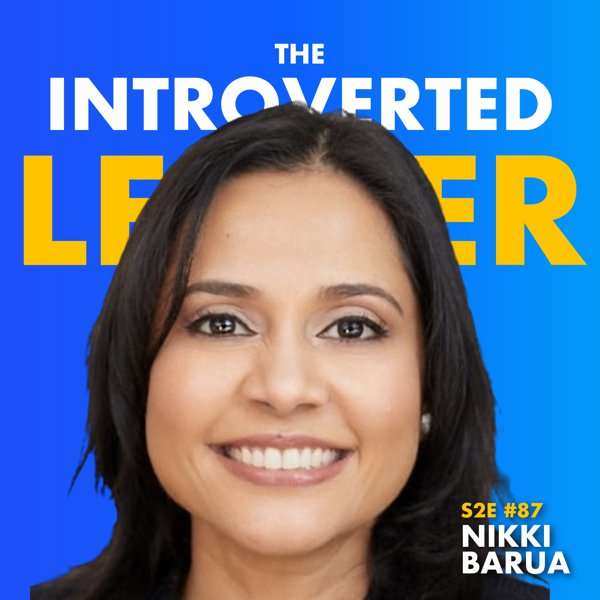
Nikki Barua is a CEO, keynote speaker, and founder of FlipWork. She describes herself as a "painfully shy introvert" who once froze in front of 1,000 students. Her core idea is that what makes you different is what makes you powerful. Copying the leaders above you only makes you invisible, and the people who relate to you can find you only when you show up as yourself. She argues that in an age of AI-generated sameness, quiet strengths like presence, patience, pattern recognition, and lived stories are becoming a real advantage.
What makes you different is what makes you powerful.
I felt like the more I became like everyone else, the less there was of me to see.
If you don't show yourself, how will your tribe find you?
AI can't make up stories. Your lived experience is yours alone, and that is something no one else can copy.
Your faith has to be greater than your fear.
You are perfect as you are.
Key Stories
- Pantyhose, pearls, and golf: As a young immigrant in a formal 1990s corporate culture, Nikki dressed far older than her age and took up golf, which she hated, because it seemed to be what business people did. She realized it was turning her into someone even she didn’t recognize.
- Forced into the open: In 2008 her partner died by suicide in their home, and the loss became public news. Nikki had not yet come out as gay. With no way left to hide, she chose to stop hiding, and she says the experience was freeing in some ways.
- Laughed off the stage: At a high school speaking competition in India she froze at the microphone in front of about 1,000 students. The silence turned into laughter across the whole auditorium, and a teacher had to lead her off the stage by the hand. That day she decided she would one day be paid to speak on stages around the world.
- Not Tony Robbins: She tried to copy the big, theatrical style of speakers like Tony Robbins and found the results “frankly mediocre.” Once she let go of that belief and spoke in her own style, more people related to her.
- The wartime CEO: Her peers call her a wartime CEO because she gets calmer in a crisis. Her teams say her calm presence gives them confidence that they can make it through.
Techniques & Frameworks
- Find your zone of genius (Ikigai-style): List what comes effortlessly to you but takes effort for others, what absorbs you until you lose track of time, and what you are endlessly curious about. Ask the people around you what they rely on you for. Match that to market demand, double down on it, and use AI for the parts you aren’t designed for.
- Get the reps, then find your style: Say yes to every speaking opportunity, “even if there were three people in a room with a pulse.” Volume builds skill, and an authentic style emerges once you stop copying someone else’s persona.
- Abundance framing for audiences: There are eight billion people on the planet. Instead of trying to please everyone, assume someone relates to how you are designed, speak to them, and stop chasing audiences that aren’t yours.
- Reinvent repeatedly, and build with your own hands: Each AI model update changes the landscape, so adaptability has to be ongoing. Senior leaders should move back toward execution and building, because you understand AI only by working with it, not by being briefed on it.
- Orchestrator, not traffic cop: As management roles that only supervise others shrink, position yourself as the person who provides context, orchestrates outcomes, and creates value.
Full transcript
Greg (2): Have you ever wanted to get ahead so badly you started copying the leaders above you, the way they dress, how they talk, the way they work a room? maybe you even copied one of their habits, like golf, and it made you feel ridiculous. Here’s the problem: You can perform your way into fitting in, but the more you look like everybody else, the less anybody sees the actual you My guest today was a painfully shy introvert who once froze in front of 1,000 people and got literally laughed off a stage. Today, she’s a CEO who speaks on stages all over the world. She got there by finding a path to lead authentically, by becoming more of herself, not less. Welcome to “The Introverted Leader.” It’s a podcast helping introverted leaders embrace your underrated quiet strengths so you can get promoted and start earning what you deserve. I’m Greg Weinger. I have over 25 years of leadership experience, and yes, I am an introvert. Nikki Barua is a CEO, keynote speaker, and She’s been called a wartime CEO by her peers because she gets calmer when everything’s falling apart, And she’s learned the hard way that what makes you different is what makes you powerful. this is powerful stuff. Listen in. But before we start, I made a free masterclass for introverted leaders. It’s called Why Everything You’ve Been Told About Getting Ahead as an Introvert is Wrong. 30 minutes. It features three moments that decide whether you advance in your career or stay where you are, and one practice you can start this week. Get started at gweinger.com/masterclass. That’s G-W-E-I-N-G-E-R.com/masterclass, one word. Let’s get into it All right, Nikki, welcome to the show. So good to have you I’m so thrilled to be here, Greg. Thanks for inviting me Well, I have to ask, as I ask everyone, do you consider yourself an introvert, extrovert, or other? I am 100% an introvert, a painfully shy introvert, and always have been. I think this may be the very first time I’m talking about that part of me That, that’s awesome. It’s an honor. I’ve been looking forward to this conversation some time. We had to… You know, life intervenes, and we have to schedule, but I believe things are meant to happen when they, Ja and, glad to dig into this Likewise I, I’d love to start with your personal journey, and I know you immigrated to the United States around 1997. As you mentioned, you’re an introvert, and you landed in a fairly corporate setting. Can you describe that for the audience and, what was that setting like, and how was that maybe, a contrast to who you really felt you were? Yeah, I think, tracing back earlier in my life and even when I think back to my childhood years in school, the through line has always been that I felt like I was in the outside of every inner circle, and I just felt different from everyone else. And, what was joyful to me was being buried in books and being alone and being in my head, and I enjoyed, really deep friendships but few of them that were meaningful. I didn’t like big crowds and all of that, and it was always so different from everyone I grew up around or even going to college and, what typical college kids do. And then moving to America, kind of exacerbated that feeling of isolation and feeling, different from everyone because now it wasn’t just about an introvert and trying to fit into this world but also being an immigrant who looks different, sounds different, and just doesn’t know the social norms quite yet. In your early years, you’re still very much trying to acculturate to, the norms and etiquettes of a new place. So everything kind of perpetuated that feeling of that outsider syndrome, right? And so getting into my corporate career, the biggest thing that I felt pressure about was fitting in because it seemed like… and this is going back to the ’90s when it was very traditional corporate, you know, everyone dressed sort of like very formal, and there was an expectation of how to show up, and I felt completely out of place in that. And my initial reaction was to do everything that made me feel like I would fit in, so I would emulate other people, dress like them. I remember wearing pantyhose and pearls in my 20s, dressing up like I’m someone a lot older, trying to play golf, and I hate golf, just because that’s what I heard business people do. So I was doing all of these things that were frankly completely inauthentic to who I really am and what I’m really about and what I enjoy. And I kept chasing that until I realized all that’s doing is turning me into someone that even I cannot recognize, and that the only way for me to find my way is to just be okay with how I’m designed. Just accept that, that until I accept myself, no one else will, and I just have to find my way, by being exactly who I am. I think a lot of people would resonate with that description, starting from feeling, like the environment doesn’t exactly fit you in through the cultural messages. I mean, the dressing up and the golf course was a little bit more in my culture, but Bien. feel like a fit for me, you know? Bien but then, coming to that place where you realize that you truly have to accept yourself, that’s a hard place to get to. And, for some of us it’s taken decades, Yeah come, coming around to that, I think for a lot of people. But I think you were kind of thrust into that a little bit, and you came to it at an earlier age. how did that happen for Yeah. It, it, it wasn’t by choice. It was, So I kinda kept building this life with layers and layers of fabrication, if you will, right? Because it’s, you know, everything I did to fit in, I mean, you know, going to networking events, schmoozing with people, trying to build a business career, trying to rise up in the corporate world, and all of those things. And I felt like the more I became like everyone else, the less there was of me to see, you know? I even hid who I really am in my personal life. I hadn’t come out as gay yet, and so I was kind of just really afraid of just being myself. And it strained a lot of my relationships, including my relationship with my parents, my close friends. It’s almost like no one really knew who I was anymore, and that included myself. And so, in 2008, um, I suffered a terrible tragedy. My partner committed suicide in our home and, that loss became very public. Just because of the circumstances, it became public news. Suddenly I was thrust into this conversation about all these things unfolding And I went from someone who was hiding behind all these shadows to someone who was thrust out in the open, and there was no more hiding. And in that moment, I felt liberated in some ways. It was like everything that I am, it was making that choice at that point to say, “This is just who I am. This is what I love, or this is what I’m designed for.” And I just… life gave me an opportunity to choose myself in that moment, and I did. And what I discovered through that process is what makes you different is what makes you powerful. Because everything in the world, at some point starts to look homogenous, and the hardest thing for anyone to do or any person or company or brand or product to do is to stand out. And ironically, the thing that makes you different is actually what makes you so special. And the moment I kind of came to terms with that, made my peace with it myself, but also started to appreciate that, that, you know, yes, being introverted may, may seem very socially awkward or avoiding crowds or not going to certain things. But on the other hand, it also makes me, you know, deeply introspective. It makes me very patient. It m-makes me a better listener. I’m able to see patterns that other people can’t. You know, there’s just so many gifts that come with that, that if I lean into that fully, what might emerge from that? And I finally just gave myself permission from that. And it’s been just the more of that I’ve embraced, not only have I been happier because of it, but I feel like it’s actually allowed me to tap into my innate talents and my gifts and serve more people better because of it Yeah. And, know, it’s really in that heart of tragedy or great loss or, or, experiencing in some ways, what you most fear, it’s— it can be so liberating to, to Mhm. face that to your point, we go through so much of life kinda hiding because we’re fearful of judgment or criticism, or we’re desperate for acceptance, or and afraid of being rejected. You know, we all have this need to belong. And so we do things because we’re afraid of what’s gonna happen if we just show up ourselves. The irony is that when the worst thing you could possibly imagine happens, it’s a moment of reckoning because at that point, you know, it just frees you from worrying about that fear and just being you. And I think it certainly has been the case for me, not just that one time, but since then every, setback has actually, helped me discover another part of myself and be more, authentic and be more bold in how I move forward. Yeah. I mean, in some ways the fears aren’t— they’re not reality. They’re not… You’re not really experiencing what it’s like to share the truth with the world or just to the world to see your authentic self. And then you might just find out it’s, you know, you like what you see, and the world appreciates, who you truly are as well And look, not everyone in the world may appreciate it though, but what will happen when you show up as yourself is that the people that relate to you will be able to spot you. It’s almost like you become this beacon of light, because as long as you’re hiding, your light is invisible. But the moment you, step into the light, you become that beacon that attracts people that relate to you. And so it leads to real friendships, it leads to real partnerships. You’re not trying to pretend to be someone else and that’s where all the goodness comes out of. And so if there’s no other reason for just accepting yourself and being okay with it, it’s simply because if you don’t show yourself, how will your tribe find you? Right. It allows you to find the connection that you’ve been really desiring. You’ve been, missing. Yeah Can you share a little bit about, what did that look for you, at a certain point you started doing public speaking and going on stages, but you kind of did it your way. Yeah, yeah. Well, a little backstory about public speaking. So when I was, in high school, this is while I was, in India, I had, signed up for a high school, speaking competition. And, I’d never done anything like that before. I’d never been on stage to speak, but like any high school kid, I was like, “Oh, I’m sure I can do this.” So I’d written up the speech, practiced it, and did all this stuff. Well, the day of the competition, I go up on stage, I’m standing in front of this microphone, and, there’s about 1,000 students in the audience, right? It’s a huge auditorium, a whole bunch of kid- big crowd. And I felt fine up until I was walking on the stage. The moment I stood in front of the microphone and took one look at that audience, I froze. Just completely froze. I mean, it… I went into a full-on panic attack right there. I could fee- feel my face flushing, sweat, just trembling, legs, all of that. And at first, because I was silent and said nothing, the whole room was silent too. Everyone was quiet. But the longer I stood there speechless People started to sort of shuffle around and then someone laughed, and then another person laughed, and another person laughed, and before I knew it, the entire auditorium, everyone was laughing at me. Wow And I just stood there in absolute horror and humiliation, basically not being able to move off the stage because I was so much in shock and panic I couldn’t get off stage. So the teacher actually had to come to me and grab my hand and pull me off of stage. Oh. That was my first time on stage, and that memory is seared into my brain. But in that moment, as I got off that stage and, felt the horror of everyone laughing at me, something in me just switched and I said… That day I said, “One day I’m gonna be on stages all around the world and I’m gonna get paid to do this.” I just made that decision as a high school kid. And from then on it was a journey of, signing up for public speaking classes and Toastmasters and doing all these things of just getting the reps in. But what I found was so many people that I would meet as public speakers, they were just gregarious, big personalities. Even their speaking style was very, sort of theatrical and big. And when I tried to become that, it just felt like the wrong match, like the glove didn’t fit me. It wasn’t meant for me. So it took me, just like my journey of kind of being comfortable with, being an introvert, even finding my speaking style, I had to do the same thing of figuring out how do I find my voice? How do I discover my authentic style? How am I actually more me on stage rather than taking on a persona for the stage? And how do I then find a way to connect with an audience, in a deeply emotional and visceral way? So it was sort of a two-part journey of kind of figuring that out for myself, but along the way also getting the reps in. I would sign up for every opportunity to speak. Even if there were three people in a room with a pulse, I would show up to speak. I said yes to everything and I got, honestly, thousands of reps. I just did a ton of speaking. And, over time I just kept getting better at my craft. But more importantly, I also found a way to express, a story that resonated and to, find a style that was just truly me and that worked with the audience. Today I get invited literally all over the world to speak and when I think back to where all of that started, it’s sort of a pinch me moment that I’ve, not only worked towards it, but I actually made that happen. yeah, another theme with your, kind of facing the worst of the worst scenario. What’s the worst case that could happen? Well, everyone could sit and laugh at you, you know, Yeah at you, and you have to walk off the stage. like the fear of public speaking is greater than the fear of death. So like, you know, when you experience that and you’ve actually faced it, you know, everything is… It, it can only be better than that moment was and it can’t kill you, you know? Ja. so you developed a lot of comfort to be on stage, and you’ve expressed that that’s authentic for you. Is that stage persona a little bit different from your kind of one-on-one, persona? it used to be different. It took time, to sort of not have the separation between a stage persona and who I am off stage. Candidly, for me, the hardest part of speaking on stages is actually not the stage, it’s everything beyond the stage. Because when I’m speaking, I’m going to a big event. There’s lots of people, there’s lights, it’s sensory overload for me. And so dealing with all of that is actually harder than being on stage because when I’m on stage, I just am sharing a message that I have. But it’s when I get off stage and there’s a lot of social interaction, that’s the thing that actually, feels more exhausting and daunting to me. But what I have done over time is just truly just show up as me and what I’ve found is it works with a certain kind of environment, a certain kind of audience, and that’s all I’m, seeking. I’m not going into places where I’m not the right match. and reaching the people who are E- exactly. in and, audience. You know what’s interesting is, I had all of these limiting beliefs that if I don’t fit into this persona… the example that comes to mind is Tony Robbins, right? Like, he’s six and a half feet tall, big guy, big personality, booming voice. He’s very animated, just hyper-energetic, loves hugging people, you know, in his shows and all of that. And I’ve been to Tony Robbins seminars and all of that, so I’ve seen firsthand just he’s just a force of nature. I’m literally the opposite end of the spectrum from him, right? You know, I’m not even five feet tall. I don’t show up with that kind of like, you know, forceful personality and all of that stuff. I had this limiting belief that in order to do well as a public speaker, you gotta be a Tony Robbins. You gotta show up with that kind of energy ‘cause that’s what people expect. But no matter how hard I tried, I just couldn’t be that. It wasn’t me, and it was frankly mediocre. When I shed that limiting belief and I said, I’m never gonna be that, but I’m already designed a certain way,” and there’s, you know… If I think of it from a place of abundance, that there’s eight billion people on the planet, someone out there relates to who I am, how I’m designed, and wants to hear the message in the way I deliver it. That’s all I need to care about. I don’t need to worry about the people who prefer a Tony Robbins ‘cause that’s not my audience. And thinking of it that way just allowed me to be truly me and, deliver my message my way and shed all of those expectations. And what I’ve, found interestingly is there’s actually more people that relate to me, both with their stories and their personalities than otherwise. And there’s power in that. That’s what’s deceptive. You know, there’s kind of this overt power, Ja your audience is tuning into a lot of power that you’re displaying when you’re just completely accepting of yourself and you just are authentically yourself. But it’s a quieter power Yeah, it is. And, what I’ve found is today we’re living in the age of AI where everything is moving at light speed and, everything is blending into AI slop and deep fakes and, everyone has access to infinite intelligence so everyone can produce very similar output. What actually stands out is, people that have that kind of quiet power, that have the ability to be fully present and not be distracted, the people that have the ability to be patient, that are, able to see things and stand out authentically, actually are more valuable. And, I found myself actually thriving even more in recent times because, of how I’m designed and what I’m able to bring to the table alongside AI. So on this presence theme, do you find that you’re able to, stay more calm in situations when things get more chaotic or be, more of a steadying influence? Yeah, I think that’s definitely been a superpower for me in business or as a leader. In fact, when there’s a crisis, it’s when I am totally calm. I’ve been called a wartime CEO for that reason because Mhm can navigate through any kind of uncertainty and risk and crisis and be really calm through it all, because, I go inwards in that and I’m not reacting to things. I’m, I listen even deeper and I’m, really, purposeful in how I move through that. So I think that, persona is not just helpful for me to navigate a business crisis, but it also helps the people around me. When they’re all shaken and they’re freaking out, they’re looking to me for that sense of reassurance, and they get that. I’ve had all of my teams have always said that there’s something about my calm presence that makes them feel more confident that we can make it through. Yeah. That’s a sometimes overlooked strength of, introverted, quieter leaders Yeah you can really draw on that calm and reserve of strength in those moments. I think there’s also a lot of, media, narrative that has been built around this idea of the big personality, extroverted, schmoozing, CEO and leader that’s the only formula for being successful. I remember reading, an article years ago where it talked about how height was a necessity for business success and that, because they’d done a survey and that every major CEO was over six feet tall and all of that. And for someone who’s like five feet tall, I was like, “Oh, well, I guess I’m screwed.” You know, I have no future. So those narratives can be really dangerous if you start to buy into that, you know? But you also have to look at how, surveys are done and how, narratives come into play because they’re taking whatever is the dominant thing there versus looking for… It’s like survivor bias, right? So, Ja. I truly believe that no matter how you’re designed, what you’re like, I think you can find your own path to success your way Yeah, absolutely. I created this show just to combat that bias that’s in the culture and provide examples of, like you, of people who are highly successful and leading authentically in a different way. and I do see a growing awareness out there, of that. It’s just, you know, still not the dominant theme yet. I believe it’s more because the stories aren’t being told, not because they don’t exist, you know? And by definition, if you’re introverted, you’re not out there talking about all of these things. You’re just living your own way, so you said, what are the things, that allows you to focus on the things that only you can uniquely do. But for someone who maybe isn’t clear on that, that could be stoking some of the fears here. Well, what can I do that’s unique? What advice would you have for them? Yeah, and that’s actually some of the work that we do in my company, FlipWork, is help people discover their zone of genius. You know, everyone has something. It’s not just about years of experience. Even if you’re a college student, there’s something there that you are uniquely gifted with. But it’s often hard to name it because you don’t quite know what that looks like. Going through that process of self-discovery, of things that just… it’s sort of like Ikigai, right? Like, it’s the thing that just comes naturally to you that people value in you, they lean on you for. And when you align that to where the demand is in the market, you’ll discover that there’s just a way for you to, truly operate in that zone and, not be limited by trying to fit into someone else’s definition of success or trying to fit into a box that wasn’t designed for you. So lean into what are those things that, are so effortless for you but maybe challenging or require a lot of effort for someone else to do. Think about what kinds of things that you love doing that you completely lose track of time and you go in a flow or, things that, you’re constantly curious about that you’re eager to learn and grow into. When you identify those things and ask people around you, you’ll know what that zone is. Double down on it and let go of everything else around that. That’s where you wanna lean on AI to do the parts that you’re not designed for. I mean, look at social media content now. My gosh, there’s just so much AI slop where Mhm. Using AI to produce, you know, a LinkedIn post, and then someone’s using AI to comment on that LinkedIn post, and it’s sort of like AI talking to AI. And you can tell it’s so, factory-churned and homogenous, and there’s no soul in it. And in the midst of all of that slop, when there’s someone with a real story and their words, it stands out so much, you know, and it’s just authenticity that’s standing out. And AI can’t make up stories. Your lived experience is yours alone, and that is something no one else can copy so the other fear is, these careers are changing and, some of them are already unrecognizable But it’s gonna be similar to what we went through in the ’90s where so many jobs were remade and to your point, more opportunities. For a lot of people there’s kind of a choice here. You can resist and then not fit in or, you have this opportunity to reinvent yourself. what’s your pitch for encouraging people in that direction? You’ve got to reinvent and not just once, but you gotta reinvent over and over again. And here’s why that’s important. At the pace at which AI is evolving, if you just reinvent once, well, you’re gonna get left behind the next time the model updates and it has more capabilities, right? So, your, adaptability is the only thing that will keep you relevant. And so for that, you have to keep reinventing over and over again. One of the things that happens when you rise up in your career, you get further away from execution. But AI is not the kind of thing that you can really develop deep perspective on just by being briefed about it or watching a video about it. You actually have to build with it. There’s a light bulb that goes off when you finally get it, and you’re like, “Wow, I, I get what this can do.” And that’s important to, go back to building and getting closer to execution. I just wanna add to that, that that’s been revelatory and actually fuels a lot more creativity. if you have been, a little distanced from the building or the day-to-day things that you were maybe earlier in your career, this cuts out so many, of the middle pieces So you can participate more in the creative aspect of this thing, and that can be extremely en-energizing for a leader. A-absolutely, and I’ve seen that with so many executive peers of, you know, instead of feeling like, “Oh, I’m, you know, in another decade I’ll retire,” to feeling like, “Wow, I may have 30 years ahead of me to create again because I can be a builder again.” Ja. There’s something magical that happens when you feel that sense of creativity and curiosity come back, and all new possibilities emerge, and it’s specifically because you have the gift of experience and wisdom, and now you have the tools to bring your ideas to life, as a creator, as a builder. So there’s a really unique opportunity for Gen Xers, but what’s gonna require senior leaders to do is to make that transition from, operating in this delegated environment where, somebody else gets the work done to actually, crossing that bridge into becoming a creator and a builder again. For early career, talent, the key here is they’re gonna learn very differently. The apprenticeship model of the past is gonna look very different. It’s gonna require companies to design ways that, someone who’s in the first year of their career is gaining, to different environments and that they’re designed in a different kind of apprenticeship because you’re not gonna have it look the same way. But this is also a generation that is gonna be more AI native naturally. They’re gonna think different, they’re gonna leverage the technology differently, and there’s a possibility for them to not have to go through the drudgery that you and I went through in our early career. When I think back to my first job, my gosh, it was all grunt work. Ja. and they can skip that part to going into solving more interesting problems, handling more complexity because they have AI alongside them. Yeah. As you’re describing that, it just strikes me how much more productivity there is going to be Yeah you have, all segments of the population. You had— your older, more mature leaders operating instead of creating new value necessarily, and then entry-level people starting out creating so much value because they’re working on ideas, not grunt work. So the overall output of valued work should be far greater. And it gives everyone an opportunity to contribute in more meaningful and significant ways. What that also means is that if your job was primarily just management, you know, like people management, and effectively you’re like the class monitor, you know, making sure the work gets done through other people, that’s an area that I do believe will shrink because having the need for just someone who’s simply traffic copping just doesn’t create as much value. Especially when you have hybrid teams with people and machines, you know, it doesn’t require that kind of supervision anymore. So you have to think about in what ways are you orchestrating outcomes, you know, in what ways are you, ensuring that you are, the context provider and, the value creator, not just the traffic cop. So the real value ultimately will go to original thinkers and creators and, makers and builders, not the managers. And this is why, I see it as a golden age for introverts because, if you think about where does all that creativity and you look at the profile of people that tend to do well in those kind of, roles and areas, introverts, dominate in that space, yeah. Definitely golden age of opportunity and, there’s really a case here for abundance. do you suppose it’s hard for people to picture that future? because the present is always more dominant in our mind. We optimize for what we need in the present moment. And in the present moment, it’s setbacks, it’s economic uncertainty, it’s job losses, it’s companies replacing humans with technology. That’s what’s dominating the media narrative right now. That’s what’s actually happening as companies are making their way through this transition. And so, you know, we can’t think about how abundant things might be 10 years from now when you’ve gotta put food on the table today. You can’t think about, how you might not make a living and not have to work for it 10 years from now when you don’t know if you can, pay your bills this week. I think it’s natural reaction to be, disturbed by what’s happening in present day. But this is where I feel your faith has to be greater than your fear, that, it’s not faith in the external environment or faith in the government or the economy. It’s faith in yourself. Build the skills, and become more resilient that makes you trust yourself more, that you’ll find a way, that you will adapt to change, that you will lead authentically your way, and that you will figure it out, that everything is figureoutable. Like, you can figure it out, and it’s a matter of time, even through hardship, that you will come through. And when you have more faith in yourself, then, it helps you overcome that fear That’s great. And I wanted to close bringing it back to if you had some advice that you could give to the younger version of yourself who was just setting out encountering environments that didn’t necessarily recognize who you are, what would it be? You are perfect as you are So much of my Focus and energy and effort went into changing how I’m designed. And until it came full circle to realizing how I’m designed is exactly who I’m meant to be. That is the place that not only, gives me joy and helps me thrive, but actually helps me create the most value for everybody else Yeah. Thank you. beautiful message no matter who you are, it’d be something you should hear Thank you Nikki, this has been such a pleasure, talking to you today. If people wanna find out more about you and your work, where should they go? go to nikkibaruah.com. I share a weekly newsletter, that is a reflection that, comes from my deep thinking and, reading every week. So you can find that on my website at nikkibaruah.com, and I’d love to connect with people on LinkedIn as well. Absolutely. And, thank you for being a living example of what I think an introverted leader can be, because we need more stories and more living ex-examples of that. So, appreciate that Thanks for having me I loved this conversation. Nikki said something early on I keep coming back to. The more she tried to fit in, the less of her there was to see. I think a lot of us can relate to that. So let’s take a moment to recap. Number one, what makes you different makes you powerful. Greg (2): pearls, golf, this borrowed persona to fit into a corporate culture, any culture, is not what’s authentically you. It’s your introspection, your patience, your ability to listen to everything around you and see patterns. That’s the point. Number two, if you don’t reveal who you are, how will your tribe find you? Nikki didn’t become a great speaker by listening to Tony Robbins. She got her reps in performing, and This allowed people to connect with the person she actually is. number three, your quiet strengths are an edge now. Staying calm in a crisis, being fully present, telling a story only you can tell. In a world full of AI slop, your unique personality is going to set you apart. If this episode resonated with you, here’s one more thing you can do. Subscribe wherever you listen to podcasts. It helps other quiet leaders find this content, and you won’t miss the next conversation and remember the message Nikki had for her younger self: You’re perfect as you are. I’m Greg Weinger. Keep leading with quiet confidence, and I’ll see you next time