Why Introvert Dating Is Really an Energy Management Problem — Myisha Battle
Manage Your Energy & Thrive in Extroverted Cultures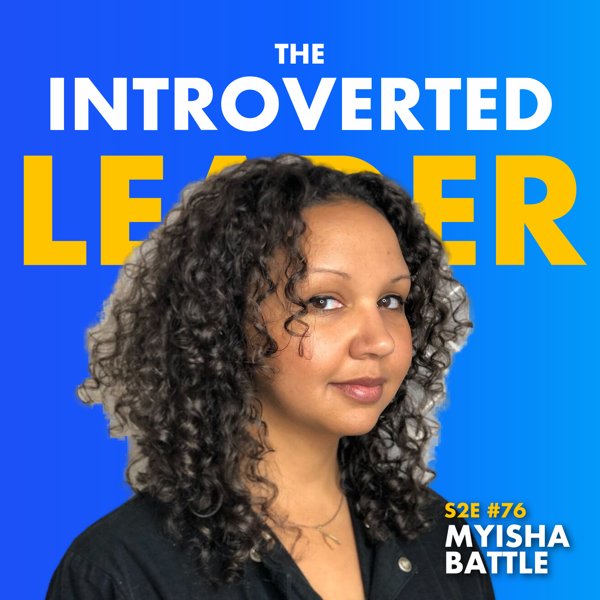
Myisha Battle is a dating and sex coach, podcaster, and author of *Sexual Pleasure for Dummies* who helps high-achieving clients — many of them introverts — rethink modern dating as an energy management problem, not a volume problem. She argues that the "go on 100 dates, collect a thousand rejections" playbook is built for extroverts and burns introverts out, and that the same skills quiet professionals have built at work (preparation, planning, boundary-setting, protecting recovery time) are the exact crossover skills that make dating, relationships, and even sex sustainable.
I am what I would call very time rich. I am time affluent.
Sex is an energy exchange.
The way that we spend our time is how we're showing what's important to us.
It's really not fun to be around an introvert who can't engage because they've overcommitted and they're flooded and don't have an escape.
That's an area of your life that you gave years and years and years of study and dedication to. Most people do not do that with sex and dating.
The general tendency for all of us is to push ourselves to be social, and especially in a work capacity.
Key Stories
- Cindy Gallup’s travel rider: Myisha describes learning from sexology leader Cindy Gallup that she insists on a rest day before and after any big event. It reframed for Myisha how much recovery a visible, performative role actually requires — and now shapes how she books her own calendar.
- The pandemic mirror: Six months after moving in with her partner, lockdown forced him to reflect her overcommitted, “million things” energy back at her. Hearing “I don’t like being around you when you’re like this” pushed her back into therapy and started her real work on being different at home.
- From four jobs to “time affluent”: Early in her coaching career she worked four jobs and just powered through. Now she runs a full practice (coaching, writing, podcasting, group programs) but deliberately keeps her days spacious — and wants to pull back further.
- The visibility trap of the girl-boss era: When she launched her business in 2016, she absorbed the message that a female-led, sex-positive brand had to be constantly visible on Instagram to be taken seriously. After some success, she now posts sparingly and treats social media output as a limited energy budget.
- The buffer commute: A recurring intervention with clients — get off the train a stop early, walk the last blocks, or trade a brief hello with your partner for 15 minutes of quiet before you re-engage. A small buffer between work-self and home-self changes the quality of everything that follows.
Techniques & Frameworks
- Recovery days flanking visibility: Treat any high-energy public event (talk, launch, back-to-back dates) like Cindy Gallup does — schedule a protected recovery day on either side rather than stacking obligations.
- The work-to-home buffer: Deliberately insert a transition ritual (walking, quiet time, a solo activity) between the professional day and partner/family time so you arrive present instead of flooded.
- Crossover-skills audit: Ask “how did you get to the place you are now in your career?” and port those same behaviors — preparation, proactive scheduling, follow-through, tolerating rejection — into dating and relationships, where most people have never trained.
- Context over frequency (for sex and intimacy): Instead of chasing matched libido, identify the contexts (weekends, low-workload weeks, post-recovery mornings) where sexual energy is actually available, and design around those rather than shaming yourself for the times it isn’t.
- Quality-over-quantity dating: Push back on the three-apps, hundred-dates advice. One thoughtful match is enough; canceling and rescheduling when depleted is better than a “quasi-interesting date where you’re about to fall asleep.”
Full transcript
If you’re an introvert who’s tried modern dating, you’ll know this feeling. You’re on the apps because everyone says that’s where you gotta be. You’re exhausted from work and now you have dates stacked on top of your work week. You quickly find yourself straining to be present or faking it and quietly wondering how you’ll show up at work tomorrow. The standard advice to go on 100 dates, collect thousands of rejections, is not built for how an introvert’s energy actually works. And each time you try to grind your way through it, you leave more depleted. My guest today has spent years teaching her introverted clients how the skills you’ve already built to advance your career or are working on. The preparation, the planning, the energy management are the exact crossover skills that make introvert dating sustainable. Welcome to the Introverted Leader. It’s a podcast helping introverted leaders embrace your underrated, quiet strengths so you can get promoted and start earning what you deserve. I’m Greg Weinger. I have over 25 years of leadership experience and yes, I am an introvert. My guest today is Mayeshah Battle. She’s a dating and a sex coach, author and podcaster. And today she’s telling us why introvert dating is really an energy management problem. Let’s get into it. Mayeshah, wonderful to have you on the show today. Thank you so much for having me, Greg. You’re a solopreneur of sorts and somewhat of a public figure on your podcast and your books. So there have been some interesting challenges with visibility. And I just want to preface this for the audience. On the surface, maybe it’s not completely obvious why this relates to leadership skills and leadership skills for introverts, but I think there’s tons of crossover here. A lot of the things that will make an introvert successful in dating, putting yourself out there, being open to rejection, needing to, in a sense, promote yourself, or even in the bedroom, issues with communications and presence and setting boundaries. These are cornerstone leadership skills and building confidence in these areas. I believe would support individuals on the leadership journey. We’re really comfortable as a culture talking about your personal health, and that has so much to do with the way you show up on the job or as a leader. And we leave out this huge aspect of our lives, which is your personal relationships, but also sex. This is a large part of being human and human health, and we don’t talk about it. So let’s talk about it. My favorite thing to do. You’re highly qualified too. Yeah, introverts are uncomfortable talking about a lot of things, and so I’m sure this is up high on that list as well. For sure. So let’s dig in. I have to ask, as I do everyone on this show, do you consider yourself an introvert, extrovert, or other? I would say ambivert with introvert leanings at this stage in my life. When I was younger, I think I felt a bit more extroverted, but there’s some questions as to like, how genuine that was. But to keep the answer short, I would always test kind of right in the middle of extroversion and introvert. And depending on when I took the test, I would be on just like one point on either side of that. So I’ve kind of grown up with this, like, why isn’t there a middle, you know, because I always would fall right there. So yeah. So you can probably relate to both sides of the equation. Yes, I feel that pretty strongly. I feel like that’s an accurate representation of how I have experienced my energy and ability to like navigate my relationships with people. Maybe you’re in your more recent experience in life and in career. How do you see the aspects that are more introverted showing up for you? It’s funny. I think a lot about a conversation that I had with Cindy Gallup, who is the founder of Make Love Not Porn, and she is older, far more successful than I am, had this whole career in marketing before she pivoted to the sexology world. But she mentioned to me that when she travels, she has to like insist on days where if she’s doing a big event, it’s included that she has a day of rest when she lands and a day of rest after. And I was like, that’s brilliant. Like I really hadn’t thought about that. I hadn’t thought of the possibility of that. I think the general tendency for all of us is to push ourselves to be social and especially in a work capacity. You want to show up, you want to do the job well, you want to not waste people’s time or money or seem too fussy. But when she said that that was something that was really important to her, I realized like, yeah, that’s a necessity for managing the expectations of showing up and being the focus of attention for several hours at a time. And I think perhaps I underestimated before hearing that statement just how draining that can be and just how much I would need the support of a recovery period. So it’s really affected how I schedule my time. I mean, that conversation and then also just working for myself and realizing that I can create space in my day for recovery. Like every single day, that’s been revelatory for me. That’s great. It sounds like that conversation gave you permission in a sense to look at your own life and say, well, if this successful role model can take care of themselves, how do I take care of myself and day to day? What are the types of events that are more draining for you? What types of things you’re doing these days that can be draining? These days, I’m in like full introvert mode. Like I see clients in my office and virtually and I’m writing and editing. And so it’s very much like I’m kind of cocooned in. But historically book events can be draining. I love, don’t get me wrong, I love to do live events. I love to be in front of people. I love that sense of performance. And also just offering what I think I have to offer, which is a take on sex and gender and relationships that kind of invites some levity, but also critique and critical thinking. But yeah, I think my brand has been so much about like, let’s think about these things. Like all of the representations about sex are very embodied. But I think bringing in energy of like, we can think critically about this. We can think logically about this. You can think logically about your body and how you want to use it or how you want to relate to people where I think there’s this kind of gap for people of how they want to experience their sexuality and think of it most of it as like an embodied experience, which it is. But it’s also, what do you think about sex and how does what you think about sex impact how you’re showing up in relationships? And so I think like, I enjoy bringing that energy. And then I also really love like a live Q&A where people, hopefully because I create a sense of safety and comfort during live events, they feel comfortable asking personal questions. And in those moments, as with on my podcast, where people send in questions about their sex lives, I have to be really present for the tone of the question, you know, what’s really underneath it. And so it’s a combination of like bringing myself and making sure that I’m creating the environment that I want to create, and then also taking on the energy of the people there, which when we’re talking about sex and you’re opening it up for Q&A, you know, and sometimes that’s unmoderated. That’s just people in the crowd, like who has a question. So you don’t know it’s popcorn style. And again, I love that because it keeps me on my toes, but it’s also like, it takes a lot to be really present with people, be sensitive, maybe be able to make a joke and bridge something that may feel uncomfortable for someone. But like, I could bring that sense of levity of like, oh, this is like something that’s super common. Actually, the thing that you’re worried about, I see in my practice all the time, or like, wow, yeah, that’s a terrible date, like let’s break it down. So there’s a lot of elements to what I think drains me, but they’re directly tied to the things that energize me and make me, I think, good at my job, I hope. Yeah, as you’re describing this, I’m thinking this is, this is the exact blueprint for leadership for introverts, you know, you have to prepare, you have to take care of yourself before and after and during. And what brings out the best in quieter people or leadership is when they are present and when they can really create a sense of safety for their audience. And, you know, in a sense, open people to be moved, to be heard, to be understood. And this is all leadership as you’re describing it. That’s a beautiful blueprint for people to follow. Thanks. That sounds like you’ve had that maybe a bit more recently. What would happen earlier in your career when you were maybe less aware of this, you’d kind of push through that, just kind of power through? Yeah, I mean, it largely has to do with getting more established in my career. When I first started full disclosure, I mean, I had four jobs, you know, so there wasn’t time for a break. There was moving from whatever headspace I had for one job into the headspace for another job and pushing through. And then I was building my coaching roster, not having to have four jobs anymore. I’m like, I have one job, but it’s many things. So even though I do this full time, I’m still doing a lot of I’m writing and podcasting, I’m coaching, I’m teaching, I’m doing group coaching now too. So yeah, there’s like a lot going on, but my days are very spacious. And I am what I would call very time rich. I am time affluent. So that is, it’s a huge change, but it’s also amazing. Like it’s just, it’s great to live this way. And in fact, I would like to pull back even more because who wants to work? I mean, I love work, but who wants to really do it all the time? True. Yeah. No, time is the ultimate luxury. And I think that most of us really aren’t used to unstructured time. And when we are confronted with it, we have our phones and have been working on awareness in the past few years and just being present with what’s going on when I feel like there’s just incredible energy. This has a compulsive quality that feels like it needs to go somewhere and it’s very uncomfortable. And it drives you, I find myself, I start by like, okay, I’m finding myself snacking on something else or going to my phone, like what’s going on. And there was like, oh, there’s all this kind of uncomfortable energy. What was your experience with that? Well, I met my current partner like six months before the pandemic. We were together for about a year and then we moved in. And then six months later, the pandemic hit. And so having someone in my home reflect the energy that I was giving off and being like, this sucks. I don’t like being around you when you’re like this, which I greatly appreciated. And it was one of the things, one of the things that got me back into therapy, honestly, is recognizing, yeah, this is fine on your own and you get a lot of validation for being, you know, for doing a million things. But it has consequences on your relationship and how important is that to you to figure out what’s the core of this and what are maybe some different ways to be. Because I believe people can change. So I changed. And so I will succumb to that energy occasionally. And we’ve developed good communication around giving each other feedback around that because I’m not the only one guilty of it. He is too. So yeah, I think it’s something where it kind of took someone outside looking into me saying, like, this is really intense to be around. I don’t really love it. And for me to go, yeah, you’re right. Like, I don’t love being this way either. I just don’t know how else to be. Yeah. So relationships can really support you in the direction of health that if for no other reason, then holding a mirror up to you and getting outside help can support that. Mindfulness activity is just bringing awareness to it can help. But that’s those for the lucky ones of us who found a relationship. So what about dating for introverts? I really haven’t explored this with other guests. There are challenges there like we touched on earlier. So what are some of the challenges that you see for introverts in this realm? And what are the ways that you advise people to go about dealing with them? It’s a great question. I think a lot of the typical dating advice that we see being widespread on social media right now do not take into account the fact that we have varying degrees of, you know, ability to show up for human connection, right? And so a lot of the advice kind of mirrors that energy that I was talking about earlier, where it’s like go on a hundred dates, collect a thousand rejections. And that’s just not something that I think a lot of my introverted clients could live through, you know, it would be very, very difficult for them to put themselves out there in that way. But when you see those messages over and over and over again, and the way that you’ve been dating maybe isn’t working, it’s easy to think, well, I just need to be, if I’m on, you know, one app, that’s just not enough. I need to be on three. And I need to be giving this more time, even though I’m really at capacity at work and I haven’t seen my friends in weeks or months. It’s just like, oh, well, but I need to make this a priority. And how I make it a priority is to just sort of grin and bear it and have some quasi interesting dates where I’m like, maybe about to fall asleep, you know, I really try to check in with people about what have their attempts to date looked like and where have they felt like they’ve fallen short for themselves. And usually it’s like overextending, overcommitting, and then realizing, actually, I don’t have the capacity for this. But then also feeling guilty about that and not following up with, if you have to cancel a date, I don’t think that’s a terrible thing, but it’s on you to reschedule, right? But when you do that, when you cancel, sometimes shame will show up and keep you from taking those next steps of, you know, I need to actually be proactive and reschedule with this person. So yeah, I just try to connect with what’s not working for them and also hear if they’ve internalized any of those messages because they’re wrong, you know, it takes one person. I think we really have gotten so far into the quantity over quality way of being because apps make connecting with people in theory easier and in a higher volume. But in actuality, it’s so different from how we ever have dated in our human history. And it is taxing. It is taxing in ways that previous generations just didn’t have to deal with. So I also try to give that awareness for people in particular who are younger, who are like, this is just how you date, right? You’re on all the apps and you’re not getting anywhere and it’s fine, you know, like, or it’s supposed to feel fine, even though everybody hates it. Yeah. So those are my initial thoughts. Yeah, well, it definitely sounds challenging. And one of the parallels I could draw to leadership, you know, if you’re an introvert, this is an inherently really challenging thing, you know, you’re putting yourself out there, you’re being visible, you’re setting yourself up for rejection. But you’re doing it because you’re really longing that human connection. There’s a strong motivating force. And so practice is important. Those same dynamics are at play if you’re an introvert moving into the leadership, because that’s not the natural thing for you to do. And I do think there’s crossover skills there. Like building confidence in one area can carry over in the other or lack of confidence in one area could hold you back in that other area. How do you help your clients build confidence in this particular area? Yeah, it’s a great question because it dovetails so well into what you just mentioned, which is like, there are patterns of behaviors that I see all of my clients, regardless of whether they identify as introvert or not, sort of fall into you in all aspects of their lives. But there are ways in which my introverted clients have created strategies in other areas of their life that have helped them overcome some of the things that are challenges, like having that confidence, being visible, you know, applying for jobs is a way that you make yourself visible and you have to stand behind your education and, you know, you have to show up and sort of prove that you are capable, especially in a leadership position, if you are wanting to rise up within an organization or, you know, take something on like being your own boss, you are the face of the company. So for people who I work with like high achieving type A people, most of them have done this. They have had to do the work to be more visible in their jobs and be more confident. I think one of the things that I helped them realize is like, that’s an area of your life that you gave years and years and years of study and dedication to. Most people do not do that with sex and dating, right? It’s like no one wants to be a great dator. No one is ever like, I’m so good at dating, you know, the idea is that you like date to find relationships that ultimately work for you. And so my feeling is like most people want to get in and get out of dating. So there’s not necessarily a long runway of like learning the skills of dating. Some of the things that we’ve talked about, energy management, time management, planning, being proactive, asking good questions, making sure that you’re showing up the best way that you can so you’re putting your best foot forward. Yes, we do some of that in other areas of our lives, but we don’t practice that in a romantic capacity. And it’s also so deeply personal and vulnerable. So I work with a lot of people who have dedicated so much of their time and energy to their careers. And then once they find that level of stability and confidence in who they are in that realm, we work together to figure out ways to use maybe some of those other strategies. And I find myself asking that question a lot. Well, like, how did you get to the place where you are now? Because we want to apply some of the things that worked for you there in your romantic life, which for a lot of people feels counterintuitive or like, doesn’t make sense logically, but it makes a lot of sense. Again, I like to apply logic to things. And I don’t think of relationship building as something other, or I don’t think of sex as like separate from health, as you were mentioning before, it’s like, it’s all apart. It can all be treated very similarly. We just have really weird feelings and thoughts about this area of our lives that keep us from thinking about it in these terms. Yeah, that’s super interesting. It hadn’t occurred to me that you could take the crossover skills that, you know, learned on the job, that that’s actually a common thing for you to then apply that back to your personal life. But I have seen that pattern of where people, you know, they gain confidence later in life, and that’s because they’ve been successful in certain areas of their career. And then that confidence kind of applies to this other realm, which we shut off parts of ourselves during these times, but never too late, I suppose. Yes. Yeah. Well, I think that’s a good segue into communication and boundaries for introverts. And so, let’s assume we’ve gotten over the hump and, you know, we’ve gotten into intimate relationships. There’s all kinds of challenges that can arise in those situations. So what kinds of things do you see introverts dealing with in that realm? I would say most people who are dating want to not be dating anymore. They want to arrive at that destination of a relationship. And I’ve worked with people who are in those early stages of a relationship where I tell them, like, get ready, because this is where your stuff will come out. This is where their stuff will come out. And then you’re really, this is where the rubber meets the road in figuring out compatibility and how you can evolve within a relationship dynamic. And this can be very challenging for introverts who are in a leadership position and expend a lot of energy around people during the day at their job. And then their partner really wants to go on more dates, see you more during the week, you know? And, like, the way that we spend our time is how we’re showing what’s important to us, right? And so, it can be challenging for introverts to balance the needs and demands of their professional careers and a romantic relationship where the expectation is often, we’re going to be spending more and more and more time together, then perhaps cohabitating, and then perhaps adding another person or people, little people, starting a family who will also have demands on our time. So, I think this is something that people don’t really think critically about when they’re making these decisions to progress a relationship and talk about, yes, I care for you deeply, I see a future, and there are going to be times when I’m not going to be available for the social hang. I would actually appreciate, you know, if we spent time just the two of us at home tonight, I can’t go out with you and your friends, or I can’t, like, commit to a weekend with your family just yet, like, I really need to make sure that that is during a time when maybe my workload is a little lighter, right? Like, thinking about those obligations and their opportunities, right? Like, to build intimacy, to learn who our partners are, to deepen our experience of them, but there are also challenges at times if we aren’t thinking about how much social battery we have for those experiences. And then, I don’t know about you, but it’s really not fun to be around an introvert who can’t engage because they’ve overcommitted and, like, they’re flooded and don’t have an escape. Like, that’s not the best place to be, you know, in a relationship. So, boundaries help establish, like, how do we move forward and continue on this journey of getting to know each other, deepening our experience, you know, getting to those milestones and achieving them, while also recognizing that it may look a little bit different or the timeline might be a little bit different for all of those milestones to be achieved. Yeah, there was so much in there. I mean, first off, I’ve many times been that over flooded, overcommitted, introvert, and certainly been around others. And either side of it is not, you know, it’s not a fun place to be. When we get in that place, well, I think for many of those times, like, I didn’t have the awareness that I had a choice in the matter. So, I think that’s part of it is understanding that you do have the social battery and that there’s this thing called energy management, which you can be planning ahead. Those are good examples of that. And your example is also perfect because, you know, think about the busy, introverted leader and all these commitments, and you’re just trying to manage to have enough time and have enough energy to honor all your interactions at work. And then now you are at home where you have expectations of yourself to be committed partner or a present father or mother without the resources to show up the way you want to. So those are really challenging situations for introverts. Yeah, I’ve actually worked with people where we’ve talked about just implementing a buffer period between work and home. And that’s transportation, maybe getting off a stop or two early walking so low to your house, or if your partner is amenable to it when you get home, kind of like maybe acknowledging each other, but then having some quiet time to just center, relax, get your headspace adjusted to like, I’m home, I’m with my partner, and this is a different social experience, doing something that feels like it is restorative for your energy a little bit. So just building in a little bit of that buffer can like transform things tremendously for people. But we don’t think about it. And I think a lot of people have trouble advocating for those things. So they think it’s weird or like, you know, they’re just like, wow, I don’t want to be the type of person who needs this. Right. I think there’s a lot of judgment around that. But I’m like, the alternative is you have some less than optimal time with people, if you don’t give yourself that. So it’s okay to be the type of person who needs this because the payoff is so great. Absolutely. And that ties into one of the themes I cover in the podcast is like, it’s, it really is important to accept the way you’re wired, the way your brain and body are wired for whatever reasons. These things aren’t really amenable to change. There’s lots of things that are you can get over fears, no problem. But the way that you process events and how that impacts your energy, it’s probably not going to change. In traverse, everyone I talk to sees much more success taking approaches like you’re suggesting there. Yeah. Yeah. Well, so we’re touching on boundaries. And that is such a key concept in terms of not just managing energy, but within any dynamic in relationship, whether at work or at home. And some of those things are pretty clear. How does that relate when it comes to sex in those areas? Yeah, I mean, sex is an energy exchange, you know, so I talk to people a lot about like, do you have the capacity for what is required of you during sex, which is a sense of presence, you know, a sense of openness and curiosity and affection. And those things, as you touched on, are different from person to person. I think a big part of my work is dispelling this myth that if you and your partner don’t want sex at the exact same time in the exact same way, that it’s, you know, you’re broken, you know, that like the relationship is not working. In fact, there are very real reasons that lie in our individual differences down to our hormone profiles, as to why this would happen, why there would be quote unquote, mismatched libido, which is what I learned to call it when I was studying, but now 10 years later, I’m like, this is just life, you know, like people having bodies that are different and having different needs. And so introversion would of course play a role in that and understanding what your own boundaries are around. And it’s almost like I hesitate to say boundary in this instance, so much as like, what are the contexts in which you feel the most access to sexual energy, right? It’s like, the context might be Saturdays and Sundays, because I’m not depleted from all of the social obligations that I’ve had during the week. And while that might feel like I’m not giving myself the opportunity to have sex during the week, it’s also recognizing very real contexts that work for you. And that will probably, you know, provide you and your partner the most enjoyable experiences together. So again, I think it’s difficult to advocate sometimes for oneself and say like, I just really do not have access to sexual energy, I don’t think about sex during the work week, I’m just trying to get from point A to point B with my head down, you know, and then, especially when I work with people with kids, it’s, you know, your day doesn’t begin with work and it doesn’t end with work, it begins with a lot of family obligations and it ends with a lot of family obligations. So that is another layer of not only energy that’s expended and it’s great that that energy is expended on family, but you have to be very realistic. I think everybody has to be realistic, regardless of introversion versus extroversion of what they have to give to their partners. So yeah, those are things that I talk about ad nauseam. And they’re a big part of the book that I wrote sexual pleasure for dummies, because I really wanted people to understand that it’s not just about someone wanting sex and the other one rejecting them. There’s more going on there. 99.9% of the time. Of course, we can talk about differences in attraction, but that’s another issue in a relationship. I think most of the time I work with couples who are really in need of resources and tools to help them manage their energy and understand what the contexts are for themselves and their partners that will make sex the best. That’s great. It strikes me that the big challenge with that are just the society ideals or the stories, the flawed information that we have about that. You should be ready to go 24 seven and then you feel shame or less than if you’re not meeting whatever the story is. Absolutely. Yes. And I see this, it’s interesting because I think we also have a stereotype of women are less interested in sex. And that is sometimes true and sometimes is caused by any number of things, hormone related, cycle related, sexual repression, internalizing a lot of those ideas about women and sex and what they should want and what they shouldn’t want. But I have also worked with men who really struggle with having a little libido and their reasonings or feelings about it are different because there’s such a cultural expectation on men to like you said, always be ready to go 24 seven. So what does it say about you if like, yeah, you are depleted and you aren’t interested and your partner is expecting something else that’s tied to an expectation of masculinity that you aren’t delivering, right? So it’s like there’s we’re constantly coming up against cultural messaging with regard to sex and no one has internalized that it’s okay for them to be the way that they are. Again, because we have very little sexual education and not a lot out in the culture right now to complicate or or like, you know, eliminate some of these myths that exist. Yeah, well enter your book you’re working on which hopefully people can it’s coming out very soon. Yeah, yeah, so dispel some of the myths and the myths are really harmful whether it’s about introversion, you’re less than you know, we have this bias against that there’s a lot of ideas that that impact us negatively this way. There’s one other thing I wanted to talk to you about which was your experience with visibility. And because I know you had been out in social media and putting yourself out there and could you walk us through what was your experience? How did you end up managing that? I think when I was starting a social media account and pivoting it to be more business facing, my Instagram account is my name. I don’t have another account, although I’ve thought about getting a finstiff or just, you know, a palate cleanse. But my name is attached to my work. I’m easily Googleable. I have a very Googleable name. And so there was this question of like, well, what do I want to use this for? And I think when I launched my business in 2016, I think people were still largely able to kind of explore and it wasn’t this focus on how many followers you had so much. But it was also the girl boss era. And there was this feeling in the air of, you know, if you had a female lead business that you could be the face of and you could be respected and you could have a feminist business and people would take you seriously. And so why not build your platform? Why not like engage? And so I felt this pressure to be more visible than maybe I would have wanted to be to like a larger audience. And I also felt that it was necessary for me to be successful. That was a message that I received and it was something that I took as truth. I no longer believe this. But it’s also after having had some success, I don’t post a lot. I feel like that’s best for me in my business. You could maybe have some marketers in your audience who are just devastated to hear me say this. But for people who really understand what it takes to market a sex-based business like myself, you’ve only got a certain amount of energy for that process because of all of the things that you’re up against that traditional businesses are not. Sounds like that would be challenging even if you didn’t have introverted tendencies. Yeah, absolutely. Yeah, because I definitely hear that grinds can burn out people on other topics as well and certainly if you’re introvert, although some people who are truly extroverted are really energized by the whole process. Yes, I had a friend tell me once that whenever she’s feeling a bit dysregulated or isn’t quite sure what she wants, she will post to social media. She is very much an extrovert and I think that engagement, the feedback is something that is actually good for her mood and overall health and well-being in a way that I think for a lot of us it’s not. We could talk about using social media to manage our own dysregulation. That’s a separate topic, but I did think there was something even beyond that where I was like, oh, you just kind of miss people and when you feel alone, you want to sense people. Yeah, and there’s all the information and research and the potential negative impacts, but it probably shouldn’t be surprising. There are some people that actually really benefits. Maisha, I’ve enjoyed our conversation so much and I really think that a lot of the messages and the content, the ideas in here will help my audience. If they have further interest or questions, where would you direct them? Yeah, you can go to my website at maishabattle.com. I do write a weekly newsletter. It’s not on Substack, it’s just you would sign up for it through my website. It’s called the Pleasure Dispatch, so I write about dating and relationship and sex trends. Sometimes I recommend products or things that I’m finding or hearing about. I write a lot about feminism and the political moment that we’re in right now, which I believe directly ties into sex. So if any of those things strike your fancy, please sign up. And yeah, I’m on Instagram at maisha battle as well. And there you can follow along. I’m releasing a book May 12th, and we’ll be doing some live events that I like to do, but I need to take some rest after. So I’ll be doing that this spring, summer. Fantastic. Thanks so much for being on the show today. Thanks, Greg. It was really fun to have this conversation. All right, that was my Aisha Battle. A few things I’m taking away from this conversation. Number one, introvert dating is an energy management problem, whether it’s insisting on recovery days after big events or building a buffer between work time and home time. Sustainable dating and relationships start with protecting our own energy. Number two, the skills you’ve already built in your career do transfer into your personal life. Preparation, planning, being proactive is how you show up as your best self. You’ve already done the work in one domain of your life. Bring that same self-knowledge and care to your relationships or dating. Instead of treating this as like some separate mysterious game that you’ve never studied for. And number three, quantity over quality is a trap. You don’t need 100 dates or three apps. This advice that’s built for high volume extroverts will burn you out and leave you feeling depleted. The authentic introvert’s way of putting yourself out there is quieter and slower and less frequent and more intentional. That allows you to show up as your best self. If this episode resonated with you, the easiest thing you can do now is to subscribe wherever you listen to podcasts. This way you’ll get the next episode and it helps other people find this content. So I really appreciate it. I’m Greg Wanger. Keep leading with quiet confidence and I’ll see you next time.