Proven Meeting Techniques to Empower Introvert Leaders
Speak Up in Meetings with Quiet Authority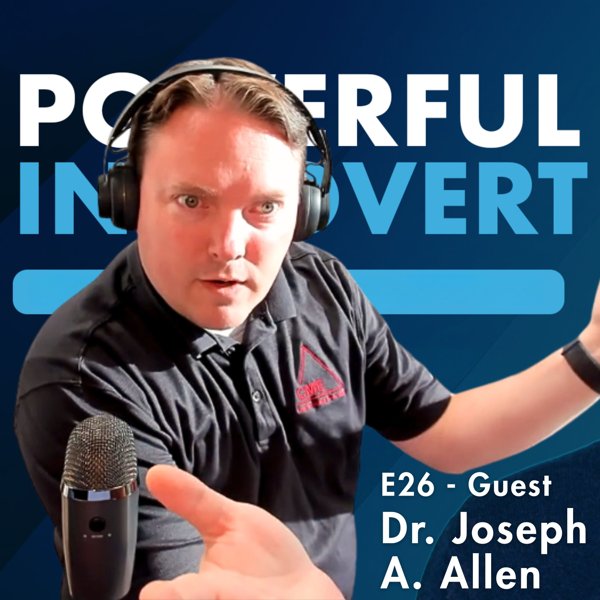
Dr. Joseph A. Allen is a leading meeting-science researcher, professor at the University of Utah, and author of "Running Effective Meetings for Dummies." He brings decades of peer-reviewed research to the practical question of why meetings fail — and how leaders can fix them, especially for quieter contributors. The core insight is that most organizations do roughly half of what makes meetings effective, and those missing elements disproportionately harm introverts; with deliberate structure (pre-meeting small talk, direct invitations to speak, and recovery time), leaders can unlock the full intelligence of their teams.
We're doing about half of what we should be doing to make meetings effective. A 60% is still a failing grade.
It's not their fault — it's who they are. It's your fault for not doing certain things.
Some of the most talkative people I know are introverts. It's not a matter of not wanting to say something — it's a matter of feeling comfortable and safe.
Key Stories
- Meeting Recovery Syndrome research: Allen’s studies found people need 17 minutes to recover from a bad meeting and 5 minutes from a good one — yet recovery gaps are almost never built into calendars, causing cumulative burnout, particularly for introverts.
- The 30-things framework: Allen explains that there are about 30 evidence-based meeting practices and most people intuitively do 15–20 of them — but a “slightly-above-half” score is still a failing grade, and every person’s missing items are different.
- Cross-cultural lateness experiment: Research comparing US and German (clock-based) vs. Chilean (relational) meeting norms to illustrate that what feels like disrespect is often cultural difference.
Techniques & Frameworks
- Pre-meeting small talk: Structured small talk before the meeting warms up both introverts and extroverts, making them more comfortable contributing — introverts actually do like small talk.
- Direct invitation to speak: Meeting leaders should call on introverts by name, with the explicit ground rule that “I have nothing to add” is a valid answer, creating a psychologically safe environment.
- In-room allies for hybrid meetings: Designate someone in the physical room whose job is to actively bring remote participants into the conversation, breaking the “two-tiered communication environment.”
- Meeting recovery time: Build 10-minute buffers after every meeting; for a bad meeting the felt need is 17 minutes. Google Calendar’s built-in feature can help, but cultural norms must also shift.
Full transcript
Okay, does this happen to anybody else? You sit down with a juicy QPC, some McNuggets, and those golden fries from McDonald’s. Then you take a long sip of your sprite, because you can still hear your mama saying, don’t fill up on that drink before you eat your food. But you’re grown now, so you do what you want. Share and share a like with the 20 piece McNuggets from McDonald’s for just $6. Limited time only, price and participation may vary, cannot be combined with any other offer. At Energy Trust of Oregon, we know it isn’t easy. The tremendous weight of today’s operating costs, working in cool, drafty spaces with inefficient heating systems, or underlights that have seen brighter days. But we also know how to help you upgrade those systems, lower those costs, and meet the demands of your business with smart, energy-efficient solutions. Find cash incentives at energytrust.org. Energy Trust of Oregon, more power to you. Not their fault, it’s who they are. It’s your fault for not doing certain things. Our bad meetings, stealing years from your life. Dr. Joseph A. Allen can not only prove this, he’s got the science to fix it. He’s a leading workplace meeting researcher, best-selling author, and professor at the University of Utah. I’m Greg Wanger, and this is the powerful, introvert podcast. Today we’re breaking down how to make meetings shorter, smarter, and more inclusive, especially for quieter folks in the room. We’ll cover why meetings fail, some science-backed strategies to make them shorter, smarter, and more inclusive, and how to give people who are quiet for any reason more space to contribute. So let’s get your time back. Joe, welcome to the show. I spend probably six plus hours in meetings every day, absolutely tortured. I’m a leader in my company, and so I’m responsible. I’m always trying to fix these things and making it better, but we seem to be powerless to do that. So I’m really glad to have you on the show today. Well, thanks for having me, and your experience is not uncommon. Most managers or leaders in organizations have way too many meetings. Calendars are just covered in all these different meetings that they are both leading, and or attending. So because of that, it does create quite the drain upon them, and meetings aren’t as good as they could be. I mean, that’s the bottom line, is that people are having a lot of meetings, but they’re not great. They’re okay. We suffer through them, but that’s the key word there. We suffer through them, as opposed to enjoying them being inspired by them, or inspired by the people in them, and that sort of thing. So there’s many, many things that we can consider. Many things we’re already doing, and other things that maybe we should start doing to make those meetings a little more tolerable, and maybe have a few less than we currently have in our calendar. All right. Well, I am absolutely behind that mission. Before we get into the meat of this, I also want to share that you are a professor at the University of Utah, but you’re not an ivory tower kind of guy. You’re actually getting this message out there. So I mean, you have written the meetings for Dummies book, the Dummies series, which presents as about as unpretentious as it gets, and two other books, Suddenly, Virtual, and Suddenly Hybrid. And you’ve got your work out there at places like Harvard Business Review, MIT, Sloan Management Review, Wall Street Journal, I saw BBC on there, and so you’re really out there spreading this message. Yeah. The main reason I decided to do that is because I’ve been frustrated with the fact that a lot of the research, it takes years for it to get into the hands of people who might make a difference. And both in terms of the process of just getting it published in an academic journal, and then there’s paywalls, and there’s other things that just keep people from being able to access that information. And so some might say that I’m motivated by generating royalties from these books and that sort of thing, but the reality is royalties don’t pay well. My goal has been rather than keeping this science behind a paywall, or stuck in the ivory tower, as it often is in many cases, the goal has been get this out there. Many of the things that we’ve found are common sense, but not commonly practiced. And so just getting the word out, the here are the things that you may have already heard, or maybe thought of, but science has confirmed, make a difference, and can make it, eating experiences better, and just get it out there in a way that more people can access it, making it as publicly available as possible. So you can find all the things that I’ve written my books. You can also find in academic journals, you can also find me talking about them on podcasts like this, you know, because I want people to know about them. An appliance tip from Northwest Natural. One of the great benefits of natural gas is that when the power goes out, a natural gas cooktop still keeps dinner on schedule. That’s good energy, reliable, and ready. Learn more at nwnatural.com. That’s great, and it’s really part of the original design of the original web. It was to get academic information publicly available to the world. It’s great you’re doing that. Before we delve in, I want to get a little bit about your personal story, because I don’t know, I have a sense there’s maybe a personal story behind this. You woke up one day and just decided no more, you know, this must end, end the suffering. So tell us a bit about it. Yeah, so it wasn’t, yeah, I wasn’t sitting at a meeting and thinking, this is miserable, this can be done better, why isn’t this done better? It was more of over time having gone to a lot of meetings and just been curious about why that seems to be a topic that always came up, you know, whether it be at the pub or at home, talking to the family, it was always something that people lamented. There was this constant drone of complaining about how many meetings people have, how long their day was because of their meetings, et cetera, et cetera, right? And that was always kind of echo my mind for many years. And then when I was in graduate school, my advisor at the time, Stephen Rolgelberg, who also does a lot of work in the meeting science space, started studying this and invited me to study it as well. And I’ve never looked back. And part of the reason that it was so interesting right from the get-go was how we haven’t really studied these very much. So, you know, yes, I was curious about it, yes, it was something that annoyed me, but I wasn’t really all that unique because the meetings annoy everybody. And we’re all frustrated with them. But what was interesting to me from a science perspective was how little there had been done on it. This was back in 2006. And at that time, there was one book written by Helen Schwarzman on the topic of the meeting. And that was it. That was, and that was in 1986. That was the deeply scientific book out there. Yeah, sure there were self-help books already about the topic, but actual science-based inquiry, that sort of thing. That was the only one there. And there were only about a dozen articles on the topic of meetings out there. Lots of research on groups and teams, lots of research on collaboration, but nothing specifically about that context where all this is happening. It was funny is that I was excited about the fact there was hardly anything out there. I tell my students, I always tell my students, just because something hasn’t been studied doesn’t mean you should. Yet, my biggest motivation right from the beginning was, no one’s looking at this. Why not? This is stupid. We spend all our time doing it. And yet, we don’t even know anything about it. So that really motivated me to explore it further. And since then, I’ve just been, that’s been where I’ve been living, is in this area of a wire meeting so bad first. And then, what do we do to make them better? Absolutely. And that’s just the idea of meeting science. It kind of tickles me, but it also is kind of astounding how much humanity is spending their time in this area. And it hasn’t been studied to the degree that, I mean, we’ve intimately studied so many other settings. And why not this? One other question before we get into why are meetings are broken? Can you describe meeting science? So like, you know, how are meetings studied? Yeah. So meeting science is the study of what happens before, during, and after meetings. Which in a lot of people’s lives encompasses the majority of their work. What are they doing? Right before meeting, whether they’re doing during a meeting or whether they’re doing after a meeting. Right? That’s what we try and study. Right? That’s what meeting science studies. And then we do it in a lot of different ways because what’s happening before is different than what’s happening during, which is different, what’s happening after. And the methods we use are different. So you think about before meeting, we think about what is the scaffolding that we’re putting in place to set the stages that were in a way that will make the meeting effective. Do we have an agenda? Do we have our location figured out whether that be a virtual or an in person location? Right? All those sorts of factors that go there, then you have what’s going on in the meeting, which is the dynamic interaction, the back and forth. And there’s a whole bunch of methodologies where we literally code every single statement and utterance made by every single person throughout the whole meeting. And then we look to figure out, okay, what are the patterns there? And why are those patterns emerging? And why do these ones make it work? And why these ones don’t make it work? And so forth. And then you have after the meeting, which is, okay, you finish the meeting, what are you doing to make sure that you don’t have a repeat of the same meeting every week? You know, that, oh, what would we decide? Like, oh, we decided this. Oh, we did. Do you want to do that? Well, no one did that. Okay, we’ll go do it this week. So it ends up being that repeating cycle. How do we keep that from happening? What are the things we do there? And so we use surveys. We do video recordings and do coding. We do all sorts of statistical analyses. We do observation, fly on the wall type experiences. Right? We do experiments where we manipulate things. Like I’ve done studies where I’ve manipulated lateness to meetings. Right. And seeing how that affects people, how do people feel about someone showing up five minutes late, ten minutes late, 15 minutes late, right? Just to try to understand what are the dynamics? What’s going on here? Why is this happening this way and can we make it better? I assume there’s also cross-cultural lenses. You could play for many of those things. Yeah. Yeah. In fact, one of my favorite colleagues, Dr. Lieben Willenbrock, out of the Hamburg University, we’ve done cross-cultural comparisons between the US and Germany, but also other comparisons to other countries, other nationalities, other races, other, you know, situations. And it’s been really interesting to see what things are very consistent and what things are a little different. We found more consistencies, more overlap, more similarities in meetings across cultures than we’ve found differences. But there are some important differences that people should be aware of when they’re in a multinational corporation, when they’re meeting with people from a different culture, and what are their expectations. There are some differences that if you’re not aware of them, can make for a slightly more awkward situation. What’s a quick example? A quick example would be the lateness I just mentioned earlier. Some people are very clock-based. Like, if you’re not there when the clock strikes at start time, then you’re late. Others are more relation-based. Like, where am I in relation to everyone else in the room? If I’m the last one to show up, I’m late. If I’m not the last one to show up, I’m fine. I’m not the last, so I’m not the late person. I’m on time. That perspective is different across cultures. It’s more relational. Chile, more relational. US, very much clock time. Germany, even more so clock time. The trains run on time in Germany. Those sorts of things we see differences. If you’re not aware of them, it can be problematic. If you want to sell your products or services to people in Chile, then you need to recognize that if you schedule something at one o’clock on a Tuesday afternoon, 1-15-120, you’re going to start that meeting. That’s got to be okay if you want to sell your product. If you’re not okay with that, then you need to send someone else who can relationally be okay with that sort of orientation towards time. That’s one example of a difference that can absolutely matter under certain circumstances. Like a sales meeting, it’s going to matter. Whereas a collaborative meeting, it may not matter quite as much if you are less informed about cultural differences. Okay, an example. So what is wrong with meetings? We don’t do them as good as we could. There’s a lot of things. It’s kind of hard to pinpoint one thing this wrong. Yes, I can go off on lateness again. But the issue that I have found is from experience, both in terms of doing the research, but also in doing consulting work with, corporations with small organizations, large organizations, nonprofits, government, etc. I found is there’s about 30 things that people should be doing in relation to their meetings. We sound like a lot. It’s really not that bad. Most of us, without even trying, do 15-20 of them. We start at the meeting on time. We have a purpose. We invite the people that need to be there. We try to give everyone an opportunity to participate. So we’re doing most of the things. More than half of the things that were required. The problem is more than doing slightly more than half is still a failing grade. That’s a 60%. Are we cool with a 60% or are we cool with a D or a slightly high F on the test? That’s why they’re not very good. Because we’re only doing about half or a little over half of what we should be doing to make our meetings effective. The problem is, the pattern is different for different people. It always frustrates me. Maybe you have this question gray. I don’t know. But always frustrates me when someone says, hey, what are the top five things that people need to do to make their meetings better? The problem with answering that question is, there’s a whole bunch of people out there. Maybe a third to half of the people that would be listening to that conversation sometime later would say, I do those things. All five of them. There are five things that they need are different from this person’s five things, which is different. This person’s five things, which is different. But that person’s five things, because we all do about 15 to 20 of those things. And our meetings are just kind of, but we don’t do the same 15 to 20 things. Some people always start late. They always start late. Doesn’t matter what you do, they always start late. But they’re really good at making sure that everybody has a chance to say something. But the person who starts late likes to hear their voice. And so they talk the whole fricking time. And everyone else is like, I would really like to share my ideas, but I never get an opportunity. So that’s the issue. I can’t just say, here are the five things you need to do, because your five things are different from their five things. What do you have is a pretty large framework that you can apply to different situations. Look is going to be pretty different depending on the company, the company culture, the particular leaders that play. Yeah. And so that’s why the solution to bad meetings, or to meetings that are just kind of okay, is really to investigate your meetings, spend a little time figuring out, what am I doing that’s good? And what am I doing that is not so good? And what from the list of 30 things? What are the list of things that are listed in running effective meetings for dummies? Or what are things that I’m not doing that I should be doing? Because frankly, most of this is intuitive. Most people could sit down and say, you know what? That meeting wasn’t great. I think it could have been better if we had done this or I’d done this or I’d done this, right? Well, list out four or five things. And frankly, the meeting would have been better if you’d done those four or five things because we’re not stupid people. We’ve had lots of meetings and lots of experience with them. We can probably figure out how to make them better. We just don’t do that. People don’t sit down and think about it. We don’t do it consistently. Why do you think that is? Why do you think we are so particularly persistently bad at this? This is something that I’ve debated for a long time because one thing that I try to do is I try to share this information, like I mentioned earlier, that I want to get this information out there, that I’m not trying to create pay walls to make it harder people to know what is the science saying about this. And the challenge, though, is there’s a cultural bias. And when I say culture, I mean humanity bias that is negative towards meetings. It’s just in general. Now, there are exceptions. I’m one of those weirdos who likes meetings, right? There’s a few of us out there. But I’m a role as a society. And when I mean society, I mean like the whole of humanity doesn’t like meetings. And we complain about meetings. And we commiserate with each other about meetings. Oh, how was your day today? I had meetings all day long. Oh, I’m so sorry. Let me buy you a beer. You know, we take care of each other because of all the lousy meetings we had, right? It’s normative in our cultures to not like meetings and to complain about them. Even if inwardly, on the inside, we may truly actually enjoy some of those meetings. But we cannot express that because society says meetings are terrible. And then the other challenge is we have filled our calendar so full of meetings and so full of things, right? Whether it be meetings or the other work we have to do or life, kids and family and so on, that we don’t have the time. So if I were to come to your office and sit down and we talk through your meetings and figure out things you should do, problem is it’s adding to your to-do list. And people are already really busy and their brains are already fried. And we’re saying, you know what, if you did this, your meetings would be better. But we don’t want to do more. We’re kind of in this learned helplessness. They’ve been bad forever. They’re not going to get better. I’m just going to lay down here and just let it be what it is, right? And then the third issue that I’ve run into is there’s a delay. But if I tell you today, here are the five things. So I go to your meetings, I observe, I say, okay, you’re doing these 20 things right? Fabulous. Here are five things that if you did this or tweaked this or changed that or edited this or whatever, right? They’d be better. And let’s say you immediately started doing that that day. Your calendar for the next two weeks, maybe even a month is already set. There’s nothing you can do right now to create relief from the burden of overload of meetings or the burden of bad meetings, at least the ones that you don’t run over the course of that two weeks. It’s really three to six weeks out on your calendar. You’ll start to feel the difference. So it’s really tough because if you can’t see immediate benefits from doing the things that someone’s telling you to do, it’s like, wait, loss, right? If you don’t, I mean, do us see five pounds drop off like that? Then you’re like, well, this, this diet’s not working. Well, no, it’s not working yet. You’ve got to give it six months, you know? Now, thankfully, it’s not six months, but you got to give it a month or six weeks before you can see on your calendar and in your actual experiences, that something has changed. And so it becomes a lot of barriers to people feeling like they can actually make a difference in how their meetings are and how their experiences are in meetings. There’s a delay and gratification by which time you may have given up, especially if it’s adding some additional work. And I agree there is additional work. If I want a meeting to go really well, I really have to prepare for it. And you know, I don’t have the time in my day to prepare for all the meetings that are currently scheduled. Yeah. So we don’t give people the space, you know, to prepare for their meetings because they’re back to back to back all day long, especially mid-level and upper-level management. Once you get, you know, above that weekly meeting you might have with your team, if you’re not one of the team members who just has that weekly meeting, if you’re one of the managers or the leader of the organization, your calendar is so full that doing the things that probably already know you should be doing to make your meetings better is really hard to implement. Or at least you feel it’s hard to implement. I don’t think it’s actually as hard as we feel it is, right? And so because we feel that it’s hard, it just remains challenging. And this brings up personality differences. Let’s see here in the wall to wall situation. And so if you’re on the introverted side, then typically you want to do your thinking in advance, you want to prepare in advance. You’re not at your best when you’re speaking off the cuff. And so then that’s a situation that continues to favor people who are a little more extroverted, just naturally. They prefer to think aloud. And maybe some of those people who are taking a more oxygen in the room, that’s another dynamic in that. Yeah, I mean, there’s a lot of different things, a lot of different dynamics and individual differences, personality differences, that matter. But the one that we often hear about and one that I think dominates the conversation. And rightfully so, is this introversion, extroversion dynamic that happens in these collaborative environments. Right? The interesting thing about that is I’ve done a little bit of work in this space. And there are things that can be done to make it more effective for an introvert. Right? So if you’re a leader, or things you can do, if you recognize that you have a team comprised of a variety of individuals, some which are introverted, some which are extroverted, you have an opportunity to access the intelligence and brilliance of the introverts in the room because frankly, you didn’t hire them to work for your company because they’re idiots. You hired them because they have expertise. Right? And they have skills and things. And if you don’t give them the opportunity to share those, then that’s not their fault. That’s who they are. It’s your fault for not doing certain things. And so that was one thing that kind of motivated several studies that I did several years ago, trying to understand, okay, how do we unlock the potential of the entire group when two people in the room like to just talk all the time? And there’s a few things. First thing I started to look at was this concept of pre-meeting talk. So this conversations that happen as you gather for the meeting. Then you got to remember, these were studies that I did before Zoom and before the virtual meeting where it’s a little harder to have that natural gathering conversation. Like if there’s a room that you’re coming together and people are showing up steadily before the start time, you can naturally facilitate some what we call small talk. Introverts actually do like small talk. That’s the thing. People assume that introverts don’t want to be around people. That’s not actually the case. They assume that introverts don’t want to talk to people. That’s also not the case. It just isn’t the source of their energy. They want people to ask them questions and ask them how they’re doing because they want to be cared for just like anyone else does. Right? They just may not respond as quickly or flamboyantly as an extrovert. Right? And so what we found was that pre-meeting conversations, pre-meeting talk, particularly small talk, ends to set the stage for introverts and extroverts feeling more comfortable going into the meeting where they would need to share things. The second thing, so there’s three things here. Second thing is in the meeting itself, it is incumbent upon those who know who the introverts and extroverts are to invite them into the conversation because introverts like to process the information, think about it, and then enter the conversation. That process takes a little time. If you don’t both allow that process but also give them the space to do it, they’re not going to very likely enter the conversation very often. It’s really incumbent upon the meeting leader to ask for their input and set the ground rules so that way everyone knows, hey, when I call on you, Joe, if you don’t have something to say, it’s okay to say I don’t have anything to add. But if I do call on you and you have something to add, it’s really important for you to go ahead and share your thoughts. Right? If you establish that as a ground rule, you’re creating a safe space for people to both think and share their ideas. The introverts now have an opportunity. You’re giving them that space to do that. And the third thing I’ll bring up real quick is introverts and attendees have a responsibility for themselves. If you know that’s how you operate, you can’t just wait for someone else to make space for you. Sometimes, and this is something that, you know, as I introvert myself, I have learned what the extroverts do. And even though it’s uncomfortable, I sometimes do it. I sometimes pull my way in there, you know, and just say, hey, I’ve got a thought, right? Which is really uncomfortable for me. But sometimes just imitating the behavior that gets you the stage to share your thoughts is sometimes necessary, right? Now, ideally, it’s not required because it’s really is uncomfortable, particularly for introverts and for most people. But if sometimes if you don’t, I’m not going to get the stage. I have other thoughts and other things we’ve learned from the science, but those are the three that come to mind right there. Great. Some of these things I’ve come to intuitively. It’s great to see that you’ve studied these and starting out with the small talk, the report building. I’d never heard this feedback from people who are introverted, like the first five minutes of bonding or stuff that does go on at Zoom calls. People are report building and the statement you made is potentially controversial. Introverts really do like small talk. I think they love to connect. They love to be included. And that’s a bit of advice that I’ve shared with people before is get involved in that beginning of the meeting because that also puts you more at ease. You might have some social anxiety or fears. And then if you’re connecting the sooner you connect the more comfortable you might feel participating in that meeting. Yeah. Some of the most talkative people I know are introverts. So it’s not a matter of not wanting to say something. It’s a matter of getting into the right mindset, feeling comfortable, feeling safe and being able to share your ideas and that sort of thing. So social anxiety and introversion, they often are talked about similarly and overlapping. They’re not necessarily happening at the same time or required to overlap as much as we like to think they do. And I really like that you brought up the fact that as an introvert and wanting to contribute, sometimes you do have to make yourself uncomfortable and jump in and say, oh, I got something to say. And then I think it’s developing some comfort with that discomfort and sticking with it. And it’s not fair. It’s absolutely not fair. The extraverts should shut up sometimes. And this is me being honest. If you find that you have talked for a while in a meeting, maybe it’s time to realize, hey, I’ve talked for a while. I probably need to stop talking. And that’s something that anybody, if you’re an extrovert, that may be natural for you to want to do or do in general, recognizing that just as an introvert needs to recognize sometimes I have to be uncomfortable and just bull my way in there. Extrars need to also recognize sometimes I have to be comfortable with silence. And I have to step back. I have to say, you know what? I’ve been talking a lot. I need to shut up so that way the leader can get other people involved in this conversation. I clearly have strong feelings about this or I like to talk and I need to stop. And that’s an expectation that we should have for our extrovert friends. If we’re going to expect our introverts to behave a little more extroverted, we should expect our extroverts to behave a little more introverted in these conversations because this is a collaboration. If we’re not working together, then we’re working against each other. I would love that. And it’s incumbent on leaders to try to help people help our extroverted friends have that self-awareness. And our introverted friends. Both sides of the coin need the opportunities to become more self-aware and create a more collaborative dialogue. So I wanted to ask you about this idea of meeting recovery syndrome. Could you tell about that? Yeah, so it was interesting because I’d heard the idea that after a meeting, I just feel used up or I feel tired. You know, I’d heard people talk about, I have a lot of meetings today. So I’m tired and that sort of thing. And it got me thinking about, you know, there’s also a lot of research in other areas about recovery, just overall recovery. And this has kind of been when I’ve tried to position more in towards its occupational health space. And people are trying to recover from their workday. You had a long workday. If you don’t recover properly, then you’re going to have more stress. That stress could lead to burnout, etc., etc., right? And so I started thinking about that from a meeting’s perspective. When we go to a meeting, we’re often using our resources, our energy, our thoughts, our ideas, which are all resources to doing work, right? We use those up in a meeting. Then we come out of that meeting and we need, we probably need some time to recover, right? So to then transition to the next thing, we often don’t give ourselves enough time to recover or transition. We schedule ourselves back-to-back, to back meetings. And we wonder why we’re exhausted because we haven’t given it inserted a little bit of recovery time, both to cognitively transition from this meeting to this meeting or from this topic to that topic, which we do for our children. We give them passing periods. It’s not just because we’re moving them from PE to math. It’s also because cognitively speaking, we’ve known for a long time, developmentally speaking, kids need a chance to change from this topic to this topic, right? We just don’t do that for ourselves as adults. So what we did in a series of studies, we looked at, okay, in an ideal world, after a meeting, how much time do you need to recover? And then we asked them, okay, how much time do you need to recover after a good meeting? And how much time do you need to recover from a bad meeting? What do you think we found in terms of how much time people want to recover after a bad meeting? Say half hour. Little lower than that, 17 minutes. So a bad meeting, 17 minutes was the average. What about a good meeting? The same? No, it’s five minutes. Oh. But to me, the key there is people want recovery time, need recovery time after either type of meeting, a good meeting or a bad meeting. And since most of our meetings are kind of, they’re not great. They’re not terrible. We probably need about 10 minutes after every meeting. How often do we give each other 10 minutes after a meeting? Then we get mad at people when they show up late, right? So this person, this meeting ended two minutes before it was supposed to be done, and then I’m five minutes late to the next meeting. Well, unless that meeting was really good, they’re still showing up having not fully recovered from the previous meeting. And so it’s just, it’s interesting to think about and interesting to see that meeting recovery was pretty strongly related to anxiety and burnout, depression, like I said, hey, if you don’t get this, these are the kinds of outcomes. Over time, people are starting to experience. And that’s particularly exacerbated by personality. If you’re more introverted and you have back to back to back to back meetings, and those meetings aren’t inclusive, right? You aren’t feeling involved. You aren’t feeling like the meetings have been good. You’re more likely to also experience some level of anxiety or burnout or even towards depression. So it’s really important. We also know that when you do get that recovery, it does improve your job satisfaction and your engagement and your willingness to support others at work. I was very surprised at how this one small thing of providing that recovery space became a little more essential than I thought it would be for enabling people to be well at work. And this one seems particularly important for introverts. And I’m even just thinking of people I know and practical experience. We have tried, I mean, Google Calendar has a feature to automatically leave time between meetings. You can set it to five minutes or 10 minutes depending. And yeah, I think it’s basically calibrated to 10 minutes per hour. And people struggle to adhere to it because the meetings aren’t done. And people have more to say and people want to chat it up. And so again, these are opportunities for leadership to have a cake for this kind of thing. It’s easy to click the button to make the Google Calendar reduce the length of your meetings. It’s hard to actually abide by it because we’re used to thinking about meetings as 30 minutes or 60 minutes. How long has we always thought of meetings as being 30 minutes or 60 minutes? So it’s very ingrained in how we think and how we operate in our organizations. And so making an adjustment on your calendar also requires you to make an adjustment in how we operate. It goes all the way back to how you set things up. If your agenda is usually about an hour long, you set a 50 minute meeting. Well, something needs to move off of the agenda. Otherwise, you’re always going to run it to the hour instead of giving people that 10 minutes. We want to switch gears to some of the work you’ve done with all these recent changes. Hybrid meetings and remote meetings. And so what are some unique dynamics to those two situations? Hybrid meetings are, they always scared me. I’m being honest because prior to COVID, me and everyone else, all of us, we didn’t really think about modality when it came to meetings. Meeting scientists weren’t thinking about the effects of being on a Zoom call versus being in a hybrid context. Those sorts of things. Those were relatively rare. Not entirely rare because we were starting to see more video conferencing and that sort of thing. But they were still relatively rare. And most meetings were face to face. The data that is published in the suddenly virtual book showed that 85% of our meetings were face to face pre-COVID. Yes, you can, I’m sure Greg, you could tell me, well, what about this industry? Well, yeah, I’m sure that industry was 90% virtual meetings pre-COVID. But across all industries, most meetings were face to face. And so most of the research COVID, that switch that happened, let’s speak to this, right? This issue or this challenge that is presented by a virtual meeting or a hybrid type meeting. That always worried me a little bit when this first one down is like, oh my goodness, is my science dead? Does anything that I’ve done for the last 20 years matter anymore? And so one of the first questions that we answered, and we put in those books, but also published in academic journals and also you could find the other outlets you mentioned, was do these things that we know work? Do they still work for virtual and hybrid meetings? And the answer is predominantly yes. Yeah, we did some studies of lighting, and we did some studies of seating, and we did some studies of shapes of different tables. And that doesn’t really, really work in virtual and hybrid meetings necessarily. But everything else does. Like starting on time, ending on time, having an agenda, providing psychological safety, ensuring that everyone has an opportunity to participate and to see and heard that sort of thing, all those things still apply. To your question, hybrid meetings particularly, virtual meetings has its own sort of challenges, but they’re a little less salient than hybrid. Hybrid has all the challenges of a face-to-face meeting. You’re adding some people connecting in a remote way, either through audio only or video and audio, but regardless, they’re connecting in a different way. And so one thing that we have found that has emerged is what I refer to as a two-tiered communication environment. And what that means is you’ve got people in the room who not deliberately in most cases, forget about the people online. And the people online too often let it happen. And the reason I say they let it happen is because the challenge in virtual meetings is that we’re on a camera, right? We may or may not have our cameras on. The camera’s on, it’s harder to get away with it, but when the camera’s off, my goodness, we’re off on other screens. Oh, look at this shiny object, right? Until someone says your name and say, oh, you were cutting out, what did you say? What was the question? We forced them to recap the last 30 seconds or minute. And then we answered the question, and we’re back off to fantasy football or whatever it is, right? Well, that happens in hybrid as well. So if you’re a remote participant and you’re finding yourself distracted, why would the people in the room call on you? And so we create this two-tiered environment. And what we’ve found is that if you don’t do something, you break down that barrier, then you’re going to miss part of the conversation, you’re going to miss part of the information, right? If you have people online who you actually want to hear what they have to say, but you’re in a room with a couple of people, if you don’t deliberately do something to pull them into the environment, unless or if they don’t do something to pull themselves into that environment, then you’re going to have that two-tiered communication environment where one group is talking predominantly. And the other group is off doing their own thing, or maybe they’re having a whole chat conversation and you’re not even aware of it. And so it just creates a barrier to collaborative decision-making and to collaboration in general. And it can create resource differences. Like you give people opportunities that are in your face in the room, opportunities that are remote for that day, or just in general. So it’s a real challenge. That framing is really helpful to two-tiered communication because it’s definitely how I’ve experienced it. One thing that I found my company has been doing more recently and these things kind of spread. There’s no official policy. They kind of virally spread, but people have really been adopting the hand-raising future. And they’ve even improved it where now it becomes a Q where it gives you a number like who’s first, who’s next. And that’s become more prominent. I’ve seen that help, but there’s, I don’t even know if there’s going to be a way outside of the dynamic that there’s just more bandwidth for communication in the room. And so there’s like almost a banter that develops. And then you go back to taking turns, but there’s just more communication in the room. It’s hard because for however long humans have been on the planet prior to 2019, 2020, we predominantly communicated in a face-to-face environment. And so we’re really good at it. Right? We can read the subtleties. We can read the non-verbal cues. We can experience the environment together. So we’re really good at that. And virtual and hybrid, they suffer from being not that. And so we as humans have to learn how to communicate in those environments. Now with the camera on, you get most of the non-verbal cues if you’re, if they’re looking at you. Right? But you’re also not necessarily, it’s not always easy to see that they’re leaning in or leaning back. So there are aspects of the non-verbals that just aren’t present. Right? And then there’s this desire, this pull away from the meeting to put the camera off so they don’t see you so that way you can catch up on other things. Because as we said earlier, people are overloaded. And so if they can go to a meeting, say, hi, and then turn the camera off and then do their email, oh, you better believe they’re doing it. Because that’s how they get caught up. Right? And so that’s a real, real challenge there. One thing. So I love the cue. I love the idea that the hands up thing. That’s been, for some groups has been a game changer in getting the people online, queued up and able to participate. But I would go a little further. And in my suddenly hybrid book, I talk about this where you have in-room allies. Right? Like everyone online has a buddy in the room. And that buddy makes sure that that person online has a chance to say something. Right? And maybe they’re even assigned to chat with them back and forth occasionally during the meeting if things are going in different direction or whatever and making sure that they get in. So you create the structure to enable a more collaborative communication environment. But if you don’t do something like that, whether it be getting the software that allows for queuing more, more easily done, or some sort of in-room ally or some other method to break down that barrier, it can be, hybrid can be really challenging. And do you want to see if I can ask you really quickly about psychological safety? Is there something you could share that could help people foster that in their rooms and with their people? Amy Edmondson, who’s a good friend, you know, and she started writing about that. I immediately started thinking about that in relation to meetings. And the reason that I started thinking about that is because in the books and in the articles that I write about participation in particular, we all have to often emphasize that people need to feel safe. I didn’t know at the time when I was saying they need to feel safe to participate, that I was really talking about psychological safety. Because when you when you feel safe to participate, it means that if you have an idea, even a half baked one, you’re not going to feel bad if you bring it up and people shoot it down. Because if they do so, they’re going to do so in a gracious and kind way. You’re going to have created such a good environment that when they shoot it down, when they bring up an idea that you know probably isn’t going to work and you have reasons why, you shoot theirs down and they’re not mad at you either. It’s about creating a team and group and an environment, a cultural environment within your organization that enables people to be able to share ideas, thoughts, feelings, etc. Without that worry of being criticized, ridiculed, belittled, etc. And that’s really, really essential. So there’s a couple of things that I’ve learned and have done some studies on that can help foster that. The first is to establish ground rules with your group. If you know that you’re going to be meeting with this group regularly, this is going to be a group that you meet with for the next six months, for the next six years, whatever it is, it’s important to establish some ground rules. And as you do that, if you do it with an eye towards, I want to create the most open sharing environment possible, then you can do that. So you say, okay, if you’re talking for more than 90 seconds, I reserve the right to cut you off. So that way other people can participate. You have to decide what those rules are and you know from your own culture and your own group’s culture, what those things need to be and what you can get away with to some degree. And I think sometimes people think that once you set that, that’s set. That’s what it has to be forever. And I would remind people that if you created it collaboratively, what you should, then you can change it collaboratively. If you say, you know what, we decided that this is how we’re going to participate. I don’t think it’s working. I think we should try something else. Then collaboratively, you try something else. Right. So that’s one really important way. The other way, if you don’t set ground rules or if this is a group that you’re only meeting with once in a while, or maybe you only meet with this group once, if you’re the meeting leader, you have the opportunity to set the stage for an inclusive environment. And then, so you can say, hey, I’m going to make sure that everybody has a chance to participate. And so therefore, if someone is sharing an idea and I feel like it’s gone off topic, I’m going to stop you. Right. And this is not because I don’t love you and care about you, but I need to make sure everybody has a chance to share. So if you can state those things, then you start to establish a mode of communication that is safe for everyone to share their ideas, but also puts guard reels on those folks that like to go monologue. Great stuff. I apologize. I have not given you your 10 minutes after this intense kind of interview experience to recover for your next meeting. Thank you so much for being on here really quick. If we want to give people a chance to learn more about your work, where can they go? So you can find me on LinkedIn, my handle for LinkedIn and TikTok and YouTube and others is at meeting doctor. I’m self-reclined meeting doctor, which is kind of fun. And you can also find me at my I’m at the University of Utah. You can look me up there, joseph.a.alanatuton.edu. Happy to chat anytime. Love hearing about people’s experiences and meetings. Good, bad and otherwise. It always inspires me to investigate new and different things and hopefully share some thoughts with you in addition to what we’ve shared today that can help you in your meeting life. Great. Thanks so much, Joe. Thank you, Greg. Appreciate you inviting me.