Why Flow States Unlock Creative Ideas That Make You Irreplaceable
Manage Your Energy & Thrive in Extroverted Cultures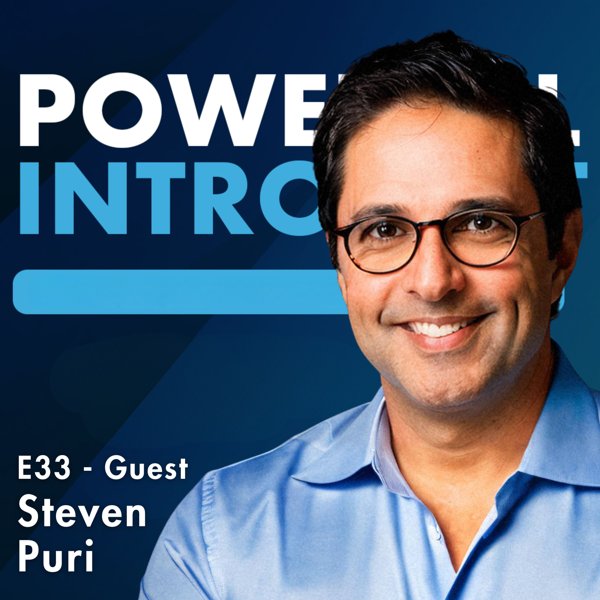
Stephen Pury spent over 20 years in senior leadership — first in Hollywood at DreamWorks and 20th Century Fox, then as a three-time tech CEO — and now runs Suupa, an app and community of 34,000+ people exploring mindful productivity and flow states. His central argument is that as AI eliminates routine cognitive work, the ability to enter deep flow states is the irreplaceable human edge — and introverts, who derive their greatest energy from focused solitary work, are structurally advantaged to cultivate it. Remote work is the delivery mechanism for this edge.
Great leaders go: here's the mission. The second thing they do is express the values. If you do those things well, you will attract the right people — and you start to dissociate the impact of someone's action from where they did it and how long it took them.
LLMs are Google autocomplete on steroids. Let us aim to have the jobs that are not replaced by autocomplete — let us aim to have the idea.
The most beautiful moments I have are sitting on a rock in the sun looking out across the plains. But you've also got to eat antelope.
Key Stories
- The broken Wi-Fi flight: Stephen describes a flight to San Francisco where the Wi-Fi was broken, his phone died, and he had nothing to do but focus on design work. He landed two hours and 40 minutes later with finished designs he liked — and realized he’d just experienced his first flow state without knowing what it was.
- Lunchroom at USC: As a freshman from Virginia, Stephen decided that if he didn’t walk up to strangers and introduce himself, he’d eat alone and “eventually die.” That act of choosing discomfort became the behavioral foundation for thriving in film — a deeply collaborative, extrovert-favored industry.
- The Snapchat crush: Stephen raised $3M for a photo-sharing startup; the day Snapchat Stories launched, his girlfriend told him from across a hotel room bed, “Your company’s over.” He describes this as one of the humbling moments that shifted him from a scarcity, ego-driven mindset toward generosity.
Techniques & Frameworks
- Flow state conditions (Csikszentmihalyi): Work must be meaningful, you must have applicable skills, and the challenge level must stretch you — these are the three core prerequisites. Distraction (social media, notifications) is the primary enemy.
- Mission + values = trust-based remote leadership: Great leaders articulate the mission and values so clearly that they don’t need to monitor remote workers — people invested in the mission will show up wherever they are.
- Music as flow trigger: Research shows 60–90 BPM ambient, non-vocal music accelerates entry into flow and prolongs the state. Suupa built a library of 1,000+ hours of purpose-made flow playlists, including nature soundscapes (Himalayan rain became their 3rd most popular playlist).
- 1% better / get comfortable being uncomfortable: Borrowed from Grant Harris’s philosophy — small, limited discomfort exposures with escape routes build the capacity for deep work and social contribution over time.
Full transcript
The Bleacher Report app is your destination for sports. Right now, the NBA is heating up, March Bandit’s here, and MLB is almost back. Every day there’s a new headline, a new highlight, a new moment you’ve got to see for yourself. That’s why I stay locked in with the Bleacher Report app. For me, it’s about staying connected to my sports. I could follow the teams I care about, get real-time scores, breaking news, and highlights all in one place. Download the Bleacher Report app today so you never miss a moment. Great leaders go, here’s the mission, and they can articulate, we’re here to cure cancer kids. We’re here to go to the moon. We’re here to invent cold fusion. We’re here to make the best romantic comedies we can, whatever. The second thing they do is they express the values of the culture. This is how we’re going to treat each other. This is how we’re going to treat our customers. This is how we’re going to treat our competitors. Now if you do those things well, and you say, here’s why we’re here, and here’s how we’re going to operate. You will attract the right people to that company. You have to then make sure they’re in alignment with those two. If you do that, like if I’m setting out to cure cancer, I’m like, Greg, you’ve got to come aboard this thing. You’re like, Stephen, my dad died of lung cancer. Let’s do this. I don’t need to watch you in your cubicle all day long to wonder. He’s great working. Is he at the dry cleaner? Did he take the day off? I’m like, no, man, Greg’s invested in this mission. Wherever he may be, he’s going to walk into the staff meeting tomorrow and say the thing where people are like, shit, we should do it. Gorgeous said. That’s a great idea. You start to dissociate as a leader, impact of someone’s action from where they did and how long it took them. Remote work is broken and not for the reasons you think. I’m Greg Wanger, and this is the powerful introvert podcast. My guest today is Stephen Pury, who’s spent over 20 years in senior leadership. First in Hollywood, Ed Dreamworks in the 20th Century Fox, then as a three-time tech CEO, and what he’s learned along the way flips a lot of common assumptions we have about workplace and productivity on their head. Today, Stephen runs the Suka. It’s an app in a community of more than 34,000 people who are exploring productivity and mindful work together. In this conversation, we’re going to dig into why remote work can be a great advantage for introverts. The biggest myths leaders get wrong and some of the personal systems that keep Stephen productive. Stephen, real pleasure to have you on the podcast today. What a generous and thoughtful introduction. I hope the rest of our time together is as helpful and entertaining for everyone listening. All right. Let’s see if you can live up to your billing here. Then there’s no wrong answer here with my first question, square root of 43. I don’t know. No real wrong answer. Are you an introvert or an extrovert? I’ll tell you this. And I’m going to illustrate it with the story because as you know, I love story. I have developed behaviors that are associated with extroverts because of the things I’ve wanted to accomplish in work. I also know that some of the most popular definitions or your litmus test for introversion versus extroversion. I fall in the introverted side. I’ll give you an example. I am doing this podcast with you and I know there’s certain public things that I do to share the messages around post dates, around work. They require certain things, but it actually does not charge me up as much. The time that I spend working alone thoughtfully designing things. At Energy Trust of Oregon, we know it isn’t easy. A tremendous weight of today’s operating costs. Working in cool, drafty spaces with inefficient heating systems or underlights that have seen brighter days. But we also know how to help you upgrade those systems. Lower those costs and meet the demands of your business with smart energy efficient solutions. Find cash incentives at energytrust.org. Energy Trust of Oregon. More power to you. Those ones actually bring me the great to energy. I went to USC. I was raised in Northern Virginia. It was the son of two engineers. I loved to read alone. One of my happiest things was going to public library with my younger brother and my mom. We would each carry out books in our arms that would fit underneath our chin. So we’d extend our arms. That was how much we could take. And I would go home and read for hours and days or time. I loved it. When I went to USC, I remember walking into the cafeteria at EVK, the one in my complex as a freshman and looking around and having this feeling like everyone here, like when I was going to ice fool together. I felt like everyone to palli high or that is high or Malibu or whatever. And I was this kid from Virginia. And I thought to myself, if I don’t develop a way of going to sit at a table with people I don’t know, I will end up going to my room and repeating that process, eating lunch alone and I will eventually die. I took my little tray and I just sat down and said, well, people I didn’t know. And I was like, hi, my name is Stephen. And that was the beginning of learning behaviors that allowed me to work in film, which is a very collaborative business in Birken Tech. But I do find the most joy in most energy and the things I do alone, usually writing blog posts, you know, working on our website, doing some engineering. Write a wrong answer. Really? That was the only wrong answer, Stephen. No, that’s great. You have such an engaging personality and it very much reads as an extrovert just down the surface. And so I love that answer. I love that you’re sharing that and your background and how you developed that because we all have to make our way in the world. I probably experienced some of those same kids at Stanford, folks going to palli high. And similar experiences like you got to fit in, you got to meet people and you develop these skills, which are maybe not inherent to your personality. They’re not completely natural to you. Yeah. And I think, you know, if you are a leopard or whatever on the Serengeti, there’s not really an affordance to be like, oh, I’m going to be the quiet leopard that doesn’t hunt. You know, it’s like, okay, I need just to arrive even if it feels weird. I need to develop this behavior. Even though maybe the most beautiful moments I have are sitting on a rock in the sun looking out across the plains. Excellent. And you got it. You got to eat antelope. Yeah. You know, with the right seasoning, quite good. I mean, I’m living Texas. We barbecued lots of things here, Greg, probably antelope among them. How’s it saying? Yeah. Okay. So you’re an introvert in Hollywood and you’re developing your skills to survive there. And but how do you survive so long in Hollywood when you’re such a nice guy? Well, what a lovely question. I haven’t gotten that question before. Let me say a couple of things. I think that had you met me in my film career, there is definitely a toughness and a sense of scarcity in that there are only so many movies that will get made. There are only so many release slots in any studio because this movie’s cost a lot of money. There’s only so many consumer dollars. So in that sense of I’m working in an industry of scarcity, I was much more cutthroat. Right? I would like to believe that as I have become more considered in my actions, as I have seen how the world’s evolved, that I do understand that every day we vote, noting is not what happens every four years in November. The world that we create is created by those daily vote. It is how you treat the woman at the dry cleaners that affects her day and how she’s going to treat someone else. It is how you drive your car against other people who are maybe competing to get to the same place that you are as quickly as you are. And that occurred to me later in my career and it influences me very much. And you know I’m having a son in eight weeks. It is definitely something I hope that I can imbue in our household the sense of like all of the little things you do every day are votes for the kind of world you want to live in. So think about them. And so some of this is maturity. Yeah. And we all are hard not to have failures where you’re like, oh, I’m not as smart as I thought I am. Yeah. I’m curious is there anything else that led to some of these realizations because really you’re talking about moving from this mindset of scarcity to generosity and really, in a way, giving in the world anything else kind of sparked that transformation? Yeah. I will tell you I had a lot of ego caught up in how smart I was and I realized that the smartness didn’t necessarily mean that I was being healthy towards others or that I was going to succeed. I was always told I was smart. I got accepted to USC when I was 14. So everyone’s telling you, oh my God, like, wow, you’re the little genius kind of here. And I had been on the cover of USA today. It’s stuff like that. It was just like, wow, there’s a lot of positivity. You know, define your identity through this. USC was very generous. They paid me to go to school there because they figured out you’re going to be successful. So be one of us. So to answer your question, there came a moment later in my career where I realized I’d had some failures now. I’ve been fired from a job in the middle of my film career. Luckily I recovered from that and things went well. But that was definitely like, oh, wow, that could happen. And then after I left film, I had a failed startup. My second startup did not work as well as the first, right? And I thought it was really smart. And some of those really gave me that pause of like, I should not discount how lucky I’ve been. Yes, I’m relatively smart and I worked hard. But there is a huge factor of luck, the generosity of others that has propelled me forward. And that has made me much more sensitive to what am I putting back into the world? Definitely give you a lot of credit for going into that self-reflection and evolving that way. I want to ask you a little bit about some of your leadership experiences. So you had teams that you led in Hollywood and then as a tech leader. So what are some of the most important things you learned there? Well, here’s the thing is you let off by talking about remote work. And let’s just say there’s a spectrum of remote hybrid in office. So one of the things that I think a lot of people don’t realize is that film for 100 years has had remote hybrid and in office, if you will, right? Most verticals, there was a shock to the system in the pandemic. It was like, oh my God, we can’t be under the same fluorescent lights two hours a day, five days a week. We’ll kill each other, right? So it was like zoom became a verb. How could we do this or discriminate work? Here’s a deal. I worked in film for over 10 years. Every film begins remote with writers writing in their homes, writing in coffee shops, writing in their writing partners, living rooms, right? At a certain point, hopefully one of those projects catches a little wind. You get some money. You open a production office two days a week. You’re all in the production office talking with customers. What should they wear talking with locations, cows? Where could we shoot this? What are the tax breaks like in Georgia, you know? And then you go from that hybrid period into in office. You’re on set all day and all night for months at a time together. Then you go back to working hybrid with you, picture editors and sound editors and stop you working. And then you’re eventually remote again. But if you were in film and you said, well, we’re in the remote phase of this film, people be like, huh? What it’s pure talking about. Because there, you know, the words have always been development, pre-production, prep, post-production, things like that, which express those things. And what’s interesting about that, the reason I bring it up, is that leaders know how to lead through each of those phases and individual contributors know how to contribute. Because it was not a new thing in 2021 about like how the heck is this working? It was just like, this is what we do is that we do it. So one of the things that I learned from that, because that contrast with tech, which was very much a when we went back into engineering and tech, that was very much a, hey man, we’re all together in this office in Selma and South Park, dog patch, wherever, do our thing together. I know, you know, SF, those are SF references, just to the black Greg, no, that I know that he knows. So, and you all, and in y’all, who are as listening as like, uh-huh, yeah, I’m on my little one wheel right now in Selma. That said, the sense of, okay, how do we make this work in a business where it has not been endemic to the business? You do, as a leader, need to recognize some of the fear around remote work and are you working in productivity, things like that? That is actually born of hiring because great leaders do two things among other things like raising money and stuff like that, but great leaders go, here’s the mission and they can articulate, we’re here to cure cancer kids. We’re here to go to the moon. We’re here to invent cold fusion. We’re here to, you know, make the best romantic comedies we can, whatever. The second thing they do is they express the values of the culture. This is how we’re going to treat each other. This is how we’re going to treat our customers. This is how we’re going to treat our competitors. Now if you do those things well and you say, here’s why we’re here and here’s how we’re going to operate, you will attract the right people to that company. You have to then make sure they’re in alignment with those two. If you do that, like if I’m setting out to cure cancer, I’m like, Greg, you’ve got to come aboard this thing. You’re like, Stephen, like my dad died of lung cancer. Like, let’s do this. I don’t need to watch you in your cubicle all day long to wonder, is Greg working? Is he at the dry cleaner? Did he take the day off? I’m like, no, man, Greg’s invested in this mission wherever he may be. He’s going to walk into the staff meeting tomorrow and say the thing where people are like, shit, we should do it. Greg just said, that’s a great idea. And you start to dissociate as a leader, impact of someone’s action from where they did and how long it took them. So to extend that analogy, for example, if you walked into the staff meeting tomorrow and you’re like, actually, I’d have breakthrough in how I think my economy are affecting this. And someone said, had you come up to this? You’re like, I was the beach with my dog yesterday and it just occurred to me. Some people would be like, you were at the beach on a Tuesday? What? You know, but I think the correct response is fantastic, dude. Like, however you get your mind to that place of doing this stuff that changes the trajectory of our company, do it. And if that is, hey, I really love us all to be in the office and brains from this together around a whiteboard on Friday. Hey, because I recognize that kind of activity is better in person than do it. These are all colors on our palette with which we can paint. It is not that you have to your remote person and that is your personality, that is your view of the world. It is rather these are all different tools. So that’s a lot how I carried that experience from film, seeing those different ways of working into what we do now, which is I run a tech company. I’m not going to answer. Sorry man, you asked. Oh, yeah. You exceeded my expectations there truly because I mean, so one, we all have this idea of TV or film is like, you’re just filming. That’s what it is. But like, you see what you see behind the scenes footage, like, you know, standing around video village, like pointing at monitors. You know how those are staged? Like, none of those unit photographer photos are like really candid. It’s like, hey, listen, between stage Greg, could you go get the DP and stand here and I could, when he pointed the monitor for me, okay, great things. That’s how that works. And the other thing is like really deep and nuanced answer to why it is an advantage to trust your people because not only does it validate people and actually encourages them to give more to you, you’re really freeing them to do their best work. You’re allowing them to in their own way. It’s going to be individual. It’s going to look really different for every single person. I’m not going to get the idea that’s like the $100,000,000, the million dollar idea. It’s not going to be sitting at a cubicle under fluorescent light. For me, it’s never going to happen. And probably for most people. So how do you structure your day to be optimally productive and access that creativity? Can I hang a lantern on something you just said? Use for the phrase, I have an idea, right? Now, we’re recording this in 2025. I’m sure thousands of years from now people will find this, you know, aliens will be unearthing this and wondering what was it like in 2025. There is a great amount of consternation around AI, right? AI in the workplace. It is true. Every CEO knows it is incumbent upon them on their earnings calls to talk about how many jobs they have cut using AI. And this is how it’s affecting their bottom line, including all the ones who are like, it’s just a big ohana here, Rala family. Oh, I need to cut 10,000 of you this week. You know, I’m forgetting where to all our cousins and our second cousins, right? Okay, ohana guy, right? Ignoring that hypocrisy. Coming back to this, AI is usually used right now in a way that conflates LLM’s large language models of the AI and how they’re affecting the workplace. And I’d like to talk about that thing you said of having an idea. So the fear of, oh, my job is being replaced and I’m going to be made obsolete. LLMs to be very reductive are Google autocomplete on steroids. They are a prediction engine saying like, hey, man, you know what? Most of the time when someone like Greg says today, it looks the next word they’re looking for as a weather word rainy sunny. No, let’s try one of them and see if Greg goes, yeah, what’s going to write rainy? This is amazing. You know, you’re thinking and it’s using statistics and advanced math to sort of do autocomplete just like Google has down four years, right? It does it with ideas, not just characters. So that said, yeah, man, AI, LLMs are going to wipe out a huge number of human jobs that do that kind of root work, which brings us to what you just said, which is have an idea. Let us aim to have the jobs that are not replaced, well, autocomplete. I need to write copy for our 17th ad we’re running on Facebook, marketplace, you know, over this week. And I’ll just have the LLM come up with a different version of the same stuff we’ve been writing, right? That great idea, hopefully, is what you become enabled to do because some of those other things are not as necessary. Let’s hope that’s where we’re going, which is not just like putting people in Wally’s spaceships where they’re fed gunk, you know, and they have no lives, but actually doing more interesting work. And for the people, it may not be familiar with LLM, large language model. It’s basically what Chatchy BT or Google Gemini, when you’re talking to them, that’s the technology behind it that’s powering the intelligent and interesting answers that it gives you, but not truly creative ideas to your point. Yes. Yes. Sort of that, leave this Greg. We’re so you’re from here. Yeah. Yeah. Now that we’ve solved that, community building is the Sukah, the first community based company that you’ve run or where did that start? No. No. I actually, when I left Fox and Fox was one of my worst jobs in my life, not just in film, just like horrible values mismatch. And I was like, this is not what I want to be doing when I’m 40, 50, 60 years old cranking out diehard 19 in the retirement home kind of stuff. And two, there’s a credit of news corp who was running at the time and the guys, my boss is the chairman of Fox film entertainment. It’s called show business. It’s not called show art. It’s called show business. You can model how much diehard five would make. It doesn’t matter if it’s good or bad. Okay. So you do that, right? So I was like, okay. So I’d like to do something where I wake up in the morning and I’m excited to get up as opposed to, oh, the alarm’s going off. I just have to get up. And I thought, what is the only other thing I know how to do? And it’s engineering. Okay. Why don’t we create a startup, find a problem that I think could be solved with some sort of engineering and design and do that. So the first thing I went to do was with a buddy who was a deep into social media more than I was, said, okay, there’s this new app coming up Instagram is becoming really popular. And that sense of a selfie was becoming very popular. And I thought it feels very selfish, like the very word and concept of selfie is like me shouting at you like, here’s me at the beach. Here’s me at the concert. Here’s me at the, and he is, it’s a very like, it felt selfish to me. And I thought, why not have it where you could send me a selfie like, hey, I’m at the spinal tap concert, which I know you’re at, which is amazing. And when I saw that, I could tap it and yourself, you would slip over and I could share back to you. Oh, I was there last night. Here’s photo of me and Laura at the, and that’s the sense of starting a conversation with photos. So we started developing that. We got to about 60,000 monthly active and Snapchat did snap stories, which I’ll just be blunt was a better user experience than what we had. They be as completely fairly. I was crushed because I was like, there’s something about this sense of like, we together that is more organic to who I am. And I wonder if other people be into that. And bands, small bands started using this. So it was cool seeing them with their fans where the band would post a photo of like, them backstage at whatever concert last night. And then other people in the audience could tap that and share back to the band photos of them at the concert. And the band could see them. They’re all collected in a nice way. But you know what? Raise three million bucks, lost all of it, including three quarters of a million of my own money. And that was a really harsh experiment of like, okay, distribution is actually more important than the idea. And snap had distribution. So when they said, oh, we can do that, they crushed us fairly. I mean, I’m not unclear on why it happened. But it was just, that was my first attempt at doing some community oriented. And it was when you say distribution, they already had an audience. They were in market. They could just release a feature and crush your ass. Exactly correct. Yep. Exactly. They had a huge audience to go, hey, we’re rolling out snapchat stories. And I remember I was with my girlfriend at the time. We were in, we were at some reunion for something in Florida. And I remember in the hotel room when it came out that day. And she was at, at best, her venture partners at the time. And maybe she’d gotten it early that morning or someone who’d like, tip her off, like, you got to go look at this and we looked at the bed and she’s like, your company’s over. And I was like, I don’t want to say yes. But I understand what you’re saying. And that was a hard reunion to be like a beat at the same time. I was like, wow. So. That’s a tough moment to talk about. Life experiences that really show you how do you want to be in the world. Yes. So I think there have been some hard knocks that have humbled me. And maybe that’s why you said the nice thing in the beginning of this, which is, I’m trying to do something. Inject some good into the world that my kids are going to inherit. Yeah. Well, clearly you are. And I think maybe that’s a segue to talk about the Suka. I love talking with the Suka. It’s my, it’s my first child. I’m about to have my second one. Uh, what would you like to know? What would your audience like to know? Well, where’d you get the idea and then what has it evolved into? So the idea began a buddy, mine who’s an engineer and grew upon. He said, I really want to make a to do list app. Would you help me? And I said, no, I don’t want to co-found that with you because I don’t have a brilliant idea. There’s not something where I’m like, oh, this is how it should be done. I said, I’ve used so many for a month or two and then just abandoned them. But I did end up helping him in a sort of a friendly capacity for a while. And then he had a baby. And he’s like, I got to tap out. I want to go be like, baby, I’m going to go get a normal job not to start up. And I said to him, listen, I actually in the course of working on this with you have done a lot of research into like flow states and, you know, remote work and the pandemic can happen. And I said, I have an idea. I’d love to buy the code base as a starting point and adapt this into my own company. And it’s super cool as I go for it. So I did that. And we ended up throwing out the original code base. There’s no y’all to do every engineering project is a thing of like saying, okay, we just need to line one rewrite and start from scratch because now we have a different kind of idea. But it was really helpful springboard to have seen that. And so the end of the answer to your question is this. And the course of working on that and learning about flow states, I realized that I had experienced that, but I didn’t know what it was. And just to set the table for those, you know, who are playing at home or driving the car, whatever, they’re like, you know, I’ve heard the term, I sort of get it, but maybe you could be more clear. There’s a Hungarian American psychologist, Paichin sent me high, who had a strong thesis. He said, high performers in these different disciplines, artists, athletes, scientists and mentors, they seem to describe these concentrated states they go into where they do like the thing that makes them famous, the thing, you know, the changes of the world. They describe it in a similar way as there’s something there. So like Prometheus, you wanted to go up, you know, to mental illness, get fire, bring it down to the rest of us. So you study them. And at the end of his research, he wrote the book, Flow, the similar work on this thing that he found, and that is from once we get the term flow state. And I think it’s so great what he said. He said, I chose this title because it was the most beautiful metaphor for what I found, which is we’re all on the water paddling to move ourselves forward. But if you align your boat with the river, the current carries you forward. It magnifies your efforts. And I thought to a time I had been, I was here at Austin and I was flying to SF. And I was on, I think Alaska operates the nonstop from here. And the Wi-Fi was broken. Got on the flight. We took off. We landed like 15 minutes later. And I thought an engine fell off. Like something really bad has happened. We’re in Dallas and they’re about to tell us once we safely land like, oh, and by the way, there’s no left engine. It was so pleased to have the nurse. And when I looked down and we were on the ground, two hours and 40 minutes have gone by, we were in San Francisco. I had no concept of time. I couldn’t even tell you if like the drink cart came by, but my designs were done. And I liked them. Because I wanted to show my team the next day. Like, here’s an idea of something we could build. And I was able to call buddy mine and be like, hey, man, I thought I’d be at the hotel room scrambling to finish these designs tonight. But I’m not. I have a free night. You want to have dinner. It was a really nice experience of feeling like I was competent in what I was doing. I was in control of my work, not controlled by it. And in hindsight, when I did this research, I was like, oh, wow. That was my first experience of a flow state, which people know by many terms, you know, being in the zone, the genius zone, tons of smart people have written about this. Right? So we now stand on the shoulders of giants around how do you get into that thing? We’re in two or three hours. You can do like a days worth of deep work. And that is really the genesis for the super company, you know, my company, which was, how do we make this available to anyone who has the intention of doing it? I have something to do. It could take me three or four hours or I could do it in one or two. I choose one or two. That’s what I do. That’s great. So that’s the kernel of the idea. And so the app has tools to help you manage or set up the circumstances for yourself so you can more regularly enter those states. And me, hi, wrote a bunch about this. He said, some of the characteristics of a flow state are you lose track of time. Check. I remember that from the last couple of light. Distractions. You’re far the way side. Like you’re not thinking about, oh, should I be checking my WhatsApp or look at a YouTube video, whatever. He said, there are conditions precedent that help you get there. He’s like, I’ve noticed number one, you have to believe what you’re doing is meaningful. No one seems to be getting into a flow state like stapling papers or shuffling emails rather in box or something, right? You have to have skills that apply. I love this quote. The Michael Jordan quote about like when I’m in the zone, it’s just me in the ball, which is a great, very succinct way of saying like all that stands in the scoreboard. Everything falls away. It’s just me in the ball. And he’s doing something where he has skills that apply. Like he’s not saying, oh, when I paint, I’m in the zone or playing basketball or baseball whatever. And you have to operate at a level that challenges you. You have to actually be trying to do something great, not like half-assing it. And there are other ones we don’t, there’s not four-hour podcast. I’ll be somewhat succinct. He wrote about there are these things that help you do this. And subsequent research has shown like music seems to be a great way to fall into a flow state faster and stay there longer. A lot of the research shows for most people 60 to 90 beats per minute, certain key signatures. Ambient, non-vocal kind of rhythmic music. So it can be low-fi, it can be upbeat, down tempo, you know, but sort of in that zone. And we were developing soupa. I happen to have a bunch of friends that are film composers with time on their hands. So I was like, hey, Greg, could you write me? I don’t know. A bunch of hours of this kind of music. And you know, we have like a thousand hours of different playlists that are oriented around that. And I’ll tell you something I discovered in doing this. There’s a buddy who is up in Marin near, you know, where Lucasfilm is, LucasArts and stuff. Like Senator Failure, who’s an audio engineer on the games, the Lucasfilm games. And he was his son’s high school graduation president was they were going to Nepal. They came back and he said, Stephen, one of the days I was there, there was this amazing rain. Like it poured, it is this lush sort of rain. I had some biodeo equipment. So I recorded it. Do you want it? And I was like, sure, it’s free. Why not? Right? So we threw up a playlist. There was not music. It was the sound of rain in the Himalayas. We called it Himalayan Dream Rain. This now our third most popular playlist. Just listening to this beautiful rain and that inspired us to say, oh, wow, some people don’t seek music for their flow state. So we did recording with scream in Japan, like a surf and cypress, Emerald Blake with the little birds tweeting in Canada, which is close to where my partner Tony lives. Bunches like that coffee shop in Vienna. Some people really loved like the sound of a coffee shop without the distraction of it. Things like that. Anyway, back to you. Yeah, it’s taking me back to, yeah, as a kid, I first heard there was, I think, what’s called element. So you could buy a CD of sounds and it was a revelation to me. I was sold on the sharper image catalog or something like that. I was supposed to do it. I was supposed to do it. Coolest thing in the world. I have a question for you. What distracts you when you were trying to focus or get into a flow state? What are the things that pull you out? I would say the reasons why I don’t get into the flow state are primarily scheduling. You know, I would go out. It will be in a job where there’s not time blocks available to reliably go into flow state. So I have to schedule time outside of it. I get up very early in the morning or like you said, you just tick off. I’m going to go take a walk. It’s not in the regiment at office where this is even possible. And this is like another key here. If you’re worried about your job, you know, being stolen by AI, then if you’re not setting up the circumstances, you’re not going to be able to produce the ideas that are going to be unique and valuable. They’re going to be this like checking the email. It’s going to be creating the 17th version of the email or the diehard 19 or 36. And LLM’s are probably really great at that. Yes. Very true. But let me dig into that a little deeper. I hear you on the scheduling thing, which is hard to then plan flow. So what are the distractions that get you when you do have that time or you try to get in a slow, what are things that pull you out? I’ll be honest. I’ll be vulnerable. TikTok knows me extremely well. And for some reason, more than Facebook or Instagram or X or Twitter and as TikTok’s the one that just gives me that weird dopamine, that’s a hard thing. When I run into something difficult, like I’m coding and the build keeps failing, I notice in my hand just reach for TikTok, they’ll all just do this for a minute or two, which becomes 30. And it’s the instant dopamine hit. Same thing with our rental blog posts where I’m like the muses are not singing. That and YouTube are really tough for me. I have to smack my hand virtually. Are there things like that for you? Sure. During the day, it’s more work related. It’ll be a slack. I mean, there’s always some email or some thread where somebody needs something and I can get a little dopamine hit by answering someone’s question or helping somebody out instead of getting the thing that I really need to be doing done. Yep. With you on that. Yeah. And I’d, you know, be disoss, if I didn’t say sometimes I flip over and the social media channel or something like that, just. I follow your old news hit. I know. I know. Yes, well, I can’t help what I got. When is Bitcoin, man? Yes. Let’s bring this back around to supporting introverts. Is there anything special about remote work that is an advantage for an introvert or getting into deep work that is an advantage for an introvert? That is such a generous question because I think implicit in the question, you know, the answer. Let me make it more explicit, which is in that story I told you about the lunchroom at USC, my freshman orientation week, this sense of, okay, part of my life is going to be more successful if I learn how to interact with others as a reward for networking and things like that. I remember you did a great episode with that marine, I think it was. Is it like a desert storm veteran? I recall. Yeah. Yeah. I can’t remember his name. Yeah. But you talked about my name. Yeah. Thank you. Yes. So there is a reward in terms of your career advance, when it comes from networking and he hung a lantern on that. So in that story, what I was saying to myself is if I’m going to have the rewards of my school and my career when I’m moving forward, I need to develop a behavior I can go sit at a table. It’s people, I don’t know, go hay my instinct. What’s your name? Oh, Greg nice to meet you. Where you from. So when you ask about how remote work can be powerful for introverts, I’ll say this. Yes. There are some industries more than others that reward networking. Like for example, I come from Washington DC area. It is absolutely a city where the currency is access. The currency is not money. The currency is access. If you every day have breakfast with the chief of staff in the White House, you might be impoverished, but you have power, right? Whereas in New York, the currency is currency. Like it is, hey man, I’m an eye banker. I’m a Wall Street guy. Like the currency of New York is money. The currency of San Francisco is intelligence. You can be at some party and like the guy in the corner who just rewrote the new Google search algorithm could be like staring at a plant, but he’s the coolest guy at the party because he’s moved that industry forward, right? And of course, living in LA, the currency value is appearance. So when you think about what it is that’s powerful about remote work for introverts, there is an element of, hey man, if I manage my brain well here at home, I block the time, I do the thing that moves my world forward. That can be a very great career accelerant where at the same time, some people are out there moving the career forward by networking. Hey man, every night of the week, I’m at some dinner, some cocktail party, I’m going to every conference, absolutely powerful for some people, but maybe not for an introvert. You know, like I had to do a lot of conventions and conferences and stuff when I was in film because it’s a network, he kind of business, right? But man, I would much rather be working with a writer one on one in our home, crafting something great where it’s undeniable. You read and you go whoever wrote this, call them in here right now. We have a meeting at the studio with this writer, right? Which is different than I met these really fun guys at the party last night after the premiere of whoa, it’s a you know, like, where did those go? Those are just networking kind of things. That’s the power I think of remote work for introverts is great. Use the thing that is true of you to your greatest advantage. Do great work and that’s why I created my company. It is about hey, if you want to be in control of your life, if you want to be controlling your life as opposed to controlled by it, find those poccasive time and use whatever accelerant works for you, which does not have to be the sukkah company. It can be whatever app or what system you work with paper and pencil, but find those tools. So your rocket fuel is that time when I do the work that causes the world to turn its head. That’s great. And part of what I do is encourage people to take advantage of your skills and where are you most happy and productive? My current situation is kind of an ideal for me. I get to go into an office one to two days a week, spend time with people, whiteboard, just have the big connection. And the rest of the time I’m in my home where I’m just more comfortable. I am able to walk my dog in the middle of the day if I want to. It’s very energizing. It’s something that just works better for me. Yeah, if it’s possible, if you can see get out at this remote or even a hybrid, if you can get it, is a great fit, I think, for introverts. It is true. And when you do need to engage, as I recall, one of your recent episodes, you spoke with that Korean woman who was talking about building outward in dress a certain way. You’ll start to feel the body, the thing that you’re dressing as. And she had a really smart comment. And I hope I quote her properly. She was talking about if you work in marketing, there is a huge part of how people are going to perceive your competence by how you dress, which is different than if you’re like a software engineer when they’re probably not going, oh, are those Jimmy Trudeau? Are they shoes or Christian Lubutah heels? You’re a software engineer. Or is that maybe very important if you’re a marketing exec? I thought that was really well observed. And her part of just how to play the game when you need to play the game. Because sometimes you do as an introvert. Well, I think it’s a game for software engineers because if you show up, and the smartest guy is probably wearing a t-shirt and shorts, and if you come in with a button down, they’re going to look at you funny. Yeah, are you really a software engineer? You’re a manager. That’s, can’t be that smart of your manager. I was a software engineering manager, which I think would be kind of hilarious though, if you were a really good software engineer, and you were the guy who came in like a suit. And they’re like, I know, I know. Greg the guy in the corner of the suit, he’s actually not our boss. Well, a pro engineer. It would be really difficult to cast software engineer. Yeah, you’d definitely be bucking the trend if you do that. Little things that make people smile. There’s so many opportunities in the day to break little patterns where you just, people get a little smile out of it. Like if you ever get an elevator and there are five people in the elevator, it’s sort of a tacit rule. The sixth person has to stand right in the middle facing the doors, right? But if you ever walk in the elevator and just stand facing inward, everyone’s sort of like, starts giggling and like not knowing where to stand and where to look. And it’s a stimulous little thing, but it sort of says to everyone like, do you realize there’s this unwritten rule that no one ever taught you, but you all know what it is, which is like, I’m supposed to stand watching, watching the numbers and staring at the door. Caution, nothing. But everyone that day is like, I had the funniest ride the elevator day with this dude. That’s great. Thank you. That’s one thing you can take away into your day and have fun with it. That’s not the only one from this podcast, but okay. No. All right. Well, you know, are there any others that come to mind? Yeah. If there were one really big one, it is start your day with your intention. Like every morning, even if you have to write it on an index card and post it. Stick it on the laptop, screen or something. Like start from there because your day will not move you forward if you just are doing the shallow work that comes at you. So that would be probably more important than the elevator joke, but the elevator joke’s pretty good, pretty good. But I go with the intention one. If there’s one takeaway, and then just dig into that one a little bit more, what does that do? It should, if you are true to your intention, you say today, the thing that will move me forward is I need to advise my website to express what I do now, right? And focus on it. It’s going to change the trajectory of your life, you know, and you have to want that. You know, if you’re caught up in self sabotage or you actually don’t want success or you’re a fear of success, I guess it’ll be hard. But if you’re like, no, actually like my family will benefit if I can get to this next level, then each morning just be clear, what’s the thing you could do today that moves it forward? And you’ll do the stupid shallow work of returning the emails. Like you say, and get a little dopamine hit from the slack message, or you help someone to, but the slack message is not the thing that’s going to move your family into a place of security. Or it’s going to pay for your kids college. It’s doing that thing where suddenly you’re at a conference talking about how you came up with the idea for blah. Absolutely. Steven, you’ve been really so generous with your time. And this has really been a lot of fun. People want to have more fun or just more, learn more about your work. Where can they go? Get in the elevator with me around three o’clock. It’s super fun. I have some board games. We’re going to play. No, I joke. There are two answers to that question. Number one, anything to which I have made reference where someone wants to know more like, what was that thing about Cal Newport or what was that thing about the Hungarian dude or my email address is very public. It is Steven at the suka THUKHA.co for company. You’re welcome to drop me an email. Go, hey man, can you send me something on that? It doesn’t have to be about my company. I’ll send you back a link. I will not write you back 19 paragraphs story in my life. I don’t have time. Do you want to read it? And I get back to all my emails in 24 hours if I’m not sick or traveling. So that is an offer. Anyone who wants to get better, there’s that. If someone wants to try the tool that we built, it’s a flow state website. It’s free for seven days. No credit card. If you love it, then yeah, you can pay us and help us pay the service bills. And it is shockingly at the suka THUKHA.co. If you try it, come with something you need to do. It’s a flow state app. So think of something you have 30 minutes an hour or two hours to work on. Hit play. You can hook up. You can download a free Chrome extension. It helps you stay off websites. You can lock your phone and help us stay off your phone and just see how you feel after that hour or two hours. And let me know if the things you want that are better email me. If you have criticisms, email me. That’s how we make it better. All right. Thanks so much, Stephen. This is great. Thanks for having me on today.