Why Quiet Men Are Needed—and Why True Masculinity Starts with Self-Care
Manage Your Energy & Thrive in Extroverted Cultures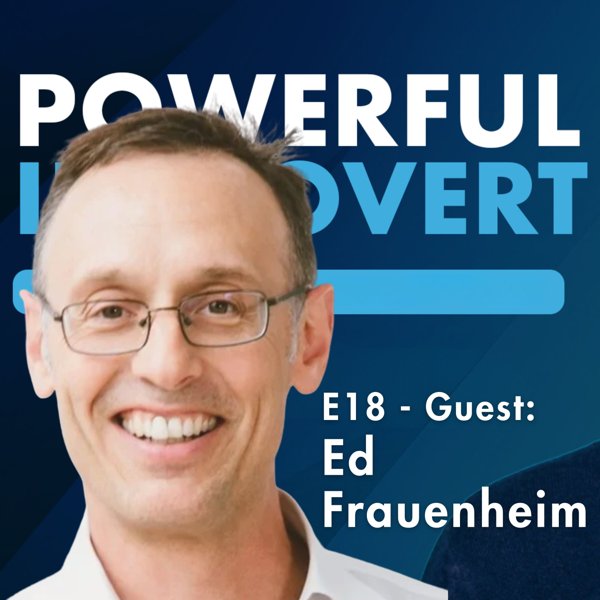
Ed Frauenheim—journalist, workplace researcher, and co-author of "Reinventing Masculinity"—speaks candidly about his cancer diagnosis and prior heart attack, using his own health crises to make the case that men who ignore their bodies are operating under a broken cultural script. He argues that quiet men offer exactly what workplaces and society need right now: thoughtful listening, deep relationship-building, and inclusive leadership—qualities that have been chronically undervalued in hypermasculine organizational cultures. The conversation moves between the personal (how he nearly missed his cancer diagnosis by playing tough) and the systemic (the "Teal" organizational model that explicitly honors introvert strengths).
Quiet men are needed in this moment because in a world that's getting faster, more fairness-focused, and more fully human—we need leaders who are thoughtful, who are calm, who can navigate the turbulence.
I have the shortest management career in history. I'm pretty sure. I managed one person for one day. And that was a source of shame for me for many years.
We've been trained to think of our life as a doggy-dog world where we're having a scrap for our own. But it's exactly what you said—when we act out of service, it comes back to you with great dividends.
Key Stories
- The GoFundMe Moment: After his cancer diagnosis, friends and strangers launched a GoFundMe that raised enough to support Ed’s family for a year—a Jimmy Stewart “It’s a Wonderful Life” moment that revealed the quiet, cumulative impact of his years of service and authentic connection.
- The For-All Leader: A colleague at Great Place to Work called Ed a “for-all leader”—defined in research as someone who is both highly inclusive and highly effective—despite Ed never having managed more than one person for one day. It validated quiet, behind-the-scenes influence as genuine leadership.
- Jonathan Holloway’s Listening Cabinet: The first Black president of Rutgers described coming in and genuinely wanting to hear from his team, which was so unfamiliar to them (used to top-down command) that they initially didn’t trust it—until his collaborative style proved itself.
- Heart Attack → Broken Masculinity: Ed’s stress-induced coronary artery spasm was followed by panic attacks because men who survive heart attacks often experience “broken masculinity”—their sense of self as invincible erodes, leading to depression they don’t treat.
Techniques & Frameworks
- Teal Organization Model: A framework (from Frederic Laloux’s “Reinventing Organizations”) that calls for decentralized decision-making, psychological wholeness at work, and integrating “feminine archetypes” of receptivity, stillness, and collaboration—conditions that allow introverts to thrive.
- Quiet Men as Change Agents: Ed and Jennifer Kahnweiler’s research found that introverted male leaders are disproportionately likely to be allies for marginalized groups and to build deep coalitions—making them structurally important agents of organizational evolution.
- “Learn-it-all” vs. “Know-it-all”: Citing Satya Nadella’s Microsoft transformation, Ed argues that a learn-it-all disposition—core to introvert identity—is the leadership superpower for a world that changes too fast for any single expert.
Full transcript
Whatever you want to become, on-point community credit union can help. Want to become a teacher? Go back to school to learn how. Want to become a pilot? Spread your wings with some flying lessons. Do you want to become a homeowner, a business owner, or an adventure van owner who hits the open road? On-point has the financial tools and expertise to help. So become a member today. On-point. People are the point, federally injured by NCOA equal housing opportunity. A payment tip from Northwest Natural. Northwest Natural offers flexible payment plans and build discount programs. For customers who need extra support, that’s good energy, reliable and ready. Learn more at nwnatural.com. Quiet men are needed in this moment because in a world that’s getting faster, more fairness focused, and more fully human. These are some that make it trans, we were noticing. We need leaders and teammates who are thoughtful, who are calm, who can navigate the turbulence in a way that separates wheat from the chaff that doesn’t get distracted by the next shiny object, but in step back and really reflect carefully that can build relationships that are deep. [♪ OUTRO MUSIC PLAYING [♪ Hello and welcome to the powerful Controvert Podcast. I’m Greg Weinger. I’m here with Ed Frownhye. He is a speaker, a writer, a consultant who has been focused on workplace, technology and culture over 25 years. His stories have been featured in USA Today, Harvard Business Review and Fortune Magazine. He’s based in San Francisco, where he spent six years as director of content at a great place to work. The global consultancy that produces the annual Fortune 100 best companies to work for a list. He’s the author of four books, including reinventing masculinity, the liberating power of compassion and connection, which is going to be very relevant to our topics today. So welcome, Ed. Great pleasure to have you here today. Thanks so much, Greg, really honored to be with you here today. Thank you. So we talked about this beforehand. We don’t want to bury the lead. And I think this topic is pretty relevant to some of the subjects we’re going to discuss today. Would you mind sharing with the audience what’s going on with your health right now? Sure. I have recently been diagnosed with appendix cancer a couple months ago, Greg, and it’s turned my world upside down some, and at the same time, been an opportunity to delve even deeper into some of the work I do. It’s a cancer that is treatable, that has some decent odds of surviving 5, 10, 15, 20 years down the line. I’m in the middle of my first chemo round that goes for three months. Then I face a very big surgery in my belly to remove cancer. And then another potential round of chemo for another three months or so after recovering from the big surgery. So I’ll hold it’s like a year slog. But it’s giving me some opportunities to reflect on some of those issues you mentioned about manhood and health, about our work, and how we treat it, and our society, and even sometimes how we think about how we care for each other in modern American society, at least, and really globally. Well, I’m really glad to hear you’re taking this time to really focus on healing and taking care of yourself and reflection. I think we’re going to come back to this and touch on this and has men in particular. But I think all of us don’t necessarily take care of ourselves the best that we can. And that’s really important. But we also talk a lot about introversion. And so I understand you’re an introvert. Tell me if I have that correct. Believe I am an introvert. Yeah, happy to share where I first identified that. If that makes sense at this point. Yeah, please. I, like many people, started identifying as an introvert in the week of reading Susan Cain’s book, Quiet. I think I read it within a couple of years of it coming out. I guess it came out in 2013. And I co-led parent education event at my kids’ elementary school. And I remember really finding the book eye-opening about the strengths of introverts and the way our world is so extrovert-oriented. And Susan Cain, maybe you did this too, Greg. She had a survey at the end or somewhere in the book. She had like a 20 point scale maybe to define yourself. And I was near the middle, but one tick toward the introversion side versus extroversion, which surprised me. Because I think of myself as pretty social and enjoying a company, but she helped me to find what introverted is largely about this question of energy. And the energy that one gets from solitude, getting drained and spending a lot of social time with folks. And my wife was very surprised to hear that I registered as an introvert. She’s a little more introverted than me. So maybe I’m like, I feel like way more extroverted than she is. But that’s kind of when I first started identifying as such and really appreciating the lens of what quieter folks have to offer. Yeah, that was my experience to really identifying and really grasping all the subjects through the process of reading Susan Cain’s work. I came to it, unfortunately, a little bit after that publication date, but better late than never. And definitely recommend that book to anyone who has not read it. It’s entertaining and fascinating. And if nothing else, she’s just a really great writer. But yeah, I’ve heard that quite frequently that that’s been a watershed moment for a lot of people. Yeah, for sure. And so how has that process been? Did you look back to your life and then even since that point of time, how has that changed the way you think about yourself or the world? Yeah, I did affect that retrospective look and prospective look, I guess too. You could say where I came to appreciate the value I had. I was often someone who was in leadership roles, but kind of slightly behind the scenes. Like I was a union secretary when I was a journalist at the Elk Kuntrabew and Chana Papers. And there was a more bombastic, quote unquote, loud, wonderful guy, that he was the president. And I did a lot of that work behind the scenes to gather people, build coalitions, similar role in my college newspaper. And so I came to see that, I wasn’t that I had failed to reach the pinnacle of leadership in some ways so much as I had been building on the strengths of an introvert, the relationship building and the preparation. I was often like the one writing the press releases for say our union work to try to get a contract at our organization, but it just validated my choices and the path I’d taken. And then I started seeing the power of introverts elsewhere. And that’s ultimately led to some work I did with Jennifer Conwiler on the topic of Ben. As introverts as well. So it’s been a neat journey to look both backwards and feel good about the president. And then keep looking at how we can make the world a little more introvert friendly, if you will. Yeah, absolutely. And we’ll come back to that collaboration you did with Jennifer. Can you tell first how do you get into journalism? I think I got into journalism because I was a crummy writer to start with. It went one of these things where it was hard for me to do well. And I had this itch to keep the scratch and getting better as a writer. And a lot of that started in college. Then I’ll actually taught for a little while and in public schools got a master’s degree in education but I really missed that journalism. And so eventually got to the open-to-be-une. And then doing some work and technology journalism. But had a lot to do with wanting to craft the truth and capture the truth and then craft it and make the world better along the way. The crusading journalism, the kind of advocacy journalism that you used to find in places like the Village Voice and then where the Nation Magazine, I had an internship there. Actually, both places. Yeah, this idea that words can make a difference has always animated me and journalism and then more broadly writing has been calling and a source of a lot of joy and sense of gratification over the years. It’s really writing about issues and raising awareness of important topics is what’s motivated you to do that work. Yeah, yeah. I remember my college, your book, one of the little things I had in there. At first I was like embarrassed about it but the more I move away from it, I feel like I was pretty smart, wiser, intelligent about what I said. But I quoted a print song called Elphabet Street and it included the line, put the right letters together and make a better day. And I’ve basically been trying to do that for some 35, 40 years. Love that. Anytime you can reference friends here, I think you’re winning. Yeah. So you’ve written and part of your career you’ve focused on workplace issues and so when to do first, start writing about those. I started writing about those as I was always drawn to labor matters and to fairness issues and I found this little odd niche out here in San Francisco and a technology news site called CNETNews.com. A lot of people are familiar with CNET for the product reviews. It also has had a news section. I was there for a while during the tech boom and bust and I ended up writing a lot about labor issues and conditions in the software industry and the technology industry. And the long hours people were putting in to make video games, for example, and efforts to sort of try to unionize or create better conditions, issues of immigrant labor or off-shoring of work. A big moment for me that kind of cemented this topic of work issues is having kids. My kids that are 22 and 20 now and when my second one was born, I wanted to have a more work-life balance to honor my commitment to my wife to try to be as equal parents as we could be and the motto at CNET was tech news first, which meant if Microsoft announced a deal to buy a company at four o’clock PM, like I might have to write about that until eight wasn’t sure when I’d get home and that was really challenging for my wife and that’s the vision we had of with it doing it together. So I changed my work from CNET and this prominent news outlet covering the tech world and I went to this trade magazine. That wasn’t really well known, but it was stable work and regular work hours. It was called Workforce and it wrote a lot about HR issues and that I was there for about eight years and ultimately really kept to know more about the workplace and business issues eventually shifted from merit to great place to work. So there’s a combination of my interests and then also my interest in being a family man that kind of has helped me focus on the workplace. Which is another set of values kind of guiding your direction and what you’re interested in, do you really able to align your work career trajectory along with those values? Yeah, I feel lucky in that and there was a trade off because I was challenging the direction that we’re told which is to always go up into the right, get to a place that’s more prestigious and make more money and have more power. I stepped off that sort of fast track, but I don’t regret it. I didn’t feel at times like I was, nobody going nowhere to put it extremely. Our articles would get published in the New York Times had seen that with a deal we had and now I was writing articles and much smaller readership probably. But the flip side is that I got to know that area and I got to have an experience as a really active dad. I coach my kids soccer and baseball teams for eight years straight. That was some of the most meaningful time for both me and my own kids and the community of kids around them. So it’s been worth it. Yeah, sounds like you made good choices there. As an aside, I actually had an initial side quest in journalism. I came out of school. I did an internship at Wired Magazine and then I moved from there to PC World. That was my first paying job. And CNET was like the biggest, there was hotwired in CNET. They were the big players. But yeah, I mean, especially doing this work in that scene in San Francisco, I was just looking at that trend of chasing ever more. Yeah, definitely a lot of respect for you for bucking that trend. And then I’m curious about you did all this work. You worked for the best places to work. So you really became more of an industry expert in workplace issues, workplace concerns. What was the next phase of your career after that? The writing of books that you got too earlier, Greg. About 15 years ago, I co-authored my first of four books. All the books I’ve written have been co-authored. And I did one of them sort of corporate social responsibility then on innovation, especially based in university settings. How do you get great innovations out of the university sector? And then great place to work with the CEO there and other colleagues. We wrote a book called Great Place to Work for All in 2018. The next book I did was about the masculinity matters. Reinventing masculinity with my co-authored Ed Adams. And Greg, you can’t really go wrong when you got to two of us because two Ed’s are better than one. It’s well known facts. And I had started to part ways with Great Place to work into his art visions of what was a truly awesome place to work. I started getting into the concept of the old management philosophy and I’m wearing my teal shirt here. And that basically is calling for more soulful workplaces where there’s a lot of democracy or autonomy for people, where there’s a sense of wholeness where people can bring not only their whole selves to work in terms of their identities, but even their spiritual callings, intuition, and emotions. And there’s also a strong sense of purpose that evolves over time. So those are the pillars of a teal philosophy that Great Place to Work was playing around with, but really wasn’t going to embrace fully. And so I parted on very good terms with them. And the day my book, then a co-authored with Ed, we came out on October 13th. I get my notice to leave at the end of the year. I wasn’t sure exactly what I was going to do, but since we called the book the liberating power of compassion and connection, I was like, I’ve got to liberate myself if I’m going to call on them and then to liberate themselves from confined beliefs. I need to get free to really fully explore my passions. And so for the last five years or so, I’ve been on my own as a consultant, writer, speaker, and coach. A lot of my work is helping other people write well and speak well and bring out their voice and their messages. And a little bit of a role of coaster, but I’m really, I’m grateful for the path I’ve been able to take. That’s fantastic. It’s just an achievement of writing books. It’s very fulfilling and daunting and challenging. And I’m sure roller coaster is a apt metaphor with all that. But yeah, I have a lot of respect for that. Let’s dive into the masculinity. It sounded like was it your first work with Jennifer Conwiler? Is that what set you on that path? No, it was actually this teal stuff that I mentioned before. I read a book called Reinventing Organizations by a consultant named Fred. That came out in 2014 and introduced this concept of these teal cultures. I read it maybe 2017 or so. And it talked about how we’ve had a hypermasculine workplace culture in much of the world, where we focused on rationality, and achievement, drive, competitiveness. And we’ve squelched the archetypal feminine energies of receptivity, stillness, emotional availability, and collaboration. And just resonated so deeply with me and got me thinking about the way our society has been and balanced when it comes to the sort of the Yin and Yang, the masculine and the feminine. And it dovetail with my own personal writings I was doing as a father and as a man. And then eventually I did see this introvert and manhood intersection, but I was really started much earlier. Got it. I’m a little interested in the color scheme. Was that defined in that book by La Lue? Yeah. And others too, there’s a color scheme that corresponds to levels of human consciousness. The notion that red is associated with a really combative power centered thinking. Then there’s yellow or amber, and that’s how a lot to do. It just clear lines of authority and bureaucracy, kind of like the church or educational institutions. You have orange, which is more conventional, capitalistic companies that are achievement-oriented, meritocracies, driving to a get bigger and bigger. And then there are two other stages. Green, which is, you might think of as the DEI movement of voices, included in the mix, trying to be more inclusive. But Teal kind of, it goes a step further and actually powered to people, not just listens to their voice, but lets people make decisions with much greater discretion and scope of authority than we typically see in organizations. And then also brings in this fuller sense of who we are as human beings. And again, consciously is integrating the mask going to the feminine. And again, it spoke to me. And I’m in part of a Teal team that I co-founded several years ago. And we do an annual report trying to track the companies that are exploring this philosophy. And this year we’ll probably identify 300 or so companies around the world. There are bigger companies that are exploring these concepts of decentralized decision making and elevating more of the emotional of our beings into how we consider an acceptable way of being at work. That’s great. And it seems like as you progress through these color schemes, then the environments become more inclusive and more supportive for people who might be quieter. It’s basically more supportive of everyone. And it sounds similar to conscious organizations, highly conscious organizations, highly conscious leaders. So I’ve always been drawn to the color teal. Now I have the answer why. I love that. And yes, exactly. It’s a deeper appreciation of what we’ve often cut off of our humanity, including a lot of the feminine archetypes. But also this notion of these personality differences of introvert extroverted and not just appreciating the loud and highly assertive, but the more thoughtful, the more reserved, the more introverted talents that organizations have largely ignored, mistreated, it’s maybe a strong statement, but that happened plenty. But it failed to take advantage of is another way of looking at it. Yeah, yeah, underutilized. And it’s a, if you look at it, just a ruthless capitalist lens, you’re not making the most of your resources. So this is just a natural way to grow profits. Or it can be a big competitive advantage as well. Yeah, totally. And then obviously we’re dealing with toxic masculinity. Just what are the lessons that the culture is teaching us as men? And where did you take the theme from there? My co-author and I tried to avoid the term toxic masculinity during rewriting rather than me too movement timeframe. And it felt like that term got used to paint men and with too broad a brush, typically. One thing that I think of as a way of understanding what’s going on is that men have most power. And most men don’t have a lot of power. So you do have abuses of power by men. It’s concentrated in a few men’s hands, in organizations and political structures economically, in terms of wealth. But when we talk about toxic masculinity and we view men overall as a problem, I think it really misses the fact that a lot of men don’t feel a lot of dignity in their lives. They’re in organizations where they don’t have much discretion over what they do. They feel enfanalyzed. They don’t have much wealth. And they don’t necessarily have much status. And so when we don’t acknowledge the lot of most men, we actually push men in the direction of being drawn to folks like Andrew Tater, these mannisfier, these strong men leaders who are, I think we just got to be more manly and beat up on women, basically. So I think that’s one of the challenges. And I think there’s introverted men have a lot to offer as an alternative in this moment. When we had this resurgence of a kind of retrograde playboy, strong man masculinity. And so that resurgence was happening at this time. I mean, it’s been going on for a while, certainly since the mid-teen. Yeah, the rise of Trump and Bolsonaro in Brazil and these other influencers, I think they came up soon after there was this reckoning, this long overdue reckoning with power and authority, when we talked about gender, when I was about race. So we come up with white men having all the power and being the problem. Not all white men have that much power. We have built in privileges. And it’s important to acknowledge those. But it’s also, I think, important to acknowledge the systems and structures in which we’re operating. And then the socialization that men have had, which has really made it hard for them to heal. A lot of the struggle is in the pain they experience in their lives. Yeah, I think we need a more nuanced lens to make sense of this question of, quote unquote, toxic masculinity. I think it’s important to really look at how do we support men and help them be living, fulfilling lives in a way is that allow everybody to live fulfilling lives. So that’s the context. And then you did this work with Jennifer? Yeah, we were bringing together ideas like a Reese’s peanut butter comp, Greg. We had the introvert peanut butter. And that was a great little match where we interviewed a number of quiet men. These were pretty successful ones in the work world. Leaders of a pharmaceutical company, a Silicon Valley, consultancy, the first black president of Rutgers University, Jonathan Holloway. And what we were trying to get it is have been the strategies for success would have been the challenges that they’ve experienced. And it was just fascinating to hear these guys talk about the drain of trying to pass as loud, margin, and charge. Men, often very big men, physically big men, that had an introverted personality that didn’t want to have to be that bombastic voice. And the real, but rather their inclination was to listen to people and understand all positions in a thoughtful way. It was exhausting for a lot of these folks. And at the same time, they found their way, stuff that would try not surprise into you and your listeners, making networks of trusted colleagues with deep relationships, taking time to recharge in ways that haven’t been sanctioned always. And including finding the conference rooms that they could take a nap that were unused during the day. And many of the ones we talked to were strong allies for other folks that had been marginalized in workplaces, which is a surprising finding for us. And pretty inspiring one that these guys tended to either identify with the allies for, say, ethnic minority groups at work or female colleagues. So it was a neat set of articles. And the other thing we could talk about is one of the strengths that introvert men bring at this moment. But it was great to talk to these guys and see what strategies they’ve used to thrive in a pretty extroverted work world. That’s great. And I should mention, not everyone here will know who Jennifer Conwiler is. She’s a psychologist, but she’s an expert on introversion, although we’re understanding she’s herself is not an introvert. But yeah, she’s written several books on leadership and very influential in this space. Yeah, one of her books just came on for the third edition. And I’d recommend meeting her stuff. She’s brilliant. And yet we did this interview series in rotissarical for the Houston Chronicle, did a conference session at Sherm, the Society for Human Resource Management. And one of the reasons that I think our articles and some of this work resonated with folks is that we made the case that quiet men are needed in this moment. Because in a world that’s getting faster, at least there’s this next F is controversial, you might say, but more fairness focused and more fully human. These are some of the trends that we make a trend. We were noticing we need leaders and teammates who are thoughtful, who are calm, who can navigate the turbulence in a way that separates weed from the chaff that doesn’t get distracted by the next shiny object, but in step back and really reflect carefully that can build relationships that are deep, especially in the wake of COVID, where now employees expect to be treated with their mental well-being, their holistic well-being, take a new account. These are strengths that quiet men have, quite women too. And but these men are a resource that we haven’t necessarily seen as such. They’ve often been painted into a corner as like the law flowers. The guys that don’t make waves and don’t have anything to offer, but in fact, they may offer what is exactly needed in this moment, including the idea of being inclusive. When we know that builds business results, even if we’re in a anti-DEI sentiment by much of the country and much of the world, it’s going to come back to, we have to deal with the fact that we live in a diverse society. And quiet men are among those who are making our organizations more inclusive and higher performing. And getting out of it in terms of coalitions, I mean, this is a sizable constituency in any organization and group. And these are the people who are going to be most, inclined to support the types of change that everyone wants, to help bring about the T.O. organizations. Great. That’s exactly right. And to give one example, we talked to, as I mentioned, Jonathan Holloway, the first black president of Rutgers. He talked about how when he came in to his leadership cabinet several years ago, he wanted to learn and listen to everybody on the team. And they had been used to a much more top-down, I will tell you what we’re doing, the way of going about things. And at first people didn’t trust that they had ideas that were worth sharing. They were afraid of getting into trouble if they said made a mistake. And that’s often the culture of places is fear from the chieftain. But eventually, Jonathan won people over in his that concept of being more collaborative and learning is such an important skill in a world where it’s no longer works, if it ever did, to be a know what all, you need to be a learn at all, which plays avert strengths. This is something that’s sat in a dolly the seat yield Microsoft, that’s a term, equine. So yes to what you’re saying, I mean, the changes that are needed can be spearheaded, if you will, by quiet men. So what else should we be doing? You have seized on trying to promote these kinds of organizations, the more highly evolved organizations. You’ve written about this in your book. How else do we help bring about this evolution in society? I think there’s still a lot of work to be done just to validate introverted character, or personality, the type. Really thinking hard about how we run meetings, how we share information and gather perspectives. Are we only having live in person town halls where you’ve got to be thinking on your feet and be brave enough to speak in front of hundreds of people if you’re going to have your idea and share it? Or do we have some kind of hybrid system where you can share the concepts in advance of a meeting and welcome East and Cornice input, which plays with the strengths of introverts, who are wanting to learn about a topic and take some time thinking about it and may share it in a written form or maybe in a little video, but some way that may not be in front of a million people, where they’re not going to be nearly as comfortable. Are we recognizing that leadership can be great if it’s not that old school mindset of the charismatic person able to control the room, command the room? These are still, we still have a lot of basic building blocks that we haven’t put into place, I think, to really recognize the quiet power, if you will. Completely agree that’s part of what I see as my mission, having spent these years in the workplace and seen all this for myself. And I’m trying to pull these tools together and provide great ideas like yours and I’d love to bring more examples of powerful leaders who are in this mold. I think it’s even just an emotional support element of you are good as you are. You got to love on yourself, Mr. Introvert, and just out of my own experience, Greg, I’ll say I have the shortest management career in history. I’m pretty sure. I have managed one person for one day. My son has already got a bigger management career. He just started like leading a team of four counselors at a bike camp, so he’s already beat me. And that was a source of shame for me for many years. But what was really gratifying was one time, one of my colleagues at Great Place to Work called me what we call the for all leader, because Ed is a for all leader. And it shocked me. And it was such an honor. The for all leader, as we defined it in our research at Great Place to Work, is someone who’s super inclusive and also super effective. And this is based on a study of 10,000 managers and 75,000 employee comments. And we learn that these leaders tend to be focused on the overall purpose. They’re very great at building bonds and trust on their team. They’re humble. And they share power. They give more discretion over how people do things. And I didn’t think that someone who is not in a formal leadership position could be called for all leader, but she was honoring the ways I was quietly leading. Behind the scenes, like I helped her give a TED talk, just on the side, get coached her and helped her frame it a little more effectively. And to be recognized in that way as a quiet leader, you might say, it just encouraged me to keep going in that direction. And I suspect a lot of quiet folks, a lot of introverted men and women and non-binary folks are hitting that kind of boost. We don’t recognize fully how important it is to be seen and appreciated. And so there’s a lot of love still needed to really make that better world. Yeah, and there are people who are leading. They’re clearly leading. They’re sharing their thoughts. They’re doing it a quiet way and not in these obvious ways. And similar to you, not necessarily aware of, oh, that’s what I’m doing, maybe not seeing and appreciating the influence they already have. And then with some encouragement and pointing that out, then that’s something that they could then harness to even increase that influence. I can give another example along those lines, which is very relevant going back to your first question about not bearing the lead about experiencing cancer at the moment. I have been overwhelmed. My wife and I have been overwhelmed by this go fund me. We started, and now we didn’t start it. Our friends started for us to help support us financially during this year of cancer treatments, because I won’t be able to work very much. My work abilities are already crimped severely by the chemo experience and of feeling nauseous or fatigued. And basically, we raise enough money to allow me not to worry about earning money for a year. And it was like what you’re just talking about, like this folks that I hadn’t even realized, we had touched their lives in a positive way. My wife or I had or our family had. And it was like the moment in, it’s a wonderful life when Jimmy Stewart, he’s in financial trouble and all these people bringing their savings, because he’s had a nice impact on them and what a treat to feel that experience, even though, and it’s not the way these gifts of cancer as much as it’s a challenge, I hope all people get to feel that much love from their communities and know that they’re having maybe a quiet influence on others, but still an influence. Maybe we have more chances to feel that and to share the ways we are benefiting from others. Right, and part of that is honoring your impulses to give constantly. I do think the more people are consciously acting out of service and out of helping others and improving this situation, all this flows out naturally and that’s a really beautiful thing to see. You’ve obviously been doing that throughout your career and your life and then, you know, when in your time in need, you see that kind of reflected back to you. Yeah, I love how you put it there. Yeah, we’ve been trained to think of our life as a doggy dog, right, where we’re having a scrap for our own, make doing on our own, be self-made men. And we’ve really, similar to how I think we’ve ignored the value of being introverted. We have ignored all the benefits of prosocial behaviors and how much we need to trust each other and that we don’t even see it in how we operate. But it’s exactly what you said. When we backed out of service, at least that’s been my experience too. It comes back to you in with great dividends. So to continue on the theme of self-love and self-care, you even prior to this health episode, you had a prior health episode that kind of put you on that track and noticing how men in general don’t take very good care of themselves. Could you tell a little bit about that? Sure. It’s funny to me that anyone would pay any attention to me about health issues because I’ve had cancer and then I also had a heart attack and panic attacks through these earlier health things. But I have tried to learn from these experiences and the share would have learned who better qualify. I still have to talk about it. I have learned that men often ignore signs of health trouble and it’s to our detriment. And it flows from these confined ways we’re taught to be guys where boys don’t cry. We are independent rocks, we’re islands, we’re self-made, we’re stoic. So we’re not supposed to show them. I’m not just tears, but any emotion really. Except maybe anger. And all that conspires against us living healthy lives besides fuller lives. So when I had this mild heart attack four years ago and the doctors could fix me, I had a clenching of my artery that was stressed-related. It’s called a coronary artery spasm. And putting some nitridlycerin into my artery just popped it back open and I haven’t had a heart attack since then, thankfully. But what I did develop afterwards were some panic attacks where I thought I was having other heart attacks. And this is actually not that uncommon. I learned that a lot of times people worry about having additional heart attacks, maybe not to the extent I did where I was feeling physical symptoms of chest tightening and shortness of breath. But I have come to understand that men, when they have heart attacks, often don’t, first of all, even acknowledge their having one, which can often kill them. And when they do have one and they survive, they often experience what some researchers call broken masculinity, is to say their sense of themselves as strong, as invincible, as reliable, get eroded, as fathers or as breadwinners. And that leads to depression or anxiety that they often don’t treat. So now they have a mental health issue like I did in the wake of the heart attack. And so it all speaks to this need for us to widen our lens for how we can show up as men and to get help when we need help, to feel our feelings, to get support with the mental health piece of our health. And I’ll give another example, which relates to the cancer that we talked about. I was experiencing abdominal pain earlier this year, Craig. And I wasn’t sure whether I should go to the hospital, not because I have had moments where I had psychosomatic panic attacks. And was this real or was it in my head? I aired on the sort of caution because if you don’t, I was worried it was appendicitis. And what I learned is that 50% of the cases of untreated appendicitis lead to death. I’m like, I’m gonna go to the yard. And that’s where I learned, they first thought it was appendicitis, but then scans were showing more and then bleak and see and ultimately got this appendicitis appendix cancer diagnosis. But if I had ignored pain, it’s quite likely that I wouldn’t have caught this cancer at an early stage, which I did. My level of cancer is an 11 out of a 39 within my belly. So the spread is relatively low. So I may have saved my life by bucking that trend to being a tough guy. And I hope that more and more men can see that those old rules are holding us back and hurting our health, keeping us from living fuller through your lives. And then all these things are connected because you’re stressed by not necessarily being kind to yourself or paying attention to your what’s going on with you. And the more you are, the more you’re attuned to these things and taking care of them. But all of these changes in attitude make you show up differently wherever you are, including in the workplace. And so these are all parts of a larger change that we would really benefit from encouraging in our culture and shifting these attitudes. I totally agree. Just, I’ve been trying to write about this experience and draw some of the lessons you were just articulating Greg. To see ourselves as more interdependent, and we are each others, and we need to care for each other. And it’s as much as the GoFundMe was a miracle that is allowing my family to, and allowing me to heal and supporting my family. It’s also a shame that we have so many, we have a system where people can so easily fall through the cracks. We’re getting into incredible medical debt for a cancer experience, say. So it’s made me more attuned to the need for us to have a more communal collective sense of responsibility than we often have in a country that’s still pretty hyper individual and hyper masculine, I would say. That’s great. Probably going to have to leave it on this really great note. I really appreciate you spending the time here so much. You have so much to say, a lot of great work out there. I really hope you get this really focused time and really enjoy the most you can, and looking forward to seeing what comes out of it also. So before we go, where could we direct the audience to see and learn more about your work? Thanks. Thanks, Craig. Probably the best place is my sub-stack newsletter called, How in Times. Like, Frouenheim, but the times at the end, and documenting the life and times of me right now. Didn’t expect to necessarily be chronicling cancer versus writing about masculinity and other topics, but that’s placed to connect also on LinkedIn. So we’re happy to connect with folks, and we’d great, what an honor to be with you in this conversation on your show. Absolutely. Thanks so much for being on here today, Ed. My pleasure. I’m glad you’re here. Hear that? Exactly. That’s the sound of McDonald’s extra-value meal, sausage McMuffin with egg, hash brown, small-hot coffee, and sweet golden silence, all for only $5. Price and participation may vary. Promotion pricing may be lower than meal pricing. Ba-da-ba-ba-ba. The Bleacher Report app is your destination for sports. Right now, the NBA’s heating up, March Band-a-Sis here, and MLB is almost back. Every day there’s a new headline, a new highlight, a new moment you’ve got to see for yourself. That’s why I stay locked in with the Bleacher Report app. For me, it’s about staying connected to my sports. I could follow the teams I care about, the real-time scores, breaking news, and highlights all in one place. Download the Bleacher Report app today so you never miss a moment.