Influence Without Volume: How Introverts Map the Real Decision-Makers with Ryan Latta
Increase Visibility & Influence Authentically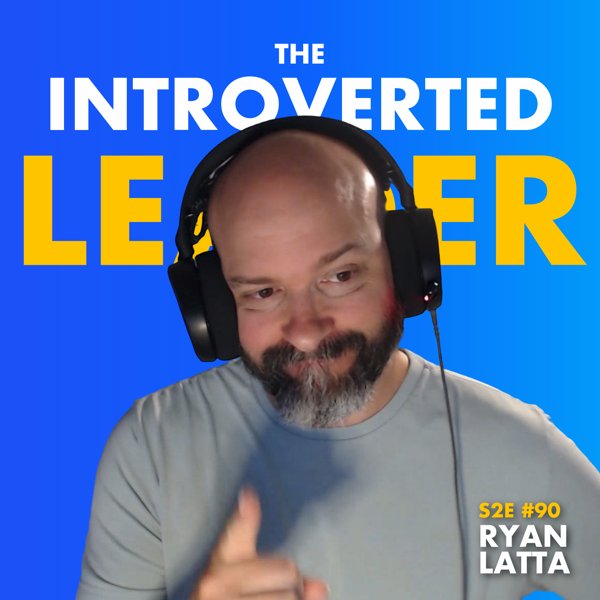
Ryan Latta is a consultant and self-described "practiced introvert" who builds exceptional software and product teams. His core idea is that real influence comes from mapping who the decision-maker actually trusts, which is rarely who the org chart says, and then reaching them one-on-one through strong relationships rather than through volume. He and Greg co-created a free AI skill that turns this rapport-mapping approach into a step-by-step influence plan. Ryan also explains how he treats discomfort as a budget so he can do the necessary hard things without collapsing.
You can't just say that doing the work is enough.
every leader I've ever worked with has someone they trust that is not at their level
It's trying to augment my unwillingness to get out of my own shell.
Yeah, I almost think of it like a budgeting problem.
It's not weakness. It's, it's actually managing the problem.
Key Stories
- “You’re not an introvert”: Ryan’s wife doubted he was an introvert because he seems so different at work. His reply was that the outgoing version is just the job, which is why he calls himself a practiced introvert.
- The AI consulting partner: Ryan had Claude read years of Obsidian notes about his conversations and interview him about his weak spots. Each morning he types “It’s a new day,” and it tells him who to check in with.
- Kicking out the director: Other consultants warned that a team could never change. Ryan mapped the real relationships and found that everyone dreaded working with their director. He asked the director to skip the kickoff, and when the director showed up anyway, he asked them to leave. The transformation then worked.
- Opening with the migraine: Ryan began a meeting with VPs and executives by saying he had a migraine and wouldn’t be at his best. Another consultant said he should never admit that. Ryan disagreed, and the group respected him for it.
- Bomb emoji risk reports: Ryan skipped his consultancy’s two-week slide-polishing service. Instead he used plain black-and-white slides that rated each project risk with bomb emojis. The CTO of a household-name company told him it was the first report that showed him what the problems were.
Techniques & Frameworks
- Rapport mapping (from Esther Derby): Put yourself at the center of a web and mark each relationship as good or bad. Repeat the process for each person around you. Then trace the most favorable path to the decision-maker, choosing who to meet first and whether you need a sit-down or a good word.
- Find the trusted advisor, not the title: Every leader has someone below their level they turn to and ask, “What do you think about that?” On teams, find the person everyone quietly follows. Winning them over can make buy-in from the tech lead or architect unnecessary.
- AI-assisted relationship upkeep: Keep dated bullet-point notes on every conversation. Have an AI interview you about how you work and what you’re bad at, then build a daily prompt that suggests who to reach out to.
- Budget your discomfort: Assume anything meaningful will cost you something uncomfortable. Plan for that cost in advance, avoid stacking expensive conversations on the same day, and keep recovery time clear after draining work like a four-hour workshop.
- Push back on the plan: When using the influence skill, ask the AI why it picked certain relationships and have it evaluate your own alternative plan. Notice the questions it raises about strained or missing relationships.
Full transcript
Have you ever done the work, had the right idea, but still couldn’t get the buy-in because the person making the calls didn’t know you exist? If you’re an introvert, most advice on leadership influence sounds exhausting. Work the room, be louder, sell more. It’s a performance that you can’t keep up. But what if leadership influence wasn’t about volume at all? what if it’s about knowing who the decision-maker actually trusts and gaining their buy-in? It’s almost never who the org chart says it is. Welcome to The Introverted Leader. It’s a podcast helping introverted leaders beat imposter syndrome and gain recognition for their underrated quiet strengths without becoming someone they’re not. I’m Greg Weinger. I have over twenty-five years of leadership experience, and I am an introvert. My guest today is Ryan Latta. He’s a consultant and self-described practiced introvert who left writing code to fix the decisions being made in his name. Together, we built an AI skill that turns influence into a plan that you can follow today. Before we start, if you’re feeling stuck at work right now, you don’t have to go it alone. Let me know what’s going on at gweinger.com/stuck. That’s G-W-E-I-N-G-E-R.com/stuck. Just leave me a sentence, and I’ll get back to you. All right, let’s get into it. Ryan, welcome to the show. So good to have you here today. Thanks for having me. I’m excited to talk Yeah, absolutely. We’ve had, more than the usual amount of, preparatory work for one of these episodes, so excited to share all the stuff we’ve been up to Yeah, I’m curious to see what your listeners are gonna think about, some of the stuff we put together Yeah. All right, Do you yourself a introvert, extrovert, or other? I would describe myself as a practiced introvert. My instinct is social interactions are really taxing for me. They wear me out fast. I typically don’t look forward to them, unless it’s, like, specific circumstances. But it’s unavoidable. I have to be in front of people. I have to do that stuff, so I’ve become practiced at it. So I was talking to my wife about it actually this morning. She was like, “What podcast are you gonna be on?” I was like, “Introverted Leader.” And she’s like, “You’re not an introvert.” And I was like, “Yes, I am, and you know that.” It’s like, “You know how hard it is to get me out of the house to go meet people.” And she’s like, “But you’re not like that at work.” And I was like, “Yep, that’s the job.” Yeah that’s how I would describe myself, as a practiced introvert Yeah, and it’s a common theme. A lot of introverted leaders, can be surprising to people. It’s like, well, you’re out in front all the time. You, I mean, you yourself, you have a consulting practice, so you have to do, activities like sales and networking, and you have to get business. So I know that can be counterintuitive one of the things that it’s a lot of people’s greatest fear is public speaking. Pre-COVID I was speaking at conferences all the time ‘cause it’s just part of the deal. But, I have this weird quirk where public speaking doesn’t phase me. But when I’m done, it’s not the public speaking that bothers me, it’s everyone who wants to talk to me afterwards. And like, I’m done after that. I have to go sit in a dark room for hours just to like get that back out of my system. So it’s weird how it takes shape for me, but that’s one of those weird quirks. But yeah, gotta be in front of people Yeah. So you have your consulting practice and, along the way you developed systems to support some of the things that might be less natural and, one of them might be networking, just sales. How do you stay in touch with people? Could you describe some of the systems that you Yeah. So, when I’m on a client site, there’s a whole pile of things that can happen in the background that aren’t the obvious thing you’re being paid to do. And it’s not natural. It’s funny, I don’t consider myself a particularly great consultant in any way, but other consultants come call me for advice. So I’m always like, “Do what I say, not what I do,” because I mess up stuff all the time. But some of those things are, you just gotta go out and have lunch with people that you don’t know what they do. You just gotta go hear their story. You gotta go talk to them. You’ve got to go seek out feedback from your clients and other stakeholders how you’re doing because a consultant, you can lose your whole contract and business, just because they don’t perceive you well enough. You could do great work, but they might be like, “I still don’t like that guy.” And you’ll never know that unless you’re maintaining a relationship with them. There’s a whole soapbox about like the, the ills of perception management, but I’m not gonna do that. But it’s an important thing. You can’t just say that doing the work is enough. You’ve got to go meet these other people. You’ve got to be very intentional about showing what you’ve done and making sure that it meets the expectations set and unsaid. And then outside of that, the stuff I’m the worst at, and I’ve been… Thankfully, I think one of the nice things about how available LLMs have become is the sort of maintaining relationships after I’m no longer working with them, which is not at all my instinct. Even best friends, I don’t call them. Like, I just don’t have no inclination to reach out to people whatsoever, but that kills my business if I don’t do that. So I’ve been using, AI to offset my weaknesses in that area to say who are the people I know? Who are the people I respect? Who are the people that, deserve a conversation? Like, we had a good time working together. I should hear at least what they’re doing, regardless if it turns into anything. And I’ve been using some tools and methods around, just organizing my notes about people and then, setting up a calendar, like who should I be calling now? Just say, “Hey, how are you?” I even send digital greeting cards now to people, just to let them know I’m still thinking about them. Mm-hmm. So it’s all kinds of things like that, I don’t particularly enjoy any of it, but it’s part of the deal Right. I mean, it’s interesting that if you have your business, you have to do the whole business, and so there can be entire swaths of your business that you don’t enjoy. if your business grows and becomes large, maybe you can hire people, but if you’re— a smaller business, then guess what? Tell me Yeah. Just to pick apart, you know, go, one layer deep on one of these layers. Let’s talk about the keeping in touch with your network, which, can be a common pain point for introverts. And you say, like, LLM, so we have AI. Mm-hmm. most people know what it is. Not everyone is practiced in using it. What does your setup look like? So you mentioned you have some— you, have a file editor kind of thing, Yeah you’ve got notes on people. So, what are you doing with this AI that is, prompting you to keep in touch with people? part of this was born out of, you know, I can’t be a consultant and have no opinion on AI, so I’ve got to, eat my own dog food a bit. So I’ve just been sort of pushing the boundaries of what I think I can get away with, and that started off mostly with, like, agentic software development and can I pull this off in a way that’s trustworthy and fairly automated and all that. I got through that. Then I was like, “Well, can I make it do something more abstract, like become a consulting partner?” And so the way that looks is that I, for a long time, I’ve been doing a lot of my writing in a tool called Obsidian, but it’s just a note-taking tool with some really interesting capabilities. Most people are like, “Yeah, I’ve heard of Obsidian, but I don’t get it,” and I understand that. There was this weird moment where it finally clicked for me, and then I was like, “Oh, I’m all in on Obsidian,” but it doesn’t matter. In the end of the day, it’s just a bunch of files. And so what I do is I just keep notes about conversations I have with people. So, I have a note for you for our first conversation, and I have little bullet points about what we talked about and the date we talked. everyone has those conversations. I have them all logged for years. And then, what I did is fired up— I use Claude most of the time, so I fired up Claude, and I said, “Okay, I want you to go look at all my notes. I want you to interview me about how I run my consulting practice. I want you to, make a record of how you understand that I work, and then I want you to ask me what I’m bad at, and then I want you to develop a skill to help me with the things that I’m bad at.” And so through this process, it basically started to realize that I’m, bad at managing relationships, and I am bad at outreach, and I am bad at those things. We basically developed a skill where every day I can hop into Claude and say, “It’s a new day,” and it will go through everything I’ve done and say, “Okay, you should probably reach out to a few new people today to check in on them. Here are the ones we think you should reach out to,” and then I do it. And so that’s the process, and that’s one of the things it does. It also helps me find, speaking opportunities and other things like that. It’s trying to augment my unwillingness to get out of my own shell. That’s the main job it does for me, and it does that by knowing everything about who I talk to, who I don’t, how I work, and how I don’t, so it doesn’t put me in an awkward position to do something abnormal. Yeah. So you and I were, talking about this in a Mm-hmm. and then kind of had this idea of coming up with a set of skills for introverted leaders. we thought that we could collaborate on one. Yeah this particular one is really about influence campaign. Say I want to, get buy-in on an initiative in an organization. And so as an introverted leader, how do you go about that? And I also understand this is grounded. We wanted to ground it in your particular approach to this. So, you know, before we get into the AI part, what is that approach? Yeah. So, the context sometimes changes, but the underlying techniques tend to wind up looking fairly similar. So at the end of the day, I need to know who I want to change their mind, and it’s almost never the person I’m working right next to ‘cause they’re already gonna change their mind if I’m around them enough. So the question is who else? You know, and it’s usually someone higher up on the food chain or someone several departments away that really owns some part of a process that we need to make changes to. Someone that I’ve got some distance to. And so A technique that I was taught by, Esther Derby, that I use is called rapport mapping. And so the concept is straightforward enough, which is you basically build out a map of people and, it starts with you, and then you’re at the center of this web and it’s like you get to say whether your relationship is a good one or a bad one to the people around you. And then for each of those people, you do it again, what’s their relationship with everyone around them, and is it good or bad? And so you look at that map, and then you can make a decision about where am I going to invest my energy to get to the decision-maker I need to in the most favorable or unfavorable way. And so I can kind of build a path and say, “I should start by talking to this person,” and then hopefully they’ll use their good relationship with this other person, which leads, and on and on and on it goes. And sometimes all you want is a sit-down, and sometimes what you want is for them to put in a good word. But you use that sort of network of relationships to decide where to go. Yeah. And I can see where that would be particularly useful in a consulting context because you’re kind of dropped in, you’re helicoptered in, and is difficult to understand the lay of the land, and you have to kind of discover that like a, I don’t know, like an archeologist or something. I think it would apply also to just any organization of a decent size where, I think some of these things we kind of gain an intuitive grasp of them, but, it’s thinking about them explicitly which might help you, know, kind of navigate more easily. Yeah, and there’s a phenomenon that, I mean, it’s not really a phenomenon, but once you build a map like this, you begin to see that the map of influence that you build isn’t necessarily the org structure. And so every leader I’ve ever worked with has someone they trust that is not at their level, is the person that they’ll turn to and say, “What do you think about that?” They have a great relationship with that leader, and that might be the only person I need to get to, and they’ll do the work. Or if I need to influence an entire team, it’s not gonna be probably the team leader, the architect that actually is the most beneficial for me to work on. It’s the person on the team that everyone, whether they realize it or not, follows their lead, and they’re the person I should lean on. And that comes out through the map. So I can find out, like that person has really strong, positive relationships with everyone, and they are influential, so I’ll go talk to them. I don’t need buy-in from the architect or the tech lead for this. They’ll follow. So there’s some unintuitive things that can come out of that. But yes, it does help me get the lay of the land and how it’s structured and what relationships exist versus how they’re supposed to. Yeah. And a thing I wanna just call attention to here is how suitable this is for someone who’s analytical and quieter. Because really what you’re doing, you’re kind of mapping out the organization, but then the way you go about this is really one-on-one. You’re going to a person, you’re sitting down, you’re getting to know them. You know, this is a strength of introverts, and you’re building rapport, a strong relationship, grounded in empathy. You’re— I mean, you yourself in your system are recording all this information here. And so as you start meeting with these different people, you’re developing an incredibly nuanced sense of, all the people involved and the situation involved that’s gotta be far more perceptive than probably 90, 95% of the people in the company yeah, there’s a story that comes to mind about this, if you don’t mind hearing it. I was— This was fairly early on in my consulting career, but I was asked to go into a company and transform their team, and this was on the heels of another transformation of a sister team. And so all the other consultants came and told me, all the reasons this isn’t gonna work. You have no idea what you’re getting signed up for. Good luck,” the whole thing. “They’re never gonna change.” I’m listening, ‘cause these are all consultants that are supposed to be good at this, and, I get in there, and I start doing my thing, and I realize that the reason this had failed, or reason why they thought it was so hard is because they didn’t leverage any of these relationships appropriately at all. They just went and tried to say, “Top down, comply.” Most people don’t tend to do that, in the way we wish. That just doesn’t tend to work out. And so I began to figure out and feel out what was actually going on and what were the real sentiments and what were the actual relationships, and, they were not at all what people thought they were. In particular, I was doing this kickoff meeting to help reform this team a bit, and, the director at the time was like, “Oh, yeah, I’m part of the team. It’s all great. It’s whatever.” And then in all my conversations I had, mapping everything out and learning what the lay of land was, everyone did not like this person. They did not wanna be in the room with them. They did not feel that they could conduct themselves at all appropriately if they were in the room. Not, again, super uncommon, but both sides believed completely different things. And so I had to go tell the director that they were not invited to this meeting. They showed up anyway, and then I kicked them out. Which everyone, you know… If I tell that story, and they’re like, “You kicked a director out?” I’m like, “Yeah, I’m a consultant. They can’t fire me. I don’t work for them.” And at the end of the day, they have to decide, is paying me money to accomplish nothing the right move, or should they just leave the room? And they’ll leave the room, and it’ll be awkward, but I’ll deal with that. And so we did solve the problem, but it was because all these relationships were not the way people thought they were, and they worked against their own efforts. So it took a different approach. Yeah. That’s a really wonderful example of the power of, a quieter approach to leadership because, I think that of the classic, extrovert top-down leadership, you know, coming in with lots of energy, attempting to steamroll a situation which really isn’t amenable to steamrolling. It took a more subtle, perceptive take on it to kind of surface what the core issues are. Awesome. All right, so, to bring back to our A- AI skill. This technique that you’ve described as, how to build an influence campaign, we’ve, co-created a skill, People can go and download it. I’m gonna place this on my website as the easiest way. Gweinger.com/aiskills. no spaces, aiskills, one word. And there’ll be, instructions where you could download this. It’ll work with any, AI whether it’s Claude or Gemini or, OpenAI, or ChatGPT. we’ve been working on this. I tried it out over the weekend on a situation I have at work right now, and it was pretty interesting ‘cause it starts you out by asking you, like, your style and, asking you some of those consulting questions. What is comfortable for you? What’s uncomfortable in terms of establishing rapport or, talking to other people? You cover the situation ‘cause there’s a particular campaign, and then it kind of walks through that set of key stakeholders and asks them key questions. Would you mind highlighting? those questions it asks about each person? essentially the main thrust of the questions that it needs to know is it needs to know about the relationships that exist. Who do they know and work with? Is that a good relationship or a bad relationship? You need to know what they tend to respond to, and if there’s any kind of shared background or history with them. All this sort of plants the seed of you being able to walk up to them or ask to be introduced to them with the right kind of introduction. The whole point of this is to build a path to a person that is advantageous to you. So you don’t wanna try to get there through a relationship that is actually, you know, adversarial unless you really know that’s what you want to do. You probably want to be able to take advantage of the ones that are healthy and strong relationships. So you’ll be like, “Hey, on this, we’ve talked together, we worked on these things together. It’d be great to catch up with you,” or, “Could I be introduced to this other person?” And you’re taking advantage of the shared history and the positive relationships to leverage another positive relationship and kinda compound that to get in front of the right people in the right context. ‘Cause if somebody you need to work with has a great relationship with someone else and they’re like, “Hey, this guy Greg wants to talk with you,” they’re gonna be inclined to be like, “Sounds great. Let’s talk.” if it’s the wrong person, they’ll be like, I’ll pencil it in sometime,” and you’ll never hear it again. So it’s about leveraging the right relationship to get there Yeah. Well, it’s amazing. It’s really cool that you’ve written down some of this, experience and, I’d encourage people to go download it, try it out, one, it could be useful in a practical sense, you have some kind of a need to influence a situation coming up, but also just as practice on with AI as a thought partner, yeah an accountability partner and encouraging but also critical kind of presence in your life If there’s something that you’re working on Yeah. And I think if you’re gonna use a skill, like by all means, take it out for a ride and see it and be critical of what it says. Ask it why it didn’t leverage a different relationship. Ask it why it chose the ones it did. Ask it to evaluate a different plan that you see. See what you find. You may find that just the act of talking through it with the LLM is gonna expose something more fruitful or useful to you than the original plan. I find that that is… There’s usually a nugget buried somewhere that if you just are willing to root around in it somewhere, it’s usually more compelling than the straight answer. Especially with that kind of work, it’ll invite a lot of internal questions to you about why don’t I have that relationship with that person? Or why is that one strained? Or why don’t I know anything about them at all? And sometimes that’s just as important as knowing the path you should take Yeah, yeah. Don’t be uncritical. Be critical of what it’s saying, but also Yeah to be open and critical of some of your own assumptions Yeah. Yeah. I, AI yells at me every day that I choose to spend time, like, writing, and it’s like, “Stop doing that. No one reads your stuff.” But I’m like, “I like it, so leave me alone.” But then it’s like you’re avoiding the important stuff. I’m like, that’s why I made this, for you to tell me that That’s right, yeah. Just because you point out the truth doesn’t mean I have to like it. That’s right. I can still turn it off Awesome. I hope people try that out and enjoy it. Definitely send feedback if you do Yeah. Yeah, I will be curious to hear how it goes for any of you as well. Now, I will point this out though. I know, Greg, when you were helping build it, you wanted to mention some of the, influence principles, that are commonly known. But, I leave that off of my methods because for whatever reason I don’t overly think about that because I have to know what the relationship is to have a decision about where I would go with it. And the worst place in the world for me to be is, like, someone who loves sports and then I have to figure out what to do about sports, ‘cause I don’t know sports. But, in working with it, there are gonna be things you’re inclined to like to do and things you won’t, but be open to the things you won’t, ‘cause it may be the thing they’ll be the most receptive to. And so all that stuff is part of the mixture. And once you know the path, then you have to decide what’s the approach, and that’s probably where it gets uncomfortable So I just want to linger on one thing that you said, because you’re talking about discomfort, and I think that’s a common theme here where, in order to accomplish the things that you want, You may need to face a certain amount of discomfort in that. So that’s sort of the bad news. The good news is you can get used to discomfort. it becomes less and less of a big deal. What’s your experience with that? Yeah, I almost think of it like a budgeting problem. So I assume that in anything meaningful that I’m about to do as a consultant, like I’m gonna have to do something I don’t want to do about it. And so I treat it as something I’m spending. And so I just accept that I have to spend something if I wanna get what I want, and I dole that out so I don’t get overwhelmed by it. So if I know I’m gonna have what I feel will be a clumsy and awkward conversation with someone, that’s an expensive thing to me, so I won’t budget more of that in the day. I’ll, keep the rest of the day in the stuff that I’m more comfortable and defer some of the more uncomfortable things for another day. So I’ll treat it as a budgeting problem, but I’ve got to spend it. It’s just part of the deal. Mm-hmm. and that’s kind of the way I can kind of not, not collapse under all of that, ‘cause I do a lot of facilitation work for groups, which is a very exhausting thing for me. People will come up to me after like a four-hour workshop or whatever, and I’m basically catatonic at that point. Like, I can barely put words together, and that’s my whole day. Like, I can’t recover from it. I just have to sit in a chair and close my eyes and be left alone. But I budget for that. I don’t plan other things that day. I don’t assume I can hop into another meeting and be useful to anyone. I just say, “Nope, that’s it.” I’ll do the other little things that are not taxing for me the rest of the day. So it’s a budgeting problem to me Yeah. Budgeting, energy management, mm-hmm. there’s a sort degree of self-awareness, exactly what your needs are and what you can do, what you can’t do, and, really embracing parts of Yeah. I got all this feedback once from all these other, very serious long-term consultants and I was running this meeting with a bunch of, VPs and a couple executives, and I started the meeting off by saying, “I am dealing with a migraine today, so I’m not gonna be at my best. I hope you all can understand that, and if there’s anything we need to pause or go over or do anything else, just say so. And I might make some mistakes, and I’ll say when I realize it, and we’ll deal with that.” And, one of these consultants came by and they’re like, “You don’t ever tell them anything like that. You don’t ever have to apologize.” And I’m like, “No, no, no. We’re gonna disagree on this because you’re worried about how you’re being perceived, and I’m not. I’m worried about doing the right thing for this group of people in this very expensive meeting, and so they should know that there’s a risk from my migraine causing problems here. And by telling them, now we can address it.” It’s not weakness. It’s, it’s actually managing the problem. And, and I think a lot of us get trapped in this idea of, how should we appear to people? How should we be perceived by people? And I think most of the time that’s a trap. It’s okay to be completely honest about being exhausted or just not have anything else to give. Because the person that wants something from you at that time, if they knew that whatever is about to come out of your mouth when you’re just wiped out is gonna be worthless, they wouldn’t wanna ask. They’d wanna wait. So I think it’s got to be okay. And I’ve never met a time where that has backfired or been anything other than respected. And I find that to be very freeing, to be honest about what my own limitations are with that stuff. I really like that. Kind of in a common theme where you’re going to be more trusted as a leader the more truthful you are, the more authentic you are, and you’re telling it like it is, and you become this person that people can trust and rely on to be straight with them Yeah. You can ask me a question and I’m gonna give you a straight answer, not a thing you have to think hard about what did I say and not say. It’s just an answer. And yes, I have found that far more of my clients at, in all levels of leadership respond far better to that than the sort of like game a lot of consultants play about appearing to be more than they are. And I know like I live in the consulting side of things, but I see that plenty on my client side with employees who are playing the same basic game. And I’m not gonna say there’s no value to it, but I think it works against people far more than they think. That, that trying to hold up an appearance of things. I think most of us have a certain amount of intuitiveness that that’s a facade. It’s not real. Mm-hmm. And so now I have to weigh more about what they say and do because I know there’s a facade in front. And even when I work with leaders that, for example, it’s not uncommon when you engage with a client that they want more than what their contract is for. Why not? I say ask. If you get a consultant that’s willing to do more for no money, you should ask. Right but I’ll tell them straight, like, “I can get you another proposal for that, but that’s not in the scope that we’ve outlined.” And I’ve never had anyone complain about it. They’re always very respectful about that, and they know the deal. It’s business. I’ve met plenty of other consultants in the whole large consultancies that that question comes up, and there’s got to be secret quiet meetings to figure out how to address the client need and not look bad and blah, blah, blah. And I’m like, “Get over it. It’s fine. Just be honest.” They asked, just give them an answer. It’s okay. the whole perception management is, is an art. And y- you told an, an amusing story, last time we spoke Yeah the style in presentations that you have, and so much energy can go into, I had this experience myself of going to a place where the most beautifully produced presentations in the world, and I came in with something that was kind of bare bones, and it became this kind of big joke. But, they kind of enjoyed it because it was so refreshingly, sparse. But tell, share your story Yeah, so I was working for a larger consultancy, and I was managing this large lift and shift of a supply chain software, and it was fine. But, we gave these weekly reports to, the executive in charge and the team and some stakeholders. And our consultancy had a whole company dedicated to building our slideshows for us, and they would make it all nice and everything else. I thought that was the most hilarious and ridiculous thing in the world. Like, the thought of it just made me laugh every time I think about it. But a lot of people would send their decks over to them, and they’d get the whole treatment thing and get sent back. It would take, like, two weeks. I’m like, “That’s ridiculous. I’m not doing this,” I’m doing a weekly report. Like, that cannot work for me. And so I would show up with, the basic Google Slides template, like white and black. I wouldn’t even put the company’s, template or theme on it. I was like, I just can’t. I have no eye for this, and me trying would probably look worse than just not trying.” And so one big part of it, what were the risks to the project going forward? Like, where are we? And so what I would do is just put whatever the risk was, and I’d put a bunch of bomb emojis next to it for how serious the risk was. And so here are the risks, and here’s the number of bombs for it. And like, I’m sitting here giving this report to the CTO of a company everyone— Like, it’s a household name. Everyone knows it. I remember the CTO came up to me after. He’s like, “I love your presentations. They’re so good.” And he’s like, “I actually feel like I know what the problems are.” And he was like, “I’ve just never seen anyone do bomb emojis.” And I’m like, “I don’t know what else to tell you. I’m not gonna put stars, but Right. this is the threat. They’re being managed, but this is the threat.” And so I kinda got over some of that in the future, like that whole idea of, making the pretty deck and the pretty presentation. Like, this just be informative. It can be okay. Yeah. Well, you’re solely focused on the content, and obviously that was appreciated. I think a little bit of the sense of humor came through that is Yeah. yeah yeah, I’ll never make a pretty slide deck ever, I think. Ryan, this has been really great conversation. I feel like, there are, a lot of rich topics we could come back and cover. I wanna make sure you have a chance to point people to where they can find out more about you, your books. Like, you’re an author. Where can people find out more about your work? I maintain a gross little website called ryanlatta.com. It’s a digital garden, so I’m not apologizing for the mess it’s in, but it’s just everything. I write a lot about product management, leadership, and technical practice ‘cause that’s what I focus on as a consultant. You can also sneakily find out about my beekeeping stuff and game stuff and, I also work primarily through word of mouth, though this is cheating, to help people navigate, interviews to get better jobs. It’s a whole other thing about how I fell into that, but I did write a book. I have an online class for that. If you need any advice for that, you can reach out to me and I’m happy to point you to any of those things or work with you one-on-one. But yeah, my specialty is building exceptional, software and product teams. So if you’re in a company where you think things could be better, that’s what I specialize in Yeah. And, you can try out the, influence skill, again, at gweinger.com, slash AI skills and try that one out and, get a little bit of a sense of it Yeah. And I’ll be keeping an eye out for feedback on that too Awesome. Thanks so much for being on the show today, Ryan. Thank you for having me ISo I really enjoyed this one. Let’s take a minute to recap. Number one, the org chart is not the real influence map. Every leader has someone they can turn to and ask, “What do you think about this?” The person a team actually follows isn’t always the manager or tech lead. So map the relationships and set out to win over the real influencers first. Number two, doing the work is not enough. You have to be intentional about showing what you’ve done. If staying in touch doesn’t come naturally, build a system for it. Ryan has an AI partner that tells him every morning who to check in with, And that’s not cheating. That’s taking ownership for your weaknesses. Number three, budget your discomfort. That hard conversation is going to cost you something, so plan for it. Don’t stack three difficult conversations in a row. And when you’re running low on gas, say so. Ryan opened a meeting saying, “Hey, I’m dealing with a migraine today. I’m not going to be at my best.” Nobody saw that as weakness. They saw someone they could trust. if you’re finding this content helpful, here’s one next step. The influence skill that Ryan and I created is free at gweinger.com/aiskills. That’s G-W-E-I-N-G-E-R.com/A-I-S-K-I-L-L-S. All the instructions are embedded in the README, Bring it a real situation you’re facing at work let it walk you through the mapping process, and push back on what it tells you. and if you found this content helpful, subscribe to The Introverted Leader wherever you listen to podcasts. I’m Greg Weinger. Keep leading with quiet confidence, and I’ll see you next time